
Steel Decking & Cladding Materials: Roof, Floor & Wall Systems for Steel Structures

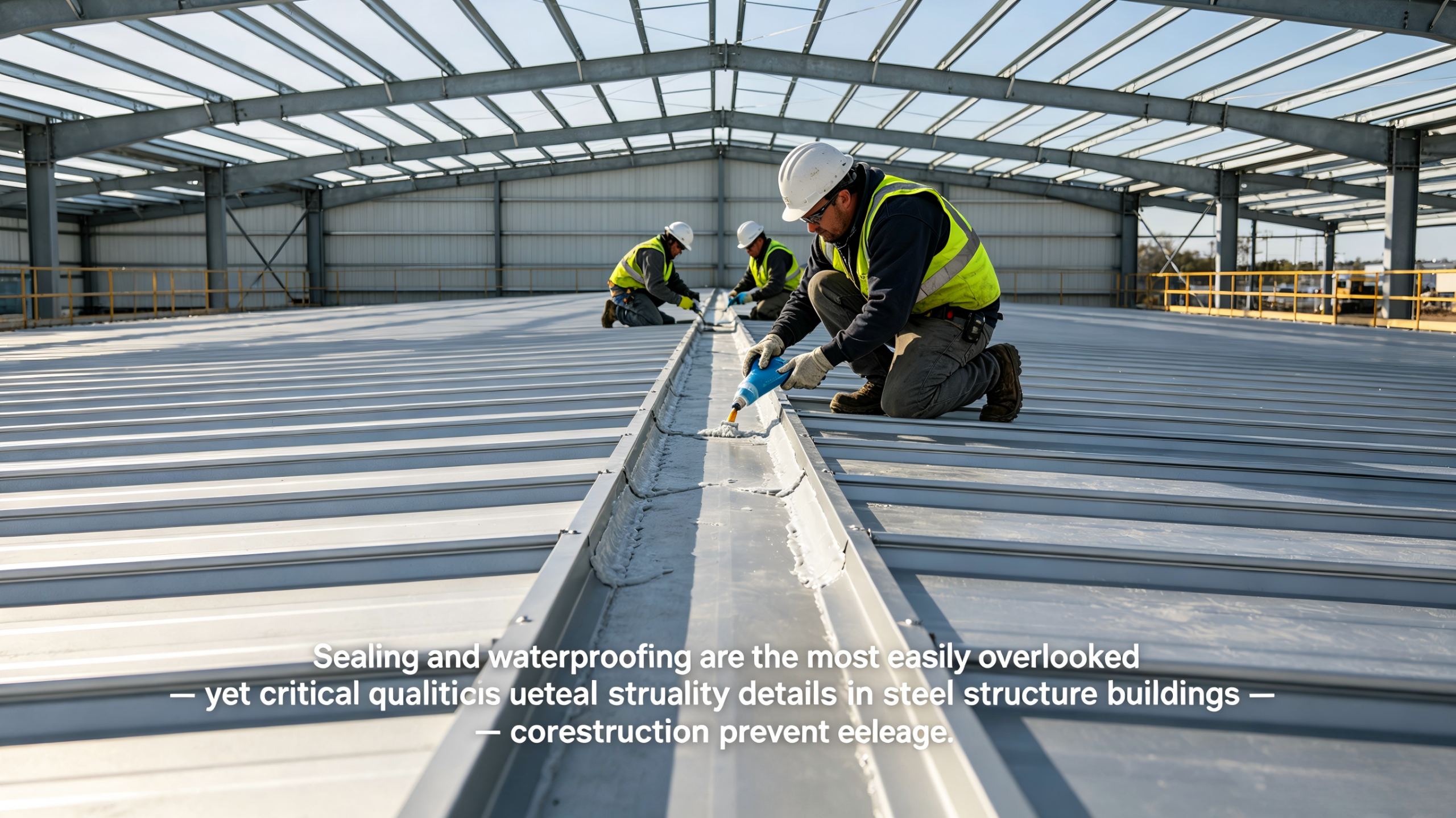
Profiled steel decking for composite floors, standing seam roof panels, and wall cladding. Learn material grades, coating systems, and how to select based on span, load, and environment.
A steel structure is not complete until it is enclosed. The roof keeps weather out. The floor supports equipment and personnel. The walls define the building envelope.
For overseas clients, selecting the right steel decking and cladding materials is often an afterthought—but it directly affects building durability, energy efficiency, and long-term maintenance costs.
This guide covers:
- Composite steel floor decking (for mezzanines and multi-story).
- Roof cladding (standing seam, corrugated, sandwich panels).
- Wall cladding (profiled sheets and insulated panels).
- Material grades, coatings, and fasteners.
- Selection by span, load, and environment.
1. Three Types of Steel Decking & Cladding
| Type | Function | Typical Location |
|---|---|---|
| Composite floor decking | Structural formwork + tension reinforcement for concrete slabs | Mezzanines, multi-story steel buildings |
| Roof cladding | Weather barrier, thermal insulation, load transfer (snow/wind) | Roof envelope |
| Wall cladding | Weather barrier, aesthetics, insulation (if sandwich panel) | Vertical envelope |
Each type uses different profiles, thicknesses, and coating systems.
2. Composite Steel Floor Decking
Composite decking serves two purposes during and after construction:
- Formwork – Supports wet concrete during pouring (no timber forms needed).
- Tension reinforcement – Embossed patterns create mechanical bond with concrete, replacing rebar in the slab bottom.
Common Profiles
| Profile Name | Depth (mm) | Typical Span | Best For |
|---|---|---|---|
| 2″ (50mm) rib | 50 | 2.0-3.0m | Light mezzanines, residential |
| 3″ (76mm) rib | 76 | 2.5-3.5m | Standard industrial mezzanines |
| 4.5″ (114mm) rib | 114 | 3.0-4.5m | Heavy loads, longer spans |
| Re-entrant (Ribbed) | 50-75 | 2.0-3.5m | Thinner slabs, flush ceiling |
How to read a decking designation:
Example: 0.8mm x 3″ x 18ga
- 0.8mm = base steel thickness
- 3″ = rib height (76mm)
- 18ga = gauge (0.0478 inches, approx 1.2mm galvanized coating)
Material for Composite Decking
| Grade | Yield Strength | Coating | Typical Use |
|---|---|---|---|
| G250 (250 MPa) | 250 | Z275 (275g/m² zinc) | Light duty, short spans |
| G300 (300 MPa) | 300 | Z275 | Standard industrial |
| G350 (350 MPa) | 350 | Z275 or AZ150 | Heavy loads, long spans |
| G450 (450 MPa) | 450 | Z275 | Very heavy, crane-supported floors |
Thickness range: 0.75mm to 1.5mm (heavier = longer span, higher load)
Coating standard: Z275 = 275 grams of zinc per square meter (both sides combined). For corrosive environments, specify AZ150 (aluminum-zinc alloy, better corrosion resistance).
Span & Load Table (G350, 3″ rib, 0.9mm)
| Slab Thickness | Concrete Depth Above Rib | Clear Span | Uniform Live Load (kPa) |
|---|---|---|---|
| 100mm | 50mm | 2.5m | 5.0 kPa (office) |
| 125mm | 75mm | 3.0m | 7.5 kPa (light warehouse) |
| 150mm | 100mm | 3.5m | 10.0 kPa (heavy storage) |
| 200mm | 150mm | 4.0m | 15.0 kPa (industrial) |
Installation notes:
- Decking spans between steel beams. Ends rest on beam flanges (minimum 50mm bearing).
- Side laps are screwed or clipped.
- Shear studs welded through decking into beams create composite action (slab + beam act together).
Cost Saving Tip
Composite decking replaces timber formwork and reduces rebar. The net cost is often 20-30% lower than traditional reinforced concrete slab on timber forms. Plus, no formwork removal time.
3. Steel Roof Cladding
Roof cladding is the first line of defense against weather. The choice affects leak risk, thermal performance, and building lifespan.
Common Roof Profile Types
| Profile | Shape | Typical Span | Water Tightness | Best For |
|---|---|---|---|---|
| Corrugated (sinusoidal) | Wavy curve | 1.5-2.5m | Moderate (overlaps) | Agricultural, basic warehouses |
| Trapezoidal (box rib) | Flat bottom, angled sides | 2.0-3.5m | Moderate-Good | Industrial buildings, cost-effective |
| Standing seam | Raised interlocking seams | 3.0-6.0m | Excellent (no exposed fasteners) | High-end warehouses, airports, cold storage |
| Sandwich panel (insulated) | Two steel skins + foam core | 2.5-4.5m | Excellent | Temperature-controlled buildings, offices |
Material for Roof Cladding
| Grade | Yield Strength | Typical Thickness | Application |
|---|---|---|---|
| G250 | 250 MPa | 0.35-0.50mm | Light agricultural (low snow) |
| G300 | 300 MPa | 0.42-0.60mm | Standard warehouses |
| G350 | 350 MPa | 0.50-0.80mm | High wind, heavy snow |
| G450 | 450 MPa | 0.60-1.00mm | Long spans, high loads (rare for roofs) |
Coating systems for roof cladding (critical for lifespan):
| Coating | Durability | Best Environment | Color Retention |
|---|---|---|---|
| Galvanized (Z275) | 10-15 years | Indoor/dry | N/A (bare zinc) |
| Galvalume (AZ150, 55% Al-Zn) | 20-25 years | Outdoor, rural/industrial | Moderate (chalking over time) |
| Polyester (PE) | 10-12 years | Dry, mild | Good (5-7 years fade-free) |
| Siliconized polyester (SMP) | 12-15 years | General outdoor | Better than PE |
| Polyvinylidene fluoride (PVDF, 70%) | 20-25+ years | Coastal, high UV | Excellent (10-15 years fade-free) |
| Plastisol (PVC) | 15-20 years | Industrial, chemical | Good (thick, durable) |
Recommendation:
- Budget warehouse → Galvalume AZ150 (best value)
- Coastal or high UV → PVDF (Kynar 500® or Hylar 5000® equivalent)
- Cold storage or temperature-controlled → Sandwich panel with PVDF exterior
Standing Seam Roof Advantages
Standing seam roofs have no exposed fasteners. Clips attach panels to the structure, allowing thermal movement.
| Feature | Benefit |
|---|---|
| No exposed screws | Zero leak paths through panel surface |
| Slide clips | Accommodates thermal expansion (steel expands/contracts 1mm per 3m per 30°C change) |
| Longer spans | 3-6m between supports (fewer purlins = lower cost) |
| Higher wind uplift | Interlocking seams resist strong winds |
When to specify standing seam:
- Building length > 50m (thermal movement significant)
- Wind speed > 150 km/h
- Architectural appearance matters
- Budget allows 20-30% premium over screw-fixed trapezoidal
4. Steel Wall Cladding
Wall cladding protects from weather and provides aesthetics. Options range from simple corrugated to insulated sandwich panels.
Profile Types for Walls
| Profile | Appearance | Typical Span | Best For |
|---|---|---|---|
| Corrugated (sinusoidal) | Wavy, industrial | 1.5-2.5m | Workshops, agricultural |
| Trapezoidal (box rib) | Ribbed, clean lines | 2.0-3.0m | Warehouses, industrial buildings |
| Micro-rib (flat panel) | Nearly flat, subtle ribs | 1.5-2.0m | Office fronts, architectural |
| Sandwich panel (insulated) | Smooth or micro-rib, flush joints | 2.5-4.0m | Cold storage, offices, clean rooms |
Material for Wall Cladding (similar to roof, but thinner often acceptable)
| Grade | Typical Thickness | Application |
|---|---|---|
| G250 | 0.35-0.50mm | Agricultural, light industrial |
| G300 | 0.42-0.55mm | Standard warehouses |
| G350 | 0.50-0.70mm | High wind zones, long spans |
Coating: Same as roof. For walls, color retention matters more than extreme corrosion resistance (walls get less direct rain). PVDF recommended for architectural projects, polyester acceptable for industrial.
Insulated Sandwich Panels
Sandwich panels have two steel skins bonded to a foam core (polyurethane, PIR, or mineral wool).
| Core Material | R-value per inch | Fire Rating | Best For |
|---|---|---|---|
| Polyurethane (PUR) | R-6 to R-7 | Low (flammable) | Cold storage (cheap) |
| Polyisocyanurate (PIR) | R-7 to R-8 | Moderate (better fire performance) | Refrigerated warehouses, food processing |
| Mineral wool (rock wool) | R-3 to R-4 | Non-combustible (A-class fire rating) | Buildings requiring fire safety (offices, hospitals, schools) |
Panel thickness range: 50mm to 200mm (thicker = higher insulation)
Joint types:
- Hidden joint (concealed fastener) – clean appearance, no exposed screws
- Exposed fastener (through-screw) – lower cost, easier installation
When to use sandwich panels:
- Temperature-controlled buildings (cold storage, food processing)
- Office areas within industrial buildings
- Buildings requiring high insulation (energy codes)
- Quick construction (panels are fast to install compared to built-up systems)
5. Fasteners for Decking & Cladding
Fasteners are the most common point of failure. Corroded or poorly installed screws cause leaks and panel detachment.
| Screw Type | Coating | Best For | Lifespan |
|---|---|---|---|
| Carbon steel + zinc plated | 5-10µm zinc | Indoor/dry only | <5 years |
| Carbon steel + HDG | 45µm zinc | General outdoor (mild) | 10-15 years |
| Stainless steel 304 | None (passive) | Coastal, moderate chemical | 25+ years |
| Stainless steel 316 | None (passive) | Marine, aggressive chemical | 50+ years |
| Carbon steel + PVDF coating | 25µm | High UV, architectural | 15-20 years |
Critical rule for overseas buyers: Never mix fastener and panel coating types. Galvanized fastener + Galvalume panel = galvanic corrosion (different metals). Use stainless or matching coating.
Installation requirements:
- Screws driven perpendicular to surface (no angled fasteners).
- Correct penetration: 15-20mm into steel purlin/girt.
- Spacing: Maximum 200mm at end laps, 300mm at side laps, 150mm at ridge and eaves.
- Gaskets (neoprene or EPDM) must be visible at screw head—this seals the hole.
Signs of bad fastener installation:
- Gasket missing or cracked → future leak.
- Screw overdriven (gasket deformed outwards) → leak.
- Screw underdriven (gasket not touching panel) → leak and loose.
- Missing screws (factory QA failure) → panel detaches in wind.
6. Selection by Environment & Load
| Environment | Recommended Roof | Recommended Wall | Fastener |
|---|---|---|---|
| Dry inland (low corrosion) | Galvalume trapezoidal | Galvalume corrugated | HDG carbon steel |
| Humid/industrial | PVDF trapezoidal or standing seam | PVDF box rib | Stainless 304 |
| Coastal (1-5km) | Standing seam, PVDF | PVDF panel | Stainless 316 |
| Coastal (<1km) | Standing seam, PVDF + extra coating | PVDF or stainless steel | Stainless 316 |
| Chemical plant | PVC plastisol or PVDF | PVC plastisol | Stainless 316 |
| Cold storage | Sandwich panel (PIR), standing seam | Sandwich panel (PIR) | Stainless (no thermal bridge) |
| High snow load (>2 kPa) | G350/G450, trapezoidal or standing seam | N/A (load on roof, not wall) | Stainless |
| High wind (>150 km/h) | Standing seam (highest uplift) | G350/G450, screw spacing reduced | Stainless 304 |
7. Thermal Movement & Design Considerations
Steel expands and contracts with temperature. A 100m long building can change length by 50-70mm between winter and summer.
Thermal expansion formula:
ΔL = α × L × ΔT
- α (steel) = 0.000012 m/m°C
- L = length (m)
- ΔT = temperature range (°C)
Example: 80m building, -10°C to 40°C range (ΔT = 50°C)
ΔL = 0.000012 × 80 × 50 = 0.048m = 48mm movement
Design strategies for long buildings:
| Strategy | Application |
|---|---|
| Standing seam roof with slide clips | Clips allow panel to move independently of structure |
| Expansion joints in cladding | Break long runs into shorter segments (every 40-50m) |
| Oversized fastener holes at ends | Allows movement without fastener shear |
| Fabric expansion joints (roof) | Rubber or fabric membrane at building expansion gap |
For overseas clients: If your building exceeds 50m in length, ask your supplier about thermal movement detailing. Many failures occur because fixed fasteners restrain movement, causing panel buckling or screw tear-out.
8. Common Failures & Prevention
| Failure | Cause | Prevention |
|---|---|---|
| Roof leaks at screw lines | Missing gaskets, overdriven screws | Use standing seam (no roof screws) or install screws correctly |
| Panel corrosion in 5 years | Wrong coating for environment (galvanized in coastal) | Specify PVDF or Galvalume + stainless fasteners |
| Panel detachment in wind | Too few screws, too light gauge | Calculate wind uplift. Increase screws, use thicker steel |
| Oil-canning (wavy flat panels) | Thermal stress, thin gage, no stiffening ribs | Use thicker steel, specify anti-oil-canning ribs |
| Condensation under roof | No vapor barrier, inadequate ventilation | Add vapor barrier, specify anti-condensation fleece on panel underside |
| Sandwich panel core shrinkage | Low-quality foam, poor adhesion | Buy from reputable manufacturer with warranty |
9. Cost Comparison (Approximate, per m²)
| System | Material Cost | Installation Cost | Lifespan | Total Annualized Cost |
|---|---|---|---|---|
| Corrugated, galvanized, screw-fixed | $8-12 | $6-10 | 10-15 years | $1.0-1.5/year |
| Trapezoidal, Galvalume, screw-fixed | $12-18 | $8-12 | 15-20 years | $1.0-1.3/year |
| Trapezoidal, PVDF, screw-fixed | $18-25 | $8-12 | 20-25 years | $1.0-1.2/year |
| Standing seam, PVDF, hidden clips | $30-45 | $15-25 | 30+ years | $1.2-1.5/year |
| Sandwich panel (PIR, 80mm), exposed fastener | $35-50 | $12-18 | 25+ years | $1.6-2.0/year |
| Sandwich panel (mineral wool, 100mm), hidden joint | $60-80 | $18-25 | 30+ years | $2.2-2.8/year |
Takeaway:
- For simple warehouses: Galvalume trapezoidal = best value.
- For long life or coastal: Standing seam PVDF = lowest long-term cost.
- For temperature control: Sandwich panel (PIR for cold, mineral wool for fire safety).
10. Link to Steel Decking & Cladding Supply Service
We supply complete building envelope systems—not just steel frames.
We provide:
- Composite floor decking: G250-G450, Z275 or AZ150 coating, embossed for composite action. Shear studs included.
- Roof cladding: Trapezoidal (screw-fixed) or standing seam (hidden clip). Galvalume, PVDF, or Plastisol coating.
- Wall cladding: Corrugated, trapezoidal, or micro-rib. Color-matched to your brand.
- Sandwich panels: PUR, PIR, or mineral wool core. 50-200mm thickness. Hidden or exposed fastener joints.
- Fasteners: Stainless steel 304 or 316, color-matched heads. Gaskets pre-installed.
- Accessories: Ridge caps, flashings, gutters, downpipes, ventilation louvers.
For overseas clients:
We pre-cut panels to length (no field cutting waste). We include fastener quantity lists and installation drawings. For sandwich panels, we provide cold-room design support.
👉 [Request a building envelope quote]
Send us your building dimensions, location (for wind/snow loads), and environment (coastal, industrial, etc.). We will return cladding recommendations, color options, and a complete material list within 48 hours.
Summary Table: Quick Decking & Cladding Selection
| Your Building Type | Roof System | Wall System | Floor Decking |
|---|---|---|---|
| Basic agricultural shed | Corrugated galvanized | Corrugated galvanized | None (ground slab) |
| Standard warehouse | Trapezoidal, Galvalume, screw-fixed | Trapezoidal, Galvalume | Optional (if mezzanine needed) |
| High-end warehouse (long life) | Standing seam, PVDF | Trapezoidal, PVDF | Composite decking (G350, 3″) |
| Cold storage / freezer | Sandwich panel (PIR, 100-150mm) | Sandwich panel (PIR, 100-150mm) | Composite decking plus insulation |
| Office / commercial | Standing seam or sandwich panel | Sandwich panel (mineral wool for fire) | Composite decking (G300, 2″) |
| Coastal / marine | Standing seam, PVDF, stainless fasteners | PVDF box rib, stainless fasteners | Composite decking, AZ150 coating |
| Chemical / corrosive | PVC plastisol or PVDF | PVC plastisol | Composite decking, heavy coating |