
Steel Warehouse Foundation Design: Common Mistakes That Delay Your Project by Months

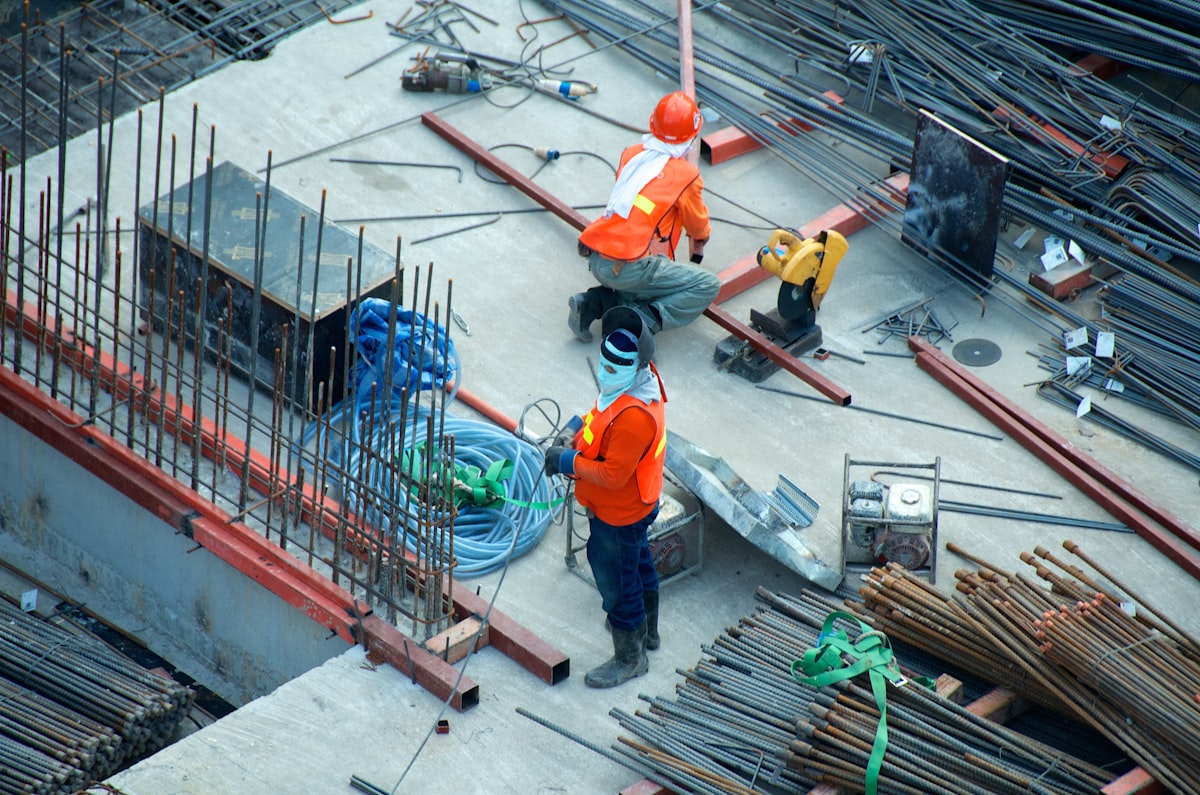
I reviewed foundation drawings for a 2,400 sqm warehouse project in Nigeria last month. The local civil engineer specified pad footings at 1.2m depth with 25MPa concrete. The soil report showed expansive clay starting at 0.8m. That mismatch would have cracked the floor slab within two rainy seasons.
Foundation errors on steel warehouse projects are expensive because they surface late. The steel goes up in 3-4 weeks. The foundation takes 6-8 weeks. Get it wrong and you are re-excavating under an erected frame.
Match the Foundation to the Frame System
Portal frame warehouses and truss-on-column warehouses load the ground differently. Portal frames generate horizontal thrust at the base—your foundation must resist lateral force, not just vertical load.
For standard portal frames up to 24m span:
- Column base moment: typically 80-150 kNm depending on frame spacing
- Vertical reaction: 120-250 kN per column
- Horizontal shear at base: 40-80 kN
Pinned bases simplify the foundation (no moment transfer) but increase steel weight in the frame by 10-15%. Fixed bases reduce frame steel but require larger, deeper footings. The total project cost usually favors pinned bases for spans under 20m and fixed bases for wider spans.
Soil Investigation: What You Actually Need
Skip the full geotechnical report for a simple warehouse on known ground. But never skip soil investigation entirely. At minimum:
- 3 boreholes to 6m depth (corners and center of the building footprint)
- Standard Penetration Test (SPT) values at 1m intervals
- Water table depth measurement
- Atterberg limits if clay is present (tells you expansion potential)
Cost: $1,500-3,000 depending on location. That is 0.5% of a typical warehouse project budget. I have seen projects spend $30,000 on foundation remediation because they skipped a $2,000 soil test.
Floor Slab Detailing for Steel Warehouses
The floor slab is independent of the structural frame in most warehouse designs. Do not connect them. A 150mm slab on grade with fiber mesh reinforcement handles forklift traffic up to 5 tons. For heavier loads (reach stackers, loaded container handlers), go to 200mm with rebar mesh.
Critical detail: leave a 20mm gap between the slab edge and column bases. Fill with compressible filler. This allows independent thermal movement and prevents slab cracking at column locations.
Joint spacing matters. Saw-cut joints at 6m centers for 150mm slabs, 7.5m for 200mm slabs. Wider spacing means wider cracks—and forklift wheels catch on wide cracks, damaging both the floor and the goods.
Timeline Planning
Realistic foundation timeline for a 2,000 sqm warehouse:
- Excavation and compaction: 5-7 days
- Footing formwork and rebar: 4-5 days
- Concrete pour and cure (footings): 7 days minimum before bolt installation
- Anchor bolt setting and survey check: 2 days
- Floor slab (after frame erection): 5-7 days pour + 28 days cure before heavy traffic
Total: 4-6 weeks before steel erection can start. Plan this into your project schedule from day one, not after the steel is fabricated and sitting in containers.