
Steel Building Price in UAE: Approvals, Fire Compliance and Escalation Costs Beyond the Quote

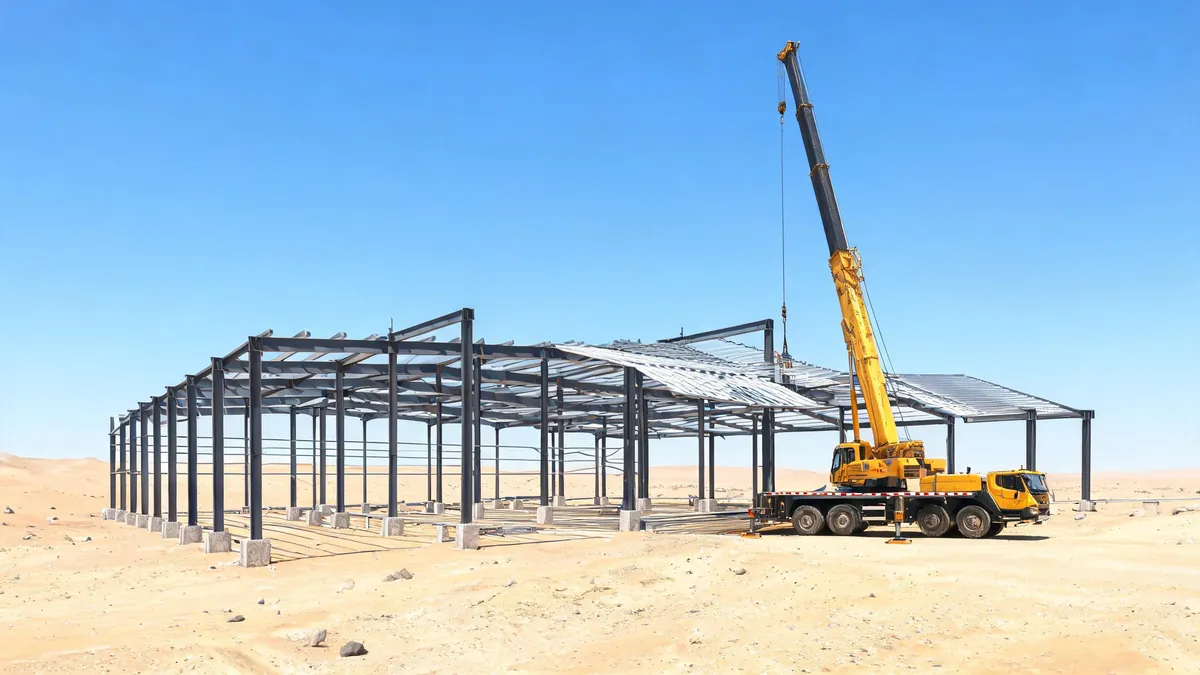
Two buyers can import the same steel building into the UAE and end up with final costs that differ by a wide margin, even when the factory quotes are close. The gap is rarely in the steel tonnage — it is in the layers that sit around the steel quote: approval and engineering certification in the emirate where the building is erected, fire and life safety upgrades demanded by the local authority, the choice between a free zone and the mainland, and the way the contract handles steel price movement between quotation and shipment. The direct answer for budgeting: treat the steel building price in UAE as the factory quote plus four managed layers — compliance, approvals, trade route and price protection — and settle each one in writing before you compare supplier numbers, because the factory price is the most comparable part of the total and the least likely to surprise you.
This article is a decision guide for buyers who are moving from “what does a steel building cost in UAE” to “what will my complete project actually cost and how do I keep it under control.” It covers the cost layers that export price tables usually omit, the questions to put to suppliers and local consultants, and the contract clauses that decide whether a quote stays a quote.
What a UAE steel building quote actually covers
An export quote for a steel warehouse or workshop in the UAE normally prices the building as a supply contract: design to a stated code, fabrication, coating, packing and delivery to an agreed incoterm — commonly FOB, CFR or CIF to a UAE port, or DDP when the supplier manages local delivery. What the same quote usually does not cover is the set of local costs that turn a delivered building into an approved, operating one.
The missing layers are predictable, and naming them early removes most of the confusion between quotes:
- Local engineering and certification. Structural drawings prepared overseas normally need review and stamping by an engineer registered in the emirate of the project before the building authority accepts them.
- Building permit and authority approvals. The permit route runs through the municipal authority of the emirate — Dubai Municipality in Dubai, the relevant municipality in other emirates — and, for most commercial and industrial buildings, fire and life safety approval from the local civil defense directorate.
- Fire-rated envelope and protection upgrades. The cladding and insulation specified for a mild climate may not meet the fire classification required for the building’s use, height and area in the UAE, and high-bay storage usually changes the sprinkler and detection requirements.
- Import duty and VAT. Steel structures entering the UAE mainland are normally subject to customs duty on the landed value, and VAT at 5% applies to most goods and services in the supply chain — the exact treatment depending on the import route and the customs classification of the goods.
- Price movement between quote and shipment. Steel plate prices, freight rates and currency moves can shift the cost of a project that takes months from quotation to fabrication. How that risk is shared is a contract decision, not a market accident.
Read the incoterm line of any UAE quote as the start of the cost story, not the end. Our Ex-Works vs CFR vs DDP comparison for UAE imports explains which basis makes supplier numbers comparable, and the UAE cost driver guide covers the quote-to-quote variables inside the factory price.
Approvals and engineering certification: the first layer most quotes ignore
In the UAE, building control is organized at the emirate level. A project in Dubai runs through Dubai Municipality for the building permit; a project in Abu Dhabi or the northern emirates follows that emirate’s municipal process. On top of the permit, most industrial buildings need fire and life safety approval from the local civil defense authority, which reviews the design against the fire code applied in the emirate. Neither step is priced into a factory quote, because both depend on the project location, the use class and the design documentation — and both have a time cost that buyers routinely underestimate.
The engineering certification point matters even earlier. Steel structure drawings from a Chinese or European fabricator are normally designed to a recognized code such as AISC, Eurocode or GB. The UAE reviewing engineer checks those drawings against the local code position and the project’s design basis, confirms or amends member sizes and details, and stamps the documentation for the authority. This review is a professional service fee, and its duration depends on how complete the drawing package is. Send the full calculation and drawing package — not a single GA drawing — and the review is faster and cheaper; send fragments and you pay for the back-and-forth.
When a supplier quotes a UAE project, ask two questions: which design code is the quote based on, and does the scope include the drawing revisions a local engineer of record will request. The difference between “we can stamp overseas drawings” and “our package is normally accepted after minor local review” is often weeks of schedule and a real line item in the local professional fees.
Quick question buyers ask: “Can my supplier’s overseas drawings be used directly for a UAE building permit?” — Usually not without local review. The drawings are normally checked and certified by an engineer registered in the emirate of the project, and the authority approves the certified package. Ask the supplier for a complete calculation and drawing set so that review runs once instead of in rounds.
Fire and life safety compliance: where the envelope spec changes
Fire compliance is the layer where a low-cost steel building quote can quietly become an expensive building. The UAE applies fire and life safety requirements to industrial buildings — the UAE Fire and Life Safety Code of Practice is the reference framework — and the authority reviews cladding fire classification, compartmentation, means of escape, firefighting access, and the sprinkler and detection design for the storage use.
The cost effects that catch buyers:
- Cladding and insulation fire classification. The wall and roof panel spec that is standard for a simple storage shed may not meet the fire classification required for the building’s use, height or proximity to other buildings. Upgrading from a basic panel to a fire-rated construction — or adding fire-resistant board, cavity barriers or protected columns — changes the envelope cost and sometimes the frame details for fire protection of the steel.
- High-bay storage and sprinklers. Warehouses with tall racking are normally required to provide sprinkler protection matched to the storage height and commodity. In-rack sprinklers, larger water supplies or higher roof deck ratings follow from the racking design — the same interaction we cover for racking and fire in this warehouse fire protection guide.
- Fire walls and separation. A multi-unit or multi-tenant building may need fire-rated separation walls between occupancies, which affects the column grid and foundation layout if decided late.
- Passive protection of the steel itself. Where the fire rating demands it, columns and rafters receive intumescent coating, board encasement or other protection — a cost that runs per square meter of protected steel and that no tonnage-based price table will show.
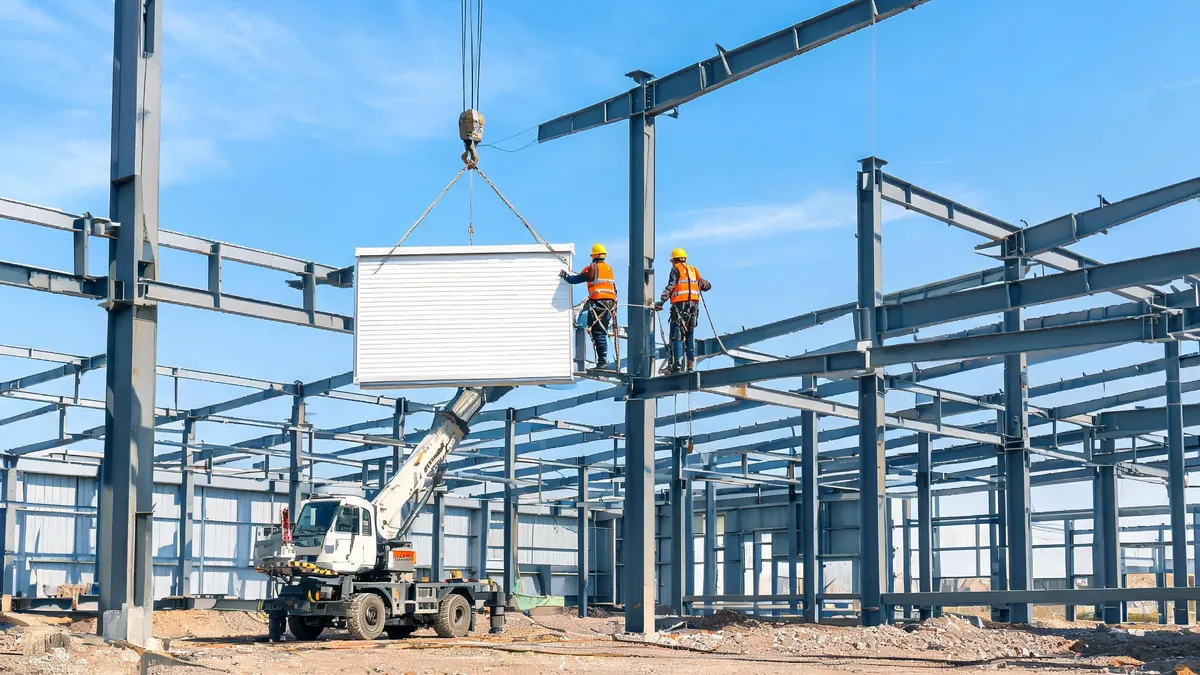
The sequence that controls this layer: fix the use class and storage plan first, let the local consultant state the fire requirement, then ask suppliers to quote the envelope and protection against that requirement. Quoting “standard cladding” without a stated fire class guarantees a change order at the approval stage. If the project is in a hot climate, the insulation and heat design decisions interact with the fire spec as well — the UAE hot climate warehouse guide covers the insulation side of that balance.
Free zone vs mainland: two different cost structures
Where the building sits decides the import economics. The UAE’s free zones — Jebel Ali, Dubai South, KEZAD and the other designated zones — offer customs arrangements designed to keep goods moving through re-export and logistics activity; mainland projects import through the standard customs route. The practical differences for a steel building buyer:
| Cost line | Free zone project | Mainland project |
|---|---|---|
| Customs duty on the steel import | Normally no duty while goods stay within the zone regime | Duty normally applies on the landed value at import |
| VAT | 5% VAT treatment follows the zone and supply rules | 5% VAT applies through the supply chain |
| Building approval route | Zone authority approval plus relevant fire approval | Municipality permit plus civil defense approval |
| Lease and land status | Typically leased within the zone | Freehold or long lease depending on the area and buyer status |
| Who the building serves | Operations inside the zone and re-export | Local market operations without zone restrictions |
The rule of thumb is not “free zones are cheaper” — it is “the two routes have different rules, and the building must match the operating license.” A mainland trading company that needs a warehouse beside its mainland operation cannot simply build in a free zone and call it the same project. Confirm the duty and VAT treatment with a customs broker for your specific goods classification and buyer status before you compare supply quotes, because the duty line alone can move the total by a meaningful percentage of the steel value.
Price protection: validity, escalation and currency
A steel building is not bought off a shelf. Between quotation and shipment, the fabricator buys steel plate, the freight market moves, and the currency pair you are paying in changes. Suppliers protect themselves with quote validity periods, and buyers protect themselves with clear rules for what happens when the market moves inside the project window.
Three contract points to settle at the quote stage:
- Validity. A written quote states how long the price holds — typically weeks, not months. If your project will not order for a quarter, ask the supplier to re-confirm the price before you budget on the old number.
- Escalation rules. For projects with long fabrication windows, agree in writing how steel price movements are shared. Some contracts hold the price firm; others include an adjustment linked to a published steel price index or a stated mechanism. Neither is wrong — the mistake is not having the rule until the market moves.
- Currency and payment terms. Quotes in USD, EUR or CNY each carry different exchange risk for a buyer paying from AED. The payment schedule — typically a deposit with the order and the balance against documents or milestones — is itself a cost line when letters of credit, bank charges and timing are included. The practical comparison of TT, LC and incoterm effects on delivered price is covered in our payment terms guide.
A quote that is valid for 60 days with a stated escalation rule is easier to compare than a quote that is “valid today.” Ask every supplier for the same validity and the same escalation position, then the price differences you see are structure and freight — not timing games.
Quick question buyers ask: “What happens if steel prices drop after I sign?” — That depends on the clause you signed. A firm-price contract protects you both ways; an escalation contract normally moves with the market in both directions or only up, depending on how it is written. Read the direction of the clause before you sign, and if the market is falling, ask whether the contract can be re-quoted at the lower level rather than assuming it.
What to ask before comparing UAE quotes
Set the comparison basis before you collect numbers. The checklist below mirrors the questions we ask on every Gulf project and turns a basket of quotes into a like-for-like comparison:
| Question | Why it changes the price |
|---|---|
| Which design code is the quote based on? | Local review effort and possible member changes |
| Which incoterm and port? | Freight, insurance and clearance split |
| Is the cladding spec fire-rated and to what class? | Envelope cost and approval outcome |
| What validity and escalation rule applies? | Whether the number survives the project window |
| Does the scope include erection or supply only? | Erection is a separate local contract on most projects |
| Are anchor bolts and base plates included? | Classic exclusion that reappears as an extra |
| What drawings does the supplier provide for local approval? | Engineering review time and fees |
| Free zone or mainland delivery? | Duty and VAT treatment differ |
Use the same answers for every supplier. When the basis is identical, the differences that remain are the real ones — fabrication quality, coating specification, engineering depth and the honesty of the exclusions list. For a deeper look at which factory quote variables matter most in the Gulf market, the UAE cost drivers article and the Jebel Ali clearance and erection budget guide break the layers down further.
Planning the budget: ranges with the factors that move them
Because steel prices, freight rates and compliance requirements move, any number printed here would be out of date before the article is indexed. The useful way to budget a UAE steel building is to plan in bands and then tighten each band with current quotes:
- Structure package. The steel building price in UAE for a mid-size warehouse normally lands in a wide planning band once delivered to port — the band moves with tonnage per square meter, coating specification, steel plate prices and the freight route, which is why the same building can be quoted very differently in different months.
- Local compliance and certification. Budget the local engineering review, permit fees and fire approval as a separate professional-services line; the fee structure is set by the local consultants and authorities and varies with project complexity.
- Fire-rated upgrades. Only quantifiable once the use class and storage plan are fixed — the swing between a standard envelope and a fully fire-rated, sprinklered warehouse is one of the largest variables in the whole project.
- Import duty and VAT. Duty normally applies on the landed value for mainland imports at the prevailing rate for the goods classification; VAT is 5%. Confirm both with a customs broker for the specific shipment.
- Erection. A separate local contract priced by tonnage and building complexity; local labor and crane markets set the rate.
- Contingency. Hold a working contingency for steel market movement between quote and shipment unless the contract fixes the price firmly.
When you ask suppliers for current numbers, ask for the same building, same coating, same incoterm and same validity — then apply the local layers above on top of every quote. That process turns “steel building price in UAE” from a search phrase into a project budget you can defend.
Site conditions that change the total: soil, foundations and access
The steel price is quoted on the assumption that the ground behaves; the total project cost is decided by whether it does. Coastal sites in the UAE are frequently underlain by sabkha — salt flats formed in arid coastal conditions — or by made ground and fill, and both can be problematic for foundations. Sabkha soils are salt-laden and often wet near the surface, which is aggressive to plain concrete and unprotected steel; fill ground may be loose and need compaction or deeper foundations before footings can bear on it. None of this changes the factory price of the building, but it changes the foundation design, the concrete specification, the corrosion protection on embedded steel and the site schedule.
Run a geotechnical investigation before you finalize the budget, and share the findings with both the local foundation engineer and the steel supplier. Two practical consequences follow for the steel contract: anchor bolt projections and base plate details are sometimes adjusted when the foundation system changes, and the coating specification on buried or embedded steel may need upgrading in aggressive soil. The supplier cannot price either adjustment until the soil report exists, so the sequence — soil investigation first, then steel design freeze — protects the budget better than ordering steel on assumed ground conditions.
Access is the second site variable. Most UAE industrial zones are built for heavy delivery and crane work, which is why logistics buildings cluster there. If the project sits on a less developed plot, confirm the route for long trucks and the crane standing area before you commit to an erection plan — a site that cannot take a delivery truck changes the logistics cost more than any line in the factory quote.
Common mistakes in UAE steel building budgeting
- Comparing quotes on different incoterms. FOB and DDP numbers for the same building can differ by the whole freight and clearance cost. Convert every quote to one basis before comparing.
- Ignoring the local engineer review. The stamping and revision cycle is a real fee and a real schedule item. Ask for the drawing package that minimizes it.
- Quoting cladding without a fire class. The cheapest envelope is rarely the approvable one for the building’s use. Fix the fire requirement before the envelope is priced.
- Assuming free zone means duty-free for every use. Zone benefits apply to the zone regime and its license. Check the operating model, not the brochure.
- Letting quote validity expire mid-budget. A price that was right last quarter is a planning number, not a commitment. Re-confirm before you commit project funds.
- Forgetting that erection is a separate contract. Steel supply quotes usually stop at delivery. Local erection, crane hire and supervision belong in the budget from day one.
FAQ
What does the steel building price in UAE usually include?
A factory quote normally covers design, fabrication, coating and delivery to the agreed incoterm — often the port. Local engineering certification, permit fees, fire-rated upgrades, import duty, VAT and erection are separate layers that buyers budget on top of the steel price.
Do I need local approval for a steel building in the UAE?
Yes. Projects run through the municipal building permit process of the emirate where the building is erected, and most industrial buildings also need fire and life safety approval from the local civil defense authority. Overseas structural drawings are normally reviewed and certified by an engineer registered in the UAE before approval.
Are steel buildings in UAE free zones cheaper than on the mainland?
Not automatically. Free zone projects normally avoid customs duty on goods that stay within the zone regime, but the building must match the zone operating license, and mainland projects follow the standard duty and VAT route. Compare the duty, VAT, lease and approval position for your specific project before choosing.
How can I protect my budget from steel price increases?
Ask every supplier for the same quote validity and a written rule for price movement — either a firm price for the project window or a stated escalation mechanism. Then re-confirm the price before you commit funds, and hold contingency if the fabrication window is long.
Is the fire-rated cladding really necessary for a steel warehouse in the UAE?
Whether it is necessary is decided by the authority’s review of the building’s use, height, area and storage, not by preference. The practical answer is to fix the use class and storage plan early, let the local consultant state the fire requirement, and price the envelope against that requirement instead of discovering it at approval.
Get a UAE project quote priced on the same basis
A steel building price in UAE only means something when every quote answers the same questions: code, incoterm, fire class, validity and exclusions. Once the steel package is on a comparable basis, the remaining work is local — approvals, fire compliance and erection — and those are manageable when they are on the table from the start.
Send your UAE project footprint and use class to our team for a quotation with the design code, coating and incoterm stated on one basis, or review the prefab steel warehouse range to match a standard design to your project first.
