
Steel Warehouse in UAE: Hot Climate Design, Insulation and Delivery Routes

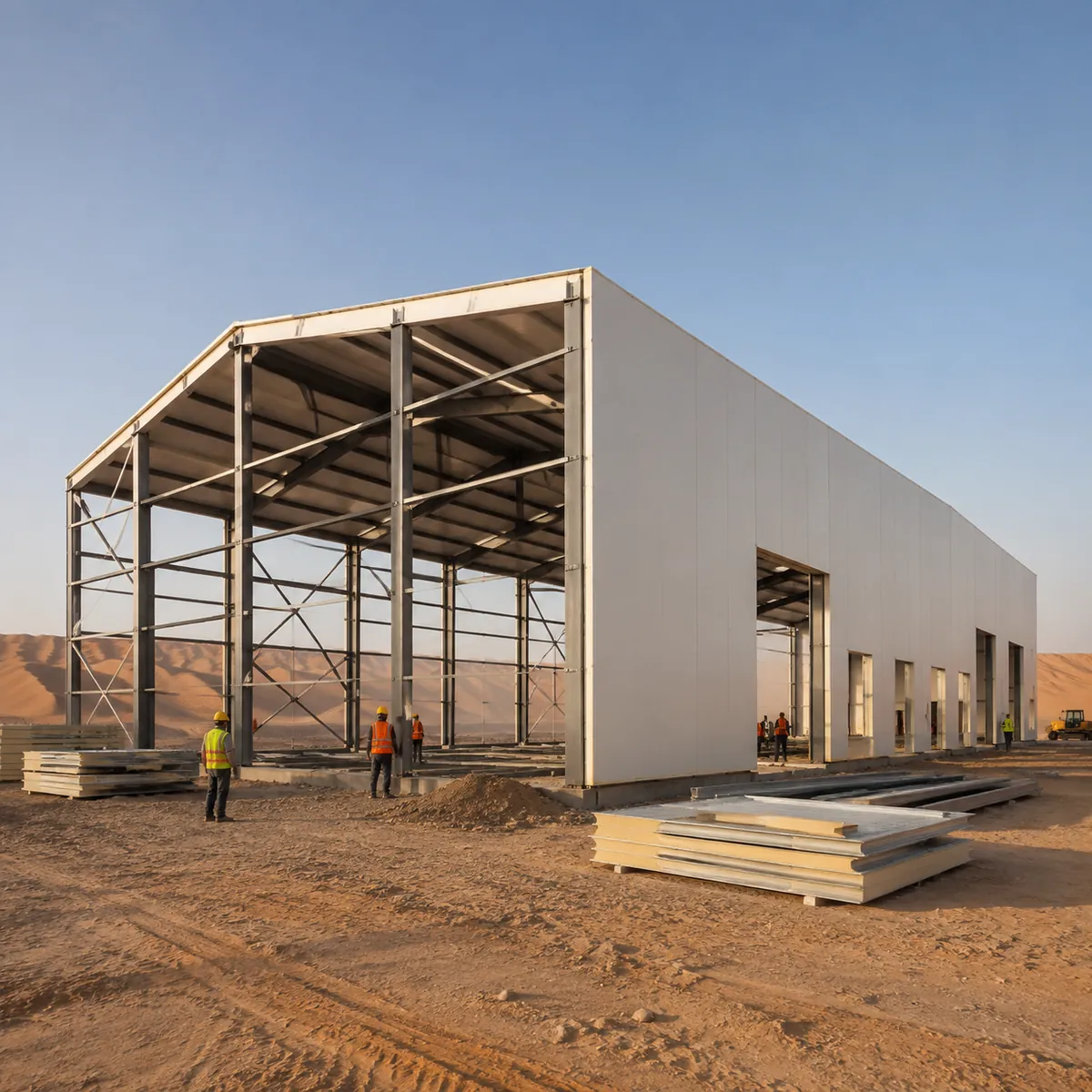
A steel warehouse in UAE is not the same building as a steel warehouse in Europe or North America. The design has to absorb extreme heat, humid coastal air, sand abrasion, and a delivery route that usually runs through Jebel Ali, Khalifa Port, or a free-zone logistics park. Buyers who ignore these four conditions during design end up paying for rework later: condensation under the roof, corrosion on coastal sites, or insulation that cannot keep the interior usable in July. This guide walks through the hot-climate design, insulation and delivery decisions that should be settled before you request a quote.
Why UAE Warehouse Design Starts with Heat, Not Steel
The structural frame of a steel warehouse in UAE is rarely the difficult part. Portal frames, purlins and bracing are designed with the same engineering methods used anywhere. What changes the building is the environment it sits in: summer temperatures regularly pass 45°C, the sun loads the roof for most of the day, and the temperature swing between day and night is large enough to cause condensation problems inside an uninsulated envelope.
That is why the design conversation for a UAE warehouse should start with the roof slope, insulation level and ventilation strategy, then move to the steel section sizes. A taller roof slope sheds sand and rain more easily, insulation keeps the interior temperature stable, and ventilation removes the heat that builds up under the roof sheet. Confirm the local design conditions with an engineer who knows the region, and state your expected operating temperature in the RFQ so the supplier can size the envelope accordingly.
Is a steel warehouse too hot in the UAE summer?
An uninsulated steel building can become very hot inside during summer because the roof absorbs solar heat and radiates it into the space. With insulated sandwich panels, reflective roof coating, and roof ventilation, a warehouse can stay workable without refrigeration — but do not expect air-conditioned comfort. For storage of heat-sensitive goods, specify insulated panels and mechanical ventilation from the start; retrofitting them later is more expensive.
Roof and Wall Insulation: What Works in 45°C+ Conditions
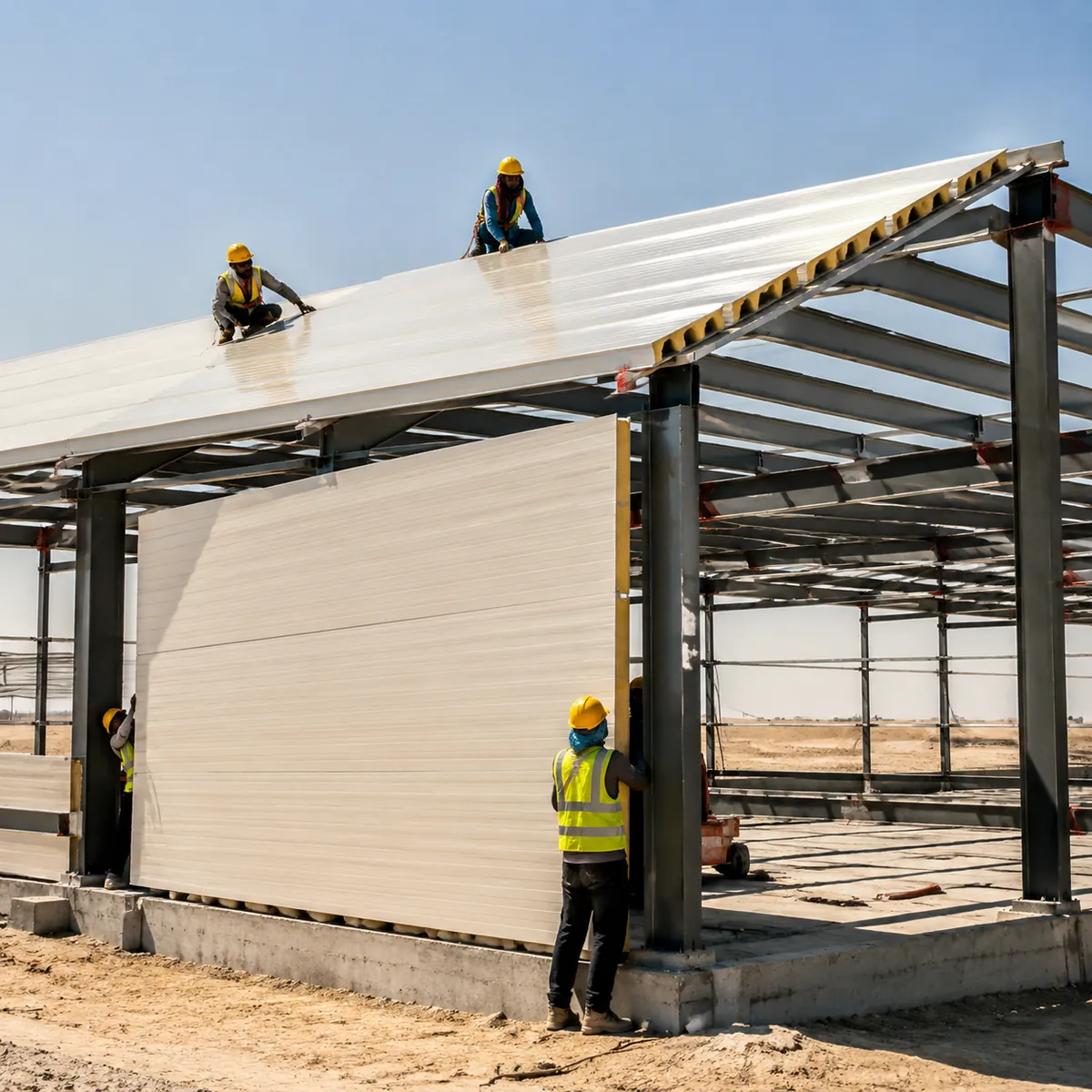
Insulation is the single biggest factor in how a UAE steel warehouse performs. Two common approaches are insulated sandwich panels (a foam or rock-wool core between two steel sheets) and single-skin cladding with separate insulation liner trays. For hot climates, the important parameters are the insulation thickness, the facing material, and the detailing at joints where condensation forms.
On the roof, a light-colored or reflective finish reduces solar gain. On walls, sandwich panels are popular because they combine structure, insulation and finish in one component and install fast. Ask the supplier for the insulation specification in the quote, not as an afterthought — the difference between a thin and a thick panel shows up directly in the cooling load of the building.
Sand, Humidity and Corrosion: Coatings That Survive the Coast
UAE sites vary from inland desert (dry, sandy, high thermal load) to coastal cities like Dubai and Abu Dhabi (humid, salty air, corrosion risk). A warehouse near the coast needs a better corrosion protection system on the steel frame than one in the middle of the desert. The standard protection for an export steel structure is usually hot-dip galvanizing or a paint system with a specified film thickness; coastal projects often require the heavier option.
Sand also affects the building mechanically: it scours cladding, blocks roof drains, and gets into sliding door tracks. Roof and wall drainage should be designed with this in mind — larger gutters, fewer blockable points, and detailing that lets sand blow through rather than accumulate. These are small decisions, but they decide how often the building needs maintenance.
Delivery Routes: Ports, Free Zones and Site Logistics
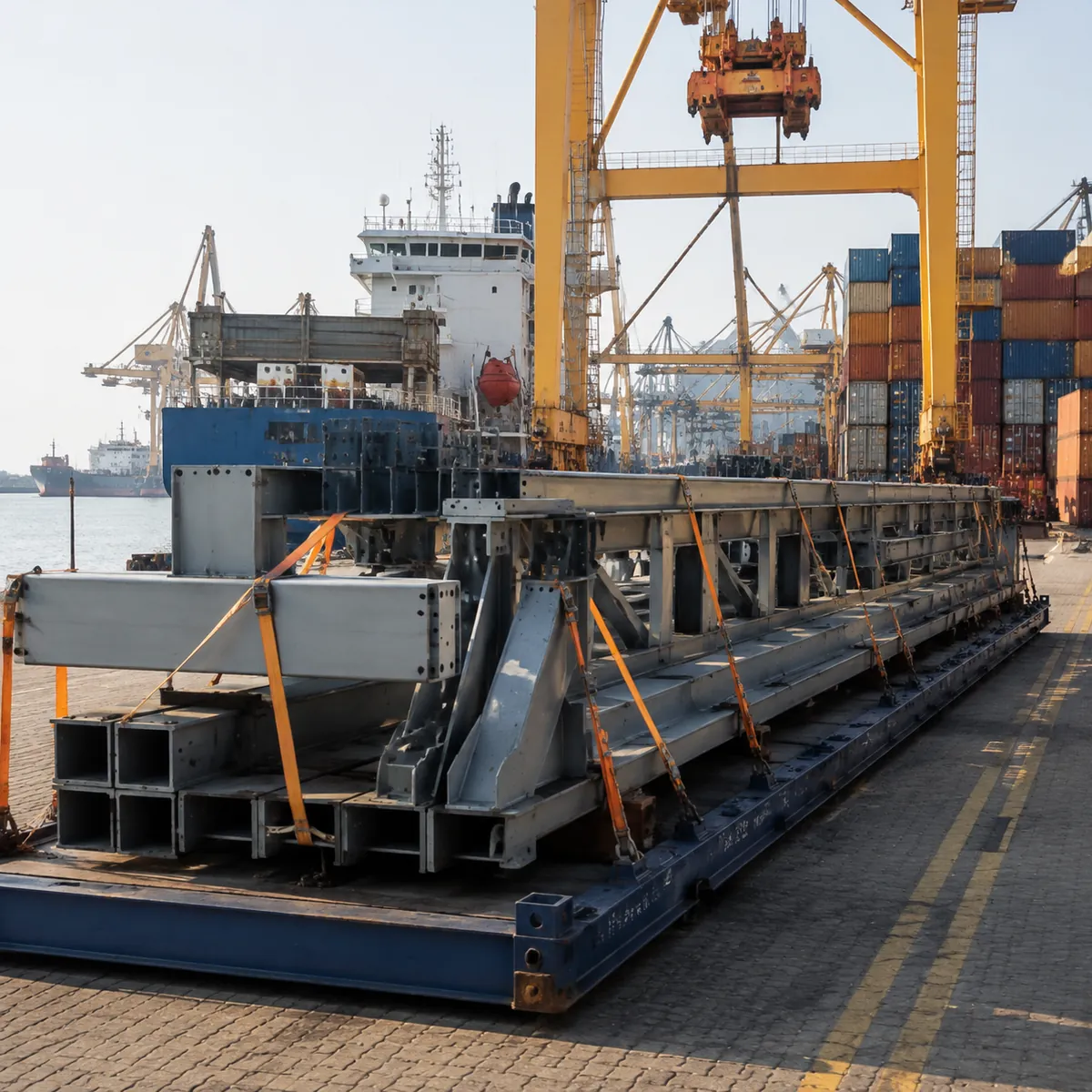
Most prefab steel warehouses for UAE projects ship as loose components or partially assembled frames and erect on site. The common entry points are Jebel Ali in Dubai and Khalifa Port in Abu Dhabi; many buyers import through a free zone such as JAFZA, Dubai South or KIZAD to simplify customs and duties. If you are new to importing steel structures, confirm with your forwarder which port and customs regime fits your project, because the paperwork differs.
Delivery planning should also cover inland transport: frames travel as flat-rack or break-bulk cargo, and oversize members need trucking permits on some routes. Ask the supplier for a packing list and member dimensions before shipment so your logistics partner can arrange the right trucks and cranes. For a fuller picture of warehouse projects in the region, see our UAE prefab steel warehouse free zone guide.
How are steel structure components delivered to a UAE site?
Usually as knocked-down components: columns, rafters, purlins, cladding and fasteners packed for container or flat-rack shipping, then erected with a mobile crane at the site. The supplier provides the erection drawings and, if agreed, an erection supervisor. Check the delivery terms in your contract — whether the price covers CFR port, DDP site, or only the ex-works frame — because that changes who arranges customs and inland transport.
What to Send a Supplier for a UAE Warehouse Quote
A complete inquiry gets a more accurate quote. At minimum send: the building footprint (width, length, eave height), the use of the building, the site location, and the local design conditions you need met. Add any special requirements such as insulation level, roller shutter doors, mezzanine floors, or crane columns. The table below shows how each piece of information changes the design:
| Design consideration | Why it matters in UAE | What a supplier will ask |
|---|---|---|
| Roof slope | Sheds sand and rain; affects solar load | Minimum slope or local practice |
| Insulation thickness | Controls interior temperature and condensation | Panel type and core thickness |
| Coastal location | Salty air raises corrosion risk | Site distance from the coast |
| Free zone vs mainland | Changes customs and duties process | Import address and regime |
| Ventilation | Removes trapped roof heat | Ridge ventilators, louvres, fans |
If your project also needs site offices, guard houses or worker accommodation next to the warehouse, a container house supplier can deliver those as separate prefab units — a common combination on UAE logistics and industrial sites.
FAQ
Are steel buildings common in the UAE?
Yes. Steel warehouses, workshops and industrial buildings are widely used in UAE logistics hubs, industrial zones and free zones because they erect fast and suit large clear spans. The frame is the same as elsewhere; the difference is the hot-climate envelope design.
What insulation is best for a steel warehouse in a hot climate?
Insulated sandwich panels with a reflective or light-colored facing are a practical choice for walls and roofs. The right thickness depends on the building use and the temperature you need to maintain — ask the supplier to confirm the specification against your operating requirements.
Do I need to worry about condensation in a UAE steel warehouse?
Yes. Large day-night temperature swings can cause condensation under the roof sheet in humid coastal areas. A proper insulation system with vapor barriers and ventilation detailing prevents this; leaving the envelope uninsulated is the common source of the problem.
How long does it take to get a UAE steel warehouse delivered?
It depends on design approval, fabrication schedule and shipping time. A standard warehouse can often be fabricated and shipped within a few weeks after drawings are approved, with erection taking days rather than weeks. Ask the supplier for a written timeline with milestones before signing.
Get a hot-climate steel warehouse quote for your UAE project. Send your building size, site location and operating requirements, and our engineers will confirm the insulation, coating and delivery route options before pricing the frame.