
UAE Prefab Steel Warehouse Guide for Free Zone Logistics Projects: Wind, Heat, Fire, Cost, and Fast Erection

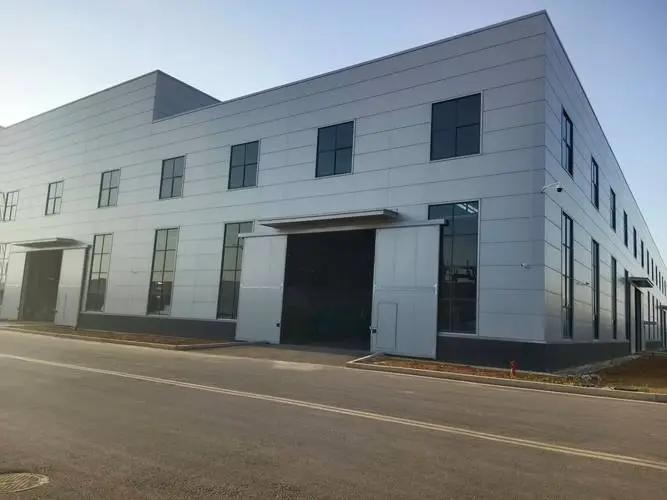
UAE Prefab Steel Warehouse Guide for Free Zone Logistics Projects: Wind, Heat, Fire, Cost, and Fast Erection
UAE prefab steel warehouse procurement is not only a price check. For a warehouse, workshop, hangar, or factory steel frame, the buyer must match span, bay spacing, loading, corrosion class, fire route, and delivery schedule before the first ton of steel is cut. This guide is written for engineering purchasers, EPC contractors, architects, industrial park owners, and project sponsors planning buildings in UAE. The focus is practical: what to specify, what to ask a supplier, what affects cost, and how to reduce change orders after shipment.
SteelStructurePrefab.com supplies pre-engineered steel buildings for export projects, including Prefab Steel Warehouse, workshops, industrial sheds, poultry buildings, and aircraft hangars. Our design team prepares drawings for approval, shop fabrication, container loading, and site erection by local crews. For UAE, the design conversation should begin with climate, authority requirements, and the intended business use of the building.
1. Project Brief for UAE: Start with Use, Site, and Approval Path
A good UAE prefab steel warehouse enquiry starts with a project brief that an engineer can read without guessing. State the city, nearest port, exact site coordinates if available, soil report status, building use, clear span, eave height, required clear height under crane hook, fire compartments, door sizes, dock levelers, ventilation, insulation, and any future expansion. For free zone logistics, e-commerce fulfillment, cold-chain support buildings, and light industrial storage in Dubai, Abu Dhabi, Sharjah, JAFZA, KIZAD, and RAKEZ, those choices decide the column grid and the roof system.
In UAE, the owner normally works with a local architect or consultant who submits civil drawings and coordinates authority comments. The imported steel supplier should support that consultant with structural calculation notes, material certificates, welding records, bolt grades, coating data, packing lists, and erection drawings. Check our Quality Control page when you review factory documentation expectations.
- Confirm the building function: storage, production, maintenance, hangar, or livestock.
- List equipment loads: cranes, conveyors, solar panels, pipe racks, sprinklers, HVAC units, and mezzanines.
- Define the finish: single skin sheet, sandwich panel, skylight percentage, louvers, ridge ventilator, or insulated roof.
- Agree who supplies anchor bolts, gutters, downpipes, trim, sealants, and site fasteners.
2. Local Climate, Codes, and Engineering Basis
The building must be designed for hot marine desert climate, high UV, airborne chlorides near the Gulf, occasional sand storms, and roof drainage demands during short heavy rain events. The governing documents and authority route often include UAE Fire and Life Safety Code, Dubai Municipality structural submission practice, Abu Dhabi International Building Code references, and local civil defense review. Buyers should ask for a design basis sheet before comparing offers. This sheet should state the code edition, load combinations, material standards, deflection limits, connection method, paint or galvanizing system, and drawing language.
Authoritative references for planning include UAE Ministry of Industry and Advanced Technology Dubai Municipality building services UAE Fire and Life Safety Code portal. These links do not replace a local engineer, but they help overseas purchasers understand the approval environment. The supplier should not promise approval without the local consultant’s stamp; instead, the supplier should provide clear data that helps the consultant complete submission.
Recommended design data to include in the RFQ
- Dead load of roof, wall, insulation, ceiling, and service lines.
- Live load for roof maintenance and access walkways.
- basic wind speed commonly reviewed around 45 m/s or project-specific values, low snow load, seismic category checked by emirate and soil report, and high thermal movement allowances.
- Crane class, wheel load, runway beam scope, and lateral surge forces.
- Deflection limits such as L/180, L/240, or stricter limits for insulated panels and overhead doors.
3. Structural Layout: Portal Frame, Clear Span, and Bay Spacing
Most export steel warehouses and workshops use welded H-section portal frames with cold-formed Z or C purlins. A single span of 18-36 m is common for storage and light production. Multi-span layouts reduce rafter weight but add internal columns, which may interfere with forklift routes or production lines. In a UAE industrial park, the best layout is often the one that keeps truck movement simple and leaves space for later extension.
| Item | Typical choice | Buyer check | Effect on cost |
|---|---|---|---|
| Clear span | 18-36 m single span; larger on request | Racking aisles, crane movement, aircraft or vehicle clearance | Wider spans increase rafter weight and transport planning |
| Bay spacing | 6-9 m for many warehouses | Panel length, purlin size, door position, dock spacing | Longer bays reduce frames but may increase secondary steel |
| Eave height | 6-12 m; higher for storage or cranes | Clear height, fire sprinkler headroom, ventilation volume | Higher columns increase wind area and bracing needs |
| Roof slope | 1:10 to 1:20 depending on rainfall and cladding | Drainage, gutter size, insulation, future solar | Low slope needs better sealing and maintenance access |
For buyers comparing quotations, ask each supplier to mark the main frame weight, secondary steel weight, roof and wall area, and accessories. A low price may simply omit bracing, flange plates, gutters, downpipes, ridge caps, end wall framing, or erection bolts. The Steel warehouse building cost guide explains the budget drivers behind these differences.
4. Material Specifications and Fabrication Control
A professional UAE prefab steel warehouse package should state steel grade and standard. Common export choices include Q355B or ASTM A572 Grade 50 for main frames, Q235B or ASTM A36 for selected secondary parts, galvanized Z purlins, high-strength bolts such as 10.9 grade, and galvanized or stainless fasteners for cladding depending on exposure. The exact mix depends on the engineer’s calculation and the owner’s corrosion requirement.
Fabrication points that reduce site risk
- Cutting and drilling by CNC equipment to keep hole position consistent.
- Submerged arc or gas shielded welding with inspection records for main members.
- Trial assembly or dimensional checks for large trusses, crane brackets, and special nodes.
- Clear part marks stamped or painted on every member, matching erection drawings.
- Container loading plan that separates anchor bolts, panels, trims, and frame steel.
Before shipment, request mill certificates, paint data sheets, bolt certificates, packing photos, and a member list. The same discipline applies to Steel Structure Warehouse product range and Steel Workshop product range projects.
5. Surface Treatment, Anti-Corrosion, and Cladding Choices
Corrosion design should match the site, not a brochure. Inland dry locations may accept shot blasting to Sa 2.5 and epoxy zinc-rich primer with a dry film thickness around 60-80 microns for sheltered steel. Coastal, chemical, poultry, or humid sites need stronger systems such as hot-dip galvanizing for secondary members, heavier paint build-up, better fasteners, and careful detailing at laps and gutters.
| Exposure | Main frame finish | Roof/wall option | Procurement advice |
|---|---|---|---|
| Dry inland industrial park | Epoxy primer plus top coat if exposed | 0.45-0.6 mm color steel sheet | Good for cost-sensitive storage buildings |
| Humid or coastal site | Higher DFT paint or galvanizing on selected parts | Aluzinc sheet or sandwich panel | Specify stainless or coated fasteners near salt air |
| Food or poultry building | Paint system with easy wash zones | PU/PIR sandwich panel, FRP skylight as needed | Add ventilation, vapor control, and drainage details |
| High visual standard facility | Primer plus polyurethane top coat | Insulated wall panel and neat trim | Useful for tenant-facing industrial parks |
Cladding is a technical decision. Single skin sheet is economical, fast to install, and suitable for many storage buildings. Sandwich panels improve temperature control and worker comfort. Skylights reduce daytime lighting cost but need careful percentage limits, UV quality, and fall protection planning. Gutters should be sized for local rainfall intensity, not copied from another country.
6. Installation Sequence and Site Schedule
Prefab steel saves time when civil works, anchor bolt setting, shipping, and erection planning are aligned. A typical 3,000-8,000 m² building can often be erected by an experienced crew in 6-12 weeks after foundation readiness, depending on height, crane access, weather, and cladding type. The factory fabrication period is often 25-45 days after drawing approval for standard sizes, while shipping time depends on port routing and customs clearance.
Practical erection sequence
- Check anchor bolt coordinates, elevation, and concrete strength before containers arrive.
- Sort members by grid line and frame number; protect panels from ground moisture.
- Lift columns and rafters, install temporary bracing, then tighten main bolts after alignment.
- Install roof purlins, wall girts, tie rods, knee braces, and permanent bracing.
- Fit roof sheet, insulation, skylights, ridge caps, wall panels, doors, gutters, and downpipes.
- Complete final bolt torque check, paint touch-up, water test, and handover file.
Owners should appoint a site manager who understands steel erection tolerances. If local crews are new to pre-engineered buildings, request remote guidance, marked drawings, and packing photos from the supplier. Our Factory Tour gives a quick view of fabrication and packing capability.
7. Budget Range and Cost Table for UAE
For early planning, 95-170 USD/m² FOB for main steel, roof and wall cladding, basic accessories; installed local budgets often add civil works, MEP, fire systems, duties, and crane cost. This range is not a final offer; it changes with steel weight, span, height, coating, panel type, doors, cranes, mezzanine, fire rating, and shipping market. Buyers should compare offers by bill of material, not only by square meter.
| Building type | Typical size | Specification notes | Budget signal |
|---|---|---|---|
| Logistics warehouse | 3,000-20,000 m² | Large doors, dock canopies, roof insulation, skylights | Low to medium steel kg/m² if no cranes |
| Steel workshop | 1,500-10,000 m² | Crane beams, higher eave, ventilation, wall openings | Medium to high due to crane and service loads |
| Factory building steel frame | 5,000-30,000 m² | Production lines, fire zones, office annex, MEP supports | Varies widely; early coordination saves redesign |
| Poultry or farm steel structure | 1,000-6,000 m² | Corrosion, insulation, ventilation, washable inner liner | Panel and ventilation choices drive price |
Request a quotation with two options: a baseline design and an upgraded anti-corrosion or insulation option. That approach gives the owner a clear capital decision instead of a vague discount discussion.
8. Procurement Checklist for Engineering Buyers
A strong RFQ protects both the owner and the supplier. It reduces assumptions and makes the quotation easier to defend to management, lenders, and local consultants.
- Site location, design code, wind, seismic, roof live load, snow if any, and soil report status.
- Plan dimensions, eave height, roof slope, bay spacing, crane data, mezzanine area, and future expansion side.
- Panel thickness, insulation type, skylight percentage, doors, windows, louvers, ventilators, gutters, and downpipes.
- Paint or galvanizing requirement, corrosion class, expected service life, and maintenance plan.
- Delivery terms such as FOB, CFR, or CIF; preferred destination port; container unloading limits.
- Documentation: calculations, GA drawings, shop drawings, packing list, certificates, and installation manual.
When the project is ready for budget review, send drawings or sketches through Contact Us. Include the target country in the message so the engineering team can check climate and logistics assumptions.
9. Common Buyer Questions
Can one imported steel building design be used in every city in UAE?
No. Even within one country, wind exposure, seismic zone, soil, fire access, and authority comments can change the design. Use a project-specific design basis.
What information is needed for a firm price?
At minimum: location, dimensions, height, load data, cladding type, openings, crane requirements, coating system, and delivery port. A sketch is enough for a first estimate, but final price needs approved drawings.
Should we choose painted or galvanized steel?
Paint is common for main frames in many inland buildings. Galvanizing is often preferred for purlins, humid areas, coastal sites, poultry buildings, and parts that are hard to repaint. The best choice depends on exposure and budget.
How long does installation take?
For a standard mid-size warehouse, site erection often takes 6-12 weeks after foundations are ready. Large spans, cranes, insulated panels, rain, limited site access, and inexperienced crews can extend the schedule.
Can the building be expanded later?
Yes, if expansion is planned in the first design. Tell the supplier which end wall or side wall should be removable, and reserve space for future columns, bracing, and drainage.
10. Final Purchasing Advice for UAE Projects
For a UAE prefab steel warehouse, the lowest square-meter number is rarely the safest choice. A better purchase decision compares design basis, steel weight, coating, cladding, accessories, drawing support, packing quality, and after-sales response. Ask the supplier to explain every exclusion in writing, especially foundation, erection, fire system, MEP, local permits, taxes, and import charges.
If the building will support a lease agreement, production launch, or logistics contract, place schedule risk beside price. Confirm drawing approval dates, fabrication slots, shipping plan, and local erection capacity before paying the deposit. A well-documented prefab steel structure building gives the owner speed, predictable material quality, and future flexibility when the specification is set correctly from day one.
11. Fire Strategy, Insurance Review, and Operational Safety in UAE
Fire planning should be discussed while the steel frame is still on the drawing board. A warehouse for plastic goods, textiles, tires, chemicals, food packaging, or e-commerce parcels has a different risk profile from a workshop for metal fabrication. The architect, fire consultant, insurer, and owner should agree storage height, commodity class, aisle width, access road, water tank, pump room, hydrant location, smoke venting, emergency exits, and compartmentation. These items affect the steel building because they add loads, openings, brackets, roof penetrations, and sometimes fire-rated wall lines.
For a UAE prefab steel warehouse in UAE, the owner should tell the supplier if sprinklers, pipe racks, cable trays, solar panels, ceiling fans, or smoke exhaust fans will hang from the roof. A light roof frame designed only for sheeting should not be asked to carry heavy services after shipment. If the insurance company requires FM-style roof uplift performance, non-combustible insulation, wider fire lanes, or higher fastening density, the requirement must be written into the purchase specification. The small cost of early coordination is usually far lower than drilling extra holes or welding unplanned brackets on site.
| Fire or safety item | Steel building interface | Question for the buyer | Supplier document |
|---|---|---|---|
| Sprinkler network | Hanger loads on rafters or purlins | What pipe size and spacing will be used? | Roof service load allowance and hanger detail |
| Smoke vents and fans | Roof openings, trimming steel, waterproofing | How many penetrations and what curb size? | Opening framing drawing |
| Fire exits | Wall girts, door frames, stairs, landings | Where are exit routes and assembly points? | Door schedule and wall framing plan |
| Mezzanine or office annex | Columns, beams, floor deck, stairs | Will people occupy this area daily? | Mezzanine load table and GA drawing |
12. Logistics, Container Loading, and Port Planning
Export packaging is part of the building quality. Long rafters, columns, bracing rods, purlins, panels, bolts, trims, and gutters must be packed so the receiving crew can unload safely and find parts without wasting days. For UAE, common routing may involve Gulf ports. The project team should confirm maximum container length, road restrictions near the site, crane or forklift availability, customs documents, and whether the site can store panels under cover.
A practical packing list should show container number, member mark, quantity, weight, and bundle dimensions. For large buildings, ask the supplier to load erection-critical items in the first containers when possible: anchor bolts, main frames for the first bays, high-strength bolts, bracing, purlins, and a starter set of roof sheets. This allows the erection team to begin while later containers are sorted. Buyers should also confirm spare fasteners, touch-up paint, butyl tape, sealant, and self-drilling screw quantities because these small items can delay handover if missing.
- Check whether rafters require splice joints to fit standard containers.
- Ask for waterproof wrapping on panels and edge protection on painted members.
- Keep bolts and small accessories in labeled steel boxes or strong wooden cases.
- Photograph each container before unloading to record transport condition.
- Store roof sheets on a slope, off the ground, with airflow to prevent wet storage stain.
13. Design Coordination with Civil Works, MEP, and Future Expansion
The steel frame is only one part of the asset. Foundations, floor slab, dock pits, drainage, electrical trenches, fire water lines, compressed air, waste water, and office blocks need coordination. The anchor bolt plan should be issued early to the civil contractor, but it should not be frozen before the final grid, column reactions, and base plate sizes are checked. In Jebel Ali, Dubai South, KIZAD, Sharjah industrial areas, and Ras Al Khaimah free zones, many projects face tight site schedules, so the owner should set a drawing approval calendar that includes the local consultant and the steel supplier.
Floor slab design is often missed in early steel building budgets. Forklift wheel loads, rack post loads, point loads from machines, joint layout, floor flatness, and moisture barrier all affect operation. The steel supplier can provide column reactions and base plate details, while the local civil engineer designs the slab and foundation based on soil data. If the owner plans solar panels, rooftop HVAC, bridge cranes, or later building extension, put those loads in the first structural model. Retrofitting capacity later is possible but rarely cheap.
Coordination questions to settle before fabrication
- Which side will receive truck docks, canopies, ramps, and dock levelers?
- Where will the office block connect to the warehouse wall?
- Will racking be fixed to the slab only, or will any bracing connect to the steel frame?
- Are there process openings, exhaust ducts, or wall penetrations for machinery?
- Which end wall must be designed as removable for a phase-two extension?
14. Quality Review Before Deposit and Before Shipment
Before paying the deposit, review the quotation line by line. It should identify the main frame steel grade, secondary steel grade, coating system, cladding thickness, insulation, fastener type, doors, windows, louvers, skylights, gutters, downpipes, ridge caps, trim, anchor bolts, and erection bolts. It should also state what is excluded. Exclusions are not a problem when they are clear; they become a problem when the owner assumes they are included.
Before shipment, ask for a pre-shipment file. This file should contain approved drawings, material certificates, bolt certificates, welding inspection notes, paint thickness records when available, packing list, loading photos, and installation notes. If the building has cranes or mezzanines, request separate drawings for those areas. For high humidity, coastal exposure, or aggressive industrial processes, ask for coating data sheets and repair procedures for site scratches. Good documentation helps the local engineer, customs broker, erection contractor, and maintenance team work from the same facts.
15. Sample Specification Summary for Tender Documents
The following outline can be copied into an early tender document and edited by the project engineer. It helps keep offers from different suppliers comparable.
| Specification line | Suggested wording | Reason |
|---|---|---|
| Design basis | Project-specific wind, seismic, roof live load, service loads, and local approval comments | Prevents generic design assumptions |
| Main frame | Welded H-section portal frame, grade stated in calculation, bolted site splices | Defines the primary structural system |
| Secondary members | Galvanized Z/C purlins and girts with sag rods and bracing as calculated | Controls roof and wall support quality |
| Cladding | Color-coated steel sheet or sandwich panel with thickness, coating mass, and insulation type stated | Affects heat, corrosion, fire, and price |
| Accessories | Doors, windows, louvers, skylights, gutters, downpipes, trims, sealants, fasteners, and anchor bolts listed | Avoids hidden scope gaps |
| Documents | GA drawings, shop drawings, packing list, certificates, and erection manual | Supports approval and site installation |
For management approval, add a one-page risk note covering authority review, climate design, coating choice, fire scope, shipping route, currency, and erection contractor readiness. This gives decision makers a clearer view than a single square-meter price and makes the steel building purchase easier to defend.