
Steel Warehouse Fire Protection: Sprinklers, Fire Walls and Insurance Implications

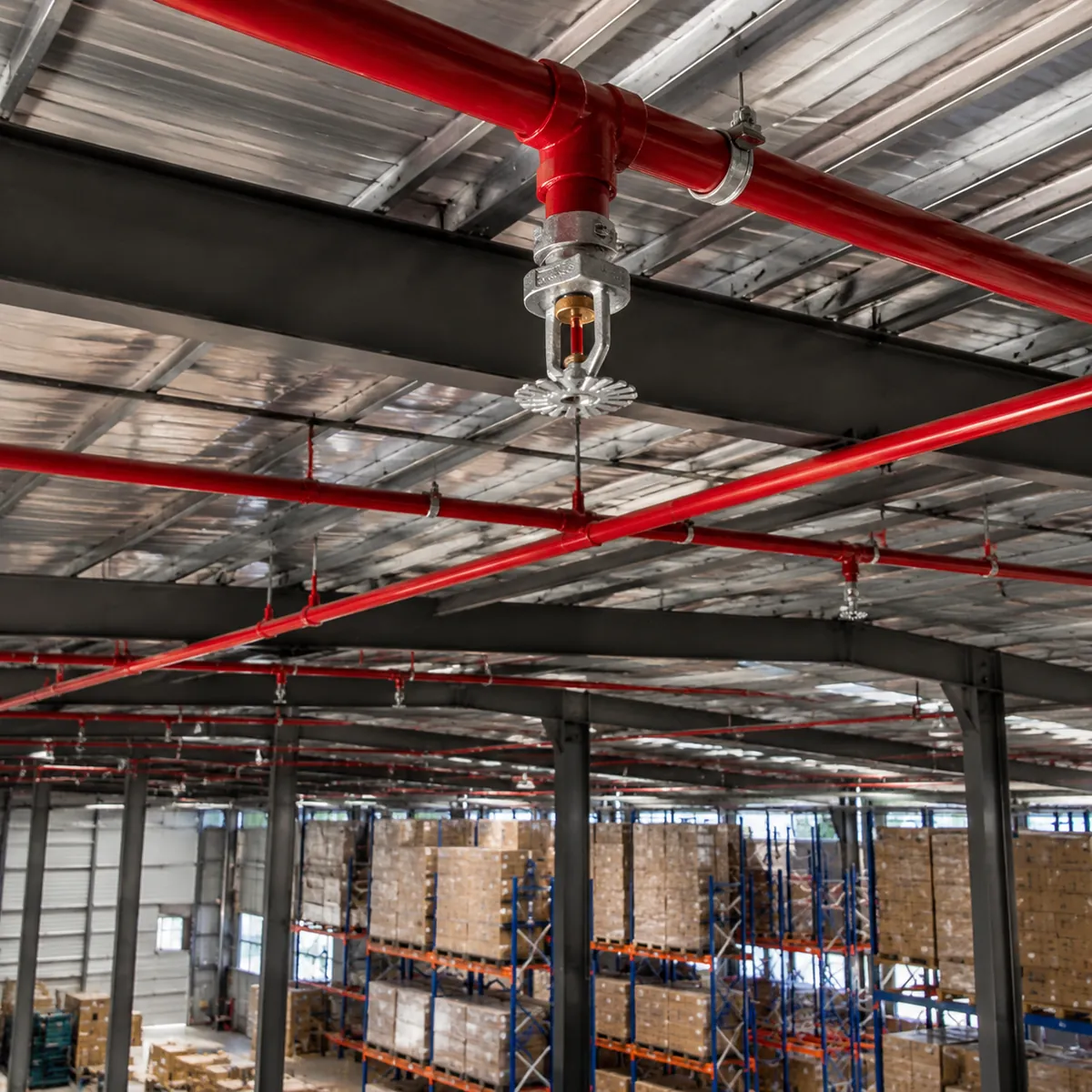
Fire protection for a steel warehouse comes down to three coordinated layers: sprinklers to control the fire, fire walls and compartmentation to limit its spread, and passive protection on the structure itself so the frame keeps its strength long enough for evacuation and firefighting. Bare structural steel loses a large share of its load capacity at temperatures above roughly 500 °C, so the design question is not whether to protect the frame, but how and where.
Why Steel Needs Fire Protection in the First Place
Steel does not burn, but it weakens when heated. In a warehouse fire, the frame is exposed to temperatures far above 500 °C within minutes, and unproteted columns or rafters can buckle before firefighters arrive. The fix is not one product — it is a fire strategy matched to the occupancy, the stored goods, and the local code’s required fire resistance rating for the structure.
Warehouses with high-value goods, racking, or combustible inventory are treated more strictly than low-occupancy shell buildings. Your insurance underwriter usually has opinions on this too, and those opinions can affect the premium more than the code minimum.
Sprinkler Systems: The First Line of Defense
Sprinklers are the most common fire suppression choice for steel warehouses because they attack the fire at its source and buy the structure time. The system must be designed for the hazard class of the stored goods — ordinary hazard for general storage, higher hazard for foam plastics, aerosols, or other high-heat-release materials.
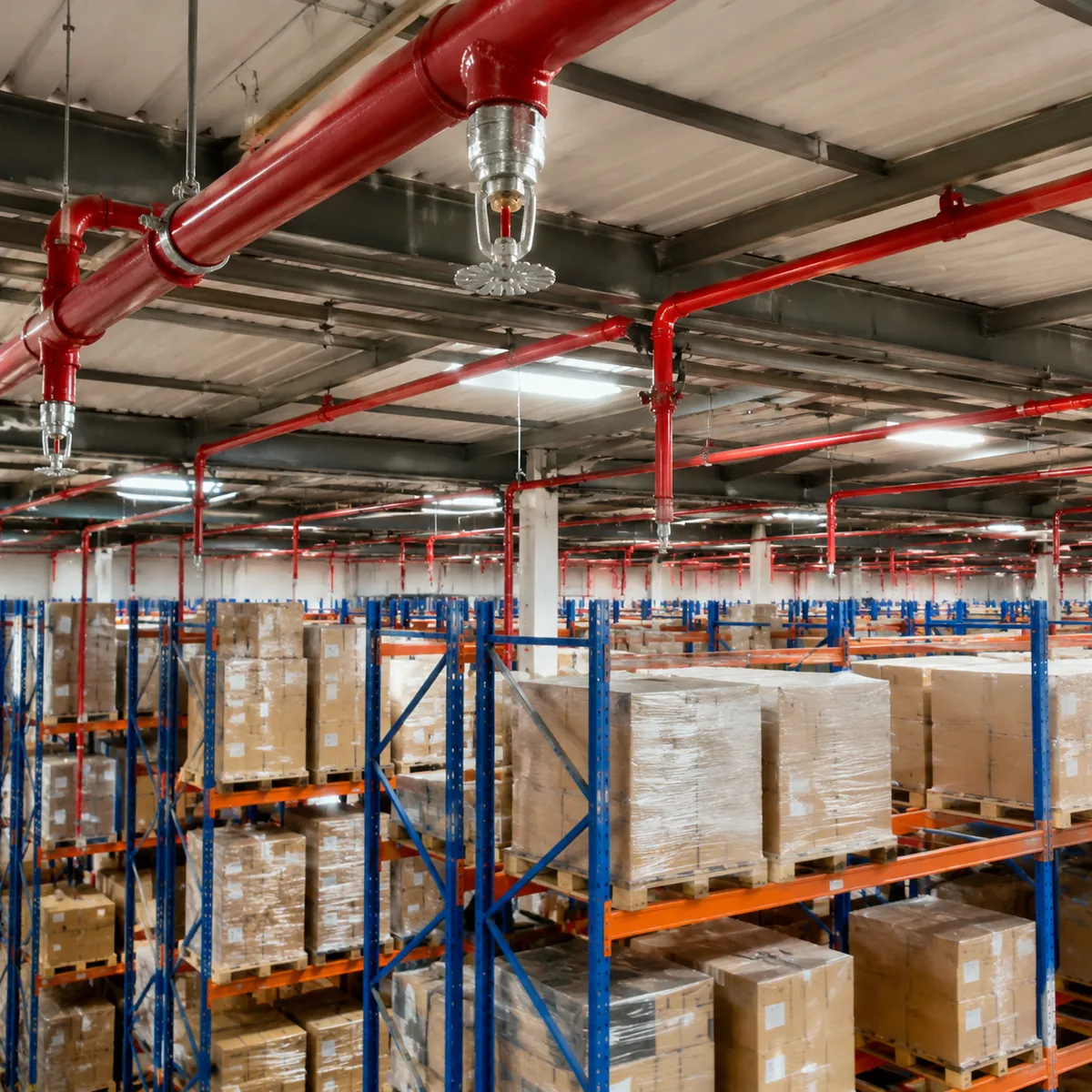
Key decisions include water supply (municipal or tank and pump), sprinkler head type and spacing, and whether the ceiling is high enough for standard response heads or needs ESFR (early suppression fast response) heads, which are common in racked warehouses with tall ceilings. Racking height and clearance below the roof drive the hydraulics, which is one reason fire protection is priced per project, not per square meter.
Fire Walls and Compartmentation
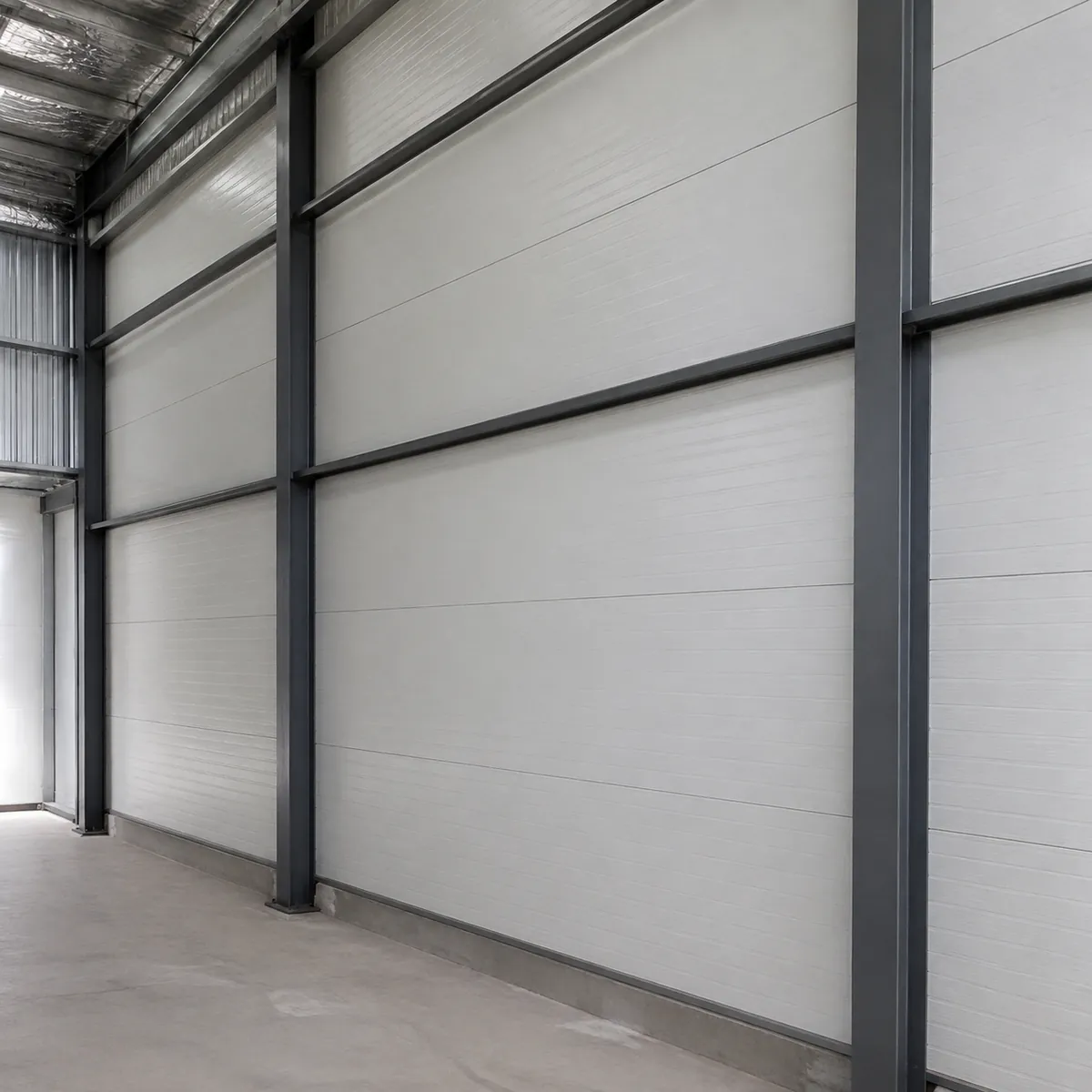
A fire wall divides a large warehouse into smaller fire compartments, so a fire in one section does not take down the whole building. Fire walls in steel buildings are typically masonry or fire-rated sandwich panels built to a defined fire resistance period, extending from foundation to roof and sealing all penetrations. If you are comparing cladding systems, our single skin vs sandwich panel guide covers the performance differences that matter for the envelope.
Compartmentation also affects your layout: doors in fire walls must be fire-rated and self-closing, conveyors and ducts need dampers where they pass through, and racking should not bridge the wall. When racking aisles align with fire walls, the protection detail gets more complicated and more expensive.
Passive Protection on the Structure
Where the code or insurer requires the frame itself to hold a fire rating, the options are:
| System | How It Works | Typical Fit |
|---|---|---|
| Intumescent coating | Paint that expands into an insulating char when heated | Exposed frames, architectural interiors |
| Board protection | Fire-rated boards fixed around columns and beams | Industrial interiors, low maintenance |
| Spray-applied fireproofing | Cementitious or mineral fiber sprayed on members | Hidden structure, fast application |
| Membrane protection | Fire-rated ceiling or lining beneath the roof | Enclosed office or mezzanine areas |
Each system has a different cost, appearance, and application speed. Intumescent coatings look clean but are sensitive to surface preparation; sprayed systems are fast but rougher in appearance. Your fire engineer should specify the rating and the system together.
Fire Clearances Around Racking and Equipment
Racking changes the fire risk picture because it creates vertical fuel arrays and can shield sprinkler discharge. Minimum clearances between racking and sprinkler heads, between racking and fire walls, and around electrical equipment are usually defined by code or the racking manufacturer’s fire guidance. Getting these clearances wrong at the design stage means either moving racks after installation or adding costly sprinkler modifications. Mezzanines add another layer: they create upper-level storage and change the egress and sprinkler geometry, which our mezzanine floor guide discusses alongside structural considerations.
Our racking integration guide covers column grids, floor loads, and fire clearances in one place — it is worth reading before you finalize the warehouse layout.
Insurance and Code Implications
Fire protection is one of the few building decisions where the insurer’s view can outweigh the architect’s. Insurers rate warehouses on occupancy, stored goods, racking, sprinkler protection, and fire wall separation, and the rating directly affects premiums and loss limits. A warehouse designed to the code minimum is not automatically insurable at a good rate.
Ask for a fire protection specification that states the hazard class, the sprinkler standard applied, the required fire resistance rating of the structure, and the fire wall locations. This specification is what your insurer and local authority review, so it should be complete before fabrication.
How to Specify Fire Protection with Your Steel Supplier
When requesting a steel building quotation, include the fire resistance rating required by your local code or insurer, the planned occupancy and stored goods, and the racking layout if known. The supplier can then detail the frame so that passive protection fits cleanly, and coordinate the sprinkler contractor’s requirements for head clearances and pipe routing through the frame. Changing the hazard class after the frame is designed can ripple through the whole project.
FAQ
Does a steel building need fire protection?
In most jurisdictions, the structural frame needs a defined fire resistance rating depending on the building size, occupancy, and local code. Small low-occupancy buildings may need little or no protection; large warehouses with combustible storage usually need sprinklers plus protected structure.
What is the difference between active and passive fire protection?
Active protection acts on the fire — sprinklers, alarms, and extinguishers. Passive protection is built into the structure — fire walls, fire-rated boards, and intumescent coatings that contain or resist the fire. A complete design uses both.
Are sprinklers mandatory in steel warehouses?
Not everywhere, but they are required for most large or high-hazard warehouses under national and local codes, and insurers frequently require them even where code does not. Check the applicable building code and your insurer before deciding.
Does intumescent paint really protect steel?
Yes, when applied to the manufacturer’s specification on properly prepared steel. The coating expands at high temperature into an insulating layer that slows heat transfer to the steel. Film thickness, surface preparation, and application conditions all affect performance.
How do I get a fire protection quote for my warehouse?
Ask your steel supplier for the structural fire rating requirements and your fire engineer or sprinkler contractor for the suppression scope, then combine both into the building budget. Fire protection should be specified before fabrication, not added afterward.
Design your warehouse with fire protection in mind. Send us the building size, occupancy, and local fire rating requirements, and we will engineer the frame and coordinate the protection details in the quotation.
