Steel Structure Supplier: In-House Fabrication vs Subcontracting — 7 Questions That Reveal Who Really Builds Your Building

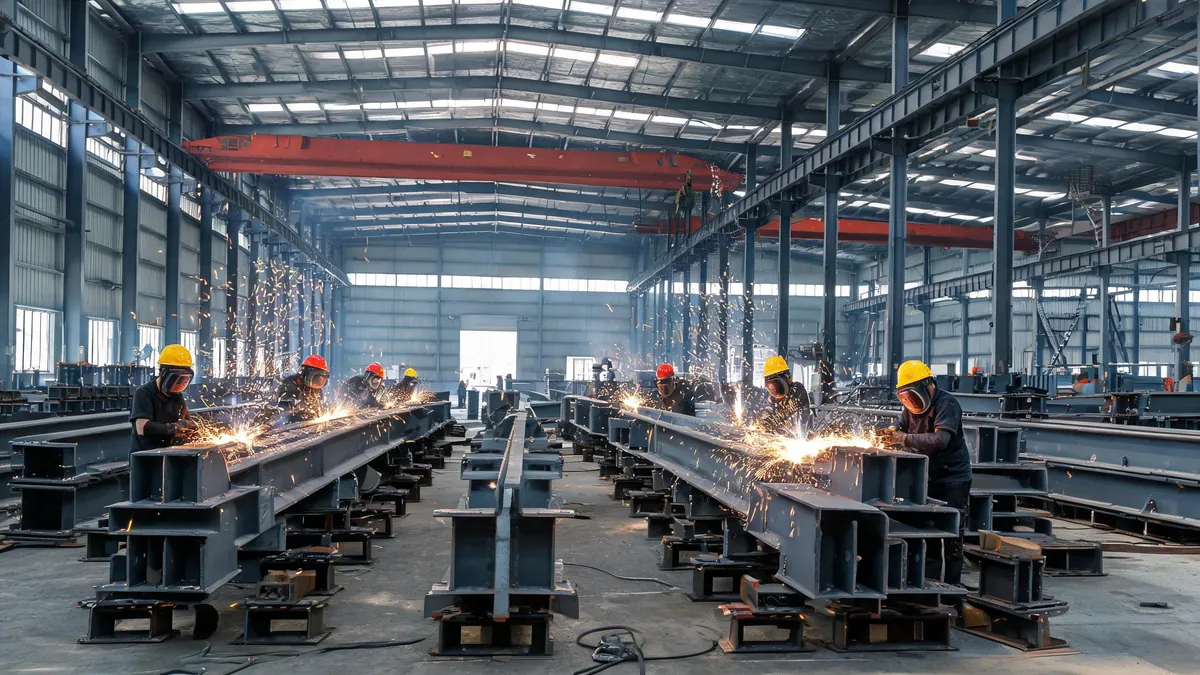
Whether a steel structure supplier actually fabricates your building in its own workshop — or quietly subcontracts part of the production to another plant — changes your quality risk, your schedule control and your ability to enforce a warranty. The direct answer to most buyers’ question is simple: you should not sign a contract until you know exactly who cuts, welds, blast-paints and packs the steel, and you should put that answer in writing. This guide gives you the seven questions that reveal who really builds your building, and shows what each answer means for price, inspection and delivery.
Why “We Are a Manufacturer” Does Not Mean “We Fabricate In-House”
In the steel building export market, “manufacturer” is used loosely. A company can call itself a steel structure supplier when it is a trading company with a design office, a full factory with its own production lines, or anything in between. In-house fabrication means the supplier owns and operates the workshop where your members are cut, drilled, welded, blasted and painted. Subcontracting means the supplier designs, sells and manages your project, but a separate factory — sometimes more than one — actually produces the steel.
Both models can deliver a good building. Some of the best-known prefab steel building brands in North America coordinate production across multiple plants and still ship reliable structures. But the two models expose the buyer to different risks, and those risks need to be managed differently. The problem is not subcontracting itself; it is subcontracting you do not know about, cannot inspect, and cannot hold accountable when defects appear.
Before you request pricing, it helps to separate the three roles in the supply chain. A steel structure supplier may combine all three, or split them across companies:
| Role | What the company does | Typical owner |
|---|---|---|
| Design / engineering | Frame calculation, drawings, connection design, approval documents | Supplier’s own engineers or an external design institute |
| Fabrication | Cutting, drilling, welding, assembling, blast cleaning, painting, packing | Supplier’s own workshop or a subcontractor |
| Trade / export | Quotation, contract, payment, shipping, customs, after-sales | Supplier (almost always) |
When a supplier owns the workshop, the people who quote your price, manage your schedule and answer your complaints also control production. When production is subcontracted, the supplier becomes a coordinator, and your leverage over the actual work shrinks by one layer. That is the core reason the question matters, and it is the reason this guide treats it as a procurement decision rather than a technical detail.
In-House vs Subcontracting: How the Two Models Compare
Neither model is automatically better, but they are different products with different risk profiles. The table below compares them from the buyer’s point of view.
| Dimension | In-house fabrication | Subcontracted fabrication |
|---|---|---|
| Quality control | One team, one set of procedures, direct supervision | Dependent on the subcontractor’s welders and inspectors; supplier supervises at arm’s length |
| Inspection access | You (or a third party) can audit the same workshop that produces your order | You may be told “our workshop” is busy; the real plant may be harder to visit or identify |
| Schedule control | Supplier controls capacity and can re-plan production directly | Supplier competes with the subcontractor’s other clients for capacity |
| Price transparency | Costs are visible across one plant; fewer margin layers | An extra margin layer for coordination usually exists |
| Warranty enforcement | One accountable party from design to delivery | Supplier may blame the subcontractor; you must chase the supplier |
| Flexibility | Rush orders and changes are easier to absorb | Change orders take longer and cost more to negotiate |
| Peak load handling | Limited by own capacity | Can pull in extra capacity when the supplier is busy |
Notice that subcontracting has one real advantage: capacity. A supplier whose own workshop is full can still take your order by moving production to a partner plant. That is legitimate, and many export suppliers do it during peak seasons. The risk is not the model — it is whether the arrangement is disclosed, inspected and documented.
7 Questions That Reveal Who Really Builds Your Building
Ask these questions in writing, and keep the answers with your contract file. Verbal assurances disappear when problems arrive.
Q1: Do you cut, drill, weld, blast and paint in your own workshop?
This is the opening question. A straight answer is “yes, all primary members in our own plant, with these specific processes in-house.” A vague answer — “we have strong partners,” “our factory group covers everything,” “we coordinate production” — usually means part of the work is subcontracted. Do not treat vague language as a no. Follow up by asking which processes are in-house and which are outsourced, and ask for the workshop address.
Q2: What percentage of tonnage do you subcontract, and to whom?
Once you know some production is subcontracted, quantify it. “Under 20% of tonnage, normally just secondary steel and purlins” is very different from “60% of primary frames.” Then ask for the subcontractor’s name, location and qualifications. A supplier that answers openly is usually managing the arrangement properly. A supplier that refuses to name the plant is a red flag, because it also refuses to let you verify the work.
Q3: Can I visit or video-audit the workshop during production?
An in-house supplier can show you the exact line where your steel will run. A subcontracting supplier should still be able to arrange a visit to the partner plant, or at minimum a live video audit of your members. If the answer is “we will send photos,” treat that as insufficient for primary structural members. Many buyers now include one remote audit in the contract milestones — it costs little and catches most substitution or outsourcing surprises.
If the supplier hesitates on this question, remember why you asked: you are paying for a building that will carry loads for decades, and you are entitled to see the production evidence. The cost of a visit is a fraction of the cost of discovering a weld defect after erection.
Q4: Who writes the WPS, and who welds to it?
Welding is the heart of steel structure fabrication. A Welding Procedure Specification (WPS) defines how a weld must be made — process, filler metal, preheat, passes and inspection. Ask whether the WPS is written by the supplier’s own engineers or by the subcontractor, and whether the welders who will touch your order hold certificates that match the WPS. If you want the full background, our guide to how a Chinese fabrication shop runs cutting, welding and QA explains the process step by step.
Q5: What happens to rejected members — rework or re-fabrication?
Every fabrication shop has rejects. The question is what happens after the inspector flags a member. Does the supplier rework the weld in place, or cut the member out and re-fabricate it? Do inspectors re-test the repaired area? Is there a written non-conformance procedure? The answer tells you whether the workshop runs on discipline or on hope. For load-bearing members, a reworked weld is acceptable only if the repair follows an approved procedure and is re-inspected; “we will fix it on site” is not a fabrication answer.
Q6: Who is liable if subcontracted parts fail inspection?
Contract language decides this, not promises. If the supplier subcontracted 50% of your tonnage and those members fail, who pays for replacement steel, extra freight and the delayed erection crew? A contract that makes the supplier solely liable for all delivered steel — regardless of where it was made — protects you. A contract that limits liability to “the portion fabricated by us” is dangerous, because it forces you to chase a company you never contracted with. Our article on the difference between a manufacturer versus a fabricator in export orders covers this liability chain in more detail.
Q7: What evidence do you provide for third-party inspection?
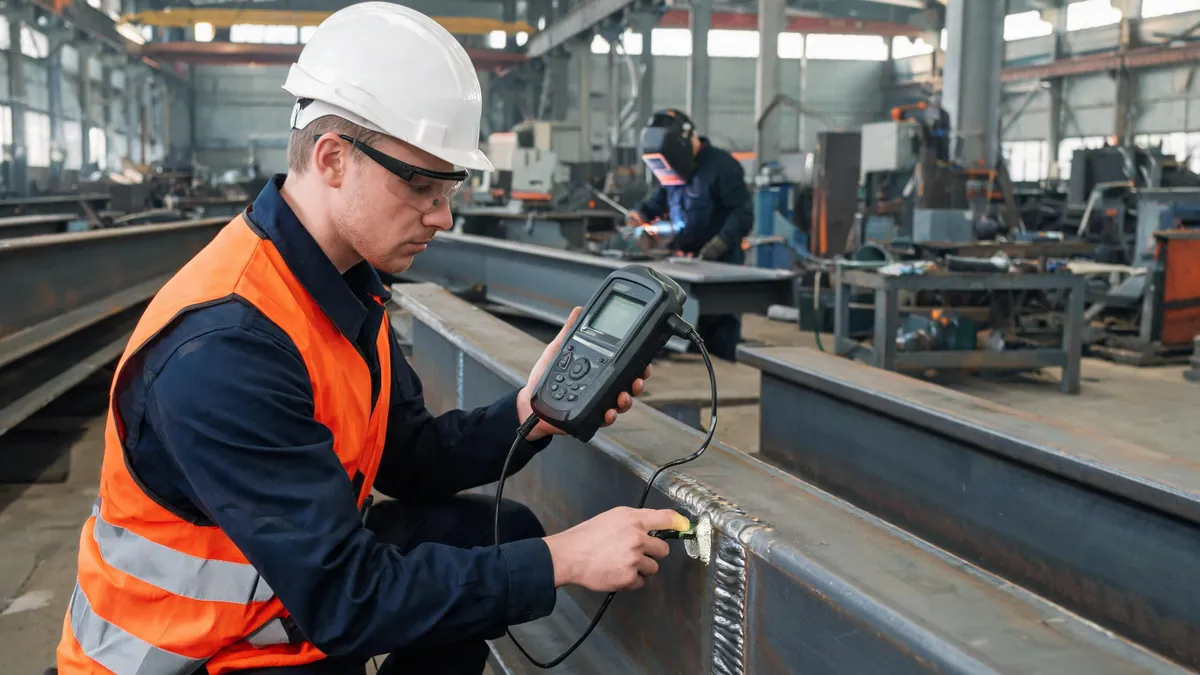
Finally, ask what inspection evidence the supplier can produce: mill certificates for steel plates and coils, welder certificates, NDT reports, coating thickness readings, dimensional check sheets and packing lists with photos. A supplier that fabricates in-house usually has this paperwork organized because the inspectors work on site. A supplier that subcontracts can still provide it, but the paperwork chain is longer and gaps are more likely. Compare the documents you receive against the technical proposal checklist we recommend every buyer keep.
Is it a red flag if a steel structure supplier subcontracts fabrication?
Not by itself. Many reliable suppliers move part of the work to partner plants during peak seasons. It becomes a red flag when the supplier hides the arrangement, refuses to name the subcontractor, or will not commit to inspection rights and full liability in the contract.
What documents prove a supplier can fabricate in-house?
The strongest evidence is a factory license and quality certifications, plus production records: WPS/PQR documents, welder certificates, inspection reports and workshop photos. For export orders, ask for examples of the documentation package from previous shipments.
How the Fabrication Model Changes Your Price
Buyers often assume in-house fabrication is cheaper because there is no middleman. That is not always true. The table below shows where the money goes in each model.
| Cost component | In-house fabrication | Subcontracted fabrication |
|---|---|---|
| Steel material | Purchased by the supplier at mill or trader prices | Usually purchased by the subcontractor; a mark-up is applied |
| Fabrication labor | Direct cost at the supplier’s own plant | Subcontractor’s rate plus coordination margin |
| Overhead | Spread across the supplier’s own plant | Shared between supplier and subcontractor overheads |
| Quality / inspection | Supplier’s own QA team | Subcontractor QA plus supplier’s supervision visits |
| Coordination risk | Low — one production plan | Higher — hidden in the price or in late deliveries |
The practical takeaway: comparing two quotes by total price is not enough. If one supplier fabricates in-house and the other subcontracts, the same total price buys different levels of control. Ask both for the same breakdown — steel, fabrication, surface treatment, packing, engineering — and you will see where the difference sits. A lower price from a subcontracting supplier can be genuine (the partner plant is more efficient) or can hide thinner margins on quality. Verify, then decide.
What the Contract Should Say About Production
Whatever the supplier tells you, put it in the contract. These clauses are the ones that matter most.
| Clause | What it should state |
|---|---|
| Production location | Name and address of the workshop(s) that will fabricate the primary steel, secondary steel and cladding |
| Subcontracting disclosure | Supplier must inform the buyer in writing before moving any part of the order to a different plant |
| Inspection rights | Buyer or a third-party inspector may visit or video-audit production at agreed milestones, at buyer’s cost |
| Liability | Supplier remains solely responsible for all delivered steel regardless of production location |
| Non-conformance | Procedure for rejected members: rework per approved WPS, re-inspection, and replacement if rework fails |
| Documentation | Mill certificates, welder certificates, NDT and coating reports delivered before shipment |
If the supplier is an honest in-house manufacturer, these clauses cost nothing to sign. If the supplier resists a subcontracting-disclosure clause, you have learned something valuable before you paid anything.
How can I check whether my order is really produced in the supplier’s own workshop?
Ask for the workshop address, request a visit or live video audit during production, and compare the workshop photos with the contract. Then check the documentation chain — mill certificates, welder certificates and NDT reports should consistently point to the same production site.
How to Verify During Production
Verification is a milestone activity, not a final surprise. A simple production verification plan looks like this:
| Stage | What to check | How |
|---|---|---|
| Material in | Mill certificates match the steel grade in your design | Ask for copies of MTCs for your order’s plates and coils |
| Cutting / drilling | Member sizes and hole patterns match approved drawings | Spot-check dimensional sheets or photos |
| Welding | Welders hold certificates; welds follow WPS | Request welder list + NDT sampling records |
| Surface treatment | Blast grade and paint thickness | Coating thickness readings per panel/box |
| Packing | Member marking, packing list, container loading | Photos or video of each container |
You do not need to be a welding engineer to run this plan. You need to ask for the evidence and compare it to the contract. If a supplier cannot produce a mill certificate for the steel it claims to have used, stop and investigate before the container ships — once steel leaves the port, every fix costs freight and time.
When Subcontracting Is Acceptable
To be fair to suppliers, subcontracting is not automatically a quality risk. It is acceptable when four conditions hold:
- The subcontractor is named and its qualifications are shared openly.
- The percentage of subcontracted tonnage is small and limited to non-critical items (for example purlins, girts or simple beams).
- The supplier keeps full inspection authority over the subcontracted work.
- The contract keeps the supplier liable for everything delivered.
Under those conditions, subcontracting can even help you: it gives the supplier flexible capacity and can shorten your lead time. The problem is never the practice; it is secrecy, unmanaged quality and unclear liability. If the supplier meets the four conditions above, proceed with normal verification. If not, treat the order as higher risk and price that risk into your decision.
The Real Cost of a Hidden Subcontractor
Hidden subcontracting rarely fails because the subcontractor is incompetent. It fails because the buyer made decisions on the wrong information. You negotiate price with one company, receive progress photos from a second, and discover during inspection that the welders belong to a third. Each layer of indirection adds a place where a fact can change without you noticing: the steel grade ordered, the coating specification, the packing standard, even the delivery date.
Walk through what can go wrong in a typical export order when production is subcontracted without disclosure:
- Material substitution. The subcontractor buys steel for your order. If its purchasing department sources a different grade to protect its margin, the mill certificate you receive may not match what is welded into your frames. You only catch this if you compare certificates against the approved design.
- Procedure drift. Your contract specifies a welding procedure. The subcontractor’s shop floor may use its own habitual procedure, because retraining welders costs time. The weld looks the same; the mechanical properties do not have to be.
- Inspection theater. Progress photos can come from a different project. Without a live audit tied to your order number and member markings, a photo of a clean workshop proves little.
- Schedule slippage. When the subcontractor is busy with a bigger client, your members wait. The supplier tells you production is “in progress” because it genuinely does not know the real status on the shop floor.
- Warranty ambiguity. When defects appear after erection, the subcontractor says the design was wrong; the supplier says the subcontractor welded badly. You are left coordinating a blame dispute between companies that never signed a contract with you.
None of these problems are inevitable. Each one is preventable with the questions and contract clauses in this guide. The point is that they are only preventable when you know the production structure up front. That is why disclosure — not the fabrication model itself — is the real issue.
How to Run a Remote Video Audit of the Workshop
A remote audit is the cheapest verification tool most buyers never use. It does not replace a physical visit or third-party inspection, but it closes the biggest gap: confirming that your order exists, in the promised workshop, at the promised stage. Here is a workable procedure.
| Step | What to do | What it proves |
|---|---|---|
| 1. Agree milestones | Fix audit points in the contract: material arrival, welding start, 50% completion, surface treatment, packing | You have a right to audit at defined stages |
| 2. Book a live session | Schedule a video call with the production manager; ask to see the shop floor, not the office | The workshop is real and accessible |
| 3. Identify your order | Ask to see members marked with your contract or drawing number | Production is actually yours, not another client’s |
| 4. Sample-check details | Ask for a tape measure on a flange width, a look at weld appearance, and the mill certificate stack | Basic dimensional and documentation checks |
| 5. Record and archive | Save the recording and a short written summary signed by both sides | Evidence exists if disputes arise |
Keep the audit short — 20 to 30 minutes is enough for a spot check. If the supplier refuses a live session but offers photos, ask why. A workshop that cannot show its floor to a paying customer during production is a workshop that should not receive your final payment on schedule.
Payment Milestones Tied to Production Evidence
Payment structure is where you convert your questions into leverage. A typical export payment schedule is a deposit at contract signing, a progress payment during production, and the balance against shipping documents. The problem is that “progress” is defined by whoever says so. Tie each payment to evidence instead:
| Milestone | Evidence required before payment |
|---|---|
| Deposit | Signed contract, approved drawings, confirmed production plan and workshop assignment |
| Progress payment | Live audit or photos showing your marked members, mill certificates for the steel grades used, welder certificates |
| Pre-shipment | NDT and coating reports, dimensional check sheets, packing list, container loading photos or video |
| Balance | Shipping documents (bill of lading, invoice, packing list) and any inspection certificates agreed in the contract |
This structure works with both in-house and subcontracted production. It simply refuses to pay for promises. If the supplier asks for the full balance before production evidence, that is a negotiation point worth questioning — the evidence costs nothing to produce when the work is real.
Documentation Trail: What Each Document Proves
The documents in a steel structure export order are not bureaucracy; each one answers a specific question. When production is subcontracted, the trail gets longer, so knowing what each document proves helps you spot gaps.
| Document | What it proves | Where a gap appears with subcontracting |
|---|---|---|
| Mill certificate (MTC) | The steel grade, heat number and chemical composition of the material | Certificates may be issued to the subcontractor’s purchase, with a different heat than your order |
| WPS / PQR | The welding procedure is written and was tested successfully | The subcontractor may use its own WPS, not the one in your contract |
| Welder certificates | The welders are qualified for the process and position used | Welder lists may be shared across projects; names may not match the shop floor |
| NDT reports | Sampled welds were tested and passed | Reports must identify your order number and the welds tested |
| Coating thickness readings | Paint or galvanizing thickness meets the specification | Readings should come from your members, not a generic panel |
| Packing list and photos | What was packed, how it was marked, and how it was secured | Photos should show your container number and member markings |
You do not need to verify every document yourself. A third-party inspector can do it, and most suppliers accept inspection by SGS, Bureau Veritas, TUV or similar companies when the contract provides for it. The key is that the documents must identify your order — generic certificates from “the factory” are not evidence for your building.
Managing a Supplier That Uses Partner Plants
If the supplier openly uses partner plants, the relationship can still work well. Treat it like managing any supplier: verify, document, and keep control points. Four practices make the difference:
- Name every plant in the contract. List the workshop(s) allowed to produce your order. Any change requires your written approval.
- Audit the actual plant. Your inspection rights should cover the partner plant, not just the supplier’s office. Insist on this in the contract.
- Require order-level documents. Mill certificates, NDT reports and coating readings must carry your contract number, no matter which plant produced the steel.
- Keep the supplier accountable. The supplier remains your single point of contact and remains liable for everything, including partner-plant work. Do not accept “we have to check with the factory” as a reason to delay answers you are owed.
With these practices, disclosed subcontracting becomes a manageable supply-chain choice. Without them, even an honest supplier can drift, because nobody set the inspection and documentation standard in writing.
FAQ
Is it a red flag if a steel structure supplier subcontracts fabrication?
Not by itself. Many reliable suppliers move part of the work to partner plants during peak seasons. It becomes a red flag when the supplier hides the arrangement, refuses to name the subcontractor, or will not commit to inspection rights and full liability in the contract.
How can I check whether my order is really produced in the supplier’s own workshop?
Ask for the workshop address, request a visit or live video audit during production, and compare the workshop photos with the contract. Then check the documentation chain — mill certificates, welder certificates and NDT reports should consistently point to the same production site.
What documents prove a supplier can fabricate in-house?
The strongest evidence is a factory license and ISO or equivalent quality certifications, plus production records: WPS/PQR documents, welder certificates, inspection reports and workshop photos. For export orders, ask for examples of the documentation package from previous shipments.
Does in-house fabrication always cost more than subcontracting?
No. In-house fabrication removes one margin layer, but the supplier’s own overhead can offset that. Subcontracting can be cheaper when the partner plant is more efficient, or more expensive when coordination costs are hidden. Compare itemized breakdowns instead of total prices.
What should the contract say about subcontracted production?
It should name the production location, require written disclosure before moving work to another plant, keep the supplier solely liable for all delivered steel, and grant the buyer inspection rights at agreed milestones.
Need a steel structure supplier you can verify? Send us your project drawings and site conditions, and we will show you our workshop, our production plan and our documentation package before you commit. Start with the prefab steel warehouse page or contact our export team with your RFQ.