
Prefab Steel Building Customization: Doors, Windows, Ventilation and Crane Options

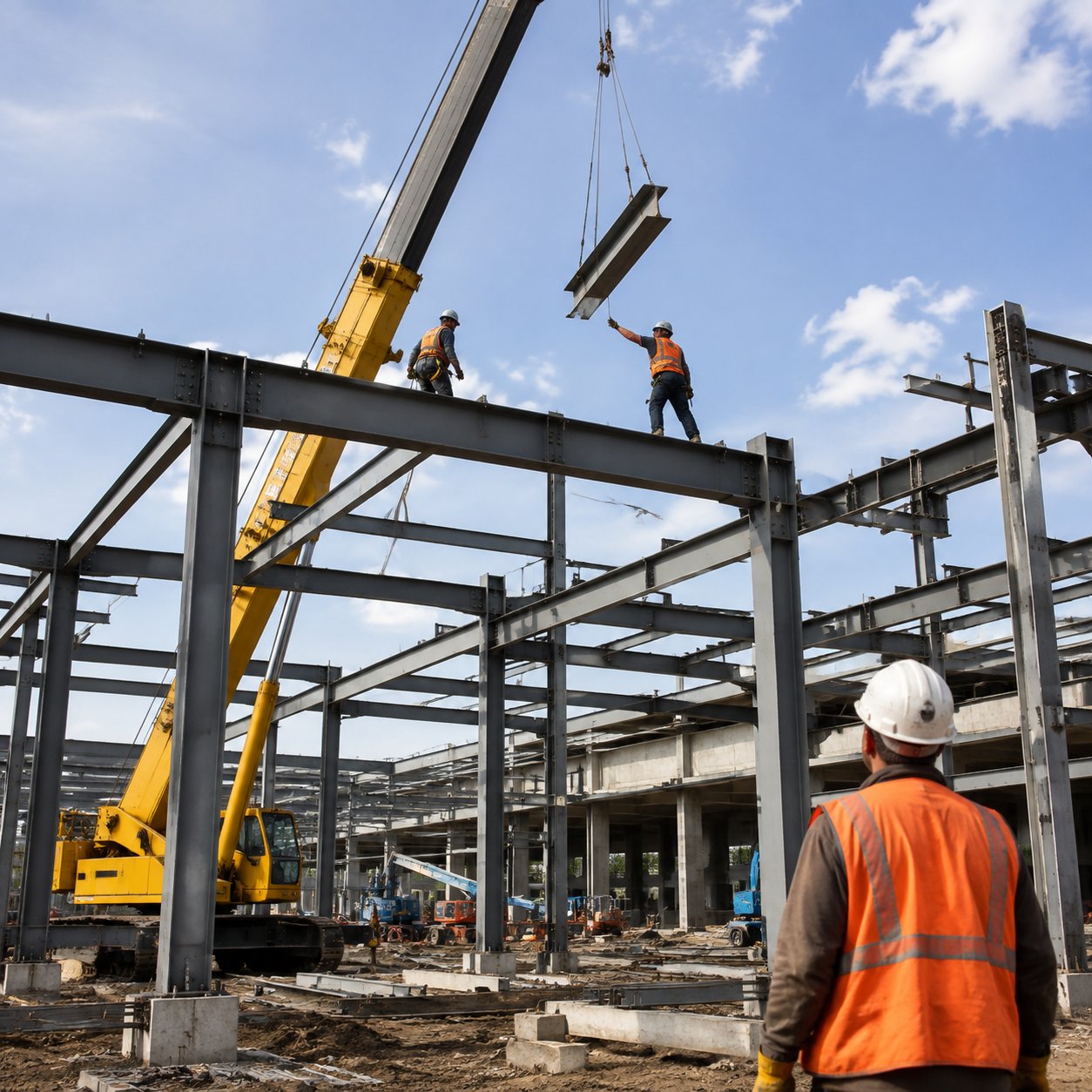
A steel building is rarely a bare shell. The openings, equipment, and accessories you specify determine whether the building works for its purpose. Whether you are planning a warehouse, a workshop, a factory, or a cold store, the customization options are extensive. This guide covers the most common additions and the decisions buyers face when configuring a prefab steel building.
Door Options
Doors are the most frequently specified customization:
- Roller shutter doors: the standard for loading bays, available in manual and motorised versions
- Sectional overhead doors: insulated, smooth operation, popular for workshops
- Sliding doors: economical for large openings
- Hinged personnel doors: access for people, fitted with locksets
- Dock levellers and dock shelters: for efficient loading in logistics buildings
Door sizes should match the equipment that will pass through. Buyers should plan the number and size of doors based on loading flow, not guess them later.
Windows and Natural Light
- Translucent roof sheets: economical daylight without windows
- Fixed and opening windows: ventilation and light in office or occupied areas
- Curtain wall sections: for entrance and office areas
Ventilation Systems
Workshops, factories, and occupied buildings need planned ventilation:
- Ridge ventilators: passive removal of hot air at the roof peak
- Wall louvres with dampers: controlled fresh air intake
- Powered roof extractors and wall fans: mechanical ventilation for high-heat processes
- Positive pressure systems: for clean or dust-controlled environments
Ventilation design depends on the activities inside. A welding workshop needs far more air exchange than a finished goods warehouse.
Crane Options
Overhead cranes are a major customization for factories and workshops:
- Crane runway beams: built into the frame design, sized to the crane capacity
- Single girder cranes: up to about 20 tonnes, economical for most workshops
- Double girder cranes: higher capacities and spans
- Crane columns: heavier sections where cranes operate close to the frame
Crane requirements must be provided at the design stage because they change frame sizing and foundations. Do not plan to add a crane after the building is erected without a structural check.
Other Common Customizations
- Mezzanine floors for offices or storage
- Insulated office partitions inside the building
- Rainwater systems: gutters, downpipes, and tanks
- Fire protection: fire walls, sprinkler-ready design, fire-rated doors
- Electrical packages: lighting, power distribution, and data
- Floor slabs and foundations (often supplied separately)
Customization Checklist
- List all activities that will happen inside the building
- Define door types, sizes, and quantities for the operation
- Confirm crane capacity, span, and hook height if needed
- Specify ventilation and environmental control needs
- Check fire and safety requirements with local authorities
- Plan future expansion and make the design accommodate it
Frequently Asked Questions
Can I add a crane to an existing steel building?
It is possible in some cases, but the frame and foundations must be checked by a structural engineer. Adding a crane after construction is usually more expensive than designing for it from the start.
What door is best for a loading warehouse?
Roller shutter doors with motorised operation are the standard for loading bays. For frequent access with insulated needs, sectional overhead doors are a good alternative.
How much does customization cost?
Customization costs depend on the options: doors, cranes, and insulation are the largest items. The supplier’s proposal should itemise each addition so you can prioritise.
For prefab steel building quotes with custom doors, cranes, and ventilation, contact the factory with your building size and operational requirements.
