
Prefab Steel Warehouse Manufacturer: Third-Party Inspection and Factory Acceptance Evidence Before Shipment

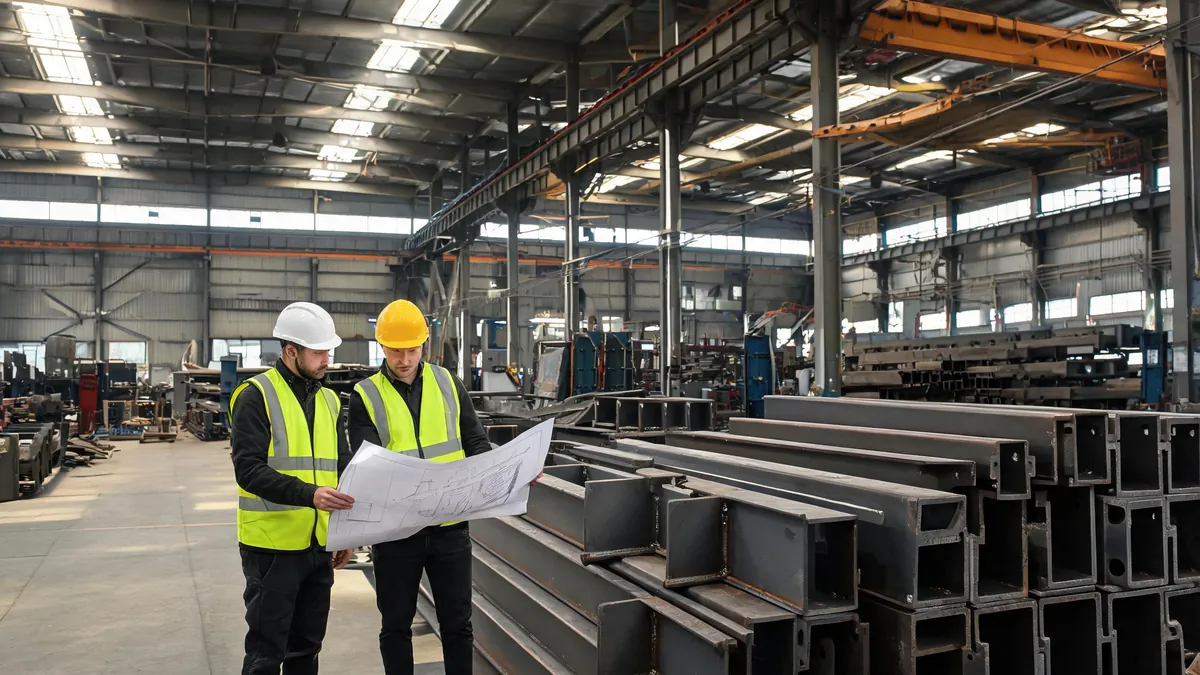
A prefab steel warehouse is fabricated thousands of kilometres from the site, so the only point where a buyer can still influence quality is before the containers are sealed. Third-party inspection is the mechanism that closes that gap. An independent inspector works to an inspection and test plan agreed with you, attends the factory at fixed hold points, and signs off dimensional checks, weld evidence, coating thickness and container loading against the approved drawings rather than against the supplier’s own word.
Practically, that means three things: you appoint and instruct the inspector, not the factory; the inspection plan names the stages where work cannot continue until the inspector releases it; and the deliverables are documents you can file — inspection reports with photographs, a witness log, and a release note for shipment. Without those three elements, an “inspection” is a factory visit with a certificate attached to it.
This guide explains what third-party inspection covers on a steel warehouse package, how the hold points map onto real production stages, which documents make inspection possible, where inspectors find the expensive problems, and how to write the requirement into a purchase order so it survives commercial pressure at the end of the project.
What third-party inspection actually covers on a steel warehouse order
Inspection on a steel building is not a single event. It is a sequence of verification steps, and each one answers a different question. The earliest steps confirm that the shop drawings match the design basis you approved. The middle steps confirm that the steel, the welding and the coating meet the specification. The final steps confirm that what is in the container is what was inspected, packed in a way that will survive the voyage and be erectable on arrival.
Buyers who only book a final inspection before loading tend to discover problems at the worst possible moment. By then the members are fabricated, painted and packed, and the only remedies left are commercial. A staged plan costs marginally more in man-days and removes almost all of that risk, because the expensive corrections happen while the steel is still in the workshop.
The scope of an inspection mandate for a prefab steel warehouse normally falls into five groups:
| Inspection group | What it verifies | Typical evidence produced |
|---|---|---|
| Design and drawing conformity | That shop drawings follow the approved design basis, load assumptions and interface details | Reviewed drawing register, comment sheet, approved-for-fabrication stamp |
| Material verification | Grade, heat number and traceability of plates and sections against what was specified | Mill test certificates mapped to member marks, material receipt records |
| Welding and fabrication | Weld procedure qualification, welder qualification, fit-up, weld quality and dimensional control | WPS and PQR, welder certificates, visual inspection records, NDT reports where specified |
| Surface protection | Surface preparation grade, coating system, dry film thickness, coverage of edges and welds | Coating inspection records, DFT readings, batch records |
| Packing and loading | Completeness against the packing list, marking, packing protection, container loading and lashing | Pre-shipment inspection report, packing list verification, loading photographs |
Nothing in that table is exotic; the difficulty is sequence. If material certificates cannot be tied to member marks, welding records lose their meaning, and a coating inspection on an unverified weld only tells you it has been painted over.
Frequently asked: what does third-party inspection cost, and how is it charged?
Fees are normally quoted per inspector man-day plus travel and accommodation, with the number of attendance days set by the inspection plan. That structure matters more than the headline rate. A plan that sends an inspector to the factory for five separate short visits will cost more than one long visit, and a plan that concentrates everything into a single pre-shipment visit will cost least and catch least. Ask for a priced plan with attendance days per hold point, so you can decide which stages you really need to witness where the price matters.
Who appoints the inspector, and why that decides whether the report is useful
The most common structural mistake in export steel procurement is letting the factory appoint and pay the inspector. Factories are not acting in bad faith when they offer this; it is a service some of them genuinely organise well. The problem is one of instruction. An inspector paid by the seller works to the seller’s scope, reports to the seller, and resolves ambiguity in the seller’s favour, because that is what the commercial relationship expects.
When you appoint the inspector, three things change. The scope of work is written for your benefit, including the right to raise observations without the factory filtering them. The reporting goes to you in parallel with the factory, so problems reach you while they are still fixable. And the release of a hold point becomes a documented decision you control, which is what gives the requirement any teeth at all.
| Arrangement | Who instructs | What it protects well | Where it fails |
|---|---|---|---|
| Buyer-appointed third party | Buyer directly, factory notified | Independent findings, hold-point control, comparable reports across suppliers | Higher cost, needs buyer management time and a clear scope |
| Factory-supplied inspection body | Factory | Convenience, fast booking, low administrative load | Scope and reporting bias, weak leverage when a finding is inconvenient |
| Buyer’s own engineer on site | Buyer | Deep product knowledge, immediate technical decisions | Costly for long projects, limited if the engineer is not a welding or coating specialist |
| No inspection, documents only | Factory | Lowest cost, acceptable for low-risk repeat orders with a proven supplier | No independent evidence; disputes become arguments about paperwork |
There is a middle path that works well on repeat business: keep a factory-approved inspection body for routine dimensional and packing checks, but commission your own inspection at the hold points that carry the most money — material traceability, weld quality on primary members, and coating thickness.
The inspection and test plan: hold points from cutting to container loading
An inspection and test plan, usually shortened to ITP, is the document that turns an inspection into a schedule. It lists each production stage, the check performed at that stage, the acceptance basis, who performs it, and whether it is a hold point, a witness point or a review of records only. Hold means production stops until the check is passed. Witness means someone may attend. Review means the records are submitted without attendance.
For a steel warehouse package, a workable ITP runs along the following sequence. It is worth reading it as a timeline, because most of the value sits in the first half.
| Stage | Check | Acceptance basis | Type |
|---|---|---|---|
| Engineering release | Shop drawings, member schedule and connection details against the approved design basis | Approved-for-fabrication drawings, load and deflection criteria, interface list | Hold |
| Material receipt | Grade, heat number and dimensions of plates and sections; traceability to member marks | Mill test certificates, purchase specification, mark-by-mark mapping | Hold |
| Cutting and drilling | Member lengths, hole positions, copes and notches; nesting against the cutting plan | Shop drawings, approved cutting plan | Witness |
| Fit-up and assembly | Jig fit-up, root gaps, alignment, tack condition before final welding | Drawings, welding procedure requirements | Hold |
| Welding | Weld procedure in use, welder identification, visual inspection, NDT where specified | WPS and PQR, welder qualification records, inspection standard named in the contract | Hold |
| Dimensional check | Overall lengths, squareness, straightness of primary members and assembled frames | Fabrication tolerance table in the standard the contract names | Witness |
| Surface preparation and coating | Preparation grade, coating continuity, dry film thickness, stripe coating at edges and welds | Coating specification, product data sheet, agreed thickness range | Hold |
| Marking and packing | Member marks, packing list completeness, protection of edges and coated surfaces | Approved marking plan, packing list, transport drawings | Witness |
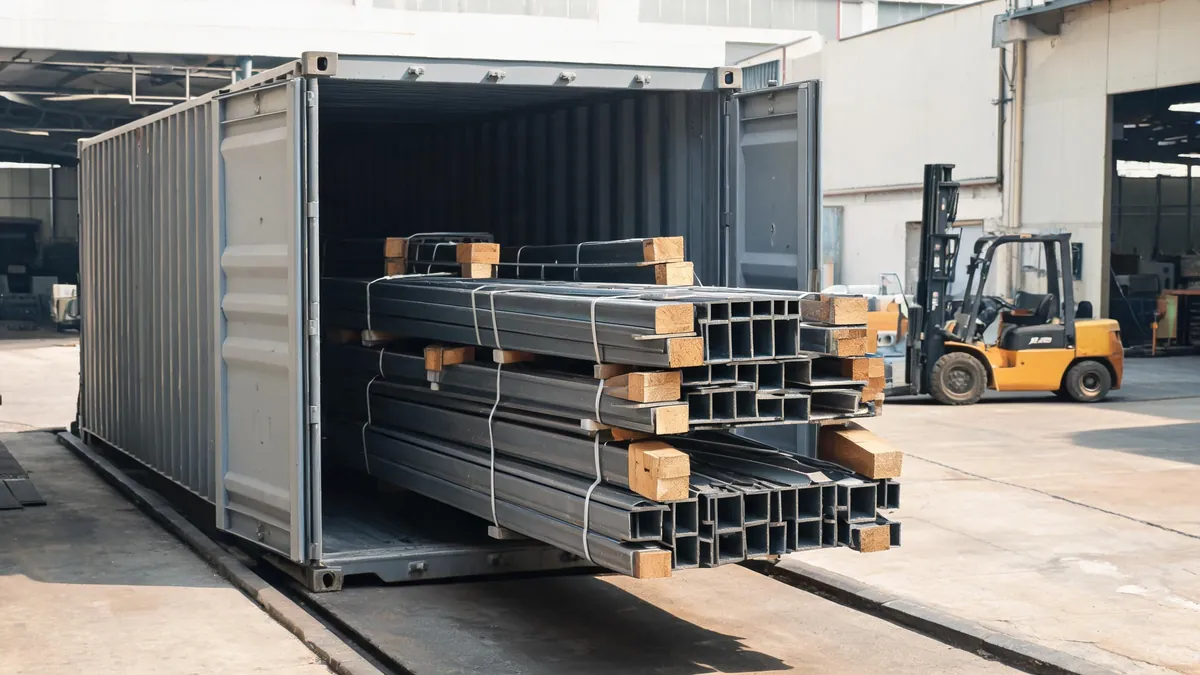
| Container loading | Load plan, lashing, weight distribution, completeness before doors close | Loading plan, packing list, photographs | Hold |
Frequently asked: when should the inspector be booked?
Book the inspection body before the purchase order is placed, not after. Readiness depends on agreeing the ITP while drawings are still open, because several hold points need your input: which design code governs tolerances, which NDT method applies to which joint, what coating thickness range you will accept, and who signs the release. Once fabrication starts, the first two hold points are usually already gone.
Documents that make inspection possible in the first place
An inspector cannot verify anything without the documents that define what “correct” means. This is the part of the package that buyers routinely forget to request, and it is the reason some inspections finish with a report that says the factory was clean, tidy and cooperative without saying whether the steel was right.
| Document | Who issues it | What it proves | When you need it |
|---|---|---|---|
| Approved-for-fabrication drawings | Factory engineering, approved by your engineer or consultant | The geometry and connection details being built are the ones you accepted | Before cutting |
| Welding procedure specification and qualification record | Factory welding engineer | The welding procedure has been qualified by test for the material thickness and joint type used | Before welding on primary members |
| Welder and operator qualification certificates | Certifying body or factory record | The people welding are qualified for the process and position they are working in | Before welding |
| Mill test certificates with heat numbers | Steel mill, through the factory | The steel chemistry and mechanical properties match the specified grade | At material receipt and again before shipment |
| Coating product data sheet and batch records | Coating manufacturer and factory | The coating system applied is the one specified and is within its shelf life and mixing rules | Before painting |
| Nondestructive testing reports | Factory or subcontract NDT laboratory | Weld quality meets the acceptance level for the joints specified | After welding, before coating |
| Inspection reports and release notes | The third party | Each hold point was inspected, with findings and closure evidence | Through the project |
| Packing list and container loading plan | Factory shipping department | Every member is accounted for and can be lifted out in erection order | Before loading |
Two of these deserve emphasis. First, the connection between mill certificates and member marks is what makes traceability real; a folder of certificates for steel that cannot be tied to specific members is not traceability, it is paperwork. Second, the coating record is the easiest document to produce and the easiest to verify on site later, because dry film thickness can be measured again after arrival. If you only verify one thing on site, verify the coating.
Frequently asked: are mill test certificates the same as an inspection certificate?
No. A mill test certificate comes from the steel producer and describes the heat of steel. An inspection certificate comes from an inspection body and describes what was checked on the fabricated product. A supplier can hold perfect mill certificates and still have members fabricated to the wrong length, welded with an unqualified procedure, or coated below the specified thickness. Ask for both, and ask how the certificates are linked to the members.
What inspectors actually measure: dimensional, weld and coating checks
An inspection report that consists only of paragraphs is difficult to act on. The useful report is quantitative: member mark, dimension checked, measured value, drawing value, and pass or fail. Ask for that format in the scope, and specify the tolerance table you want used, because there is no single global tolerance that applies to every contract.
On a steel structure package the checkable items fall into a short list, and each one has a physical method behind it. Knowing the methods helps you read a report critically.
| Check | Method | What a weak report looks like |
|---|---|---|
| Member lengths and hole positions | Tape or laser measurement against shop drawings | “Dimensions generally as per drawing” with no values recorded |
| Straightness and camber of rafters | String line, laser or straightedge over the member length | No mention of camber, so deflection-critical members are unverified |
| Squareness of assembled frames | Diagonal measurement across column and rafter assembly | Photographs only, without diagonals recorded |
| Bolt hole alignment and hole size | Gauge or vernier on sample holes, plus trial assembly where required | No hole measurements, leading to reaming or field drilling on site |
| Weld size and profile | Weld gauge at sample locations, visual inspection against the acceptance standard | “Welds visually acceptable” without leg length or profile notes |
| Nondestructive testing | Ultrasonic or magnetic particle testing by qualified personnel, usually on primary joints | Report with a scope that excludes the joints that carry the load |
| Surface preparation | Visual comparison against preparation grade photographs, or surface profile gauge | Statement that surfaces were “cleaned” without a preparation grade |
| Dry film thickness | Magnetic or electronic gauge, readings logged per member and per coating layer | Single average value for the whole consignment instead of per-member readings |
| Coating continuity | Visual inspection for misses at edges, welds, bolt holes and cut ends | No coverage of edges, where corrosion starts first |
The dimensional checks are where most commercial value sits, and the reason is simple: a member that is short or a hole pattern that is wrong cannot be fixed by argument once it reaches site. Reaming a few bolt holes is routine. Cutting and re-welding a rafter at height is not. Trial assembly of one bay before coating is the cheapest insurance available on a first order from a new factory, and it converts the drawing review into a physical proof.
Welding verification deserves a note about scope. Visual inspection of every weld is standard. Nondestructive testing of every weld is not, and asking for it on a full warehouse package will change the price substantially without changing the outcome, because the joints that matter are a small subset. The practical approach is to specify NDT by joint category: full inspection of complete joint penetration welds in primary members, sampling on secondary members, visual only elsewhere. Write the categories into the ITP so there is no debate later.
Frequently asked: how much NDT should be specified on a steel warehouse?
There is no single percentage that fits every project, and any supplier who quotes a fixed figure without seeing the joint schedule is guessing. The defensible approach is by consequence: joints in primary members resisting the governing load cases, moment connections and any complete joint penetration weld are typically inspected in full or in a high proportion, while secondary members and non-structural connections are covered by visual inspection with occasional sampling. Agree the categories in writing, then let the inspector apply them.
Coating verification: the check you can repeat after the ship arrives
Coating is unusual among the quality items in this package because it can be verified twice — once at the factory and again on site, months later. If the coating thickness and coverage are as specified on arrival, the preparation and painting process was controlled. If the coating is thin at edges or missing at bolt holes, the process was rushed at the end of the contract, which is exactly when other shortcuts tend to happen too.
The verification sequence on a coated steel package looks like this. Before painting, confirm the preparation grade and that welds, sharp edges and cut ends have been dressed. During painting, confirm the specified system is being applied — primer, intermediate and topcoat in the sequence and thickness range agreed — with stripe coating at edges, welds and bolt holes where the specification calls for it. After curing, take dry film thickness readings on a defined sample of members and record them against member marks. After loading and again after arrival, inspect for mechanical damage in transit, because the most common coating failure on export steel is abrasion in the container, not a painting error in the factory.
| Coating stage | Factory check | Site check after arrival |
|---|---|---|
| Surface preparation | Preparation grade verified against reference photographs | Not repeatable; assess rust bloom or contamination instead |
| Primer and build coats | Batch record, mixing, recoat intervals, thickness per layer | Not repeatable individually |
| Total system thickness | Dry film thickness readings per member | Measureable; compare against the agreed range |
| Edge, weld and hole coverage | Visual inspection of stripe coating | Visual inspection of the same locations |
| Transport damage | Packing and dunnage check before doors close | Photograph damage at unpacking, before touching up |
If the contract allows touch-up paint to be included in the package, insist on it. A small quantity of the same coating system, shipped with the steel, removes the risk of colour and compatibility problems and lets the erection crew repair transit damage immediately rather than after a corrosion stain appears. You can read more about how fabrication quality is controlled in a Chinese factory in our article on cutting, welding and QA in a steel structure factory, and about the specific weld evidence a buyer can request in our piece on NDT reports and weld quality evidence before final payment.
Pre-shipment inspection: what to check before the container doors close
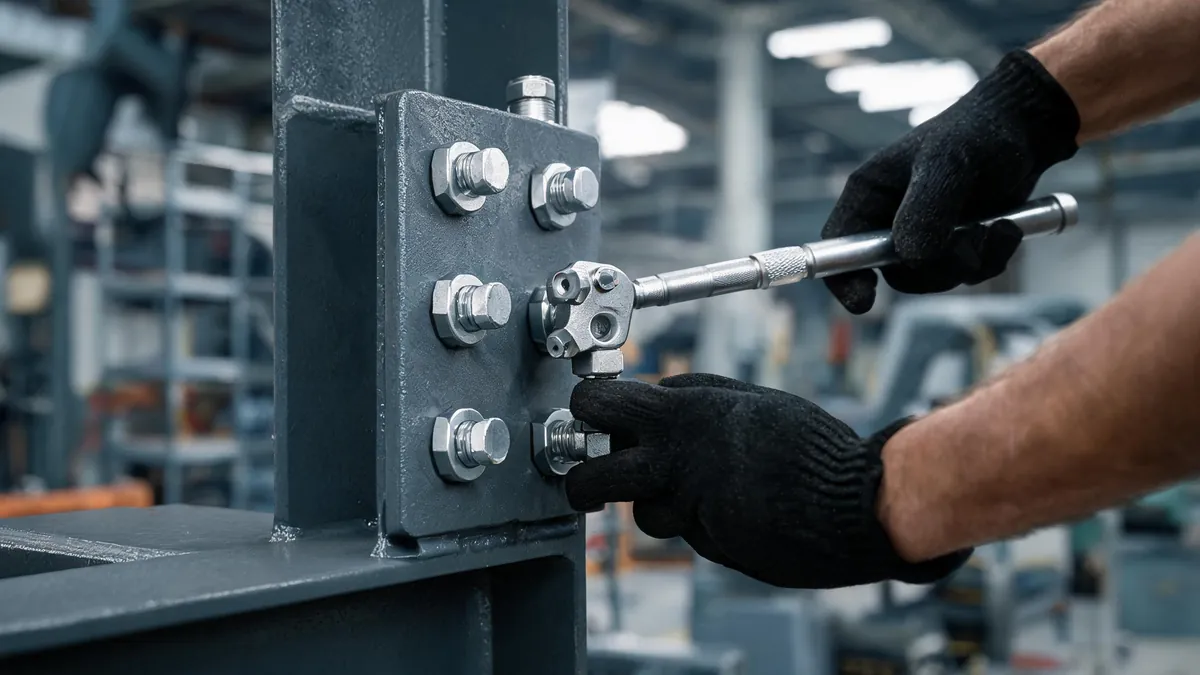
The pre-shipment inspection is the last point where a mistake is still cheap to correct. Once the container is sealed and on the water, every remedy costs freight, time and goodwill. This is why the pre-shipment stage is a hold point rather than a courtesy visit.
The check has four parts. Completeness: every item on the packing list is present, marked and accounted for, with the packing list reconciled to the shipping documents. Condition: coated surfaces protected, edges and flanges separated by dunnage, no distortion from handling, no damage from storage outdoors. Loading: the load plan matches what was approved, weight is distributed sensibly, lashings or bracing prevent movement, and heavy members are not resting on unsupported cladding packs. Documentation: inspection release notes, packing list, container and seal numbers, and photographs of the loaded container.
| Pre-shipment item | Common failure mode | Cost if missed |
|---|---|---|
| Packing list reconciliation | Small items — bolts, purlin clips, flashings, gaskets — left behind | Local purchase at short notice, often at a large premium and possibly the wrong specification |
| Member marking against erection drawings | Marks missing or duplicated, so site sorting begins with guesswork | Days of crane time and labour on site, and arguments about who caused the delay |
| Packing protection | Coated surfaces in direct contact, no dunnage between layers | Touch-up work at height, or visible damage the client will notice |
| Loading and lashing | Movement in transit, twisted members, damaged panel edges | Replacement steel and a claim process that crosses two jurisdictions |
| Documentation set | Certificate or release note missing, holding up customs clearance | Demurrage and storage charges at the destination port |
Frequently asked: what should a pre-shipment inspection certificate contain?
At minimum: the purchase order and drawing revision it relates to, the date and place of inspection, the inspecting organisation and inspector identity, the scope of checks performed, the results with any deviations listed, the status of any open observations, photographs of the packed and loaded cargo, container numbers and seal numbers, and a clear statement of what is being released. A certificate that names none of these is a compliment, not evidence.
Marking, packing and the link to site erection
Inspection at the factory and cost on site are directly connected through marking and packing. A building delivered with clear member marks that follow the erection sequence can be unloaded, staged and erected in the order the installer planned. The same building delivered with marks applied inconsistently arrives as a pile of steel that must be sorted by measurement against drawings, in the open, on a schedule that has no slack.
Two requirements are worth writing into the purchase order. First, marking must follow an agreed marking plan that matches the erection drawings, applied so it survives handling and the voyage. Second, packing must be organised by erection zone or by building bay where the project has more than one building, rather than by member type alone. The second requirement costs the factory a little planning time and can save weeks of site labour on multi-building projects.
It is also worth confirming how edge protection and bundling are handled for members most prone to transit damage: long rafters, thin-walled purlins and profiled cladding panels. Cladding is usually where visible damage appears first, because panels are wide, light and stack load-sensitive.
Red flags: when an inspection certificate is decorative
Certificates are easy to produce, which makes them easy to fake and even easier to issue in good faith without meaning anything. The signals below are drawn from how weak inspection packages usually present themselves, and none of them requires technical expertise to spot.
| Signal | What it usually means | What to ask instead |
|---|---|---|
| Report appears only after loading is complete | No hold points were observed during production | Attendance dates per production stage, with the production schedule |
| Inspector is named but not identified | The report cannot be tied to a qualified person | Inspector name, organisation, qualification and mobile number |
| Findings list is empty on a first order | Scope was narrow, or findings were not recorded | The observation log, including items closed during the visit |
| Photographs show finished, packed steel only | Nothing was witnessed before coating | Photographs at fit-up, welding and thickness measurement stages |
| Thickness given as one average figure | Readings were not taken per member | Reading log by member mark and location |
| Certificate issued by a trading company | No independent inspection body was involved | Inspection body accreditation and its contract with you |
| Deviations described as “minor” with no closure | Open items were quietly abandoned | Written closure for every observation, or a credit note |
One further signal is worth watching for on the commercial side: an inspection clause agreed at order stage and then challenged at the first hold point because “the schedule cannot wait”. That challenge is itself information. If a factory cannot pause for a drawing check or a fit-up inspection, the production plan has no float, and no amount of inspection will fix a schedule that was never realistic.
Writing inspection into the purchase order
Requirements that exist only in email threads do not survive a change of sales contact. Put them in the order document, in language that a factory production manager can act on, and reference the ITP as an annex. A compact clause set covers most of the exposure.
| Clause | What it should say |
|---|---|
| Appointment | The buyer appoints the inspection body; the supplier grants access to production areas and records at agreed times |
| Hold points | Named stages where work does not proceed until the inspector releases them, with the time allowed for release |
| Notification | Notice period before each hold point is reached, and who is notified in writing |
| Documents | Which records are submitted for review, in what format, and by when |
| Costs of re-inspection | Who pays for re-attendance after a failed check, and who pays for repair or re-fabrication |
| Release to ship | Shipment only proceeds after written release of open observations, or after a documented agreement on their closure |
| Retention | Part of the payment held until the post-arrival checks are complete |
| Records retention | How long the supplier keeps inspection and material records, and their availability for later replacement orders |
The retention clause is the one buyers most often leave out, and it is the one that makes the rest enforceable. A modest retention released only after the arrival inspection converts every earlier hold point into a commitment rather than an intention. It costs nothing if the work is right.
Frequently asked: can we inspect a factory before placing the order?
Yes, and it is usually the highest value inspection of all on a first order. A pre-order factory audit looks at workshop equipment, welding qualification records, coating facilities, lifting capacity, storage arrangements and the quality management system, and it answers the question a sample order cannot: whether the factory can repeat what it just showed you. If you are comparing several prefab steel warehouse manufacturers, this audit is where the differences between them become visible.
Cost, schedule and the honest trade-off of skipping inspection
Inspection is a cost line that produces no steel. That is why it gets cut, and why the cut is usually regretted. The trade-off is worth stating plainly: a staged inspection plan for a warehouse package adds a small fraction to the contract value, and it displaces risks that cost multiples of that fraction when they materialise. The calculation is not really financial, because the downside cases are not symmetrical. A missed drawing error costs a week and a crane. A missed material substitution costs the structural performance of the building.
What makes the decision easier is separating inspection into tiers and applying each tier where it pays.
| Tier | What is covered | Where it pays |
|---|---|---|
| Records review only | Drawings, material certificates, coating records, packing list | Repeat orders with a factory you have audited and inspected before |
| Single pre-shipment inspection | Packing, marking, loading, document completeness | Small orders of standard components, low-consequence buildings |
| Staged inspection | Adds material, fit-up, welding and coating hold points | Primary structures, first orders, anything with a design deviation |
| Audit plus staged inspection | Adds pre-order factory audit and trial assembly of a bay | New factories, complex geometry, projects where site labour is expensive |
Schedule pressure runs the other way, and it is worth naming. A well-planned inspection adds days at hold points, not weeks, because the inspector is attending work that was going to happen anyway. Where inspection genuinely delays a project, the cause is almost always a factory schedule with no float.
How to choose an inspection body
The market for third-party inspection in China is wide, and quality varies. Four questions separate the providers quickly. Do they have engineers qualified in welding and coating inspection, not only general cargo inspection? Can they attend at short notice in the region where your factory is located? Do they issue reports in the format you need, with readings and photographs, and can you see a redacted sample before you contract them? And are they willing to work directly for you rather than through the factory’s introduction?
One further question concerns independence. Some inspection companies also offer supplier sourcing or trading services, which is not improper on its own, but when the same organisation recommends the factory and inspects it, the inspection loses part of its purpose.
Common mistakes buyers make with third-party inspection
Most of these failures happen before any inspector arrives.
Appointing inspection after fabrication begins. The two most valuable hold points — drawing release and material receipt — are already gone. Everything after that is damage control.
Writing a vague scope of work. “Inspect quality” produces a report that says quality was inspected. The scope has to name checks, acceptance bases and the documents required as output.
Accepting the factory’s inspector by default. Convenient, cheap, and structurally unable to report against your interests when a finding is inconvenient.
Ignoring the coating stage because it feels cosmetic. Coating is the most visible long-term failure mode on an export steel building, and the one check that can be repeated on arrival to see whether the factory controlled its process.
Letting findings stay open. A closed observation has a photograph and a date. An open one has a sentence. Do not release shipment while a sentence is doing the work of a photograph.
Skipping the arrival inspection. Transit damage is common and, without photographs taken before unloading, unarguable in the wrong direction. Fifteen minutes with a phone at unpacking protects the whole claim.
Frequently asked questions about third-party inspection for prefab steel warehouses
| Question | Short answer |
|---|---|
| Is third-party inspection worth it on a small order? | At minimum, request the document set and a pre-shipment check. Below a certain order value a full staged plan can cost more than the risk it removes, but document completeness and loading are cheap to verify and expensive to get wrong. |
| Can the inspector reject a shipment? | Only if the purchase order gives the buyer that right. Build the release clause and retention into the contract; otherwise the inspector can report, but not stop anything. |
| How long does a staged inspection add to production? | Days, not weeks, when hold points are planned into the factory schedule. Each hold point needs a defined release time, typically hours for dimensional checks and longer where corrective work is required. |
| Do we need inspection if the factory is already certified? | Certification describes the factory’s system, not your order. Use it to shortlist, then verify the specific consignment you are paying for. |
| What happens if steel arrives with a problem? | The inspection record decides the conversation. With dated reports, photographs and release status, the discussion becomes a technical closure plan; without them, it becomes a dispute about who noticed what and when. |
If you want a further layer of assurance on the settlement side, ask how the payment milestones line up with inspection releases. A schedule that releases the balance only after arrival verification aligns the factory’s interest with your own. Our article on quality inspection before shipment covers how the closing stages of a steel order are verified, and the prefab steel warehouse systems section of this site shows how the packages are normally scoped.
Final recommendation
For a prefab steel warehouse order, the practical minimum is a factory that accepts your inspection plan without negotiation, an ITP with hold points at drawing release, material receipt, welding, coating and loading, and a release clause tied to a retention. Everything beyond that is a proportionate response to the size of the risk. What matters is that verification is written down before the order is placed, because after that the only arguments available are commercial ones, and those are the expensive kind.
If you are preparing a purchase now, send us the building dimensions, the intended use, the destination port and your inspection requirements. We will come back with a scope that includes the inspection plan, the document set, and the hold points we would expect your inspector to attend on a project of that size.
Want the inspection plan quoted with the steel? Send your building size, span, eave height and destination port, and we will return a quotation with the fabrication scope, the document set, the inspection hold points and a written exclusion list you can compare against any other supplier.
Request a prefab steel warehouse quote See prefab steel warehouse systems Check what information we need