
Kuwait Prefab Steel Warehouse Guide for Shuwaikh, Mina Abdullah and Al Jahra Logistics Projects

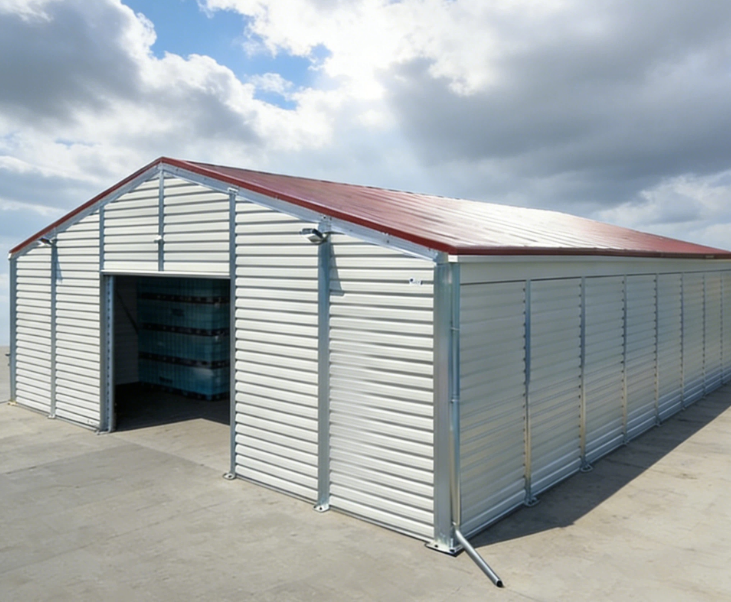
Kuwait Prefab Steel Warehouse Guide for Shuwaikh, Mina Abdullah and Al Jahra Logistics Projects
Kuwait buyers planning a prefab steel warehouse need a building package that can handle high heat, dusty wind, coastal corrosion near Kuwait Bay, truck movement, customs timing, and local permit review. This guide explains how to specify a steel warehouse for logistics parks, industrial plots, cold storage support buildings, spare-parts depots, and contractor yards in Kuwait.
For B2B buyers, a steel building is not only a roof and columns. It is a production asset, a customs and shipping package, a design file set, and a schedule risk item. The notes below are written for engineering procurement teams, contractors, architects, industrial park owners, and project sponsors who need clear decisions before sending a request for quotation.
This guide focuses on Kuwait logistics and light industrial projects in Shuwaikh, Mina Abdullah, Al Jahra, Ahmadi and free-zone related distribution areas. It connects structural design, wind load, snow or rain exposure, seismic demand, cladding choice, corrosion control, installation method, and budget planning. If your team is still defining the building size, use our steel building quote requirement checklist before asking factories for final prices.
1. Project scenarios and buyer priorities
Kuwait has strong demand for distribution warehouses, oil-and-gas service stores, construction material sheds, vehicle maintenance workshops, and industrial park buildings near ports and highway corridors. A prefab steel structure fits these sites because most cutting, drilling, welding, shot blasting, and coating work is finished in the factory. The site team receives marked columns, rafters, purlins, bracing, bolts, roof panels, wall panels, flashings, doors, and drawings. This reduces uncertain site welding and shortens erection time compared with cast-in-place or masonry-heavy industrial buildings.
- Third-party logistics warehouses serving Kuwait City retail and e-commerce distribution.
- Oil-field service storage for tools, pipes, pumps, spare parts, and maintenance vehicles.
- Cold-chain support buildings where insulated panels and vapor control must be decided early.
- Contractor yards requiring high doors, canopy areas, and fast erection before project mobilization.
- Light manufacturing workshops that need clear spans, crane beams, ventilation, and office attachments.
The first purchasing question should be: what work will happen inside the building during the next ten to fifteen years? A logistics building needs dock doors, truck turning space, fire lanes, daylight, drainage, and forklift-safe floor planning. A workshop needs crane beams, service trenches, wall openings, ventilation, and machine foundations. A poultry or agro-processing building needs washable details, air movement, humidity control, and corrosion protection. A clear process brief helps the structural engineer avoid under-designed members and helps the supplier avoid overpricing.
2. Recommended building layout for overseas procurement
Most overseas buyers select a portal frame system for spans from 18 m to 36 m. Wider clear spans are possible, but the steel weight, crane capacity, shipping volume, and erection equipment should be checked early. For Kuwait projects, the layout normally starts with column grid, eave height, roof slope, door positions, roof drainage, and office attachment. The same footprint can have very different costs if bay spacing, crane duty, and cladding are changed late.
| Item | Practical starting point | Procurement note |
| Main span | 24-36 m clear span for many dry warehouses; 18-24 m for smaller service buildings | Confirm clear width, not outside dimension |
| Column bay | 6-8 m common, 9 m possible when racking and truck doors require it | Align with racking, crane runway, or production line |
| Eave height | 6-10 m for logistics; higher if pallet racking, mezzanine, or crane hook clearance is needed | Leave clearance for doors, lights, cranes, ducts, and sprinklers |
| Roof slope | 5%-10% is common; drainage length and gutter sizing matter during rare heavy rain | Must match rainfall, drainage length, and local practice |
| Wall system | single sheet for basic stores; insulated sandwich panel for cooled or occupied areas | Choose insulation and corrosion grade before final quotation |
| Doors | large sectional or roller doors, dock doors, personnel exits, and fire escape routes | Mark truck doors, personnel doors, emergency exits, and fire access |
Buyers comparing a prefab steel warehouse, steel structure workshop, or factory building steel frame should not rely only on square-meter price. A narrower building with heavy crane beams can cost more than a larger dry storage warehouse. A coastal building with hot-dip galvanized secondary steel can cost more than an inland workshop with standard epoxy primer. The quotation must state both steel tonnage and scope.
3. Structural design loads: wind, snow, seismic, rain, and service loads
Kuwait has no snow demand in normal industrial design, but wind, heat movement, dust, roof equipment load, crane load, and seismic review still matter. Local practice may refer to international standards while the approving engineer aligns the design with Kuwait authority requirements.
For an export steel building, the design basis should be written in the quotation. It should identify the design code, basic wind speed or reference wind pressure, terrain category, importance factor, seismic parameters, roof live load, collateral load, crane load, and deflection limits. If the local authority requires a local engineer stamp, ask whether the Chinese supplier will provide calculation sheets and editable drawings for local review.
| Design item | Kuwait planning note | What to ask the supplier |
| Wind | Open desert terrain and coastal exposure can increase suction at roof edges | Basic wind speed, terrain category, pressure zones, fastener schedule |
| Snow | Normally not a governing load | Confirm roof live load and maintenance load instead |
| Rain | Short heavy rainfall can overwhelm undersized gutters | Gutter width, downpipe spacing, overflow path |
| Seismic | Usually moderate but must be checked by the project engineer | Seismic parameters, base shear, bracing layout |
| Heat | High roof temperature creates expansion and comfort issues | Expansion joint need, insulation, ventilation, light roof color |
| Crane | Workshop bays may need 3-20 ton overhead cranes | Crane span, duty, hook height, wheel load, runway beam detail |
Wind load and cladding pressure in Kuwait
Wind in Kuwait can carry dust and sand, and warehouse sites are often open. This means roof uplift and wall pressure must be checked with realistic exposure assumptions. Large roller doors should not be treated as ordinary wall panels; when doors are open during a wind event, internal pressure may change. Bracing bays, end-wall columns, and roof screw spacing should be reviewed carefully.
Wind design is not only a frame issue. Roof sheets, wall sheets, self-drilling screws, ridge caps, gutter supports, corner trims, and large doors also need checking. End-wall zones and roof corner zones often receive higher suction than the middle of the roof. Buyers should ask for fastener spacing by zone instead of one generic spacing for the full building.
Snow, rain, and roof drainage
Snow is not a normal design driver in Kuwait. Rain is less frequent than in tropical markets, but short storms can be intense, and flat industrial yards may drain slowly. A steel warehouse should use adequate roof slope, gutters, downpipes, and ground drainage at dock areas so water does not flow into storage zones.
Seismic and foundation coordination
Kuwait projects still need seismic checking because braced steel frames must transfer lateral force into foundations. The supplier should issue anchor bolt plans and column reactions early so the local engineer can coordinate pad footings, tie beams, slab edges, and any soil improvement.
The exported steel package usually excludes civil foundation work, but foundation drawings cannot be an afterthought. Anchor bolt size, base plate dimensions, uplift forces, shear forces, and column reactions must be sent to the local civil engineer before excavation. For soft soil, reclaimed land, or sites with aggressive groundwater, pile caps or improved foundations may be needed.
4. Material specification and fabrication scope
For Kuwait warehouses, welded H-section Q355B or equivalent is a common main-frame choice. Purlins and girts are usually galvanized C/Z sections. Buyers should pay close attention to panel coating, fastener coating, and insulation because heat and dust shorten the life of weak envelope details.
| Component | Common specification | Inspection point |
| Main columns and rafters | Welded H-section Q355B or equivalent | Mill certificates, weld size, flange/web thickness |
| Crane beams | Welded or hot-rolled section, Q355B typical | Fatigue detail, stiffeners, rail fixing, runway alignment |
| Purlins and girts | Galvanized C/Z section Q235B or Q355B | Zinc coating, hole position, nesting mark |
| Bracing | Round bar, angle steel, pipe, or rod bracing | Thread length, turnbuckle quality, bracing layout |
| Roof and wall sheets | Color-coated steel sheet or sandwich panel | Base metal thickness, coating, insulation core, overlap detail |
| Bolts | High-strength bolts for main frame, ordinary bolts for secondary parts | Grade marking, washer set, torque method |
| Accessories | Gutters, downpipes, ridge cap, trims, skylight, ventilator | Material gauge, corrosion grade, packing list |
For quality control, request photos of raw material, assembly welding, shot blasting, primer thickness testing, trial assembly marks, and container loading. Our steel structure quality control guide lists common checks that reduce missing-part disputes after the containers arrive.
5. Surface treatment and corrosion protection
Kuwait combines coastal air in some zones, industrial pollutants, dust accumulation, and high temperature. Main steel should be shot blasted and coated to a stated dry film thickness. Secondary members are often better supplied with galvanized finish, especially for buildings near the bay, ports, washing areas, or chemical storage.
- Inland dry sites: shot blasting Sa 2.5 plus epoxy zinc-rich primer is often acceptable for main steel.
- Coastal or chemical exposure: consider heavier paint systems, hot-dip galvanizing for purlins, and stainless or coated fasteners where needed.
- High humidity buildings: detail ventilation, avoid water traps, seal panel laps correctly, and protect cut edges.
- Food, poultry, and agro-industrial buildings: choose washable surfaces and avoid crevices that collect moisture and dust.
- Project near ports: specify marine packing protection and check coating damage after unloading.
Do not approve a low price if the coating scope is vague. The supplier should state surface preparation grade, primer type, dry film thickness, topcoat if supplied, galvanizing grade for secondary members, and touch-up paint method. If a building is going to a humid coastal zone, ask for a coating maintenance plan and keep spare panels and fasteners in the project inventory.
6. Cladding, insulation, ventilation, and thermal comfort
For dry storage, single-skin color steel sheet can be economical. For occupied warehouses, spare-parts depots, cold-chain support, or workshops with sensitive equipment, roof insulation should be added. Buyers in Kuwait often select light roof colors, insulation blankets, ridge ventilation, and wall louvers to reduce heat load.
| System | When it works | Buyer caution |
| Single-skin color steel sheet | Dry storage, budget warehouse, temporary workshop | Needs anti-condensation plan in humid or cooled spaces |
| Glass wool with sheet liner | Warehouse or workshop needing heat reduction | Protect insulation from water during installation |
| EPS sandwich panel | Cost-sensitive enclosure with insulation demand | Check fire rules and insurance requirements |
| Rock wool sandwich panel | Better fire rating and acoustic control | Higher cost and heavier lifting requirement |
| PU/PIR sandwich panel | Cold room, controlled environment, some food projects | Confirm fire rating and panel joint details |
Thermal comfort affects labor output and equipment life. Roof insulation, ridge ventilators, wall louvers, HVLS fans, skylight ratios, and smoke vents should be coordinated with the MEP designer. In hot markets, light-colored roof sheets reduce heat gain. In heavy rain areas, good gutter capacity and downpipe spacing prevent overflow at loading doors.
7. Installation schedule and site management
A mid-size Kuwait warehouse can often be erected quickly once containers, cranes, and anchor bolts are ready. The main schedule risk is not frame assembly; it is late permit comments, port clearance, missing lifting equipment, or foundation tolerance problems.
| Stage | Typical duration | Key control |
| Shop drawings and approval | 1-3 weeks | Confirm loads, dimensions, doors, crane data, and local review comments |
| Fabrication | 3-6 weeks | Depends on tonnage, coating, panel type, and factory queue |
| Sea freight and customs | 2-6 weeks | Route, port congestion, import documents, duty, and inland transport |
| Foundation and anchor bolts | 2-5 weeks | Can proceed while steel is fabricated if reactions are issued early |
| Frame erection | 1-3 weeks for many mid-size buildings | Crane access, bolt tightening, bracing sequence, safety plan |
| Purlins, panels, doors, trims | 2-5 weeks | Weather, crew skill, fastener control, leak testing |
See our steel building installation timeline for the usual sequence from fabrication to site assembly. For overseas projects, the safest schedule is not the shortest factory lead time. It is the schedule where civil works, customs papers, unloading equipment, erection crew, and inspection hold points are aligned before shipment.
8. Budget range and price drivers
Kuwait budgets vary with span, height, coating, insulation, and MEP/fire scope. The ranges below are for early comparison of exported steel structure packages, not turnkey civil construction.
| Building type | Typical steel package range | Notes |
| Basic dry warehouse | USD 65-110/m² | Main frame, purlins, basic cladding; excludes slab and MEP |
| Insulated logistics building | USD 95-160/m² | Insulated roof/wall, better doors, larger gutters, more accessories |
| Workshop with crane beam | USD 120-220/m² | Crane runway, heavier frame, bracing, service openings |
| Canopy/loading extension | USD 45-95/m² | Depends on cantilever length, wind load, and drainage |
The numbers above are planning ranges only. Final price depends on steel grade, plate thickness, design loads, bay spacing, insulation, coating, fire requirements, door systems, crane beams, mezzanines, skylights, ventilation, and shipment volume. For more cost variables, read our steel building cost guide.
9. Local regulations, permits, and documentation
Kuwait projects normally need review by local consultants and authority channels before construction. The overseas supplier should not claim that factory drawings alone are enough for permit approval. The buyer should confirm land-use permission, fire access, environmental requirements, utility clearances, and local engineer stamping before placing the order.
- Architectural layout and site plan showing truck circulation and fire lanes.
- Structural calculation report and material certificates.
- Anchor bolt plan, column reactions, and foundation coordination drawings.
- Shop drawings for main steel, purlins, bracing, panels, doors, gutters, and trims.
- Packing list, installation manual, coating records, and bolt list.
Useful references include Kuwait Municipality, Public Authority for Industry Kuwait, and ASCE 7 Hazard Tool. These references do not replace local engineering approval, but they help procurement teams ask more precise questions.
10. Procurement checklist before requesting a formal quote
A good inquiry package saves weeks. It also stops suppliers from giving cheap but incomplete offers. Before issuing an RFQ, prepare the following information.
- Project city, site address, distance to port, and whether the site is coastal, desert, highland, reclaimed land, or industrial zone.
- Building length, width, eave height, roof slope, column grid, future expansion direction, and clear internal height.
- Use of building: dry storage, cold chain, manufacturing, repair workshop, hangar, poultry, agro-processing, or mixed use.
- Required design code, wind speed, snow or rain conditions, seismic level, roof live load, collateral load, and crane data.
- Cladding type, insulation thickness, panel color, skylight, ventilator, gutter, downpipe, doors, windows, and fire partitions.
- Surface treatment requirement, expected service life, corrosion category, and whether hot-dip galvanizing is required.
- Supply scope: steel frame only, full envelope, anchor bolts, doors, installation tools, supervision, or local erection service.
- Documentation needs: calculation report, fabrication drawings, installation drawings, packing list, certificates, and inspection photos.
If you want a supplier review, send the above data through the contact page. For buyers comparing several countries, the global prefab steel building country guide index is a good place to compare climate and project priorities by market.
11. Common Buyer Questions
Can a Kuwait steel warehouse be shipped in standard containers?
Yes. Most columns, rafters, purlins, panels, bolts, and accessories can be packed in 40-foot containers. Oversized members may need splicing to fit container length, so splice design and site bolt access should be checked.
Should Kuwait buyers choose sandwich panels or single sheet cladding?
For simple dry storage, single sheet cladding may work. For occupied work areas, temperature-sensitive goods, cold-chain support, or offices, insulated panels or roof insulation usually give better long-term value.
How long does installation take after containers arrive?
Many mid-size warehouses can have the main frame erected in one to three weeks, with panels and accessories taking additional time. The actual schedule depends on crane access, crew skill, building size, and weather windows.
What information is needed for an accurate price?
Provide dimensions, location, design loads, door schedule, insulation, coating requirement, crane data, local code requirement, and supply scope. Without these details, offers are only rough estimates.
12. Practical purchasing advice
For Kuwait, give extra attention to heat, dust, coating, roof drainage, and door details. A warehouse that looks inexpensive at quotation stage can become costly if insulation, high-wind fasteners, corrosion protection, or dock equipment are added later.
The safest buying route is to freeze the process layout first, then confirm loads and local review requirements, then compare suppliers on the same scope. Ask for a line-by-line offer instead of one lump sum. Check whether anchor bolts, roof insulation, gutters, downpipes, doors, skylights, fasteners, touch-up paint, and installation drawings are included. Do not treat the lowest steel weight as proof of good design. A building that is too light may fail serviceability checks, leak under wind uplift, or need costly reinforcement during local approval.
A well-specified prefab steel building should arrive with clear marks, matching drawings, protected coating, complete fasteners, and a realistic erection plan. When these details are settled early, overseas buyers can control cost, reduce site delays, and receive a building that fits local climate and permit demands.
13. Kuwait detail notes for warehouse owners and contractors
Before approving fabrication, Kuwait buyers should run a short coordination meeting between the structural supplier, local civil engineer, fire consultant, and operations manager. This meeting should confirm truck door locations, rack loads, forklift paths, office block interface, dock canopy projection, and rainwater route away from the slab. If the warehouse will store spare parts for oil-field work, add laydown zones for long items and check whether wall columns or bracing will block side loading.
For high-bay storage, confirm the actual clear height under rafters, bracing, lights, sprinklers, and roof insulation. A quoted eave height of 9 m does not always mean 9 m of storage clearance. Rack suppliers may need slab flatness, aisle width, column protection, and fire sprinkler clearance data, so it is better to coordinate these items before the steel frame is released for production.
Another Kuwait-specific issue is unloading and container staging. Industrial plots can be tight, and customs timing may place several containers on site at once. Ask the supplier for a container loading sequence that matches the erection order: anchor bolts and first-frame columns should not be buried behind roof panels or trims. Clear marking and a bilingual packing list help local crews find the correct members without opening every bundle.