
Prefab Steel Warehouse in Bahrain: Specification, Coastal Corrosion and Procurement Guide

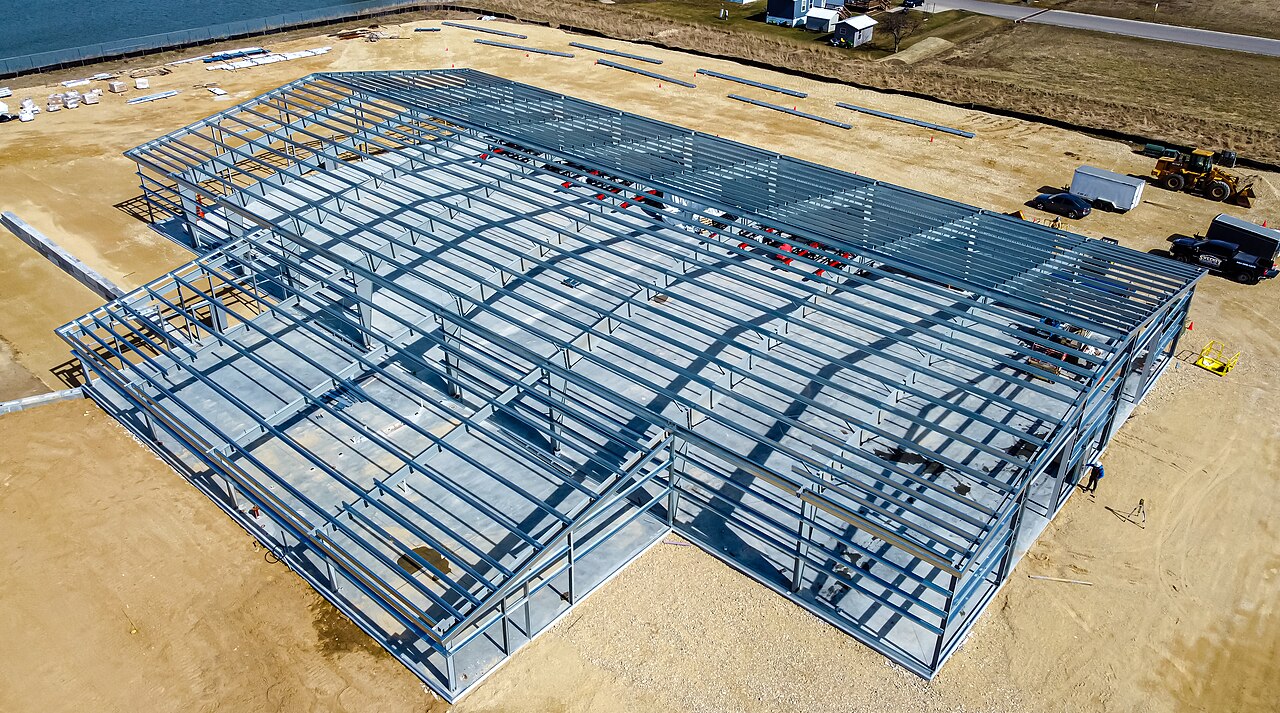
Bahrain runs a compact but demanding industrial program. The Bahrain Logistics Zone next to Khalifa Bin Salman Port, the Hidd industrial area, Salman Industrial City, and the planned expansion around Bahrain International Investment Park all need warehouse and light-industrial space that can be built quickly and stand up to a hot marine climate. A prefab steel warehouse answers both points: short erection time and a structure that tolerates salt-laden air when it is specified correctly.
This guide is written for procurement engineers, contractors, project owners, and logistics-park decision-makers planning a steel warehouse or distribution building in Bahrain. It covers structural design, wind and seismic loads, material grades, corrosion protection for a Gulf coastal site, installation timelines, indicative price ranges, and the local approvals you need before steel arrives on site.
Why Prefab Steel Suits Bahrain Warehouse Projects
Bahrain is a small market with high construction costs and a tight labour pool. Two factors push owners toward pre-engineered steel rather than cast-in-place concrete or block construction:
- Speed. A pre-engineered building (PEB) frame is fabricated off site while foundations are poured, so the erection sequence is short and predictable. A 5,000 m² warehouse shell can be stood up in weeks rather than months.
- Clear span. Distribution and storage operations want column-free floors for racking and forklift movement. Portal frames clear-span 30 m to 45 m without internal columns, which concrete struggles to match economically.
- Salt-air durability. Bahrain’s coastal humidity is hard on bare steel, but a correctly coated and galvanized frame inside a sealed envelope performs well for decades.
- Cost control. Steel tonnage and cladding areas are easy to quantify, so a fixed-price supply package is realistic. See our steel building cost guide for the line items that move a quotation.
Bahrain Climate and Site Conditions That Drive Design
Design decisions for a Bahrain warehouse start with the environment. The island sits in a hot desert climate with strong marine influence on every side.
Temperature and Humidity
Summer air temperatures reach the mid-40s °C with relative humidity above 80% near the coast. Steel surface temperatures on a dark roof can exceed 70 °C. This drives three choices: light roof colours with high solar reflectance, insulated panels or a roof blanket to cut heat gain, and ventilation sizing for working comfort. The combination of heat and humidity also accelerates corrosion, which we address below.
Wind Loads
Bahrain does not sit in a cyclone belt, but the flat, open terrain and exposed coastal sites produce meaningful wind pressures. Design wind speeds in the range of 40–45 m/s (3-second gust) are typical for permanent buildings, applied per ASCE 7 or the wind provisions adopted in the Bahrain National Building Code. Open-sided canopies and high-eave buildings need careful uplift checks on the roof, purlins, and anchor bolts.
Seismic Loads
Seismic hazard in Bahrain is low to moderate. The island is far from major fault zones, but a modest seismic coefficient is still applied for code compliance. For a regular, low-rise steel portal frame, wind almost always governs the lateral design over seismic. The frame ductility of a braced or moment-resisting steel building covers the seismic case comfortably.
Soil and Foundations
Much of Bahrain’s industrial land is reclaimed or sits over weak sabkha and limestone. Bearing capacity varies widely, and sulphate content in groundwater can attack ordinary concrete. A geotechnical report is not optional. Expect isolated pad footings for good ground, or piled foundations and sulphate-resistant concrete where reclamation fill or sabkha is present.
Structural Design of a Bahrain Steel Warehouse
Primary Frame
The workhorse is the tapered-section portal frame: welded built-up I-sections that follow the bending-moment diagram, with deep sections at the knee and shallower sections at mid-span. Typical clear spans run 24 m to 40 m, eave heights of 8 m to 12 m for high-bay storage, and bay spacing of 6 m to 9 m. For very wide buildings, multi-span frames with internal columns reduce steel weight where a clear span is not essential.
Secondary Members
Cold-formed Z-purlins and C-girts carry the cladding and transfer wind to the frame. Purlin gauge and spacing are set by the roof panel span and the wind uplift. On exposed coastal sites the uplift case often controls purlin selection more than gravity load.
Bracing
Roof and wall bracing, usually rod or angle cross-bracing, carries longitudinal wind and stabilises the structure during erection. Portal-frame action handles the transverse direction. Crane buildings need additional bracing and possibly heavier columns to carry runway loads.
Material Specifications
The following grades are standard for our Bahrain projects and align with the design references in our steel structure design guide.
| Component | Specification | Notes |
|---|---|---|
| Primary frame (built-up sections) | Q355B / S355JR (yield 355 MPa) | Welded plate, follows ASTM A572 Gr 50 equivalent |
| Hot-rolled sections | ASTM A992 / S275–S355 | For columns and beams where rolled shapes suit |
| Cold-formed purlins/girts | Galvanized Z/C, Z275 coating | 1.5–3.0 mm gauge by span and uplift |
| Roof and wall cladding | 0.5–0.6 mm AZ150 Galvalume or PPGI | Higher coating mass for coastal sites |
| Anchor bolts | Grade 8.8, hot-dip galvanized | Sized for uplift and shear |
| High-strength bolts | ASTM A325 / 10.9 | Friction or bearing connections |
Corrosion Protection for Bahrain’s Marine Environment
Corrosion is the single most important durability question for any Bahrain steel building. Coastal sites with high humidity and airborne chloride fall into ISO 12944 corrosivity category C4 to C5-M. Specifying an inland coating system on a coastal building is a common and costly mistake.
Our recommended protective systems by exposure:
- Internal frame, conditioned/sealed envelope (C3): shop primer plus a two-coat epoxy/polyurethane system, total dry film thickness around 160–200 µm.
- Coastal or partly open building (C4): hot-dip galvanizing or a zinc-rich epoxy primer plus epoxy intermediate and polyurethane topcoat, 240–280 µm total.
- Severe marine, open structures within ~500 m of the shore (C5-M): hot-dip galvanizing combined with a duplex paint system, 300 µm and above, per ISO 12944-5. The international standard is published by ISO.
Secondary points that matter on the coast: stainless or galvanized fasteners throughout, sealed sheet laps, factory-cut and edge-sealed panels, and avoidance of dissimilar-metal contact that drives galvanic corrosion. We detail inspection holds in our steel structure quality control guide.
Cladding, Insulation and Ventilation
Heat management defines occupant comfort and energy cost in Bahrain. Options range from single-skin sheeting for unconditioned storage to insulated sandwich panels for temperature-sensitive goods.
| Envelope option | Typical use | Thermal performance |
|---|---|---|
| Single-skin Galvalume + roof blanket | General storage | Basic; reflective roof cuts peak heat |
| PU/PIR sandwich panel 50–75 mm | Distribution, light assembly | U-value ~0.35–0.45 W/m²K |
| PU/PIR sandwich panel 100 mm | Cold-adjacent, comfort-cooled | U-value ~0.22 W/m²K |
| Rock-wool sandwich panel | Fire-rated zones | Improved fire performance |
Ridge ventilators, wall louvers, and turbine or powered extract fans manage internal heat in non-conditioned buildings. For comfort-cooled space, the insulated envelope pays back quickly through reduced HVAC load.
Installation Timeline for a Bahrain Project
A realistic schedule for a mid-size warehouse, from contract to handover, looks like the table below. Sea freight from a China fabrication base to Khalifa Bin Salman Port runs roughly 18–28 days plus customs clearance.
| Phase | Duration | Notes |
|---|---|---|
| Design, approval drawings, calculations | 2–4 weeks | Includes wind/seismic calcs and connection design |
| Fabrication and coating | 4–7 weeks | Runs parallel with foundation work |
| Sea freight + customs to Bahrain | 3–5 weeks | Port of Khalifa Bin Salman |
| Foundations on site | 3–5 weeks | Parallel with fabrication |
| Steel erection | 2–4 weeks | 5,000–8,000 m² shell |
| Cladding, doors, services | 3–5 weeks | Roof, walls, roller shutters, fit-out |
Sequencing the foundation works in parallel with fabrication is what keeps the overall program short. Our steel building installation timeline breaks down each step in more detail.
Indicative Price Ranges for Bahrain
Pricing depends on span, height, loads, coating system, and envelope. The figures below are supply-and-erect guidance for budgeting; a firm quote needs your drawings and site data. Freight and Bahrain duties are quoted separately.
| Building type | Indicative rate (USD/m²) | Scope |
|---|---|---|
| Basic single-skin storage warehouse | 55–80 | Frame, single-skin roof/wall, one phase |
| Insulated distribution warehouse | 90–140 | Sandwich panel envelope, dock doors |
| Coastal C5-M warehouse | 120–170 | Duplex coating, heavier cladding spec |
| Crane-equipped industrial building | 140–210 | Runway beams, heavier frame, bracing |
Steel-supply-only packages (frame, purlins, bolts, cladding shipped to port) sit well below the erected rates and suit owners with a local erection contractor. For an accurate figure, see what to send us in our steel building quote requirements page.
Bahrain Approvals and Local Regulations
Permitting in Bahrain runs through the relevant municipality and the building control process, with civil defence sign-off for fire safety. Practical points for a steel warehouse:
- Structural calculations and drawings must be submitted by or endorsed through a locally licensed consultant. We provide stamped calculation packages and shop drawings that a local engineer can review and certify.
- Wind and seismic loads follow the Bahrain National Building Code, which references international standards such as ASCE 7 for loading and AISC steel design provisions published by the American Institute of Steel Construction.
- Fire requirements depend on occupancy and storage type, covering compartmentation, fire-rated cladding where required, and access for civil defence.
- Bahrain is part of the GCC customs union; import duty and clearance at Khalifa Bin Salman Port should be factored into landed cost and schedule.
Project Scenarios in Bahrain
Logistics and 3PL Distribution
Operators in the Bahrain Logistics Zone need high-eave, clear-span buildings with multiple dock-levellers and racking to 10–12 m. The priority is column-free floor area and a roof that handles uplift. Insulated panels reduce cooling cost for goods that degrade in heat.
Light Manufacturing and Assembly
Tenants in Bahrain International Investment Park want flexible bays, natural light through translucent roof panels, and provision for future overhead cranes. A steel workshop building layout with a mezzanine office block suits these users.
Cold-Chain and Food Storage
Bahrain’s food-import role drives demand for temperature-controlled stores. These use 100 mm-plus insulated panels, vapour-sealed details, and a structural allowance for ceiling-hung refrigeration.
Common Buyer Questions
How long does a prefab steel warehouse take to build in Bahrain?
From signed contract to handover, a mid-size warehouse runs about 12–18 weeks. Fabrication and foundations happen in parallel, and on-site erection of the steel shell is typically 2–4 weeks. Sea freight and customs add 3–5 weeks and should be planned into the schedule.
What corrosion protection do I need for a coastal Bahrain site?
Sites near the shore fall into ISO 12944 category C4 to C5-M. Plan for hot-dip galvanizing, or a duplex galvanizing-plus-paint system for the most exposed structures, with galvanized or stainless fasteners. An inland-grade single-coat primer is not adequate for Bahrain’s marine air.
Can the building handle Bahrain’s summer heat?
Yes. Light, high-reflectance roof colours, insulated sandwich panels, and ridge or powered ventilation manage internal temperatures. For comfort-cooled or cold-storage buildings, thicker insulated panels cut HVAC load substantially.
Do you supply steel only, or build the whole warehouse?
Both. We supply complete pre-engineered packages to Khalifa Bin Salman Port for a local erection contractor, or we coordinate supply-and-erect. Many Bahrain owners take the steel-supply package and use a local civil and erection crew.
What information do you need for an accurate quote?
Building length, width, and eave height; intended use and any crane loads; preferred insulation; site location and soil data if available; and your target schedule. Send what you have and we refine the rest. Start at our get a quote page.
Procurement Recommendations
- Commission a geotechnical report early. Reclaimed and sabkha ground in Bahrain dictates the foundation type and concrete spec, and it is the biggest source of cost surprises.
- Specify the coating to the real exposure category. Pay for C4–C5-M protection on coastal sites; it is far cheaper than re-coating or replacing corroded steel in five years.
- Lock loads against the Bahrain National Building Code. Confirm the design wind speed and any crane or future-expansion loads before fabrication starts.
- Plan freight and customs into the timeline. Build the 3–5 week shipping and clearance window into your program from day one.
- Use a single source for the steel package. Frame, purlins, cladding, and fasteners specified together avoid interface gaps and warranty disputes.
If you are scoping a warehouse, workshop, or distribution building for Bahrain, send your dimensions and site details and we will return a marked-up layout and budget. Reach us through the contact page, and review related projects on our blog for Gulf reference work in Qatar, Saudi Arabia, and the UAE.
Steel Versus Concrete and Block for Bahrain Warehouses
Owners in Bahrain often weigh a steel portal frame against traditional concrete-frame or block construction. The trade-offs are clear once you look at span, speed, and lifecycle cost.
| Factor | Prefab steel | Concrete / block |
|---|---|---|
| Clear span | 30–45 m without internal columns | Limited; internal columns common |
| Erection speed | Weeks for the shell | Months; curing time on site |
| Site labour | Small skilled erection crew | Large crew, formwork, wet trades |
| Future modification | Bolt-on extensions, easy openings | Difficult and disruptive |
| Weight on foundations | Light; smaller footings | Heavy; larger foundations |
| Coastal durability | Excellent with correct coating | Good, but rebar corrosion risk in salt air |
For warehouses and industrial sheds in Bahrain, steel wins on speed and span almost every time. Concrete remains relevant for the ground slab, blast walls, fire-rated cores, and any heavy mezzanine floor, which is why most projects are a steel frame on a concrete foundation and slab.
Floor Slabs and Hardstanding
The structural frame is only half the warehouse. The floor slab carries racking legs, forklift wheel loads, and stored goods, and in Bahrain it must also resist sulphate attack from groundwater. A typical specification uses a 150–200 mm reinforced or steel-fibre slab on a compacted sub-base, with a power-floated finish for flatness under high racking. For container yards and truck aprons, a thicker reinforced hardstanding handles repeated heavy axle loads. Joint layout and curing are critical in Bahrain’s heat to avoid early shrinkage cracking.
Mezzanines and Office Integration
Many Bahrain distribution buildings add a mezzanine for offices, parts storage, or a pick module. Steel mezzanines integrate cleanly with the portal frame and can be designed as free-standing or frame-tied structures. Plan the mezzanine loading early: an office floor at 2.5–3.0 kN/m² is very different from a storage mezzanine at 7.5 kN/m² or more, and it changes column and footing design.
Maintenance Over the Building Life
A correctly coated steel warehouse in Bahrain needs little routine work, but a short maintenance plan protects the asset:
- Annual visual inspection of coatings at cut edges, fasteners, and ground-contact zones where chloride concentrates.
- Touch-up of any mechanical damage to galvanizing or paint within the first season to stop creeping corrosion.
- Clearing roof gutters and downpipes before the wet months to prevent ponding and standing water.
- Checking fastener tightness and sheet laps on exposed coastal elevations every few years.
With this light routine, a C4–C5-M coated frame inside a sealed envelope comfortably reaches a 30-year-plus service life in Bahrain conditions.
Logistics, Freight and Landed Cost into Bahrain
For an imported steel building, the landed cost is more than the factory price. Bahrain projects should budget the full chain so the comparison against local fabrication is honest.
| Cost element | Typical share of landed cost | Notes |
|---|---|---|
| Ex-works steel package | 62–72% | Frame, purlins, cladding, fasteners, accessories |
| Sea freight to Khalifa Bin Salman Port | 8–14% | Container or break-bulk by tonnage and volume |
| Insurance and documentation | 1–3% | Marine cargo cover, certificates of origin |
| GCC import duty and clearance | 5% | Common external tariff plus handling |
| Inland haulage and offload | 3–6% | Port to site, crane offload |
| Local erection and civil interface | balance | If not in the supply-and-erect scope |
Packing strategy matters. Nesting purlins inside primary members, flat-packing cladding, and bundling bolts by connection reduce shipping volume and speed up sorting on site. We mark every piece against the erection drawings so a Bahrain crew can build without guesswork.
Crane Buildings and Heavy Industrial Use
Bahrain’s aluminium downstream sector, fabrication yards, and equipment workshops often need overhead travelling cranes. A crane changes the structural design well beyond the runway beam:
- Columns carry vertical crane load plus lateral surge and must be checked for combined bending and axial force.
- Runway beams are sized for the crane wheel loads, impact factor, and fatigue from repeated lifts.
- Bracing is increased to control longitudinal crane forces and sway limits, which protect the crane rails from misalignment.
- Foundations grow to resist the higher column loads and overturning from the crane.
Typical Bahrain workshop cranes run 5 to 20 tonnes. State the crane capacity, span, duty class, and hook height at enquiry stage so the frame is right the first time. Retrofitting a crane into a frame designed without one is expensive and sometimes impossible.
Solar-Ready Roofs
Bahrain’s high solar irradiance and net-metering interest make warehouse roofs attractive for photovoltaic arrays. A large flat roof is effectively a power plant waiting for panels. Design the roof for PV from the start:
- Add the panel dead load (typically 12–18 kg/m² including mounting) to the roof design so purlins and frame are not overstressed later.
- Confirm uplift on panels under Bahrain wind speeds and detail the mounting to the purlin, not just the sheet.
- Plan cable routes, inverter locations, and roof access at design stage to avoid penetrations that compromise the waterproof line.
Specifying a solar-ready roof adds little to the frame cost but avoids a costly strengthening exercise when the PV system is added.
Quality Control and Documentation
For an imported building, paperwork is what lets a local engineer certify the structure. A complete Bahrain package includes mill certificates for the steel, welding procedure and welder qualification records, coating inspection reports with dry-film-thickness readings, bolt certificates, and as-built erection drawings. We hold inspection points at material receipt, after welding, after coating, and before dispatch. This traceability is what separates a compliant industrial building from an unverifiable one, and it is the documentation Bahrain building control expects to see.
Choosing a Steel Building Supplier for Bahrain
The supplier decision affects schedule, compliance, and lifetime cost more than any single material choice. Bahrain owners should weigh a few practical criteria before committing:
- Code literacy. The supplier should design to the Bahrain National Building Code and the referenced ASCE and AISC provisions, and hand over stamped calculations a local consultant can certify without reworking them.
- Coastal coating track record. Ask for ISO 12944 C4–C5-M project references in the Gulf, not just inland sheds. Marine corrosion is unforgiving of generic specifications.
- Freight experience to Bahrain. A supplier that has shipped to Khalifa Bin Salman Port knows the packing, documentation, and clearance details that keep cargo moving.
- Complete documentation. Mill certs, weld records, and coating reports should be standard, not an extra.
- Clear scope split. Be explicit about who handles foundations, erection, and services so there are no gaps at the civil-to-steel interface.
We work with Bahrain contractors and project owners across all of these points, from a stamped design package through to delivered and erected buildings. Whether the project is a coastal distribution warehouse, a crane-equipped workshop, or a cold-chain store, the same fundamentals apply: design to the right loads, coat for the marine environment, and document everything so the building passes review and lasts.