
Steel Structure Warehouse in Tanzania: Dar es Salaam, Coastal Corrosion and Procurement Guide

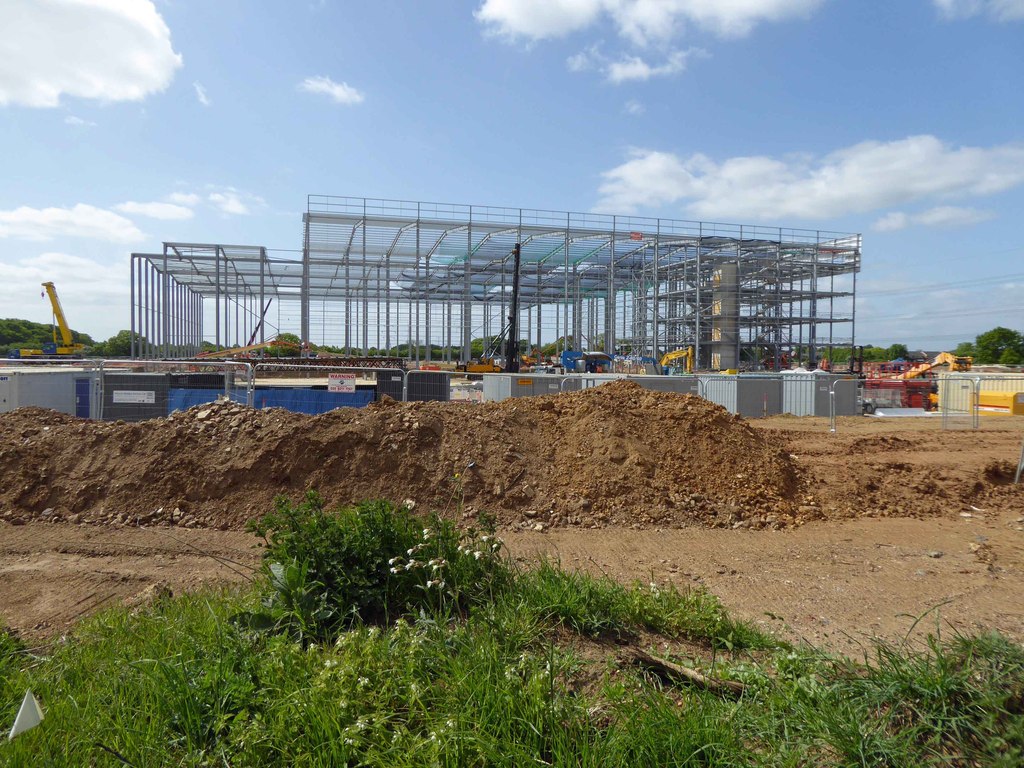
Tanzania is building out its industrial and logistics base fast. The Dar es Salaam port corridor, the Export Processing Zones at Benjamin Mkapa and Kurasini, the growing manufacturing cluster around Kibaha and Morogoro, and the inland hub at Dodoma all need warehouse and factory space that can be built quickly and survive a hot, humid, and in places highly corrosive coastal climate. A prefab steel warehouse or industrial building meets both needs: short erection time and a structure engineered for tropical conditions.
This guide is for procurement engineers, contractors, project owners, architects, and industrial-park decision-makers planning a steel structure building in Tanzania. It covers structural design, wind and seismic loads, material grades, corrosion protection for a tropical coastal site, installation timelines, indicative price ranges, and the local approvals you need before steel arrives at Dar es Salaam.
Why Prefab Steel Suits Tanzania Industrial Projects
Tanzania’s construction market faces long lead times for skilled labour and imported materials, and a wet season that interrupts concrete work. Pre-engineered steel addresses these directly:
- Speed and weather resistance. A pre-engineered building frame is fabricated off site while foundations are poured locally, so erection is fast and far less exposed to rain delays than wet concrete trades.
- Clear span. Warehousing, agro-processing, and light manufacturing all want column-free floors. Portal frames clear-span 24 m to 40 m, which suits racking, grain handling, and production lines.
- Tropical durability. With the right coating and envelope, a steel frame handles Dar es Salaam’s heat and humidity for decades.
- Predictable cost. Steel tonnage and cladding areas quantify cleanly, so a fixed supply price is realistic even when local material prices swing. Our steel building cost guide lists the items that move a quotation.
Tanzania Climate and Site Conditions That Drive Design
Design for a Tanzanian building depends heavily on where it sits. The coastal belt around Dar es Salaam, Tanga, and Mtwara is hot, humid, and corrosive; the central plateau around Dodoma is hot and dry; the highlands are milder.
Temperature and Humidity
Coastal Tanzania runs 25–33 °C year-round with relative humidity often above 80%. This sustained warm, damp air is aggressive toward bare steel and demands a proper coating system, light reflective roof colours, and ventilation sized for worker comfort and stored-goods protection.
Wind Loads
Tanzania is outside the cyclone belt that affects the southern Indian Ocean, but coastal and open inland sites still see meaningful wind. Design wind speeds around 33–42 m/s (3-second gust) are typical for permanent buildings, applied per the loading code adopted on the project, commonly Eurocode or ASCE 7. Roof uplift and anchor-bolt design govern on exposed sites.
Seismic Loads
This matters in Tanzania. The country sits along the East African Rift, and the northern and western regions, including areas near Arusha, Mbeya, and the lake zones, carry real seismic hazard. Buildings in those zones need a seismic design check with appropriate ductility detailing. Coastal Dar es Salaam is lower hazard, where wind usually governs, but the rift zones are not a place to ignore earthquake loading.
Soil and Foundations
Coastal sites often have soft alluvial or made ground with a high water table; inland plateau soils vary from firm to expansive black-cotton clay, which swells and shrinks with moisture and can wreck poorly designed footings. A geotechnical investigation is essential. Expect pad footings on good ground and piles or ground improvement where black-cotton soil or soft coastal deposits are present.
Structural Design of a Tanzania Steel Building
Primary Frame
The standard solution is the tapered-section portal frame: welded built-up I-sections that follow the bending-moment diagram, deep at the knee and shallower at mid-span. Clear spans of 24 m to 40 m, eave heights of 6 m to 12 m, and bay spacing of 6 m to 9 m cover most warehouse and factory needs. Multi-span frames with internal columns reduce steel weight for very wide buildings where a full clear span is not required.
Secondary Members
Cold-formed Z-purlins and C-girts carry cladding and transfer wind to the frame. On exposed coastal sites, uplift often governs purlin gauge more than gravity load. Galvanized secondary steel is strongly preferred in Tanzania’s humid coastal zone.
Bracing and Lateral Stability
Roof and wall cross-bracing carries longitudinal wind and stabilises the frame during erection, while portal action handles the transverse direction. In rift-zone seismic areas, bracing and connection detailing are upgraded to provide ductility under earthquake loading.
Material Specifications
The grades below are standard for our Tanzania projects and align with our steel structure design guide.
| Component | Specification | Notes |
|---|---|---|
| Primary frame (built-up) | Q355B / S355JR (yield 355 MPa) | Welded plate, ASTM A572 Gr 50 equivalent |
| Hot-rolled sections | S275–S355 / ASTM A992 | Columns and beams where rolled shapes suit |
| Cold-formed purlins/girts | Galvanized Z/C, Z275 coating | 1.5–3.0 mm by span and uplift |
| Roof and wall cladding | 0.5–0.6 mm AZ150 Galvalume or PPGI | Higher coating mass on the coast |
| Anchor bolts | Grade 8.8, hot-dip galvanized | Sized for uplift and shear |
| High-strength bolts | ASTM A325 / 10.9 | Friction or bearing connections |
Corrosion Protection for Tanzania’s Tropical Climate
For coastal Tanzania, corrosion is the defining durability question. Dar es Salaam, Tanga, and Mtwara sit in ISO 12944 corrosivity category C4, rising to C5-M within a few hundred metres of the shoreline. Inland Dodoma and the drier plateau are typically C3. Specifying a dry-inland coating on a coastal building is a costly error.
- Inland dry sites, sealed envelope (C3): shop primer plus a two-coat epoxy/polyurethane system, 160–200 µm total dry film thickness.
- Coastal humid sites (C4): hot-dip galvanizing, or zinc-rich epoxy primer plus epoxy intermediate and polyurethane topcoat, 240–280 µm.
- Severe marine within ~500 m of shore (C5-M): hot-dip galvanizing with a duplex paint system, 300 µm and above per ISO 12944-5, published by ISO.
On the coast, also specify galvanized or stainless fasteners, sealed sheet laps, edge-sealed cut panels, and no dissimilar-metal contact. Inspection holds are detailed in our steel structure quality control guide.
Cladding, Insulation and Ventilation
Heat and humidity management protect both workers and stored goods in Tanzania. Options run from single-skin sheeting for general storage to insulated panels for agro-processing and comfort-cooled space.
| Envelope option | Typical use | Thermal performance |
|---|---|---|
| Single-skin Galvalume + roof blanket | General storage | Basic; reflective roof cuts heat gain |
| PU/PIR sandwich panel 50–75 mm | Distribution, agro-processing | U-value ~0.35–0.45 W/m²K |
| PU/PIR sandwich panel 100 mm | Comfort-cooled, cold-adjacent | U-value ~0.22 W/m²K |
| Rock-wool sandwich panel | Fire-rated zones | Improved fire performance |
Ridge ventilators, wall louvers, and powered extract fans manage internal heat and moisture in non-conditioned buildings. Good cross-ventilation also reduces internal condensation, which matters for stored produce and equipment in humid coastal air.
Structural Design of a Tanzania Steel Building
Primary Frame
The standard solution is the tapered-section portal frame: welded built-up I-sections that follow the bending-moment diagram, deep at the knee and shallower at mid-span. Clear spans of 24 m to 40 m, eave heights of 6 m to 12 m, and bay spacing of 6 m to 9 m cover most warehouse and factory needs. Multi-span frames with internal columns reduce steel weight for very wide buildings where a full clear span is not required.
Secondary Members
Cold-formed Z-purlins and C-girts carry cladding and transfer wind to the frame. On exposed coastal sites, uplift often governs purlin gauge more than gravity load. Galvanized secondary steel is strongly preferred in Tanzania’s humid coastal zone.
Bracing and Lateral Stability
Roof and wall cross-bracing carries longitudinal wind and stabilises the frame during erection, while portal action handles the transverse direction. In rift-zone seismic areas, bracing and connection detailing are upgraded to provide ductility under earthquake loading.
Material Specifications
The grades below are standard for our Tanzania projects and align with our steel structure design guide.
| Component | Specification | Notes |
|---|---|---|
| Primary frame (built-up) | Q355B / S355JR (yield 355 MPa) | Welded plate, ASTM A572 Gr 50 equivalent |
| Hot-rolled sections | S275–S355 / ASTM A992 | Columns and beams where rolled shapes suit |
| Cold-formed purlins/girts | Galvanized Z/C, Z275 coating | 1.5–3.0 mm by span and uplift |
| Roof and wall cladding | 0.5–0.6 mm AZ150 Galvalume or PPGI | Higher coating mass on the coast |
| Anchor bolts | Grade 8.8, hot-dip galvanized | Sized for uplift and shear |
| High-strength bolts | ASTM A325 / 10.9 | Friction or bearing connections |
Corrosion Protection for Tanzania’s Tropical Climate
For coastal Tanzania, corrosion is the defining durability question. Dar es Salaam, Tanga, and Mtwara sit in ISO 12944 corrosivity category C4, rising to C5-M within a few hundred metres of the shoreline. Inland Dodoma and the drier plateau are typically C3. Specifying a dry-inland coating on a coastal building is a costly error.
- Inland dry sites, sealed envelope (C3): shop primer plus a two-coat epoxy/polyurethane system, 160–200 µm total dry film thickness.
- Coastal humid sites (C4): hot-dip galvanizing, or zinc-rich epoxy primer plus epoxy intermediate and polyurethane topcoat, 240–280 µm.
- Severe marine within ~500 m of shore (C5-M): hot-dip galvanizing with a duplex paint system, 300 µm and above per ISO 12944-5, published by ISO.
On the coast, also specify galvanized or stainless fasteners, sealed sheet laps, edge-sealed cut panels, and no dissimilar-metal contact. Inspection holds are detailed in our steel structure quality control guide.
Cladding, Insulation and Ventilation
Heat and humidity management protect both workers and stored goods in Tanzania. Options run from single-skin sheeting for general storage to insulated panels for agro-processing and comfort-cooled space.
| Envelope option | Typical use | Thermal performance |
|---|---|---|
| Single-skin Galvalume + roof blanket | General storage | Basic; reflective roof cuts heat gain |
| PU/PIR sandwich panel 50–75 mm | Distribution, agro-processing | U-value ~0.35–0.45 W/m²K |
| PU/PIR sandwich panel 100 mm | Comfort-cooled, cold-adjacent | U-value ~0.22 W/m²K |
| Rock-wool sandwich panel | Fire-rated zones | Improved fire performance |
Ridge ventilators, wall louvers, and powered extract fans manage internal heat and moisture in non-conditioned buildings. Good cross-ventilation also reduces internal condensation, which matters for stored produce and equipment in humid coastal air.
Installation Timeline for a Tanzania Project
A realistic schedule for a mid-size steel building, from contract to handover, is set out below. Sea freight from a China fabrication base to Dar es Salaam port runs roughly 25–35 days, plus customs clearance and inland haulage to Dodoma, Mwanza, or Arusha.
| Phase | Duration | Notes |
|---|---|---|
| Design, approval drawings, calculations | 2–4 weeks | Wind/seismic calcs and connection design |
| Fabrication and coating | 4–7 weeks | Runs parallel with foundation work |
| Sea freight + customs to Dar es Salaam | 4–6 weeks | Plus inland haul to upcountry sites |
| Foundations on site | 3–5 weeks | Parallel with fabrication |
| Steel erection | 2–5 weeks | 5,000–8,000 m² shell |
| Cladding, doors, services | 3–5 weeks | Roof, walls, roller shutters, fit-out |
Running foundation works in parallel with fabrication keeps the overall program short. Inland transport to upcountry regions adds time and cost, so plan delivery routing early. Our steel building installation timeline breaks down each step.
Indicative Price Ranges for Tanzania
Pricing depends on span, height, loads, coating system, and envelope. The figures below are supply-and-erect guidance for budgeting; a firm quote needs your drawings and site data. Freight, Tanzania import duty, and inland haulage are quoted separately.
| Building type | Indicative rate (USD/m²) | Scope |
|---|---|---|
| Basic single-skin storage warehouse | 50–75 | Frame, single-skin roof/wall, one phase |
| Insulated distribution warehouse | 85–135 | Sandwich panel envelope, dock doors |
| Coastal C5-M warehouse | 115–165 | Duplex coating, heavier cladding spec |
| Crane-equipped industrial building | 135–205 | Runway beams, heavier frame, bracing |
Steel-supply-only packages shipped to Dar es Salaam sit below the erected rates and suit owners with a local erection contractor. For an accurate figure, see what to send us on our steel building quote requirements page.
Tanzania Approvals and Local Regulations
Permitting in Tanzania runs through the local authority and the relevant building control process, with fire authority sign-off. Practical points for a steel warehouse or workshop:
- Structural drawings and calculations should be submitted by or endorsed through a locally registered engineer, registered with the Engineers Registration Board (ERB). We provide stamped calculation packages and shop drawings a local engineer can review and certify.
- Tanzanian practice commonly references British Standards and Eurocodes for loading and steel design; we align our calculations to the code basis your consultant prefers.
- Fire requirements depend on occupancy and storage type, covering compartmentation, access, and fire-rated cladding where required.
- Imports clear through Dar es Salaam port; factor TRA customs duty, VAT, and clearance time into landed cost and schedule. Standards alignment is overseen by the Tanzania Bureau of Standards.
Project Scenarios in Tanzania
Port and Logistics Distribution
Operators around Dar es Salaam port and the planned Bagamoyo corridor need high-eave, clear-span buildings with multiple dock doors and racking. The priority is column-free floor area and a roof detailed for tropical rain and uplift. Insulated panels cut cooling cost for sensitive goods.
Agro-Processing and Storage
Tanzania’s agriculture drives demand for grain stores, cashew and coffee processing sheds, and cold rooms. These use insulated panels, vapour-sealed details, and good ventilation. A steel workshop building layout with a mezzanine office suits processors.
Mining and Equipment Workshops
The gold and gemstone sector around Mwanza, Geita, and Shinyanga needs heavy maintenance workshops with overhead cranes. These require heavier frames, crane runway beams, and additional bracing to carry lifting loads.
Common Buyer Questions
How long does a prefab steel warehouse take to build in Tanzania?
From signed contract to handover, a mid-size building runs about 14–20 weeks. Fabrication and foundations run in parallel, and on-site erection of the steel shell is typically 2–5 weeks. Sea freight, customs, and inland haulage to upcountry sites add 4–6 weeks and should be planned in.
What corrosion protection do I need on the Tanzanian coast?
Coastal Dar es Salaam, Tanga, and Mtwara fall into ISO 12944 C4 to C5-M. Plan for hot-dip galvanizing, or a duplex galvanizing-plus-paint system for the most exposed structures, with galvanized or stainless fasteners. Inland Dodoma and the plateau are usually C3 and need a lighter system.
Can you ship to upcountry sites like Mwanza or Dodoma?
Yes. Steel clears through Dar es Salaam port and moves inland by road. We size members and bundle loads for road transport, and we plan delivery routing and lifting access at the design stage to suit upcountry sites.
Do you supply steel only, or build the whole warehouse?
Both. We supply complete pre-engineered packages to Dar es Salaam for a local erection contractor, or coordinate supply-and-erect. Many Tanzanian owners take the steel-supply package and use a local civil and erection crew.
What information do you need for an accurate quote?
Building length, width, and eave height; intended use and any crane loads; preferred insulation; site location and soil data if available; and your target schedule. Send what you have and we refine the rest. Start at our get a quote page.
Procurement Recommendations
- Commission a geotechnical report early. Coastal soft ground and black-cotton soils inland dictate the foundation type and are the biggest source of cost surprises.
- Match the coating to the real exposure category. Pay for C4–C5-M protection on coastal sites; it is far cheaper than re-coating corroded steel within a few years.
- Confirm the code basis with your consultant. Agree whether loading follows British Standards or Eurocodes before fabrication starts.
- Plan freight, customs, and inland haulage into the timeline. Upcountry delivery adds real time; build it into the program from day one.
- Use a single source for the steel package. Frame, purlins, cladding, and fasteners specified together avoid interface gaps and warranty disputes.
If you are scoping a warehouse, workshop, or processing building for Tanzania, send your dimensions and site details and we will return a marked-up layout and budget. Reach us through the contact page, and review related African projects on our blog.
Floor Slabs and Hardstanding
The floor slab carries racking legs, forklift loads, and stored goods. In Tanzania’s wetter regions, sub-base drainage and slab design must handle a high water table and seasonal rain. A typical specification uses a 150–200 mm reinforced or steel-fibre slab on a compacted, well-drained sub-base, with a power-floated finish under high racking. Container yards and truck aprons need a thicker reinforced hardstanding for repeated heavy axle loads.
Mezzanines and Office Integration
Many Tanzanian distribution and processing buildings add a mezzanine for offices, parts, or a pick module. Steel mezzanines integrate with the portal frame as free-standing or frame-tied structures. Set the loading early: an office floor at 2.5–3.0 kN/m² is very different from a storage mezzanine at 7.5 kN/m² or more, and it changes column and footing design.
Maintenance Over the Building Life
A correctly coated steel building in Tanzania needs little routine work, but a short plan protects the asset:
- Annual visual inspection of coatings at cut edges, fasteners, and ground-contact zones where moisture and chloride concentrate.
- Touch-up of mechanical damage to galvanizing or paint within the first season to stop creeping corrosion.
- Clearing roof gutters and downpipes before the long rains to prevent ponding and overflow.
- Checking fastener tightness and sheet laps on exposed coastal elevations every few years.
With this light routine, a C4–C5-M coated frame inside a sealed envelope comfortably reaches a 30-year-plus service life in Tanzanian conditions. For the structural reasoning behind these choices, see our steel structure design guide.
Steel Versus Concrete and Block for Tanzania Buildings
Owners in Tanzania often compare a steel portal frame with concrete-frame or block construction. The trade-offs become clear when you weigh span, speed, and the local climate.
| Factor | Prefab steel | Concrete / block |
|---|---|---|
| Clear span | 24–40 m without internal columns | Limited; internal columns common |
| Erection speed | Weeks for the shell, rain-tolerant | Months; curing delayed by wet season |
| Site labour | Small skilled erection crew | Large crew, formwork, wet trades |
| Future modification | Bolt-on extensions, easy openings | Difficult and disruptive |
| Foundations | Light; smaller footings on soft soil | Heavy; larger footings, more risk on black-cotton clay |
| Coastal durability | Excellent with correct coating | Rebar corrosion risk in humid salt air |
For warehouses, factories, and agro-processing sheds in Tanzania, steel wins on speed and span, and it copes better with the wet-season schedule. Concrete keeps its place for the ground slab, fire-rated cores, and heavy mezzanine floors, so most projects end up as a steel frame on a concrete foundation and slab.
Floor Slabs, Mezzanines and Maintenance
The frame is only part of the building. In Tanzania the ground slab must carry racking and forklift loads and resist moisture from a high coastal water table. A typical specification is a 150–200 mm reinforced or steel-fibre slab on a compacted, well-drained sub-base, power-floated for racking flatness. Container yards and truck aprons need thicker reinforced hardstanding for repeated heavy axle loads.
Mezzanines for offices or storage integrate with the portal frame; set the design loading early, since an office floor at 2.5–3.0 kN/m² differs sharply from a storage mezzanine at 7.5 kN/m² or more. For long service life in Tanzania’s climate, run a light maintenance routine: annual inspection of coatings at cut edges and fasteners, prompt touch-up of damaged galvanizing, clearing gutters before the rains, and checking sheet laps on exposed coastal elevations. With this routine a C4–C5-M coated frame inside a sealed envelope comfortably exceeds a 30-year service life.