
Steel Structure Building in Chile: Seismic Design, Mining Logistics and Procurement Guide

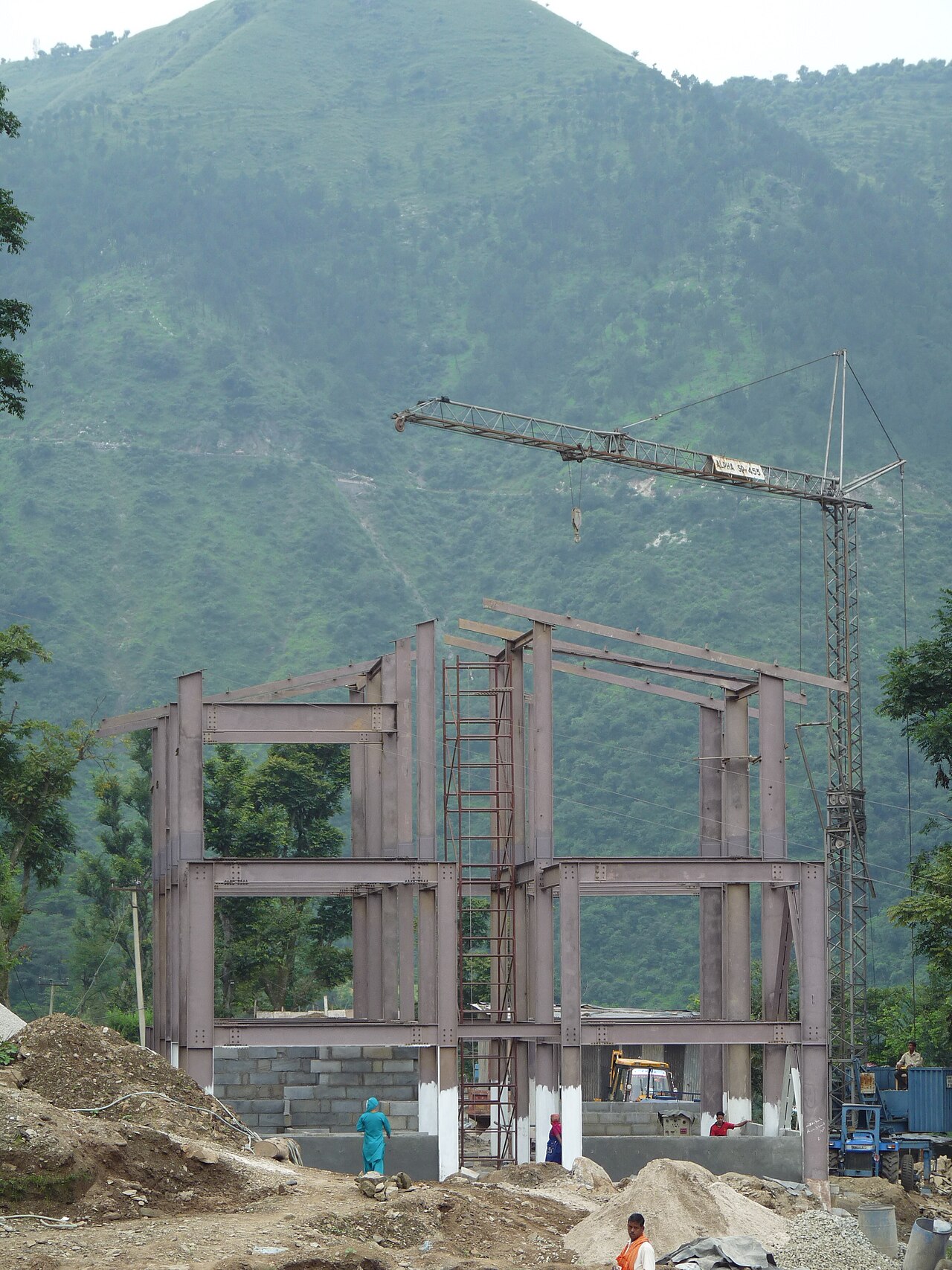
Chile’s industrial and logistics build-out runs the length of an extraordinarily varied country, from the mining north around Antofagasta and Calama, through the ports and distribution hubs of Valparaiso, San Antonio and Santiago, down to the agro-industrial and salmon-processing south around Puerto Montt. Every one of these markets needs warehouse, workshop and factory space that goes up fast and, above all, survives one of the most seismically active environments on earth. A prefab steel warehouse or industrial building answers both: rapid erection and a ductile structure that performs in a major earthquake.
This guide is written for procurement engineers, contractors, project owners, architects, and mining and logistics decision-makers planning a steel structure building in Chile. It covers seismic and wind design, material grades, corrosion protection across Chile’s climate zones, installation timelines, indicative price ranges, and the local approvals you need before steel arrives at a Chilean port.
Why Prefab Steel Suits Chile Industrial Projects
Chile is a steel-building country by necessity. Its seismic exposure rewards lightweight, ductile structures over heavy masonry, and its long, thin geography makes fast, transportable construction valuable. Pre-engineered steel delivers on several fronts:
- Seismic performance. Steel’s ductility lets a frame absorb and dissipate earthquake energy rather than shattering. After the 2010 Maule earthquake, well-detailed steel buildings consistently outperformed brittle alternatives.
- Speed. A pre-engineered building frame is fabricated off site while foundations are poured, so erection is short and predictable across remote mining and southern sites.
- Clear span. Mining maintenance shops, distribution centres, and processing plants all want column-free floors. Portal frames clear-span 24 m to 45 m for racking, equipment, and production lines.
- Predictable cost. Steel tonnage and cladding areas quantify cleanly, so a fixed supply price is realistic. Our steel building cost guide breaks down the items that move a quotation.
Chile Climate and Site Conditions That Drive Design
Chile spans desert, Mediterranean, temperate and sub-polar zones, so design conditions change radically with latitude. But one factor is constant the length of the country: seismic hazard.
Seismic Loads
This is the governing design case for nearly every Chilean building. Chile sits on the Nazca-South American subduction zone and experiences frequent large earthquakes, including the magnitude 9.5 Valdivia event in 1960, the strongest ever recorded. Design follows the Chilean seismic code NCh433 together with NCh2369 for industrial structures, which is among the most demanding industrial seismic standards in the world. Frames need genuine ductility detailing: capacity-designed connections, controlled brace behaviour, and careful attention to the load path into the foundations. This is not a market for generic portal-frame details copied from a low-seismic region.
Wind Loads
Wind matters most in the far south. Patagonian sites around Punta Arenas see sustained high winds, with design gusts that can rival the seismic lateral demand. Central and northern Chile have more moderate wind, applied per NCh432 or ASCE 7. Roof uplift and anchorage govern on exposed southern and coastal sites.
Climate Zones and Temperature
The Atacama north is hyper-arid with high solar load and large day-night temperature swings, but very low atmospheric moisture inland. Central Chile is Mediterranean and mild. The south is cool, wet and windy. Each zone drives different envelope and ventilation choices, covered below.
Soil and Foundations
Chilean soils range from competent rock and dense gravels in parts of Santiago to soft coastal and lake-bed deposits that amplify seismic shaking. Soil classification under NCh433 directly changes the seismic design forces, so a geotechnical investigation is essential, not optional. Expect pad footings on competent ground and piles or ground improvement on soft sites, with anchor design checked for seismic uplift and overturning.
Structural Design of a Chile Steel Building
Primary Frame
The standard solution is the tapered-section portal frame in welded built-up I-sections, deep at the knee and shallower at mid-span. Clear spans of 24 m to 45 m, eave heights of 6 m to 12 m, and bay spacing of 6 m to 9 m cover most warehouse, workshop and plant needs. For mining maintenance shops with heavy overhead cranes, frames are upgraded with heavier columns and runway beams.
Secondary Members
Cold-formed Z-purlins and C-girts carry cladding and transfer load to the frame. In the windy south, uplift governs purlin gauge; in coastal zones, galvanized secondary steel is preferred for corrosion resistance.
Bracing and Ductility Detailing
This is where Chilean design diverges from low-seismic markets. Vertical bracing systems, concentrically braced frames or moment frames are detailed per NCh2369 for ductile response, with connections capacity-designed to remain elastic while braces or designated members yield. Erection bracing is also planned carefully because partly built frames are vulnerable during the construction window.
Material Specifications
The grades below are standard for our Chilean projects and align with our steel structure design guide.
| Component | Specification | Notes |
|---|---|---|
| Primary frame (built-up sections) | Q355B / A572 Gr 50 (yield 355 MPa) | Welded plate, ductile grade for seismic |
| Hot-rolled sections | ASTM A992 | Columns and beams where rolled shapes suit |
| Cold-formed purlins/girts | Galvanized Z/C, Z275 coating | 1.5–3.0 mm gauge by span and uplift |
| Roof and wall cladding | 0.5–0.6 mm AZ150 Galvalume or PPGI | Higher coating mass for coastal/mining sites |
| Anchor bolts | Grade 8.8, hot-dip galvanized | Sized for seismic uplift and shear |
| High-strength bolts | ASTM A325 / A490 | Capacity-designed seismic connections |
Corrosion Protection Across Chile’s Climate Zones
Corrosion exposure in Chile varies more than almost anywhere. The same building specification cannot serve Antofagasta’s coastal mining belt and the dry Atacama interior. Categories follow ISO 12944.
- Atacama interior, very dry (C2–C3): shop primer plus a two-coat epoxy/polyurethane system, 140–180 µm. Low atmospheric moisture means corrosion is slow, though UV and salt-nitrate dust still warrant a durable topcoat.
- Coastal cities and northern coastal mining (C4): hot-dip galvanizing, or zinc-rich epoxy primer plus epoxy intermediate and polyurethane topcoat, 240–280 µm.
- Severe marine and salmon-processing south within ~500 m of shore (C5-M): hot-dip galvanizing with a duplex paint system, 300 µm and above per ISO 12944-5, published by ISO.
On coastal and processing sites, also specify galvanized or stainless fasteners, sealed sheet laps, and edge-sealed cut panels. Inspection holds are detailed in our steel structure quality control guide.
Cladding, Insulation and Ventilation
Envelope choices track Chile’s climate zones closely.
| Envelope option | Typical use | Thermal performance |
|---|---|---|
| Single-skin Galvalume + roof blanket | General storage, arid north | Basic; reflective roof cuts solar gain |
| PU/PIR sandwich panel 50–75 mm | Distribution, central Chile | U-value ~0.35–0.45 W/m²K |
| PU/PIR sandwich panel 100–120 mm | Cold/wet south, processing | U-value ~0.18–0.22 W/m²K |
| Rock-wool sandwich panel | Fire-rated zones | Improved fire performance |
The arid north needs solar-reflective roofs and ventilation against heat; the wet, cold south needs insulation, condensation control, and a wind-tight envelope for Patagonian conditions.
Installation Timeline for a Chile Project
A realistic schedule for a mid-size warehouse or workshop, from contract to handover, looks like the table below. Sea freight from a China fabrication base to San Antonio or Valparaíso runs roughly 30–40 days plus customs clearance.
| Phase | Duration | Notes |
|---|---|---|
| Design, approval drawings, seismic calculations | 3–5 weeks | NCh433 seismic and NCh432 wind calcs, connection design |
| Fabrication and coating | 5–8 weeks | Runs parallel with foundation work |
| Sea freight + customs to Chile | 5–7 weeks | Port of San Antonio or Valparaíso |
| Foundations on site | 3–6 weeks | Parallel with fabrication; heavier for seismic |
| Steel erection | 3–5 weeks | 5,000–8,000 m² shell |
| Cladding, doors, services | 3–5 weeks | Roof, walls, roller shutters, fit-out |
Running foundations in parallel with fabrication keeps the program short. Our steel building installation timeline breaks down each step in more detail.
Indicative Price Ranges for Chile
Pricing depends on span, height, seismic and wind loads, coating system, and envelope. The figures below are supply-and-erect guidance for budgeting; a firm quote needs your drawings and site data. Freight and Chilean import duties are quoted separately.
| Building type | Indicative rate (USD/m²) | Scope |
|---|---|---|
| Basic single-skin storage warehouse | 60–85 | Frame, single-skin roof/wall, one phase |
| Insulated distribution warehouse | 95–145 | Sandwich panel envelope, dock doors |
| Coastal C5-M building | 125–180 | Duplex coating, heavier cladding spec |
| Mining / crane-equipped industrial building | 150–230 | Runway beams, heavier seismic frame, bracing |
Steel-supply-only packages shipped to port sit well below erected rates and suit owners with a local erection contractor. For an accurate figure, see what to send us in our steel building quote requirements page.
Chile Approvals and Local Regulations
Permitting in Chile runs through the municipal Dirección de Obras Municipales (DOM), with structural design certified by a locally licensed engineer. Practical points for a steel building:
- Structural calculations and drawings must be submitted by or endorsed through a Chilean structural engineer. We provide stamped calculation packages and shop drawings a local engineer can review and certify.
- Seismic design follows NCh433 with the steel provisions of NCh427; wind follows NCh432. These are administered through the building code framework of Chile’s Ministerio de Vivienda y Urbanismo (MINVU).
- Steel design and fabrication generally reference AISC provisions published by the American Institute of Steel Construction, aligned with Chilean seismic detailing.
- Fire requirements depend on occupancy and storage type, covering compartmentation, fire-rated cladding where required, and access for emergency services.
- Import duty and clearance at San Antonio or Valparaíso should be factored into landed cost and schedule; Chile’s free-trade agreements can reduce duty on qualifying goods.
Project Scenarios in Chile
Mining Supply and Maintenance Buildings
The northern mining regions around Antofagasta, Calama, and Copiapó need workshops, warehouses, and maintenance buildings for heavy equipment. These want high eaves, overhead crane provision, and frames designed for both seismic load and the dry, high-UV Atacama environment. A steel workshop building with a runway crane suits mine-site maintenance.
Logistics and Distribution
Operators around Santiago, San Antonio, and the central valley need clear-span, high-eave distribution buildings with dock levellers and racking to 10–12 m. Seismic detailing and a column-free floor are the priorities.
Agro-Processing and Cold Storage
Chile’s fruit, wine, and salmon exports drive demand for temperature-controlled stores in the central and southern regions. These use 100 mm-plus insulated panels, vapour-sealed details, and structural allowance for ceiling-hung refrigeration.
Steel Versus Concrete for Chile’s Seismic Zones
In a high-seismic country, the weight advantage of steel is a direct safety and cost benefit. Lighter structures attract lower seismic forces, which means smaller foundations and less reinforcement.
| Factor | Prefab steel | Concrete |
|---|---|---|
| Seismic mass | Light; lower inertial forces | Heavy; higher seismic demand |
| Ductility | High with proper detailing | Good but heavier detailing |
| Clear span | 30–45 m column-free | Limited; internal columns common |
| Erection speed | Weeks for the shell | Months; curing on site |
| Foundations | Smaller footings | Larger, heavier foundations |
| Repair after a quake | Inspect bolts, replace members | Crack repair, harder to assess |
For warehouses and industrial buildings in Chile, a ductile steel frame on a concrete foundation is the standard answer. Concrete stays relevant for the slab, retaining elements, and fire-rated cores.
Floor Slabs and Hardstanding
The floor slab carries racking legs, forklift loads, and stored goods. A typical specification uses a 150–200 mm reinforced or steel-fibre slab on a compacted sub-base, with a power-floated finish for flatness under high racking. Mining and container yards need thicker reinforced hardstanding for heavy axle loads. In seismic zones, slab-to-foundation detailing must accommodate movement without distress.
Maintenance Over the Building Life
- Annual visual inspection of coatings at cut edges, fasteners, and ground-contact zones, with extra attention on coastal elevations.
- Post-earthquake structural inspection: check connections, anchor bolts, and bracing after any significant seismic event.
- Touch-up of mechanical damage to galvanizing or paint within the first season to stop creeping corrosion.
- Clearing roof gutters and downpipes before the wet season, especially in the rainy south.
With this routine, a correctly coated steel building reaches a 30-year-plus service life across Chile’s climate zones.
Common Buyer Questions
How are Chilean seismic loads handled in a steel building?
Design follows NCh433 with steel detailing per NCh427 and AISC seismic provisions. The frame uses ductile, bolted moment connections and braced bays so the structure can deform and absorb energy without collapse. Steel’s light weight reduces the seismic force in the first place, which is a major advantage over concrete in Chile.
What corrosion protection do I need for a coastal Chilean site?
Coastal sites fall into ISO 12944 category C4 to C5-M. Plan for hot-dip galvanizing, or a duplex galvanizing-plus-paint system for the most exposed structures, with galvanized or stainless fasteners. The dry inland north is less corrosive but has very high UV, so topcoat selection matters there.
How long does a steel building take to deliver to Chile?
From signed contract to handover, a mid-size building runs about 18–24 weeks. Fabrication and foundations run in parallel, on-site erection is 3–5 weeks, and sea freight plus customs adds 5–7 weeks given the distance from Asia, which should be planned into the schedule.
Do you supply steel only, or build the whole project?
Both. We supply complete pre-engineered packages to San Antonio or Valparaíso for a local erection contractor, or coordinate supply-and-erect. Many Chilean owners take the steel-supply package and use a local civil and erection crew familiar with seismic detailing.
What information do you need for an accurate quote?
Building length, width, and eave height; intended use and any crane loads; seismic zone and soil data if available; preferred insulation; site location; and your target schedule. Send what you have and we refine the rest. Start at our get a quote page.
Procurement Recommendations
- Commission a geotechnical and seismic site study early. Soil class drives both the foundation design and the seismic response; it is the biggest source of cost surprises in Chile.
- Specify seismic detailing to NCh433/NCh427 from the start. Ductile connections and bracing are not an afterthought; they shape the whole frame design.
- Match the coating to the real exposure. Pay for C4–C5-M protection on the coast and high-UV topcoats in the north.
- Plan the long freight window. Build the 5–7 week shipping and clearance time into your program from day one.
- Use a single source for the steel package. Frame, purlins, cladding, and fasteners specified together avoid interface gaps and warranty disputes.
If you are scoping a warehouse, workshop, mining, or distribution building for Chile, send your dimensions, seismic zone, and site details and we will return a marked-up layout and budget. Reach us through the contact page, and review related projects on our blog for other Latin American reference work in Mexico, Peru, and Brazil.
Insulation and Energy Performance Across Chile’s Regions
Chile spans roughly 4,300 km of latitude, so a single envelope spec does not fit the whole country. Matching insulation to the regional climate controls both running cost and condensation risk.
| Region | Climate driver | Recommended envelope |
|---|---|---|
| Far north (Atacama, Antofagasta) | Extreme UV, hot days, cold nights, very dry | Reflective roof, UV-stable topcoat, 50–75 mm panel for diurnal swing |
| Central (Santiago, Valparaíso) | Mediterranean, mild, moderate rain | 50–75 mm sandwich panel, standard ventilation |
| South (Concepción, Temuco) | Cool, wet, windy | 100 mm panel, condensation control, wind-tight detailing |
| Far south (Patagonia) | Cold, persistent strong wind | 100 mm+ panel, heavy fixings, sealed laps |
For agro-processing and cold storage anywhere in Chile, thicker insulated panels and vapour-sealed details cut refrigeration load and prevent interstitial condensation. Translucent roof panels add daylight to reduce lighting cost, but their fixings and seals need extra attention in the windy south.
Logistics, Freight and Local Erection in Chile
Chile’s distance from Asian fabrication bases makes freight planning a core part of procurement. A few practical points keep landed cost and schedule under control:
- Port choice. San Antonio and Valparaíso are the main entry points for the central region; northern mining projects may route through Iquique or Mejillones to cut inland haulage.
- Containerisation. Pre-engineered components are cut, drilled, and bundled for efficient container loading, which reduces freight cost per tonne and speeds clearance.
- Inland transport. Mining sites in the Andes foothills involve long road hauls and altitude; member lengths and bundle weights are planned around Chilean road limits.
- Local erection crews. Chile has experienced steel erection contractors familiar with seismic detailing. We supply marked members, a bolt schedule, and an erection sequence so a local crew can assemble efficiently.
Coordinating fabrication, freight, and a competent local erection team is what turns a long supply chain into a predictable delivery. We align documentation, marking, and packing to suit Chilean site logistics from the outset.
Earthquake Performance: Why Steel Is the Default in Chile
Chile experiences large earthquakes more often than almost anywhere on earth, including the magnitude 8.8 Maule event in 2010 and the 9.5 Valdivia earthquake in 1960, the largest ever recorded. The country’s building stock and its design code, NCh433, reflect hard-won experience. For industrial buildings, steel is the default structural material precisely because of how it behaves under seismic load.
Steel’s advantage is ductility: a well-detailed steel frame deforms and absorbs energy rather than failing brittly the way poorly confined concrete can. For a pre-engineered building in Chile, the practical design measures are:
- Moment-resisting or concentrically braced frames detailed for the seismic zone, with the design base shear set by NCh433 and the relevant soil category.
- Capacity-designed connections so that yielding occurs in chosen, ductile locations and brittle failure of welds or bolts is avoided.
- Anchor bolts and base plates sized for the full seismic demand, including uplift and overturning at the column bases.
- Bracing layouts that provide a continuous, redundant load path from roof to foundation in both directions.
A light steel building also imposes far smaller inertial forces on its foundations than a heavy concrete structure, which reduces footing size and cost in high-seismic zones. This combination of low mass and high ductility is why warehouses, mining buildings, and factories across Chile are overwhelmingly steel-framed.
If you are planning a warehouse, workshop, mining building, or factory in Chile, send your dimensions, intended use, region, and seismic zone, and we will return a layout, a seismic design approach, and a budget. Reach us through the contact page or start at our get a quote page, and review related Latin American projects on our blog.
Procurement Models: Supply-Only Versus Supply-and-Coordinate
Chilean buyers generally choose between two delivery models, and the right one depends on your in-country resources.
- Steel supply-only. We fabricate, coat, and ship a complete pre-engineered package to a Chilean port, and your local civil and erection contractor handles foundations and assembly. This suits mining contractors and developers who already work with established Chilean erection crews and want to control the on-site program directly.
- Supply and coordinate. We provide the steel package plus stamped calculations, erection drawings, a bolt schedule, and remote technical support through the build, working alongside a local engineer who certifies the design to NCh433. This suits owners who want a single technical point of contact across fabrication and erection.
In both models the structural design, connection detailing, and corrosion specification are fixed before fabrication, so there are no interface gaps between the frame, purlins, cladding, and fasteners. For first-time importers, the supply-and-coordinate route removes most of the risk of mismatched documentation at the border and on site, while experienced mining and logistics buyers often prefer the leaner supply-only package.