
Prefab Steel Warehouse Supplier: How Supply Scope Changes the Price You Compare

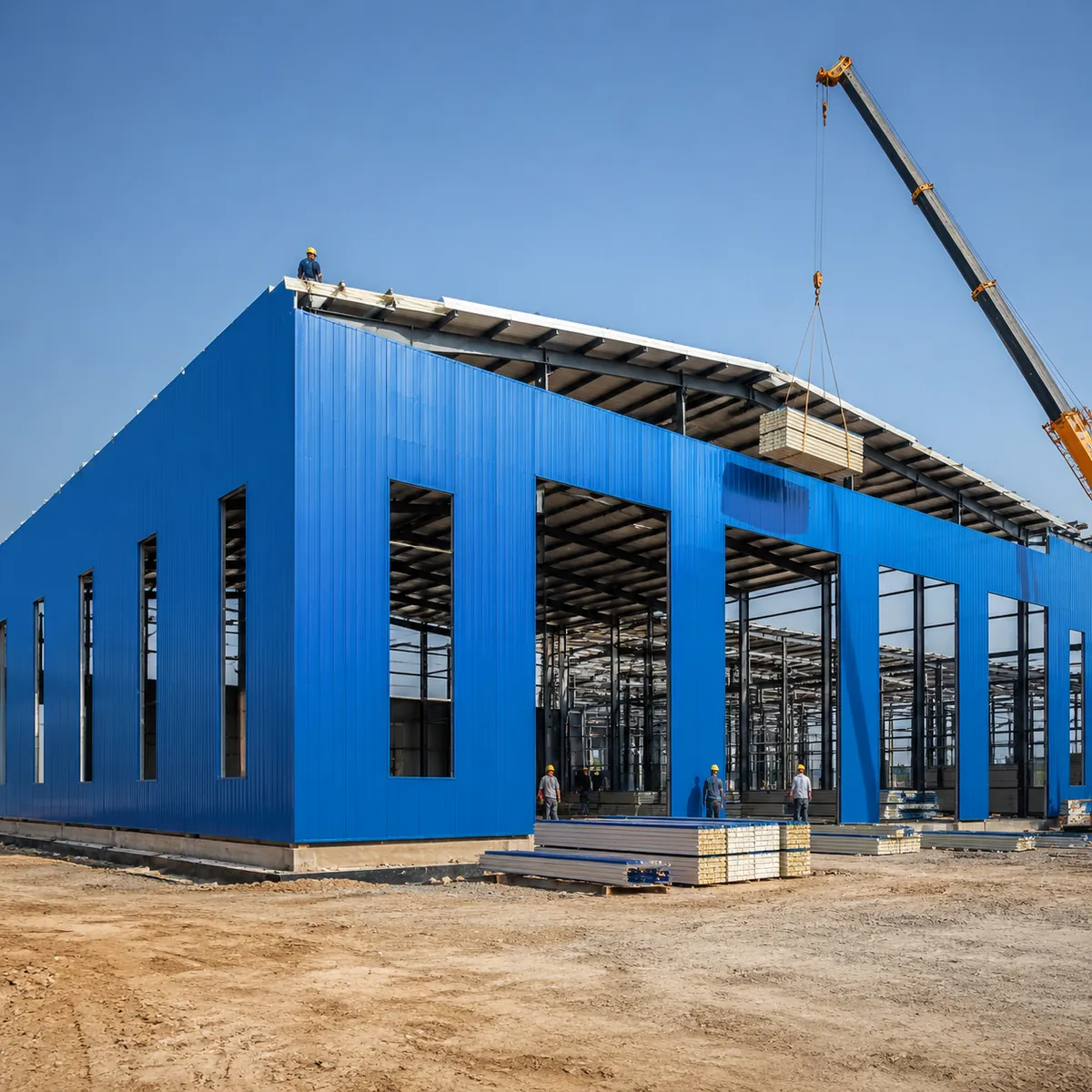
Two prefab steel warehouse suppliers can quote the same building at very different prices and both be honest, because the supply scope is different. One includes a complete cladding system, insulated roof and two roller doors; the other quotes the frame plus a line saying cladding is extra. Before you compare totals, compare the scope columns. This article maps the lines that belong in every warehouse quote and shows where the gaps usually hide.

The six scope lines in a warehouse quote
A complete supply quotation normally breaks into six lines. When suppliers quote a single lump sum, ask them to split it — the split is where you find the scope differences.
| Scope line | What it covers | Where differences hide |
|---|---|---|
| Structural steel | Columns, rafters, purlins, bracing, base plates, bolts | Steel grade, load assumptions, design weight per square meter |
| Cladding and roofing | Wall and roof panels, flashing, fasteners, ridge capping | Panel type and thickness, single skin vs sandwich, coating |
| Accessories | Roller doors, personnel doors, windows, gutters, vents | How many doors are included, quality of hardware |
| Engineering | Design calculations, shop drawings, erection manual | Code used, number of revision rounds included |
| Packing | Sea-freight ready packing, blocking, dunnage, protection | Long-member handling, moisture protection quality |
| Freight terms | Ex-works, FOB or CIF; port and inland legs | Incoterm changes who pays and where risk transfers |
For a full discussion of the biggest scope gap — kit supply versus turnkey — see our kit versus turnkey cost guide.
Why the cheapest quote is usually the thinnest scope
A low headline price almost always means fewer included lines. The frame-only quote looks unbeatable until you add cladding, doors, engineering and freight, at which point the total often lands near the complete quote or above it. The reverse is also true: the highest quote may include items the others omit, like heavier cladding or an extra revision round in engineering.
The discipline is to convert every quote to the same scope sheet before comparing. If one supplier quotes sandwich panels and another quotes single skin, the price gap is a specification gap, not a market gap. Our prefab warehouse cost guide by size shows how scope choices scale with building size.
Engineering and drawings: the line nobody prices separately
Engineering is real work even when it is folded into the price. The design calculations, shop drawings and erection manual take engineer hours, and the code used changes the steel weight. Ask which design code will be applied and whether the destination country’s local code is the basis. Then confirm how many shop drawing revision rounds are included — extra rounds after approval are a common source of surprise charges. Our guide to what a factory needs for a quote lists the site data that keeps the engineering loop short.
Packing and freight: where the total lands
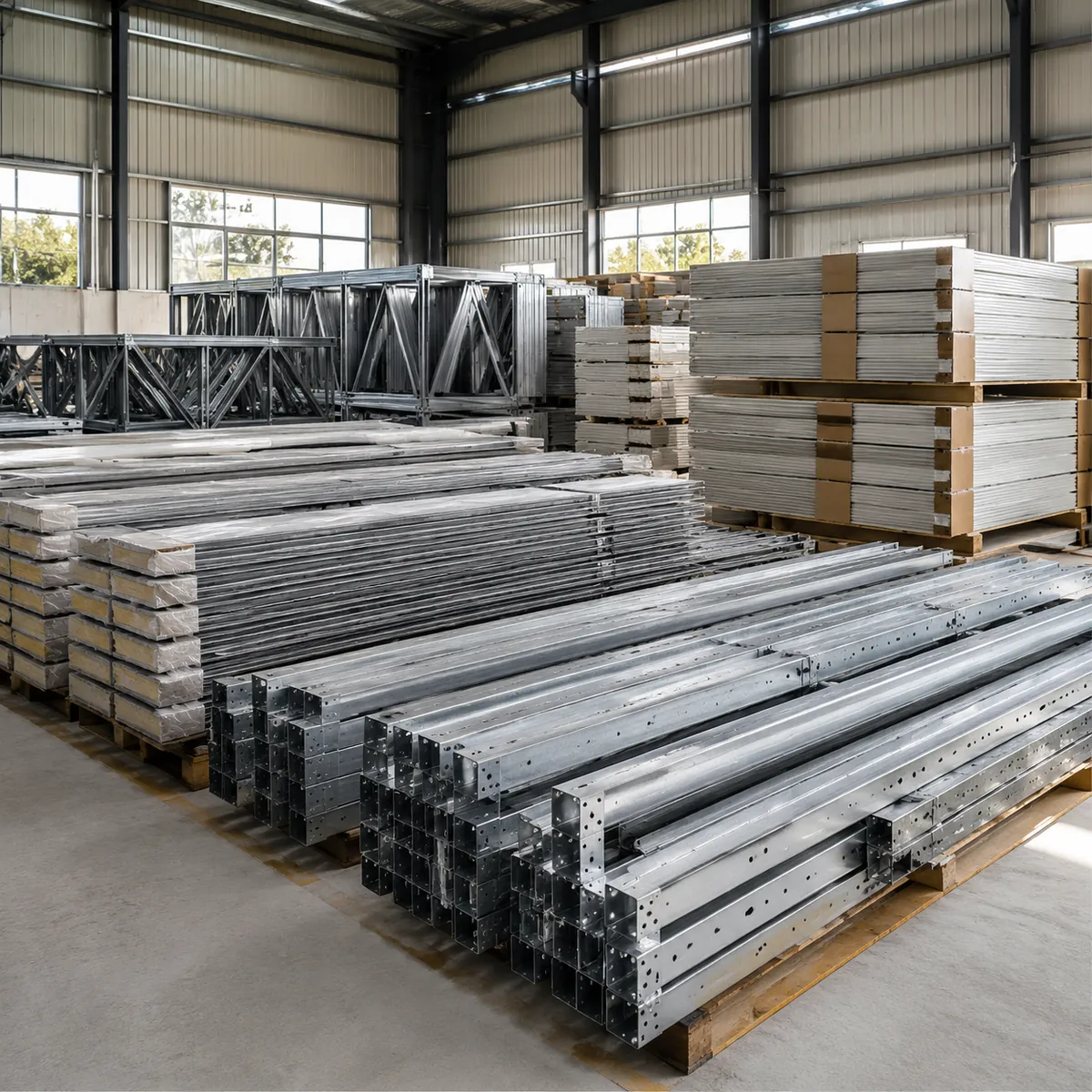
Packing is easy to underestimate because steel is heavy and long members need real protection: blocking, dunnage, moisture barrier and careful container loading. Freight terms decide who carries each leg, so normalize every quote to the same Incoterm before comparing totals. A quote that looks cheaper ex-works can cost more landed than a slightly higher FOB price with better packing included. The supply scope table should state packing and Incoterm as explicit lines so the comparison is honest.
How to build the comparison sheet
Create one table with a column per supplier and rows for each scope line: steel tonnage, design code, cladding spec, accessories list, engineering rounds, packing and Incoterm. Fill it from the quotes, then compare. Flag any line a supplier refuses to clarify — that line is where the risk sits. When you are ready to start, our prefab steel warehouse team sends a scope sheet with every inquiry so buyers compare like for like.
The rule that saves the most money: never compare two warehouse quotes until the scope columns match, and never assume the cheapest number is the cheapest building.
Frequently Asked Questions
Why do prefab steel warehouse quotes vary so much?
Because the supply scope varies: frame weight, cladding type, accessories, engineering, packing and Incoterm all change the total. Normalize the scope columns before comparing price.
What is usually included in a complete warehouse supply quote?
Structural steel, cladding and roofing, basic accessories (doors, gutters, flashing), engineering and shop drawings, sea-freight packing, and a stated Incoterm. Erection labor and foundation are usually separate.
Is a frame-only quote cheaper?
The headline number is lower, but the total usually rises once you add cladding, doors, engineering and freight. Compare totals on the same scope sheet, not headline numbers.
Should cladding be included in the base price?
Most complete quotes include a stated cladding specification. The key is that every supplier quotes the same panel type and thickness, otherwise the price gap is a specification gap.
How do I make quotes comparable quickly?
Send the same scope sheet to every supplier and ask them to quote on identical columns: steel tonnage, cladding spec, accessories, engineering rounds, packing and Incoterm. Fill one comparison table and flag anything left unclear.
Request a Comparable Quote
Comparing prefab steel warehouse quotes? Tell us the building size and site, and we will send a scope sheet with six standard lines — steel, cladding, accessories, engineering, packing and Incoterm — so your comparison is apples to apples.
