
Steel Building Manufacturer: What to Send for a First Quote

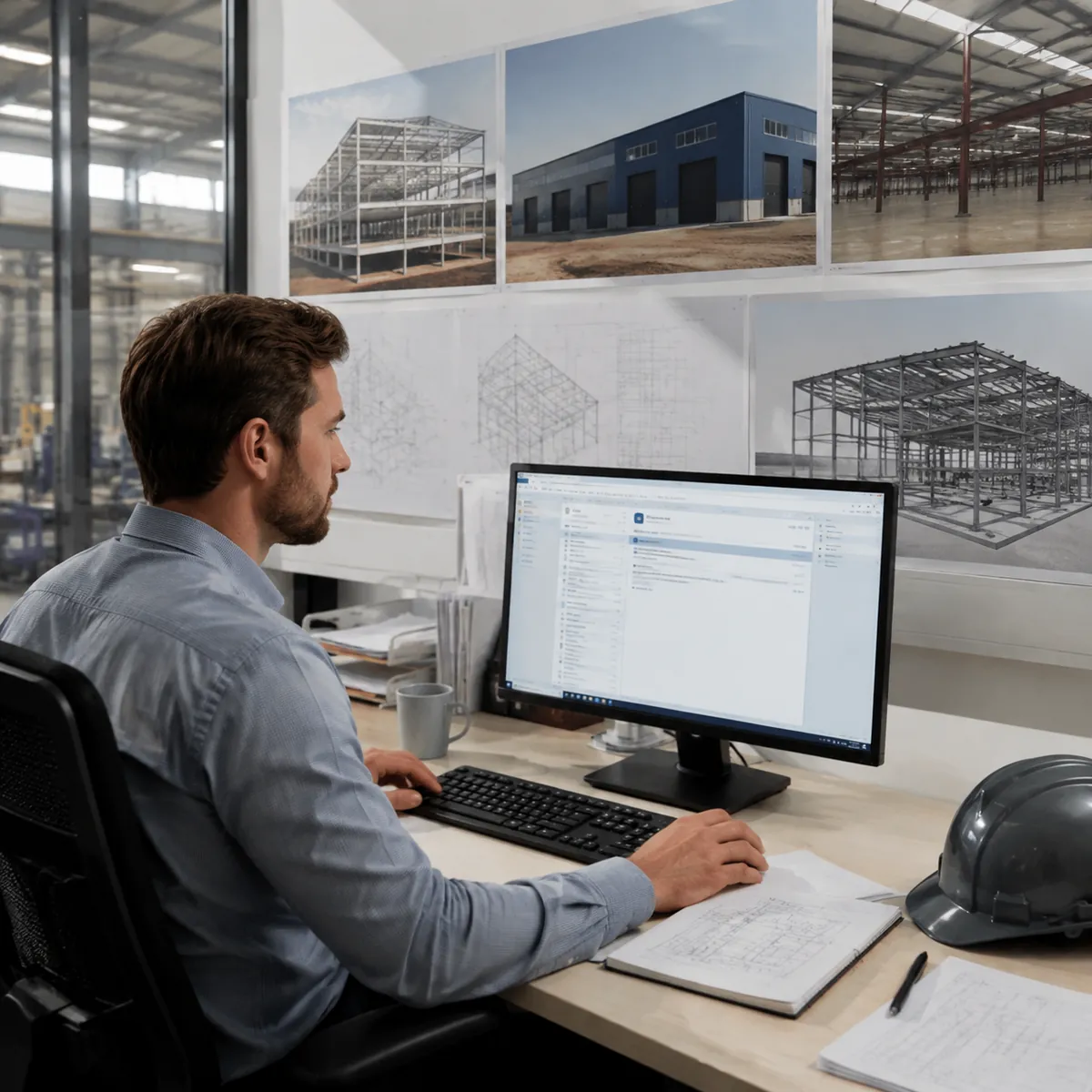
A steel building manufacturer can price a project from a single clear paragraph of requirements, and can also price it badly from the same paragraph if the details are missing. The difference between an accurate first quote and a padded one is usually the quality of the information you send. Here is the checklist a serious factory expects in a first inquiry, and why each item matters to the number they come back with.

The six pieces of information every RFQ needs
Manufacturers price steel by weight, and weight follows the design brief. Without the brief they add assumptions, and assumptions come with a safety margin that you pay for. Send these six items in the first message:
| Information | What to send | Why it changes the quote |
|---|---|---|
| Building use | Warehouse, workshop, aircraft hangar, agricultural shed | Use sets loads, door sizes, fire and ventilation needs |
| Dimensions | Width, length, eave height; clear span if it matters | Span and height drive member sizes and steel weight |
| Site country and code | Destination country, local building code if known | Wind, snow and seismic inputs come from the location |
| Openings and equipment | Door sizes, windows, crane capacity and hook height | Openings add steel around them; cranes add runway beams |
| Cladding preference | Single skin or sandwich panels, color, insulation | Cladding spec is a large share of the total price |
| Quantity and timeline | Number of buildings, target delivery window | Batch size affects setup and freight planning |
Our quotation information checklist turns this table into a fill-in form you can reuse with every supplier.
Loads: give the region, let the factory design
You do not need to calculate wind or snow loads to get a good quote — you need to name the site so the manufacturer can. The destination city or region, plus the local code if you have it, is enough for the design engineer to apply the right basic wind speed, snow zone and seismic category. If your site is coastal or in a known cyclone region, say so explicitly. Our prefab steel warehouse design pages show the load package a factory should produce with its proposal.
One caution: if you send only a country name for a very large country, expect the supplier to assume a moderate site. The more specific the location, the more accurate the steel weight and the closer the final price to the quote.
Extra details that separate a serious RFQ
Serious inquiries include a few details beyond the basics: whether the building needs a mezzanine or crane (and the crane capacity), the foundation conditions if a site survey exists, the access situation at the port and site, and whether the project is supply-only or includes erection support. Each detail either removes an assumption or changes the price structure. A crane, for example, adds runway beams and heavier columns to the tonnage calculation — the single largest add-on in a workshop inquiry.
Quantity matters too. Manufacturers price per ton, so a two-building order usually prices slightly better per building than a one-off, and a multi-phase program can be quoted with fixed price validity periods. For how order size changes the commercial picture, our steel building MOQ guide explains the tonnage logic behind minimums.
What a good first response looks like
Judge the first reply as much as the price. A strong manufacturer answers within a couple of working days, confirms the design basis they will use, lists the information still missing, and asks clarifying questions before quoting. That behavior predicts the whole project: responsiveness during RFQ is responsiveness during drawing approval and production. A reply that quotes a number without asking a single question usually means the price includes a large safety margin.
When the quote arrives, compare it on the same scope sheet you sent. The manufacturer that asks for your wind and snow data before pricing is protecting the design, not delaying you.
The one-page RFQ that gets you comparable quotes
Write the inquiry as a one-pager: use, dimensions, site, openings, crane, cladding, quantity, timeline and target Incoterm. Send the same page to three or four manufacturers and ask each to quote on identical scope columns. That is how you get prices you can compare line by line instead of three different interpretations of the same request. For the full set of fields, our prefab steel warehouse supplier page includes a sample requirement sheet used for export inquiries.
Frequently Asked Questions
How much information do I need before requesting a steel building quote?
Enough to define the design brief: building use, width, length, eave height, site country or region, door sizes, crane or mezzanine needs, cladding preference and target timeline. One page is enough.
Will a manufacturer quote without my wind and snow load data?
Most will, using the site location and local code to determine the values. Naming the exact site or region makes the assumption accurate; a vague location invites a conservative, heavier design.
Do I need drawings for the first quote?
No. Dimensions and a sketch are enough. Shop drawings are produced after the design is agreed, well after the first price.
How quickly should a manufacturer respond to an inquiry?
A serious manufacturer usually replies within two working days with clarifying questions or a preliminary price. Slow or vague responses during RFQ tend to continue that way through the project.
What is the biggest add-on that changes a quote?
A crane. It adds runway beams, heavier columns and often a taller eave height, all of which increase steel weight and price. State crane capacity and hook height in the first inquiry.
Request a Comparable Quote
Sending your first steel building inquiry? Use our requirement sheet format — send us your dimensions, site country and loading needs, and we will confirm the design basis and return a comparable quote within two working days.