
Steel Structure Fabrication Service: How Shop Drawing Approval Sets the Fabrication Schedule

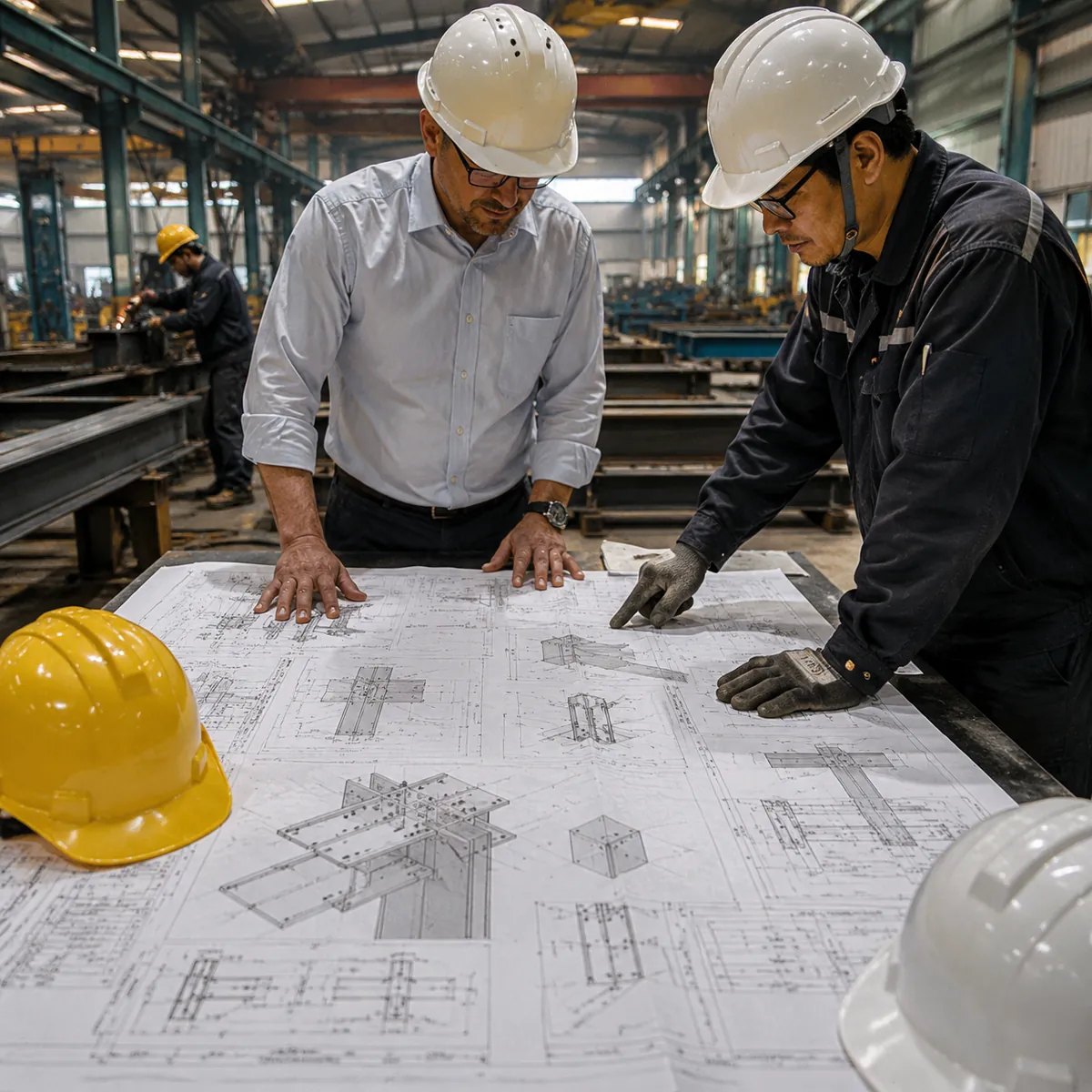
In a steel structure fabrication service, the shop drawing approval is the gate that decides the schedule. Nothing is cut until the drawings are approved, so every day spent in review is a day added to the delivery date — and late changes after approval are the most expensive way to move a schedule. This guide explains the approval rounds, what to check in each one, and how to keep the review fast without missing the details that cause problems on site.
Where approval sits in the fabrication workflow
The workflow is linear: design basis, general arrangement (GA) drawings, shop drawings, material procurement, cutting and welding, QC, surface treatment, packing. Shop drawing approval sits right before procurement and production, which is why it gates everything downstream. The supplier’s engineers turn the GA layout into member-level drawings — every column, rafter, purlin, girt, base plate and connection with dimensions, grades and weld symbols. Once you approve them, the factory orders material to those sizes and starts cutting; a change after approval means re-ordering or re-cutting, which costs both money and weeks.
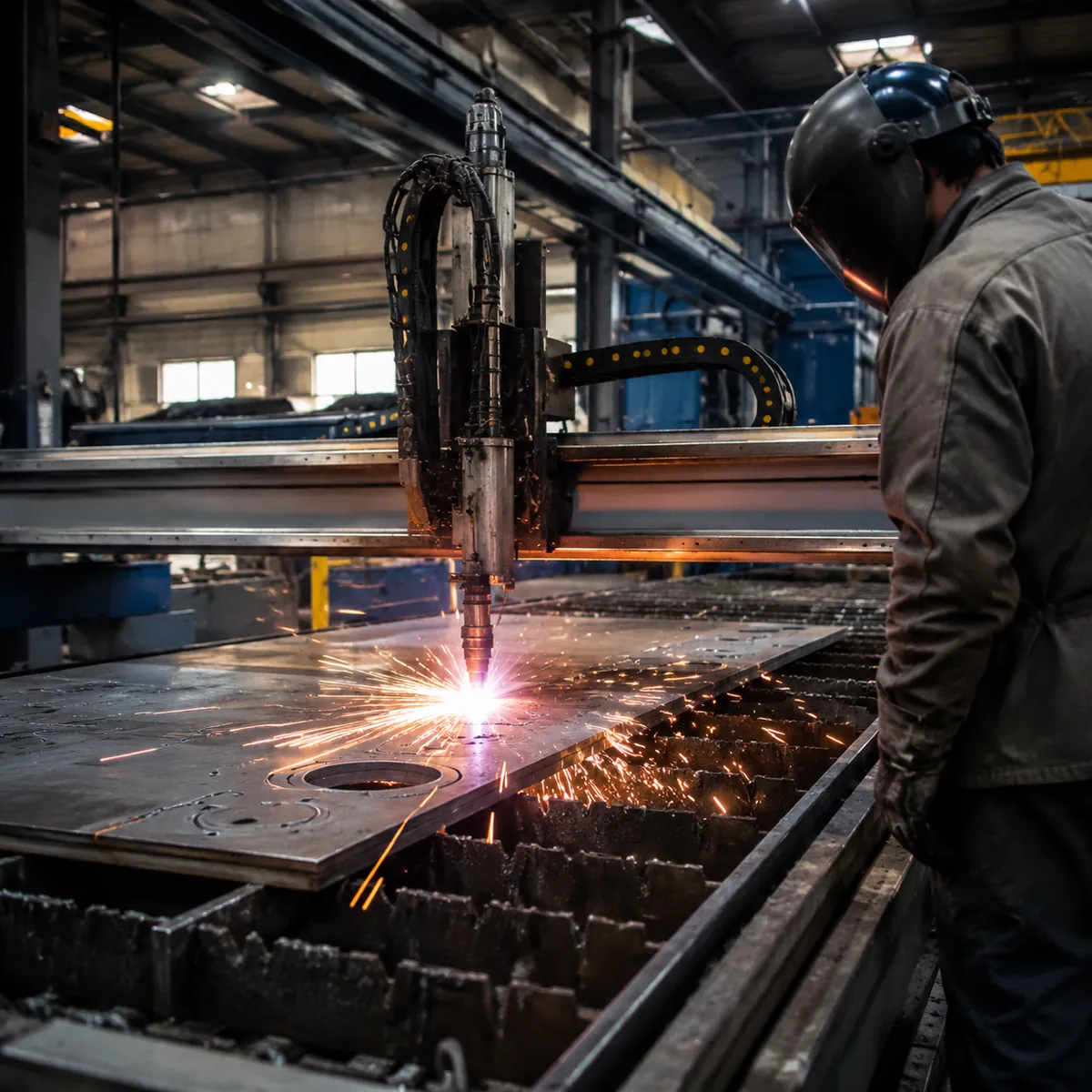
For the full quality sequence between cutting and packing, our steel structure fabrication QA guide walks through the inspection steps at a serious factory.
Which approval is the most important for the schedule?
The shop drawing approval, because it sits directly before material procurement and production. Getting this round right the first time protects the fabrication slot; the GA round protects the layout and is usually faster.
The approval rounds and what to check
Most projects run two or three review rounds. The GA round confirms the overall layout — bay sizes, eave heights, door and window positions — before member-level detail starts. The shop drawing round checks the details: member sizes, grades, connection types, bolt specifications, weld symbols, base plate and anchor bolt geometry. A final consolidated review catches conflicts between the architectural and structural packages.
| Approval stage | What is checked | Typical issues found here |
|---|---|---|
| General arrangement | Layout, dimensions, openings | Door/window position mismatches |
| Shop drawings | Member sizes, grades, connections | Wrong bolt spec, missing stiffeners |
| Clash / consolidated review | Interfaces with services and cladding | Penetrations, anchor bolt conflicts |
Review against your contract scope and your site data. Our steel building shop drawings review guide explains the full checklist item by item.
How approval delays compound
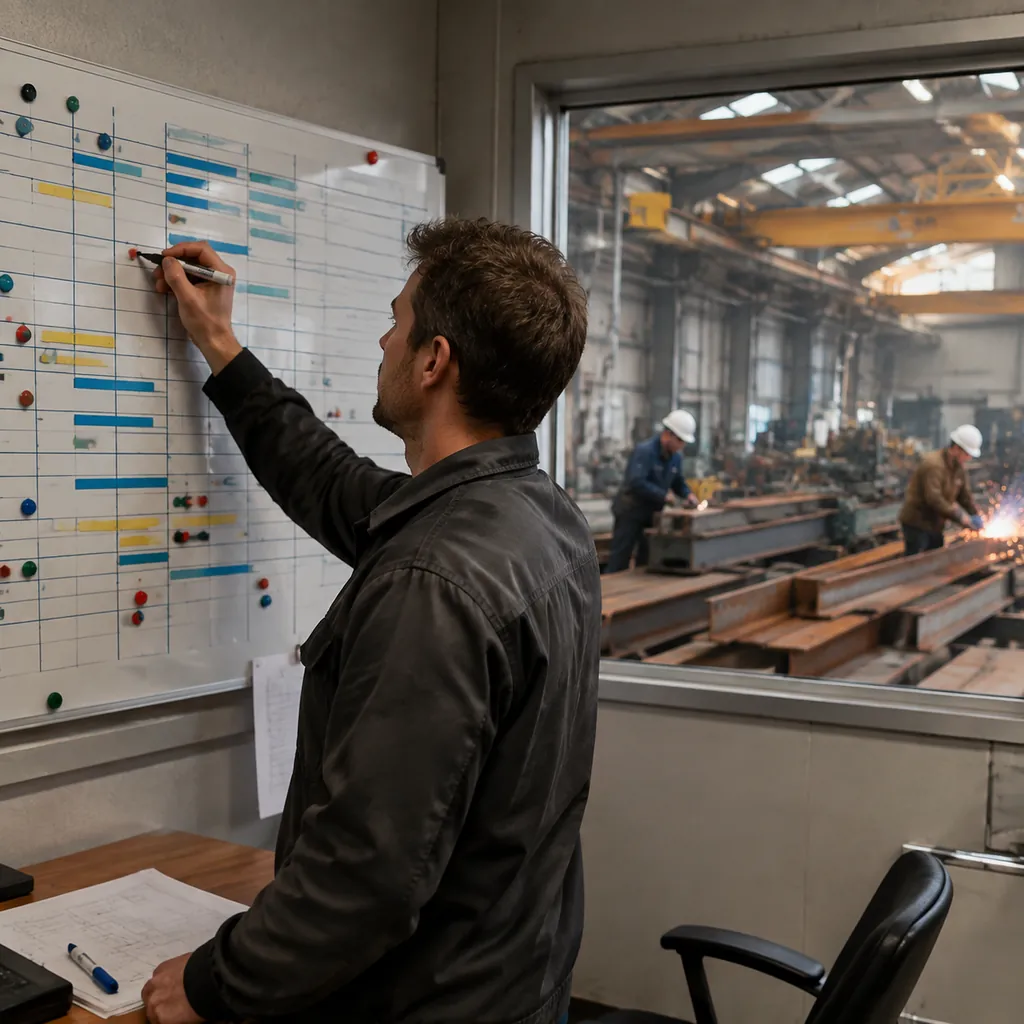
A one-week approval delay does not add one week; it shifts the material order, the production slot and the packing date, and the delay usually grows because the factory has planned capacity around the original date. Repeated small delays — waiting for a colleague, a slow email chain, a missing document — are the classic schedule killers. On the other side, approving too fast without checking is just as dangerous: errors found on site cost more than errors found on paper.
For multi-building orders, approval also interacts with batch planning; our batch planning and shipping splits guide shows how approvals line up across batches.
Getting approvals done fast without risk
Prepare before the drawings arrive: nominate one approver with authority, pre-agree the revision procedure with the supplier, and confirm which changes are free during review and which are chargeable after approval. When the drawings land, review against a fixed checklist rather than reading the whole set cold, and log every comment with a reference number so the revision round is clean. Most experienced suppliers return revised drawings quickly; the bottleneck is almost always the buyer’s review queue, not the factory.
What happens if I change the design after approval?
It is priced as a variation: re-engineering, possible material re-ordering and rescheduling. Some changes are cheap if they do not touch procured material; others restart part of the fabrication. Confirm the revision and variation procedure in writing at contract stage so the price of a late change is known in advance.
FAQ
Why does shop drawing approval matter for a fabrication schedule?
Because fabrication cannot start until the drawings are approved. The approval date sets the material order and production slot, so every review day directly extends the delivery date.
How many approval rounds does a steel structure need?
Typically two or three: general arrangement, shop drawings, and a final clash or consolidated review. Larger or more complex projects may add a preliminary round; simple standard buildings may merge them.
What should I check in shop drawings?
Member sizes and grades, connection types, bolt specifications, weld symbols, base plate and anchor bolt geometry, and consistency with the GA layout and the contract scope. A fixed checklist makes the review faster and more reliable.
How can I speed up shop drawing approval without risk?
Nominate one approver, agree the revision procedure in advance, review against a checklist, and log comments with reference numbers. Prepared buyers typically approve in days; unprepared ones take weeks.
What is the cost of a design change after approval?
It depends on whether material has been procured and cutting started. Confirm the variation procedure in writing at contract stage so the price of late changes is predictable.
Planning a steel structure order and want a schedule you can rely on? Send your drawings and timeline, and we will confirm the approval rounds, the review checklist and the fabrication schedule before you commit.