How to Choose a Steel Structure Manufacturer in China: Factory Audit and RFQ Checklist

Choosing a steel structure manufacturer in China comes down to verifying four things before you talk about price: real fabrication capability, engineering and drawing support, a documented quality control process, and the paperwork trail that gets your building through import approval. A manufacturer that passes those four checks can still quote high or low, but one that fails them is a risk no discount justifies. This guide gives you the audit and RFQ checklist we use with our own overseas buyers.
Step 1: Verify Real Fabrication Capability
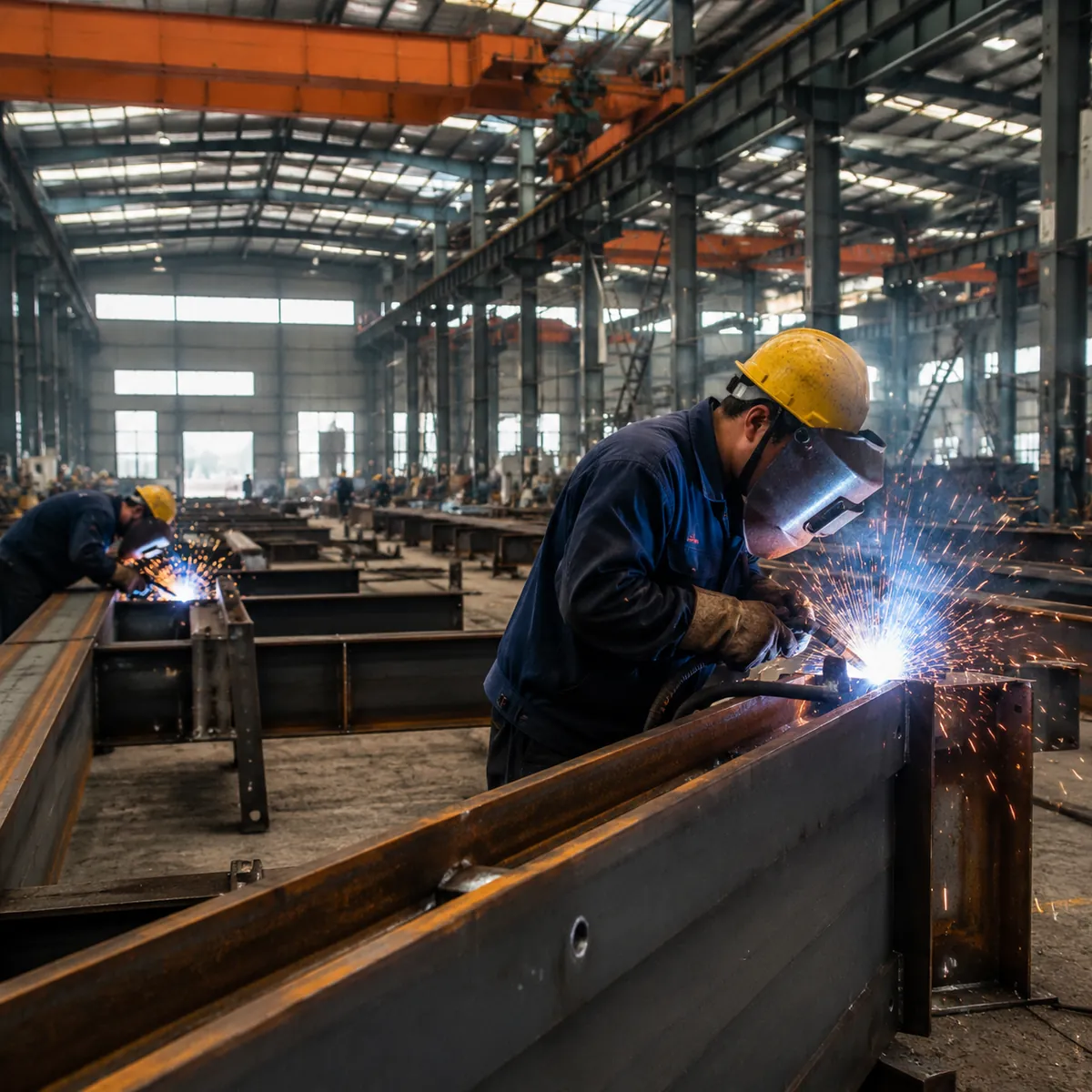
Not every company that advertises steel buildings owns a factory. Start by confirming the facility exists and matches the scale of your project. Ask for photos or a video call of the workshop floor, and check for the equipment that actually matters for a structural frame:
- CNC cutting and drilling lines for plates and sections.
- Welding capability (qualified welders and procedures, ideally with WPS/PQR records).
- Shot blasting and painting lines for surface preparation and coating.
- Assembly beds and jigs for trial assembly of large members.
- In-house or trusted third-party testing for welds and materials.
A supplier can be a trading company with a subcontractor behind it and still deliver well — but you should know which one you are dealing with before signing, because your quality leverage changes completely.
Step 2: Check Engineering and Drawing Support
Your building’s design must be checked against the local code of the destination country, and the manufacturer’s engineer is the one who does that conversion. Confirm that the supplier provides: structural calculation notes, shop drawings for approval, anchor bolt and foundation drawings, and erection drawings with connection details. Ask who stamps or reviews the design for your country’s code — the manufacturer’s engineer, a third-party engineer, or your own consultant.
The quality of the drawing package tells you more about a factory than its sales materials. If the shop drawings are sloppy, the fabrication will be too. For reference on what a good drawing review looks like, our shop drawings review guide walks through the approval process step by step.
Step 3: Audit the Quality Control Process
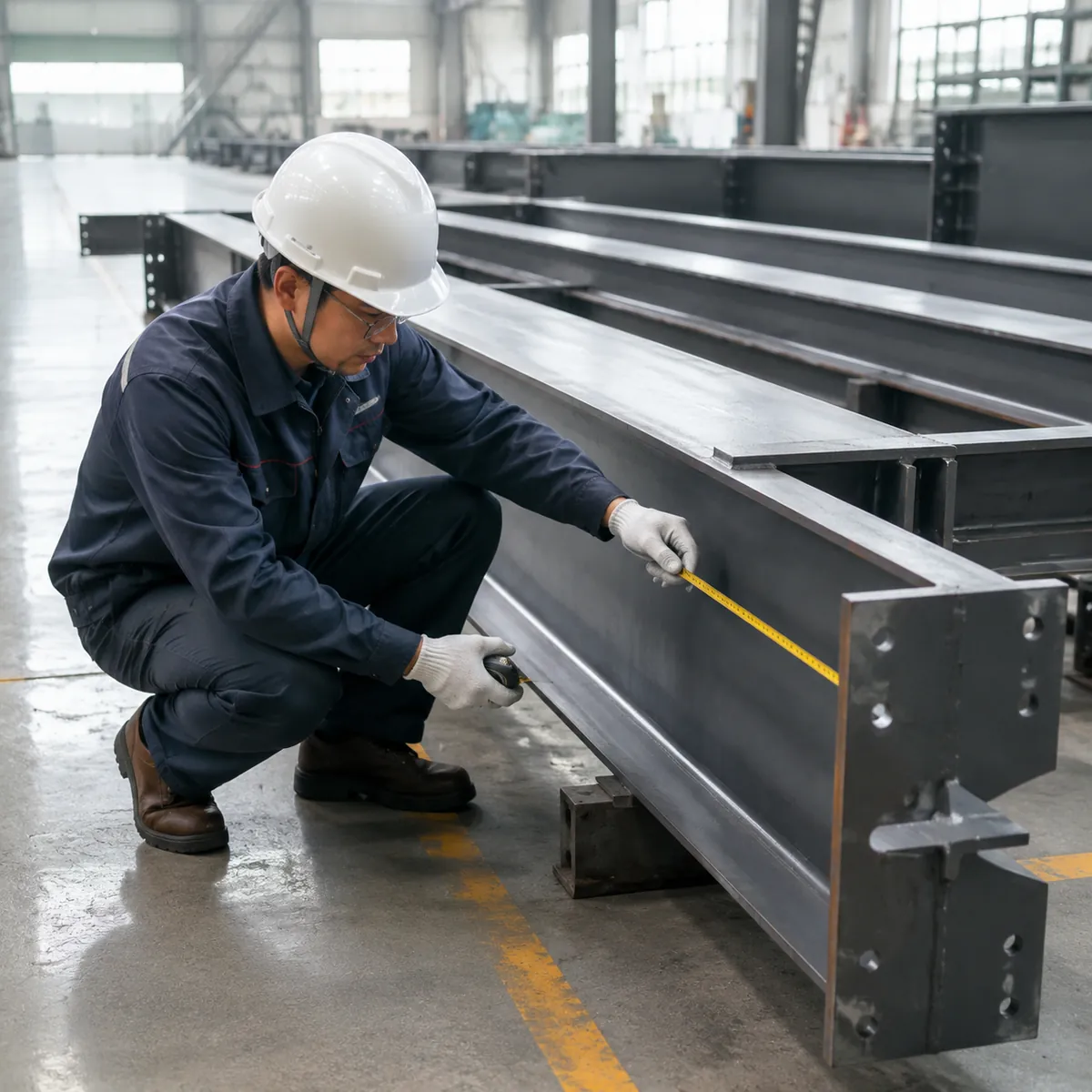
Ask for the QC plan before you order, not after. A credible manufacturer will share their inspection points: incoming material certificate checks, dimensional checks after cutting, weld inspection, coating thickness measurement, and a final pre-shipment inspection with photos. If they offer third-party inspection (SGS, Bureau Veritas, TÜV, or similar) at your cost, that is a healthy sign — it means they have nothing to hide.
Material grades deserve special attention. Confirm that the steel grade in the mill certificate matches what was quoted, and that the certificates cover the actual heat numbers used in your members. Our steel grades guide explains the difference between Q235B, Q355B, and S355 so you can read those certificates with confidence.
Step 4: Review the RFQ Information You Need to Send
The accuracy of your quotation depends on the completeness of your brief. The information every serious manufacturer needs:
| Item | Why It Matters |
|---|---|
| Building dimensions (length, width, eave height) | Sets frame spans and quantities |
| Roof type and slope | Single slope, double slope, or monitor roof |
| Design loads (wind, snow, seismic) or site location | Drives member sizes |
| Cladding and insulation specification | Envelope cost and performance |
| Door and window schedule | Openings affect framing and accessories |
| Crane or mezzanine requirements | Adds runway beams and floor loads |
| Destination port and delivery terms | Shipping, packing, and documentation scope |
| Code or certification requirements | Design review and import approval path |
Our quotation information checklist goes deeper on each item and shows what happens when details are missing.
Step 5: Know the Red Flags
Some patterns repeat across problematic suppliers. Watch for: prices quoted without asking for your site location or loads, promises of any steel grade at the same price, no willingness to share shop drawings before the contract, unclear incoterms, and pressure to pay the full balance before production photos are shared. None of these are automatically fraud, but each one shifts risk onto you.
Also check the paperwork side early. Import approval for steel buildings usually needs documents like packing lists, mill certificates, and sometimes fumigation and origin certificates. Confirm which documents the manufacturer routinely provides — a supplier who has shipped to your region before is worth a premium over one who has not.
How to Compare Quotes After the Audit
Once two or three manufacturers pass the capability and QC checks, compare like for like: same scope, same steel grade, same cladding, same incoterm. Then look beyond the total — compare the weight of the frame, the coating system, the drawing review process, and the payment terms. A lighter frame may be an efficient design or a risky one; your engineer should be the judge. Our PEB vs conventional cost guide shows how frame type changes the comparison.
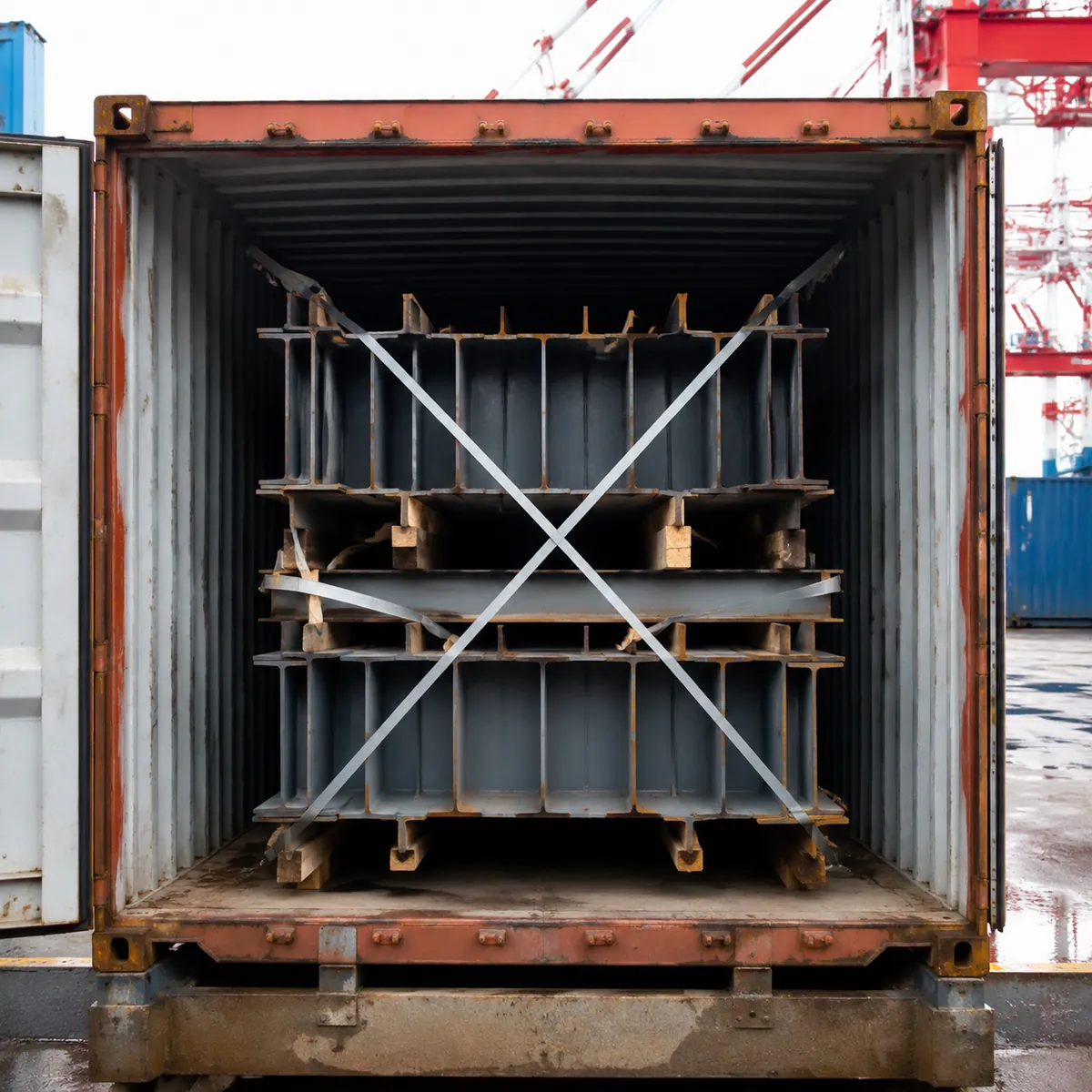
Related reading: the same buying considerations apply when importing container houses from China — importing container houses from China.
FAQ
Is it safe to buy steel buildings from China?
Yes, when you verify the manufacturer’s capability, QC process, and documentation before ordering, and use a clear contract with milestone payments and third-party inspection. The risk is not the country — it is unverified suppliers.
What certifications should a Chinese steel manufacturer have?
Common ones include ISO 9001 for quality management, ISO 14001 for environment, and CE or SGS project-specific inspection certificates. Certificates alone are weak evidence — ask to see the mill certificates for your actual material and the QC records for your project.
How do I verify a Chinese steel factory without traveling?
Use video calls to tour the workshop, ask for photos of the production line with today’s date marker, request references and contact previous buyers, and book a third-party inspection at your cost. These steps cover most of what a site visit would reveal.
What payment terms are normal with a Chinese steel supplier?
Typical arrangements include a deposit with the balance against progress or shipping documents, sometimes with a letter of credit. Be cautious with full prepayment. Milestone payments tied to production photos and inspection reports protect both sides.
How long does production take for a steel building order?
Production time depends on tonnage, complexity, and factory load, and is usually quoted in weeks after drawing approval. Get the production schedule in writing and tie milestone payments to it, so delays are visible early.
Talk to a steel structure manufacturer that passes its own checklist. We publish our workshop capability, QC points, and drawing process openly — send us your building brief and compare our quotation with your other options.