
Prefab Steel Warehouse for UAE Projects: Specification and Procurement Guide

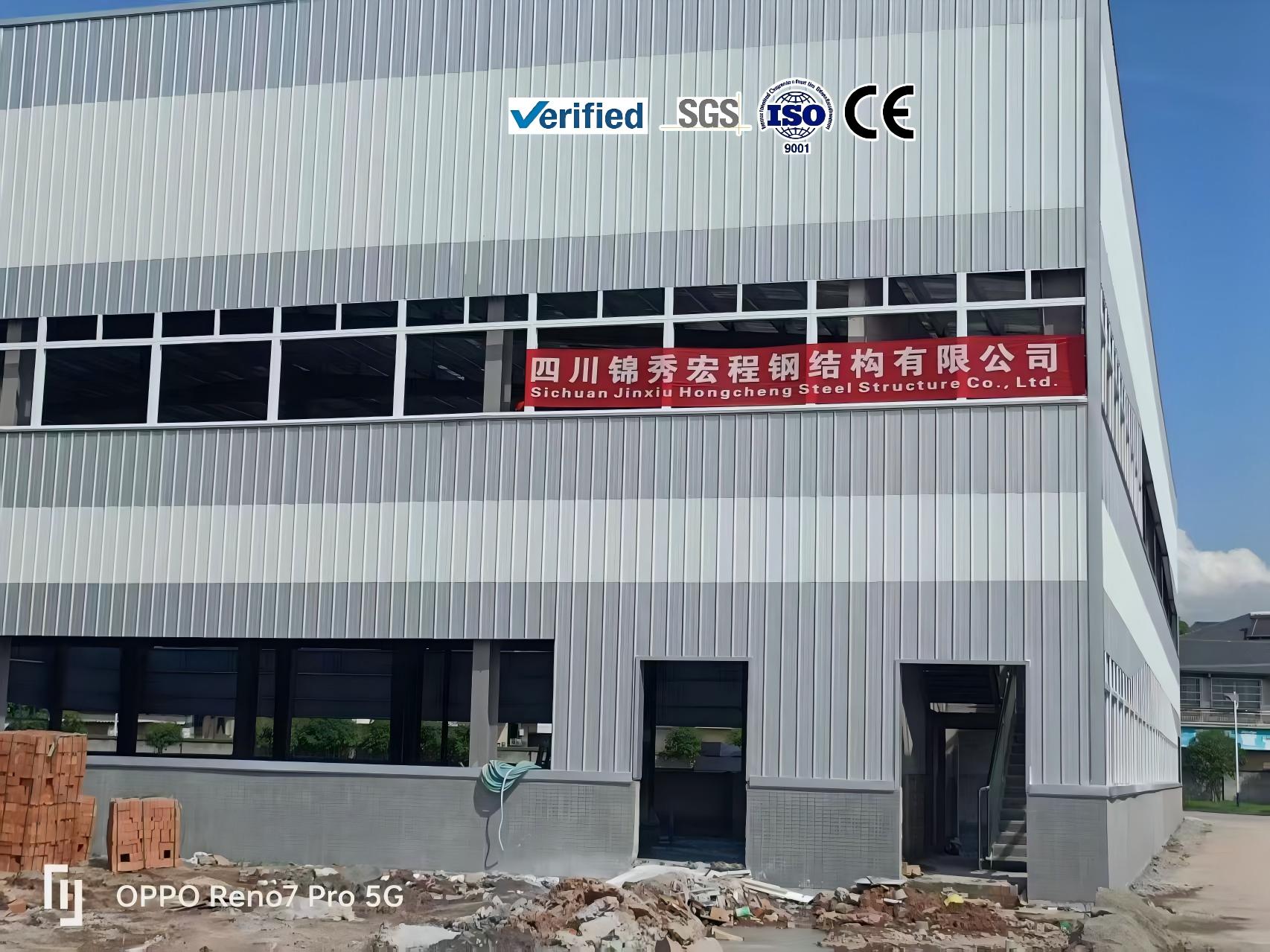
For contractors, developers, and project buyers working across the United Arab Emirates, a prefabricated steel warehouse is rarely a generic box. It is a logistics asset that has to perform under Gulf heat, coastal humidity, fine wind-driven sand, and the procurement timelines that free zone tenants and 3PL operators live by. This guide walks through how to specify, budget, and install a prefab steel warehouse for UAE projects in Dubai, Abu Dhabi, Sharjah, and the northern emirates, with the engineering decisions that actually move cost and schedule.
Why prefabricated steel suits UAE warehouse projects
The UAE warehouse market is shaped by two pressures: tenants want large, column-light floor plates that suit racking and material handling, and landlords want speed to revenue. Prefabricated steel structures answer both. A clear-span portal frame for a prefab steel warehouse removes internal columns that obstruct racking aisles and forklift paths, while shop fabrication compresses the build program because foundations and steel production run in parallel rather than in sequence.
Steel also handles the UAE climate predictably. The material does not absorb moisture, it tolerates the large day-night temperature swing of the desert interior, and with the right coating system it resists the chloride-laden air near the coast. For a buyer comparing concrete tilt-up against steel, the steel option usually wins on erection speed and on the ability to extend the building later by adding bays.
Typical UAE warehouse use cases
Most enquiries we see fall into a few categories: distribution and 3PL sheds inside free zones such as JAFZA, DAFZA, and KIZAD; cold-chain and food logistics units near ports; light industrial workshops in Sharjah and Ajman; and high-bay storage for building materials and equipment rental. Each use case pushes a different specification, so the first conversation should pin down throughput, racking height, and dock requirements before anyone draws a frame. A distribution shed and a steel workshop building share the same structural vocabulary but diverge sharply on clear height, ventilation, and door schedules.
Span and clear height: getting the envelope right
Span is the single biggest driver of steel weight and therefore cost. UAE distribution warehouses commonly sit between 24 m and 40 m clear span for single-aisle blocks, with multi-span arrangements used where the plot is wide and a few internal columns are acceptable. A clear-span portal frame above roughly 36 m starts to carry a meaningful steel premium, so where the operations team can live with a line of columns on a 12 m to 18 m grid, a multi-span layout often delivers the same usable floor at lower tonnage.
Clear height under the haunch is set by racking. A buyer planning selective racking with a reach truck typically needs 10 m to 12 m clear, while a basic cross-dock or transit shed may only need 6 m to 8 m. Always specify clear height to the underside of the haunch or the lowest structural obstruction, not the ridge, because the ridge height is irrelevant to what a forklift can actually reach. Add an allowance for sprinkler pipework, lighting, and the in-rack clearance that fire codes require above the top pallet.
Bay spacing and future extension
Bay spacing of 6 m to 9 m balances purlin economy against frame count. Tighter bays mean lighter purlins but more frames; wider bays reverse that. For UAE landlords who expect to extend a warehouse as a tenant grows, design the gable frame as an internal frame from day one and leave the foundation and slab detailing ready for a bolt-on bay. That single decision turns a disruptive future expansion into a weekend connection.
Wind load: the dominant lateral case in the UAE
Across most of the UAE, wind governs the lateral design rather than seismic action. Design wind speeds are moderate by global standards, but coastal sites and tall, lightly clad warehouses still generate significant uplift and suction on roofs and corners. The structural engineer should design to the project’s adopted code, commonly an ASCE 7 basis or a Eurocode basis depending on the consultant, with the basic wind speed and exposure category confirmed for the specific emirate and plot.
Uplift is the case that catches inexperienced buyers. A light steel roof has very little dead weight to resist suction, so anchor bolts, base plates, and roof-to-purlin fixings have to be designed for net uplift, not just gravity. Skimping on holding-down detail is a false economy that shows up as roof sheet flutter or worse in the first strong shamal. The wind methodology and load combinations are explained further in our steel structure design guide, and authoritative load definitions are maintained by the American Society of Civil Engineers for projects using the ASCE 7 family of standards.
Local wind exposure and corner zones
Roof corners and edges see the highest local suction, which is why cladding fixings are densified in those zones. For a UAE warehouse near open desert or open coastline, exposure is typically high because there is little surrounding roughness to slow the wind. Confirm the exposure category with the design consultant rather than assuming a sheltered urban value, because the wrong assumption under-designs the most vulnerable parts of the roof.
Snow load and the UAE reality
Snow load is effectively zero across the UAE, so it does not govern roof design. That does not mean the roof carries no live load: maintenance access, mechanical plant, solar arrays, and ponding from blocked drainage all impose loads that must be designed in. Rooftop solar is increasingly common on UAE warehouses, and a retrofit array can add meaningful dead load and point loads at the fixing rails. If solar is even a possibility, tell the engineer up front so the purlins and frames carry the reserve rather than needing strengthening later.
Seismic load and how it interacts with a light steel building
UAE seismic hazard is generally low to moderate, with the northern emirates near the Musandam region carrying somewhat higher attention than the southern desert. For a light single-storey steel warehouse, the building is light and relatively flexible, so seismic forces are usually modest compared with wind. The cases that need care are heavy mezzanines, tall racking that is building-tied, and any concrete elements such as office cores attached to the steel shell. Where high-bay racking is rack-supported or braced to the structure, the seismic mass of the stored goods becomes a real design input and should be coordinated between the racking supplier and the building engineer.
Insulation and beating the Gulf heat
Thermal performance is where UAE warehouses differ most from temperate-climate sheds. Ambient summer temperatures and intense solar gain on the roof drive cooling loads and, in ambient warehouses, worker comfort and product integrity. The roof is the priority surface because it takes the brunt of solar radiation.
Common build-ups include insulated sandwich panels (PIR or PUR cored) for the roof and walls, or a built-up system of outer sheet, glass wool or rock wool, and a liner sheet. Sandwich panels give a faster, cleaner install and a reliable U-value, which is why they dominate cold-store and temperature-controlled units. For a high-bay ambient distribution shed, a built-up roof with a good reflective outer coating and adequate insulation thickness is often the cost-effective choice.
Cool roofs and condensation control
A high-reflectivity roof coating lowers surface temperature and cuts cooling demand, which matters when grid power and chiller running costs are part of the tenant’s operating budget. Condensation control also matters in cold-store applications and in humid coastal locations: the insulation line, vapour control, and panel joints have to be detailed so warm humid air does not reach a cold surface and drip onto stored goods. These build-up choices feed directly into the budget, which we break down in the steel building cost guide.
Cladding and corrosion in a coastal, sandy environment
Cladding selection in the UAE is as much about durability as appearance. Coastal sites near Dubai, Abu Dhabi, and the eastern seaboard see chloride-laden air that attacks ordinary coatings, while inland sites face abrasive wind-blown sand. The specification should match the coating system to the corrosivity category of the site.
For steelwork, hot-dip galvanizing of secondary members and a multi-coat paint system on primary frames is a common approach, with the paint specification stepped up for coastal exposure. For cladding sheets, a thicker metallic coating and a durable paint finish resist both salt and UV. The fastener choice matters too: stainless or properly coated carbon fasteners avoid the rust streaking that cheap fixings cause within a season near the coast. Our quality control guide covers how coating thickness and weld quality are verified before steel ships.
Crane systems for UAE workshops and warehouses
Many UAE buildings combine storage with light manufacturing or maintenance, so an overhead crane is a frequent requirement. The crane decision has to be made before the frame is designed, because crane loads change the column sizes, the bracing, and the foundations. A 5 t to 10 t single-girder electric overhead travelling crane suits most maintenance bays and light fabrication, while heavier double-girder cranes serve steel yards and equipment rental depots.
Key inputs are crane capacity, span, hook height, and duty cycle. The building needs gantry beams on corbels or stepped columns, plus the lateral surge and longitudinal braking forces designed into the frame. Specifying the crane after the steel is detailed leads to expensive re-engineering, so capture it in the brief alongside the racking and door schedule.
Ventilation strategy in a hot climate
Ventilation in a UAE warehouse serves two goals: removing heat that builds up under the roof, and providing fresh air for occupants and processes. Even an air-conditioned unit benefits from a ventilation strategy that purges the hot air layer that forms beneath the ridge during the day.
Passive options include ridge vents and wall louvres that drive stack-effect airflow, while powered roof extractors and high-volume low-speed fans handle larger ambient sheds. For workshops with welding, painting, or vehicle movement, mechanical extraction sized to the process is essential and should be coordinated with the cladding openings so the structure accommodates the ductwork and louvre framing. Get this into the design early; retrofitting large louvres into a finished gable is disruptive and rarely as clean.
Installation and what site work looks like in the UAE
Erection of a prefab steel warehouse in the UAE is fast once foundations are ready, but the program is only as good as the coordination between the foundation contractor and the steel erector. Typical sequence is foundation and anchor bolt setting, steel frame erection, secondary steel and bracing, roof cladding, wall cladding, then doors, drainage, and fit-out.
Heat is the main site constraint. Summer working hours are regulated, and midday work is restricted during the hottest months, which extends the effective program if erection lands in summer. Plan crane availability, lifting studies, and labour around those constraints. A realistic UAE program for a mid-size distribution shed runs the steel erection in a few weeks once foundations cure, with cladding and fit-out following. The detailed phase-by-phase view is in our steel building installation timeline.
Logistics from factory to site
Because the steel is fabricated off site and shipped, delivery sequencing matters. Frames, purlins, cladding, and accessories should arrive in erection order so the site is not paying to store and double-handle steel in a congested free zone yard. Containerised shipping to UAE ports is well established, and a clear packing list tied to the erection sequence keeps the site moving.
Delivery time and how to protect the schedule
Lead time for a prefab steel warehouse breaks into design and approval, fabrication, shipping, and erection. The variable that buyers most often underestimate is local approval. Authority submissions and building permits in the relevant emirate or free zone have their own timelines, and steel fabrication can run in parallel with that approval only if the design is frozen early.
To protect the schedule, lock the structural concept and the major openings before fabrication starts, confirm the foundation design so site work begins while steel is in production, and align shipping bookings with the erection window. The fastest projects are the ones where the buyer provided complete information at quote stage; the items we need are listed in the steel building quote requirements.
Local code and approvals in the UAE
Compliance routes differ by emirate and by whether the plot sits inside a free zone or on mainland. Dubai Municipality, Abu Dhabi’s authorities, and the various free zone authorities each maintain their own approval processes, fire and life safety requirements, and inspection regimes. The structural design must be issued by an engineer acceptable to the relevant authority, and fire strategy, including sprinklers and smoke control for high-bay storage, is reviewed by civil defence. Buyers should confirm the governing authority for their plot early; the regulatory framework for Dubai projects is published by Dubai Municipality. A country-level overview of approval routes across markets is collected in our global country guides.
Budget control across the project
Controlling cost on a UAE steel warehouse is about specifying to need rather than to a generic maximum. The levers that move the budget most are span (avoid over-spanning when a column line is acceptable), clear height (every extra metre adds steel and cladding), insulation build-up (sandwich panel versus built-up versus none), coating system (coastal versus inland), and crane provision. A disciplined brief that sets each of these to the real operational requirement, rather than copying a previous project, typically takes meaningful tonnage and cladding area out of the cost.
The other budget discipline is avoiding change after fabrication. Steel is cheap to change on a drawing and expensive to change on site, so the value of a complete, frozen brief is hard to overstate. When operational uncertainty is genuine, design in the flexibility (extra bay readiness, reserve crane capacity) deliberately rather than discovering the need mid-build.
Maintenance of a UAE steel warehouse
A well-specified steel warehouse needs modest but disciplined maintenance. The priorities in the UAE climate are the coating system and the drainage. Inspect coatings on primary steel and cladding for early corrosion, particularly at cut edges, fixings, and any coastal-facing elevation, and touch up before rust spreads. Keep gutters and downpipes clear so the rare but intense rain events drain rather than pond on the roof. Check door gear, seals, and louvres, and re-torque critical bolted connections per the maintenance schedule. A roof inspection after each storm season catches loosened fixings before they become leaks.
Foundations and ground conditions across the emirates
The foundation design for a UAE steel warehouse is shaped by ground conditions that vary widely across the emirates. Coastal reclaimed land near Dubai and Abu Dhabi can present soft or variable strata and a shallow water table, while inland desert plots often have firmer sabkha or sand profiles that still need careful assessment for settlement and salt content. A geotechnical investigation is not an optional extra; it is the input that decides whether the building sits on pad footings, strip footings, or piles, and it directly affects both cost and program.
Sabkha soils, common in parts of the coastal UAE, are aggressive to concrete and steel because of their high salt and sulphate content, so foundation concrete mixes and any buried steel need protection specified for that exposure. The anchor bolt and base plate detail also has to reconcile the uplift case from wind with the bearing and sliding checks from the ground. Getting the geotechnical report early lets the structural engineer design the foundation in parallel with the steel, rather than holding up fabrication while ground questions are resolved on site.
Slab design deserves the same attention as the frame. A warehouse floor carrying loaded racking legs, reach truck wheel loads, and point loads from stored goods needs a slab thickness, joint layout, and surface flatness matched to the material handling equipment. Specifying floor flatness to the right tolerance class matters for narrow-aisle operations where a mast extends high; a floor that is fine for a counterbalance truck may be unworkable for a turret truck reaching twelve metres.
Fire safety and life safety for high-bay storage
Fire strategy is a defining requirement for UAE warehouses, particularly high-bay and high-piled storage where the stored commodity and storage height drive the sprinkler design. Civil defence review covers the sprinkler system, smoke and heat exhaust, access for firefighting, travel distances, and compartmentation. For an in-rack or high-ceiling sprinkler scheme, the pipework adds load and occupies clear height, which is exactly why the fire engineer and the structural engineer need to coordinate before the frame is fixed.
The structure itself interacts with fire safety through the support of sprinkler mains, the provision of smoke vents in the roof, and the fire rating of any office or ancillary areas built into the shell. Where a mezzanine office or a battery-charging area for electric forklifts is included, those zones bring their own fire requirements. Capturing the fire strategy in the brief, alongside racking height and commodity class, prevents the costly scenario where a finished building has to be retrofitted with extra sprinkler capacity or smoke vents to pass inspection.
Frequently asked questions
What clear span and clear height should a Dubai distribution warehouse target?
Most Dubai distribution sheds work well at 24 m to 40 m clear span with 10 m to 12 m clear height under the haunch for selective racking and reach trucks. If the operation can accept a line of internal columns on a 12 m to 18 m grid, a multi-span layout delivers the same usable floor at lower steel tonnage. Confirm clear height to the lowest structural or services obstruction, not to the ridge.
Does a warehouse in Abu Dhabi need to be designed for seismic load?
Abu Dhabi seismic hazard is low to moderate, and for a light single-storey steel shed wind usually governs the lateral design rather than seismic. Seismic does become relevant where there are heavy mezzanines, building-tied high-bay racking, or attached concrete office cores, because those add mass that the frame and connections must carry. The structural engineer confirms the governing case against the adopted code for the specific plot.
What insulation works best for a temperature-controlled warehouse in the Gulf?
Insulated sandwich panels with a PIR or PUR core are the common choice for cold-store and temperature-controlled units in the Gulf because they deliver a reliable U-value, fast clean installation, and good condensation control when joints and vapour lines are detailed correctly. For ambient high-bay sheds, a built-up roof with adequate insulation and a high-reflectivity coating is often the more economical route while still cutting cooling load.
How do coastal conditions near UAE ports affect the steel specification?
Coastal air near UAE ports carries chlorides that accelerate corrosion, so the coating system is stepped up: hot-dip galvanizing on secondary members, an upgraded multi-coat paint system on primary frames, thicker metallic-coated cladding, and corrosion-resistant fasteners. Matching the coating to the site corrosivity category, rather than using a generic inland spec, is what prevents premature rust streaking and protects the building’s service life.
How long does it take to deliver and erect a prefab steel warehouse for a UAE free zone project?
The program splits into design and authority approval, fabrication, shipping to a UAE port, and site erection. Fabrication can run in parallel with approval only if the design is frozen early, and summer working-hour restrictions can extend the erection window. The single biggest schedule protection is providing complete information at quote stage and locking the structural concept and major openings before fabrication begins.
Who approves a steel warehouse design in the UAE?
The governing authority depends on the plot: Dubai Municipality, the relevant Abu Dhabi authority, or the specific free zone authority for plots inside JAFZA, KIZAD, and similar zones, with fire and life safety reviewed by civil defence. The structural design must be issued by an engineer acceptable to that authority. Confirm the governing body and its submission requirements before the design is finalised so approval and fabrication can be sequenced without delay.
A prefab steel warehouse for the UAE rewards a buyer who specifies to the real operation: the right span, honest clear height, a coating system matched to the coast or desert, insulation chosen for the climate and the goods, and a frozen brief that lets fabrication and approval run in parallel. When those decisions are made deliberately, the building goes up fast, performs through the Gulf summer, and extends cleanly as the business grows. To start a specification or pricing conversation for a UAE project, you can request a quote.