Steel Building in Uganda: Import Duties, Mombasa Corridor Logistics and Assembly

A steel building shipped to Uganda almost always comes through Mombasa port, which means the buyer manages two separate processes: the Kenya transit leg and Uganda customs clearance. Once you understand the corridor, the lead time and the assembly plan, importing a factory or warehouse to Kampala becomes a manageable sequence — this guide lays out the stages and the questions to ask before you commit.
What import duties apply to steel buildings in Uganda?
Steel structure kits are normally classified under HS heading 7308 (structures and parts of structures of iron or steel), and Uganda applies the East African Community Common External Tariff on most goods, plus VAT and, for many products, an environmental levy. Rates are revised, so confirm the current rate with the Uganda Revenue Authority or your clearing agent before you budget — a rate you found in an older article may no longer apply.
The invoice structure matters. If the supplier splits the shipment into frames, cladding, fasteners and accessories, each line can be classified differently, and the duty base changes. Ask for a packing list that matches the customs declaration, and consider a DDP (delivered duty paid) quotation so one party owns the duty risk.
How does the Mombasa–Kampala corridor work?
Your container lands in Mombasa, Kenya, then travels roughly 1,100 km by road through Kenya and over the border at Malaba or Busia to Kampala or upcountry Uganda. In practice you have two clearance choices:
- Clear in Mombasa and truck as domestic cargo — simpler paperwork but you pay Kenyan duty and VAT up front, then claim or recover where applicable.
- Transit bond through Kenya — the container moves under bond to an inland container depot or the border, and Uganda duty is paid at the point of entry into Uganda. This is the common pattern for EAC-bound cargo, but the bond adds a customs guarantee.
Border crossing adds time you should plan for. Trucks queue at Malaba and Busia, so a 1–3 day allowance for the border itself is realistic on top of the 3–5 days of trucking from Mombasa to Kampala. Ask your clearing agent which route they recommend for a single container of steel — volume and timing change the answer.
What is a realistic lead time for a Ugandan project?
| Stage | Typical duration | Planning note |
|---|---|---|
| Design and drawings | 1–2 weeks | Freeze layout and openings before fabrication |
| Fabrication in China | 3–5 weeks | Frames are flat-packed and containerized for export |
| Sea freight to Mombasa | 25–35 days | Shipping season and port congestion move this |
| Transit and border clearance | 5–10 days | Includes Kenya transit, Malaba/Busia crossing, URA clearance |
| Inland delivery | 1–2 days | Kampala and nearby industrial areas; upcountry adds time |
| Assembly | 2–6 weeks | Crew size, crane and weather all affect the schedule |
Compare this with our breakdown of steel building export packaging and shipping documentation to see exactly which documents your supplier should hand over at loading.
What do you need before the frames arrive?
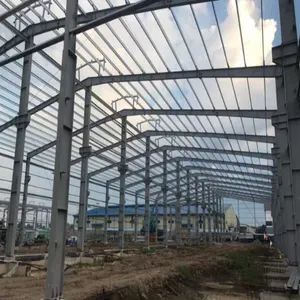
Prefabricated steel buildings are bolted together on site, so the critical work happens before the truck shows up: the foundation must be cast with anchor bolts set to the shop-drawing tolerances, and the erection crew needs the frame sequence plan. If the foundation is wrong, the whole schedule stalls.
A typical sequence for a portal-frame warehouse is: check foundation levels and bolt positions, erect the first frame, brace it, then work bay by bay. Cladding follows the frame. Ugandan buyers usually schedule assembly outside the heavy rain months, or accept weather delays in the schedule. For a small workshop, a six-to-eight-person crew with a boom truck can finish in two to three weeks; a large factory with crane beams needs more time and equipment.
Assembly and site preparation checklist
| Item | Owner | Why it matters |
|---|---|---|
| Soil test and foundation design | Buyer + local engineer | Poor soil under a heavy industrial frame is the classic failure |
| Anchor bolt setting | Buyer | Bolts out of tolerance create costly field fixes |
| Crane and lifting plan | Buyer | Frame members need the right reach and capacity |
| Erection crew | Buyer or supplier | Some suppliers can recommend or supply a trained crew |
| Local permits | Buyer | District and municipal approvals vary across Uganda |
| Duty and transport cashflow | Buyer | Transit bonds and duty bills are due before release |
If you are comparing suppliers across the region, our overview of steel structure buildings in African projects explains how export packages differ, and our Tanzania steel warehouse guide covers a similar import route next door.
FAQ
Can my Ugandan company clear the steel building itself?
Yes, but most buyers use a licensed clearing agent for the Kenya transit and URA clearance. The agent handles the transit bond, border documentation and duty payment, which is usually cheaper than learning the process on a one-off shipment.
Do I pay duty twice if the container crosses Kenya?
No — that is the point of the transit bond. Cargo in transit through Kenya to Uganda is not cleared for local consumption in Kenya; duty is paid once, in Uganda, at the applicable EAC rate. Confirm the transit procedure with your agent before shipment.
How much of a steel building can be assembled by a local crew?
Most of it. Prefabricated frames use bolted connections, and cladding is screw-fixed, so a trained local crew with the erection manual can complete the building. Heavy lifts and safety-critical steps usually need an experienced foreman.
Is Kampala or Mombasa the better delivery point?
For a single project, compare delivered-to-site cost: Mombasa delivery avoids the border leg but leaves you with Kenyan clearance; Kampala delivery includes the corridor. Ask suppliers for both price points.
Importing a steel building to Uganda? Tell our engineers your site location and building size, and get a design, export packing list and delivery schedule planned around the Mombasa corridor.