
Steel Grades for Steel Buildings: Q235B vs Q355B vs S355 for Portal Frames


The steel grade written into your building contract decides how heavy the frame is, how it welds, and how much steel tonnage you pay for — so it belongs on the procurement checklist, not only in the engineering folder. The direct answer: most prefab steel buildings use Q235B for secondary members and lighter structures and Q355B for main portal frames, with S355 as the European-standard equivalent of Q355B; choosing the grade by function saves cost, while choosing it by habit either over-specifies the steel or leaves the frame undersized. Confirm the grade selection with your structural engineer before fabrication starts.
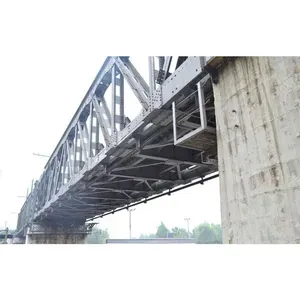
What the grade numbers mean
The grade names come from the yield strength in megapascals. Q235B has a specified yield strength of 235 MPa, and Q355B of 355 MPa — the higher number means the steel can carry more stress before permanent deformation. S355 is the European (EN 10025) grade with a 355 MPa yield, which is why it is often treated as the EN equivalent of Q355B. The letter B refers to the impact test requirement and chemistry limits within the Chinese standard GB/T 1591, not to the strength itself.
For the same load, a Q355B member can be lighter than a Q235B member because the higher strength allows smaller sections. That is the trade-off at the center of grade selection: higher-grade steel costs more per tonne but can reduce the total tonnage and freight weight.
Where each grade is typically used
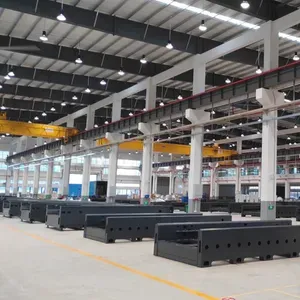
| Grade | Yield strength | Typical use in a steel building | What to check |
|---|---|---|---|
| Q235B | 235 MPa | Purlins, girts, bracing, light frames, secondary members | Weldability is good; section sizes grow under heavy loads |
| Q355B | 355 MPa | Main columns and rafters, crane girders, long-span frames | Welding procedure and preheat may be required |
| S355 (EN 10025) | 355 MPa | Export projects specified to European standards | Confirm the standard and subgrade required by the contract |
The split between main frame and secondary members is the most common pattern in prefabricated steel buildings: Q355B or S355 for the portal frame members that carry the primary loads, Q235B for the purlins and girts that support the cladding. This is not a rule — the engineer sets the grade from the actual loads, spans and deflection limits.
Weldability and fabrication impact
Higher-strength grades are weldable with the right procedure, but they are less forgiving than mild steel. Q355B and S355 may require preheat, controlled heat input and qualified welders depending on thickness and ambient temperature. A fabrication shop that welds Q235B every day does not automatically weld Q355B to the same quality, so when you specify a higher grade, ask the supplier how their welding procedure specifications cover it and whether they run the required testing.
For bolted connections, the grade of the steel plate matters less than the bolt class, but the connection design — plate thickness, bolt diameter and edge distances — depends on the forces, not on the plate grade alone. The shop drawing review is where these details get caught; our steel building shop drawings review guide walks through what to check before approval.
How grade choice moves the price
Q355B costs more per tonne than Q235B, but a Q355B frame can use lighter sections, so the steel tonnage — and the freight weight — can drop. The net effect depends on the span, the loads and how much of the frame the engineer can slim down. That is why two suppliers quoting the same building can give different tonnages: one may design in Q235B with heavier sections, the other in Q355B with lighter ones. Ask each supplier for the grade and the section schedule together, and compare tonnage per square meter with the grade stated. Our steel building frame weight guide explains how tonnage per square meter is calculated and where the weight really goes.
What to specify in your procurement documents
- Grade for main frame members and for secondary members, stated separately.
- The standard the grade must meet (GB/T 1591 for Q235B/Q355B, EN 10025 for S355).
- Impact test requirements, especially for cold climates.
- Coating system — galvanizing or paint — and the surface preparation standard.
- Material test certificates to be delivered with the frame.
Put these five items in the RFQ and the contract, and the grade discussion is settled before fabrication. If a supplier substitutes a grade without written approval, the structural design may no longer be valid — treat any substitution as a change that requires engineer sign-off.
Related reading: steel grade and weight considerations apply to container house frames too — container house weight and transport limits.
FAQ
Is Q355B the same as S355?
Both have a 355 MPa specified yield strength, but they are defined by different standards — Q355B by the Chinese standard GB/T 1591 and S355 by the European standard EN 10025. Confirm which standard your contract requires.
Why do suppliers use Q235B for purlins and Q355B for the main frame?
Secondary members carry lower loads, so Q235B is sufficient and more economical. Main columns and rafters carry the primary loads, where the higher strength of Q355B allows lighter sections.
Does a higher steel grade always mean a higher building price?
Not necessarily. The higher grade costs more per tonne, but the frame can be lighter, so total tonnage and freight may fall. Compare quotes on tonnage per square meter with the grade stated.
Can a supplier change the steel grade without approval?
No. A grade substitution changes the structural design assumptions. Any change should be requested in writing and approved by the engineer before fabrication.
Specify the Right Steel Grade for Your Building
Send us your building dimensions, loads and project standard, and our engineers will confirm the steel grade schedule for the main frame and secondary members before quoting the tonnage. Request a quote with a grade-specified steel schedule and compare suppliers on the same basis.