
Steel Building Payment Terms Explained: T/T, L/C and Incoterms for Importers


The payment terms decide how much risk each side carries on a steel building order. For a B2B buyer importing a prefabricated steel structure, the practical choice is between a T/T schedule and an L/C at sight, with Incoterms deciding where freight, insurance and customs risk sit. The safest approach is not a single payment method but a schedule: deposit, milestone payments tied to verifiable documents, and a final balance before or at loading.
Why payment terms matter more for steel buildings than for stock products
A steel building is designed, fabricated and shipped to your specification over several weeks. The supplier buys steel plate, beams and cladding with your order, so they ask for commitment early. You, in turn, need evidence that the design was approved, the steel was purchased and the fabrication actually happened before releasing large balances. A written payment schedule with document checkpoints is how both sides manage that risk.
Every supplier publishes a standard schedule, but the schedule is negotiable. What matters is that each payment is tied to a milestone you can verify, not to a calendar date alone.
T/T vs L/C: how each method works for steel structures
| Aspect | T/T (wire transfer) | L/C at sight |
|---|---|---|
| How it works | Direct bank transfer to the supplier | Bank pays against compliant documents |
| Typical structure | Deposit + milestone balances | Deposit + L/C for the balance |
| Document protection | Based on your contract schedule | Bank checks documents against L/C terms |
| Cost | Low transfer fees | Bank charges and margin, plus courier fees |
| Supplier preference | Preferred for small to medium orders | Common for larger or first-time orders |
| Best fit | Established supplier, repeat order | New supplier, large contract value |
There is no single best method. Many buyers use a hybrid: pay a deposit by T/T, open an L/C at sight for the balance, and close it when the shipping documents arrive. That gives the supplier commitment and the buyer document control.
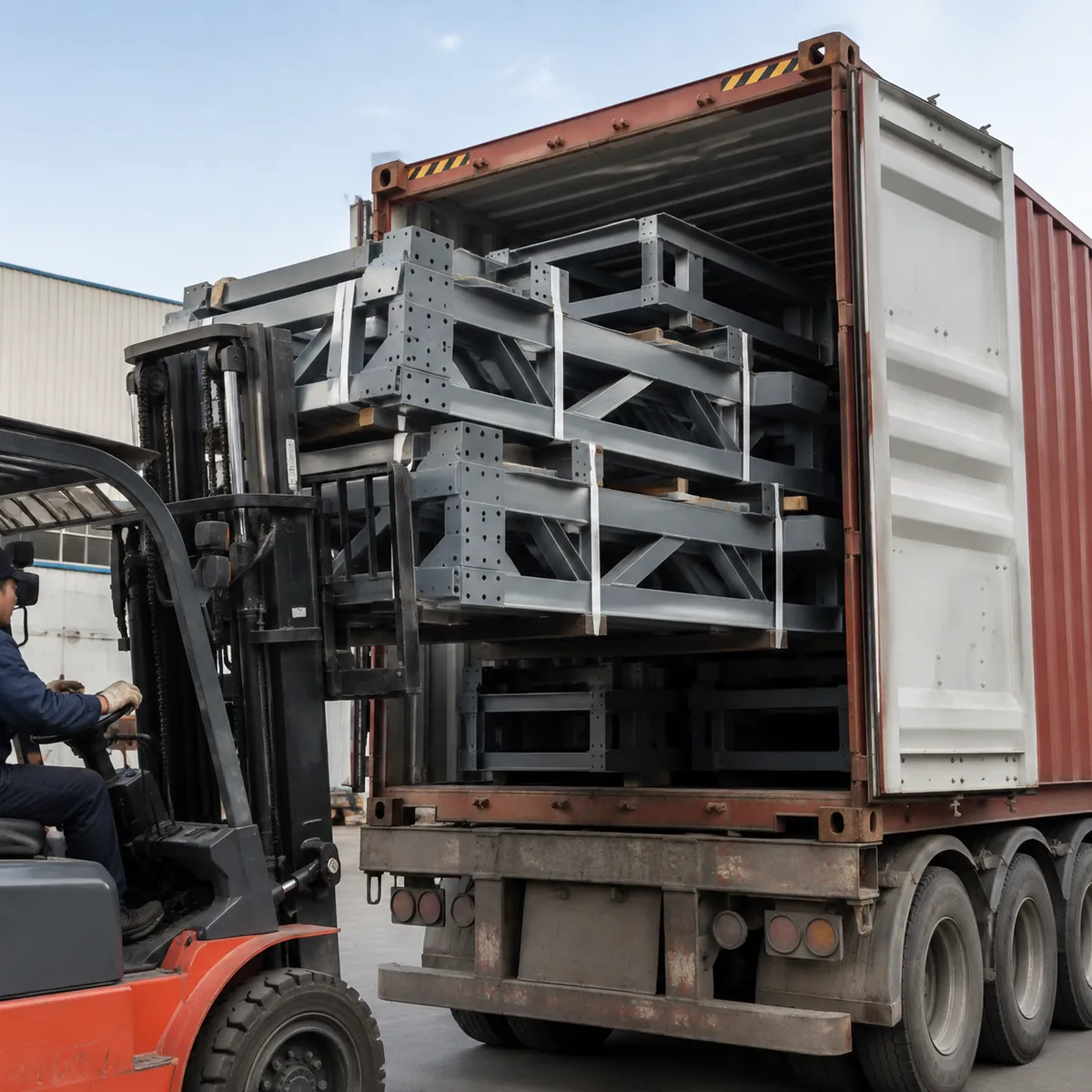
A practical milestone payment schedule
A workable schedule for a prefabricated steel structure order looks like this, in order:
- Deposit after you sign the contract and approve the final structural design and quotation.
- Second payment after the shop drawings and fabrication drawings are approved, usually when the steel is cut.
- Balance before or at loading, once the factory inspection report, packing list and loading photos are confirmed.
Adjust the percentages to the order size. The key point is the milestone names and the documents released at each step should be written into the contract, so a payment is never based on trust alone.

Choosing Incoterms for steel structure shipments
Incoterms decide who pays for freight, insurance and customs, and where risk passes from supplier to buyer. For steel building parts shipped in containers, the common options are:
- EXW: you collect from the factory. Lowest quoted price, but you handle all export logistics and risk.
- FOB: the supplier delivers goods onto the vessel at the named port; you cover ocean freight and insurance.
- CIF: the supplier arranges freight and insurance to the destination port, but risk passes at the vessel.
- DDP: the supplier handles delivery, duties and customs to your door. Convenient, but the quote usually includes those costs.
Choose the Incoterm that matches your own logistics capability. If you have an experienced freight forwarder, FOB or CIF keeps the supplier’s scope clean. If you want a single-responsibility delivery, DDP may be worth the higher price. Also confirm how the Incoterm interacts with the payment schedule, because documents like the bill of lading change hands at different points under each term.
Documents that should be attached to the payment schedule
Whatever payment method you choose, agree the document list in advance. The standard set for a steel structure export order includes the proforma invoice, commercial invoice, packing list, bill of lading, material certificates for the steel grades used, the final structural and shop drawings, and an inspection report from the factory or a third-party inspector. If you use an L/C, this list becomes the L/C document checklist, so define it before opening the credit.
For the engineering side of the order, our checklist of what information a steel building quotation needs covers the inputs you should finalize before any payment is due. To see how packaging and documentation are handled at the shipping stage, read our guide to steel building export packaging, loading and shipping documentation. When you are still shortlisting suppliers, our guide on how to choose the right steel structure supplier covers the vetting that should happen before you discuss money.
FAQ
Is a 30% deposit normal for a steel building order?
Deposits around 30 percent are common in the prefabricated steel structure trade, with the balance tied to production milestones and loading. The exact split varies by supplier and order size, so treat the schedule as a negotiation point and make sure each payment is linked to a document or milestone you can verify.
What is the difference between T/T and L/C for steel building imports?
With T/T you transfer bank funds directly, usually a deposit and then a balance payment before or at loading. With L/C at sight, the bank pays the supplier when compliant shipping documents are presented. L/C gives you more document control, while T/T is simpler and often preferred by factories for smaller orders.
Which Incoterm should I choose for a steel structure?
FOB and CIF are common for containerized steel parts. DDP shifts more responsibility to the supplier but usually raises the quote. The right choice depends on your logistics capability and where the risk of freight, insurance and customs should sit; discuss the options with the supplier before signing.
What documents protect my payment for a steel building order?
Proforma invoice, commercial invoice, packing list, bill of lading, material certificates, inspection reports and the final structural drawings. For L/C, the bank checks these documents against the L/C conditions, so agree the full document list before opening the credit.
Discuss payment terms with our team
If you are planning a steel building import and want a clear quotation with a milestone payment schedule and Incoterms options, send us your project details through the inquiry form or contact our export team. We will confirm the design scope first, then walk you through the payment structure that fits your order size. Contact us to start.