
Steel Building Lead Times: From Drawing Approval to Factory Delivery

{“@context”: “https://schema.org”, “@graph”: [{“@type”: “BlogPosting”, “headline”: “Steel Building Lead Times: From Drawing Approval to Factory Delivery”, “mainEntityOfPage”: {“@type”: “WebPage”, “@id”: “https://www.steelstructureprefab.com/2026/08/09/steel-building-lead-time-factory-delivery-guide/”}, “url”: “https://www.steelstructureprefab.com/2026/08/09/steel-building-lead-time-factory-delivery-guide/”, “datePublished”: “2026-08-09T22:43:53”, “dateModified”: “2026-08-09T22:43:53”, “inLanguage”: “en”, “image”: “https://www.steelstructureprefab.com/wp-content/uploads/2026/08/steel-steel-building-lead-time-fac-featured-20260810-064343.webp”, “author”: {“@type”: “Organization”, “name”: “SteelStructurePrefab”, “url”: “https://www.steelstructureprefab.com”}, “publisher”: {“@type”: “Organization”, “name”: “SteelStructurePrefab”, “url”: “https://www.steelstructureprefab.com”}}, {“@type”: “FAQPage”, “mainEntity”: [{“@type”: “Question”, “name”: “How long does a steel building take from order to delivery?”, “acceptedAnswer”: {“@type”: “Answer”, “text”: “The total is the sum of drawing approval, material procurement, fabrication, coating, packing, shipping and customs. For a typical export project the supplier can give a stage-by-stage schedule once the drawings are approved; treat the shipping leg as the least predictable part.”}}, {“@type”: “Question”, “name”: “Can a steel building be delivered faster?”, “acceptedAnswer”: {“@type”: “Answer”, “text”: “Yes, within limits. Approve drawings quickly, lock the scope early, choose standard spans, and book freight in advance. Suppliers can also prioritize a project for a fee or by contract, but cutting safety and inspection steps is not a legitimate way to save time.”}}, {“@type”: “Question”, “name”: “Why is my steel building still not shipped after fabrication?”, “acceptedAnswer”: {“@type”: “Answer”, “text”: “Common reasons are waiting for coating (especially hot-dip galvanizing), packing scheduling, or the booked vessel being delayed. Ask the supplier for the current stage and the reason, and confirm who is responsible for the delay under your incoterm.”}}, {“@type”: “Question”, “name”: “Does a bigger building always take longer?”, “acceptedAnswer”: {“@type”: “Answer”, “text”: “Usually, because more tonnage means more fabrication time, but the drawing approval and shipping legs can dominate the schedule for small buildings too. Compare the stage breakdown, not just the total.”}}, {“@type”: “Question”, “name”: “What is the typical fabrication time for a prefab steel building?”, “acceptedAnswer”: {“@type”: “Answer”, “text”: “Fabrication time scales with tonnage and the plant’s workload. Suppliers normally quote a fabrication window after drawing approval; ask for it in weeks in the schedule, and separate coating time if the frame is galvanized.”}}]}]}
Lead time is the question every buyer asks second, right after price, and the honest answer is that it is a chain, not a number. Drawing approval, material ordering, fabrication, inspection, shipping and customs each take their own weeks, and the total is decided by the slowest link. A typical export program from a Chinese fabricator is often planned in a window of several weeks from drawing approval to port loading, but the range is wide because the building size, the season, and the buyer’s own response speed all move it. This guide maps the chain and shows where buyers can genuinely shorten the schedule.
The Lead Time Chain
| Stage | What happens | Who controls the clock |
|---|---|---|
| 1. Quotation and order | Scope locked, deposit paid | Both |
| 2. Shop drawings | Fabricator details the frame | Supplier |
| 3. Drawing approval | Buyer and engineer review | Buyer, mostly |
| 4. Material procurement | Steel ordered and cut | Supplier |
| 5. Fabrication | Cutting, welding, drilling, coating | Supplier |
| 6. Inspection and packing | Pre-shipment check, bundling | Both |
| 7. Shipping and customs | Ocean transit and clearance | Freight market |
Drawing Approval: The Stage Buyers Control
Shop drawings are the one stage where a fast reply visibly shortens the total program. When the fabricator sends the frame drawings, they expect a review within a set number of days; every extra week of review pushes material ordering later. Assemble the review team in advance, including your local engineer if one is required, and answer comments in one batch instead of trickling them back. The fewer revision rounds, the faster fabrication starts. If you are unsure what to check, our guide to how to review steel building shop drawings walks through the key items to review before approval.
Fabrication and Material Lead Times
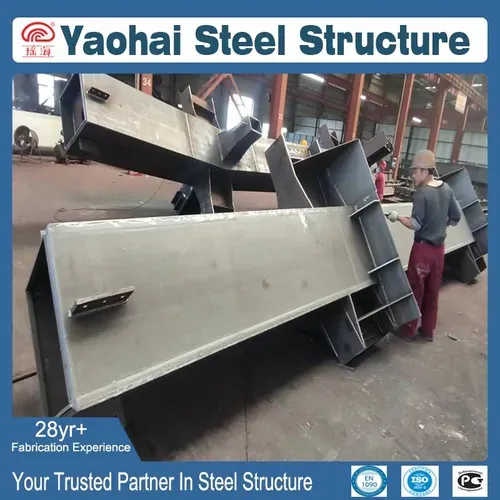
Once drawings are approved, the fabricator orders the steel. Standard sections are usually available quickly, but large or unusual sections, or high-demand periods in the steel market, can add weeks. Fabrication itself scales with tonnage: a 40-tonne frame takes more shop time than a 15-tonne frame, and coating, whether paint or hot-dip galvanizing, adds its own queue because galvanizing is usually a separate plant. Ask the supplier to separate the material, fabrication and coating periods in the schedule so you can see where the real bottleneck is.
Material availability is the wildcard in this stage. Hot-rolled sections used in standard portal frames are usually stocked or rolled regularly, but coated or galvanized members depend on the finishing plant’s queue. Buyers who leave a small buffer in the schedule for material and coating variation avoid the most common disappointment: a frame that is fabricated on time but waits in the galvanizing line for another week.
Shipping and Customs Delays
Ocean transit is the stage buyers cannot control, only plan around. Port congestion, blank sailings and seasonal demand all extend the transit, so treat the forwarder’s estimate as a minimum. The incoterm you choose decides who absorbs the delay risk: under FOB, the schedule risk transfers at the load port; under DDP, the supplier holds the risk until your site. Confirm which port the frame sails from, whether it is containerized or flat-rack, and who arranges customs clearance. The steel building payment terms and incoterms explains how payment terms and incoterms affect the schedule and cash flow.
Customs is the stage where paperwork mistakes cost whole weeks. A packing list that does not match the declared weight, or a tariff code that changes at the border, stops the shipment until the broker fixes it. Confirm the import requirements with your customs broker before the vessel sails, so the documents match what the inspector will check.
How to Shorten Your Total Timeline
Five practical moves cut weeks from a typical program. First, lock the scope before ordering, because change orders reset the drawing cycle. Second, approve drawings fast and in one batch. Third, order during the fabricator’s off-peak months if your schedule allows. Fourth, choose standard spans and member sizes instead of custom dimensions, since standard components are often pre-ordered. Fifth, book the freight early and confirm the container or flat-rack plan with the forwarder before fabrication finishes, so the frame is not waiting at the port.
Suppliers who share a weekly progress photo and a stage milestone table make the schedule visible; ask for that reporting rhythm when you place the order, and hold them to it.
FAQ
How long does a steel building take from order to delivery?
The total is the sum of drawing approval, material procurement, fabrication, coating, packing, shipping and customs. For a typical export project the supplier can give a stage-by-stage schedule once the drawings are approved; treat the shipping leg as the least predictable part.
Can a steel building be delivered faster?
Yes, within limits. Approve drawings quickly, lock the scope early, choose standard spans, and book freight in advance. Suppliers can also prioritize a project for a fee or by contract, but cutting safety and inspection steps is not a legitimate way to save time.
Why is my steel building still not shipped after fabrication?
Common reasons are waiting for coating (especially hot-dip galvanizing), packing scheduling, or the booked vessel being delayed. Ask the supplier for the current stage and the reason, and confirm who is responsible for the delay under your incoterm.
Does a bigger building always take longer?
Usually, because more tonnage means more fabrication time, but the drawing approval and shipping legs can dominate the schedule for small buildings too. Compare the stage breakdown, not just the total.
What is the typical fabrication time for a prefab steel building?
Fabrication time scales with tonnage and the plant’s workload. Suppliers normally quote a fabrication window after drawing approval; ask for it in weeks in the schedule, and separate coating time if the frame is galvanized.
Final Recommendation
Ask every supplier for a stage-by-stage schedule, not a single delivery date, and identify who controls each stage. Treat drawing approval as the stage you own, book freight early, and fix the scope before you sign. With the chain mapped and the slow links managed, the delivery date becomes a plan you can actually meet.
Contact our steel structure team for a stage-by-stage lead time schedule matched to your building size and destination port.