
Steel Building Cost per Square Meter: What’s Included in a Factory Quote

A factory quote for a steel building is not one price; it is five or six prices taped together. Structural steel weight, cladding, accessories, engineering, freight and packing each move the total, and the per-square-meter figure only makes sense when you know which lines are inside it. This guide breaks down a typical export quote so you can compare suppliers on the same basis instead of on the headline number.

Why the per-square-meter number needs a definition
Ask three suppliers for a steel building cost per square meter and you can get three numbers that all look different because they include different things. One supplier quotes structural steel only; another adds cladding and doors; a third includes engineering drawings but no freight. Before comparing any figures, pin down the scope: floor area basis (usually the building footprint), the steel grade, the cladding specification and whether the quote is ex-works, FOB or CIF. Our turnkey versus supply-only cost guide explains the biggest scope gap first.
The practical rule: never compare two quotes line by line until you have normalized the scope. A quote that looks cheap often turns out to be the one with the fewest lines.
The structural steel line: weight is the core driver
The single largest line in most quotes is the fabricated steel itself, priced by weight. Weight depends on the design: clear span, bay spacing, column height, roof load, snow and wind loads, and whether the building carries a crane or mezzanine. Two buildings of the same floor area can differ in steel weight by a wide margin because one was designed for heavier loads. Ask for the steel tonnage per square meter and the design basis behind it, then compare weight, not just price per ton.
| Quote line | What it covers | Why it changes between suppliers |
|---|---|---|
| Fabricated steel frame | Columns, rafters, purlins, bracing, base plates, bolts | Load assumptions, span and bay layout, steel grade |
| Cladding and roofing | Wall and roof panels, flashing, fasteners | Panel type (single skin vs sandwich), thickness, color |
| Accessories | Doors, windows, gutters, downpipes, ridge vents | Quantity and specification of openings |
| Engineering | Design calculations, shop drawings, erection manual | Code used, revision rounds, included or extra |
| Packing and freight | Sea-freight ready packing, container or breakbulk | Route, Incoterm, port charges |
For a closer look at how loads translate into weight, our design basis guide for pre-engineered buildings shows what the supplier should hand you with the quote.
What is usually excluded from a steel building factory quote?
Foundation design and construction, site work, erection labor, crane hire and local permits are typically excluded. A reliable supplier states exclusions in writing; a quote that stays silent on exclusions is incomplete.
Cladding, accessories and the specification trap
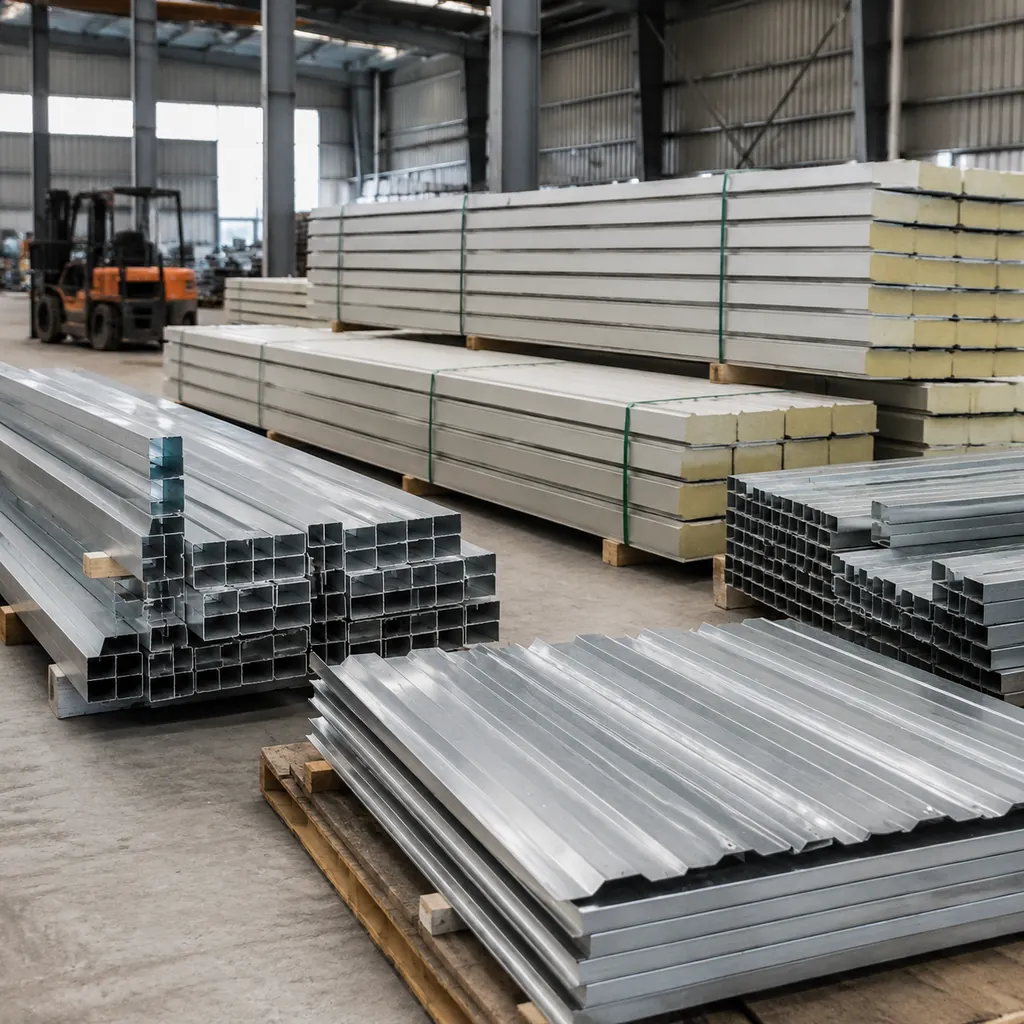
Cladding is where scope differences hide. A sandwich panel wall with insulation costs more than a single-skin sheet, and a higher-spec coating costs more than a basic one. The same building can be quoted with premium cladding by one factory and basic cladding by another, and the per-square-meter gap will look like a price difference when it is really a specification difference. Write the cladding specification into the comparison sheet: panel type, thickness, coating, color and the fastener system.
Doors, windows, gutters and vents are usually listed as accessories with their own prices. Count them: one supplier may include two roller doors in the base quote, another lists them as extras. The extras list is a normal part of the commercial discussion, but you need it on the table before you compare totals.
How do I know if the quote is complete?
Ask the supplier to confirm, in writing, what is excluded: foundation, erection labor, crane hire, local permits and anything site-specific. A complete quote states exclusions clearly. If the supplier hesitates to list exclusions, treat the quote as incomplete and ask again.
Engineering, drawings and the approval loop
Engineering is a real cost line even when suppliers fold it into the price. The design calculations, shop drawings and the erection manual take engineer hours, and revision rounds add more. Clarify what is included: one round of shop drawing approval is standard; extra revisions after approval usually carry a fee. Our guide to what a factory needs for a quote lists the site and loading information that keeps the engineering loop short.
Freight, packing and the landed cost
Export quotes separate the goods price from freight because the two follow different markets. Packing for sea freight is a real cost: steel is heavy, and long members need proper blocking, dunnage and moisture protection inside the container or on breakbulk. The Incoterm decides who carries the risk and the cost of each leg. For a full breakdown of how shipping cost moves with weight, volume and route, see our steel building shipping cost guide.
Should I budget extra for site work?
Yes. Foundation, erection and local permits are almost always outside the factory quote. Treat the factory price as the building delivered to the port, and build a separate budget for site work. Ask the supplier for anchor bolt and reaction data early so your local engineer can price the foundation while the steel is still in production.
How to turn three quotes into one comparison
Put the quotes into a single table with the same scope columns: steel tonnage, cladding spec, accessories list, engineering included, packing and Incoterm. Then compare totals line by line, and flag any line a supplier refuses to clarify. The cheapest quote is only the cheapest if the scope is identical. For a step-by-step method of normalizing and comparing proposals, our quotation information checklist is a practical starting point.
FAQ
Why do steel building prices per square meter vary so much between suppliers?
Because the scope behind the number varies: steel weight per square meter, cladding specification, accessories, engineering and freight terms all change the total. Normalize the scope before comparing.
What is the biggest line in a factory quote?
Usually the fabricated steel frame, priced by weight. The tonnage depends on design loads, span, bay spacing and building height, so compare steel weight per square meter rather than only price per ton.
Are engineering drawings included in the price?
Usually yes, in the sense that design and shop drawings are part of a complete supply package, but revision rounds after approval may carry fees. Confirm the included number of approval rounds in writing.
Is freight included in the per-square-meter price?
Not normally. Export quotes separate the goods price from freight and packing, and the Incoterm decides who pays each leg. Convert all quotes to the same Incoterm before comparing.
What should I ask for to make quotes comparable?
A scope sheet: floor area, steel tonnage, cladding spec, accessories list, engineering scope, packing and Incoterm. Ask each supplier to fill the same sheet and compare line by line.
Comparing steel building quotes? Send us your building size, location and loading requirements, and we will return a full scope sheet — steel tonnage, cladding spec, accessories and Incoterm — so your comparison is apples to apples.