
Commercial Steel Building in Nigeria: Port Logistics and Site Preparation

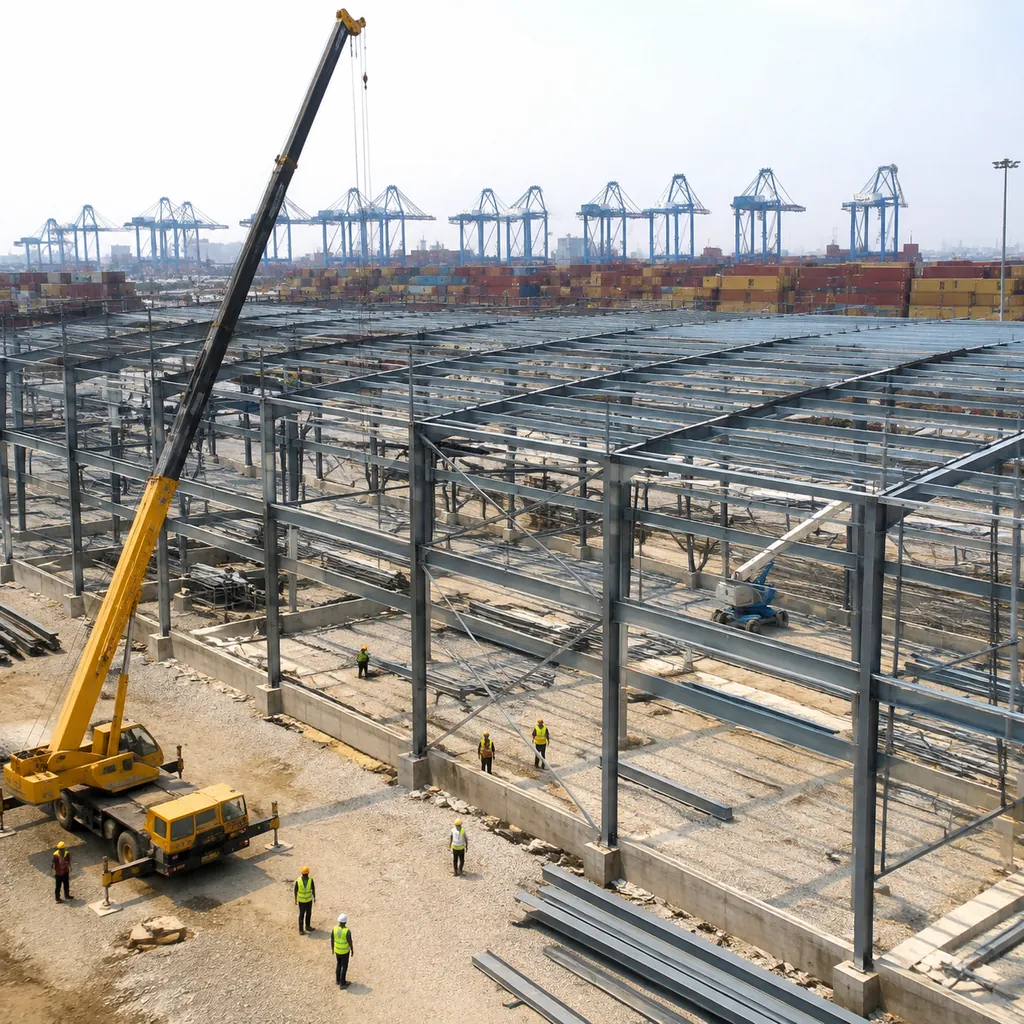
A commercial steel building in Nigeria is usually decided before the first column is lifted: the cargo has to clear Apapa or Tin Can Island, reach the site by truck, and the foundation has to be ready when the steel arrives. Buyers who plan these two legs well finish on schedule; buyers who treat them as an afterthought pay demurrage, idle cranes and re-negotiated erection rates. This guide walks through the port logistics chain and the site preparation checklist that keep a prefab steel warehouse or commercial project moving in Nigeria.
What counts as a commercial steel building in Nigeria
In the Nigerian market, commercial steel buildings are the warehouses, showrooms, retail outlets, cold stores, workshops and logistics hubs that a business actually operates from. They differ from heavy industrial plants mainly in scale and fit-out: smaller clear spans, more attention to cladding and insulation, and a floor slab that has to handle forklifts and pallet racking. The design loads still follow the same code-based process, but the procurement question is almost always the same: how does the steel get from the factory to my site, and what do I need to have ready when it arrives.
For a planning view of building types and price drivers in the region, our steel building price guide for East Africa explains the landed-cost model that Nigerian buyers also need to apply.
Which Nigerian ports handle steel building cargo?
Apapa and Tin Can Island in Lagos handle most container and breakbulk steel, with Onne and Calabar used for regional projects. Confirm the terminal, the vessel schedule and the current port charges with your clearing agent before shipment.
The port logistics chain: from vessel to site
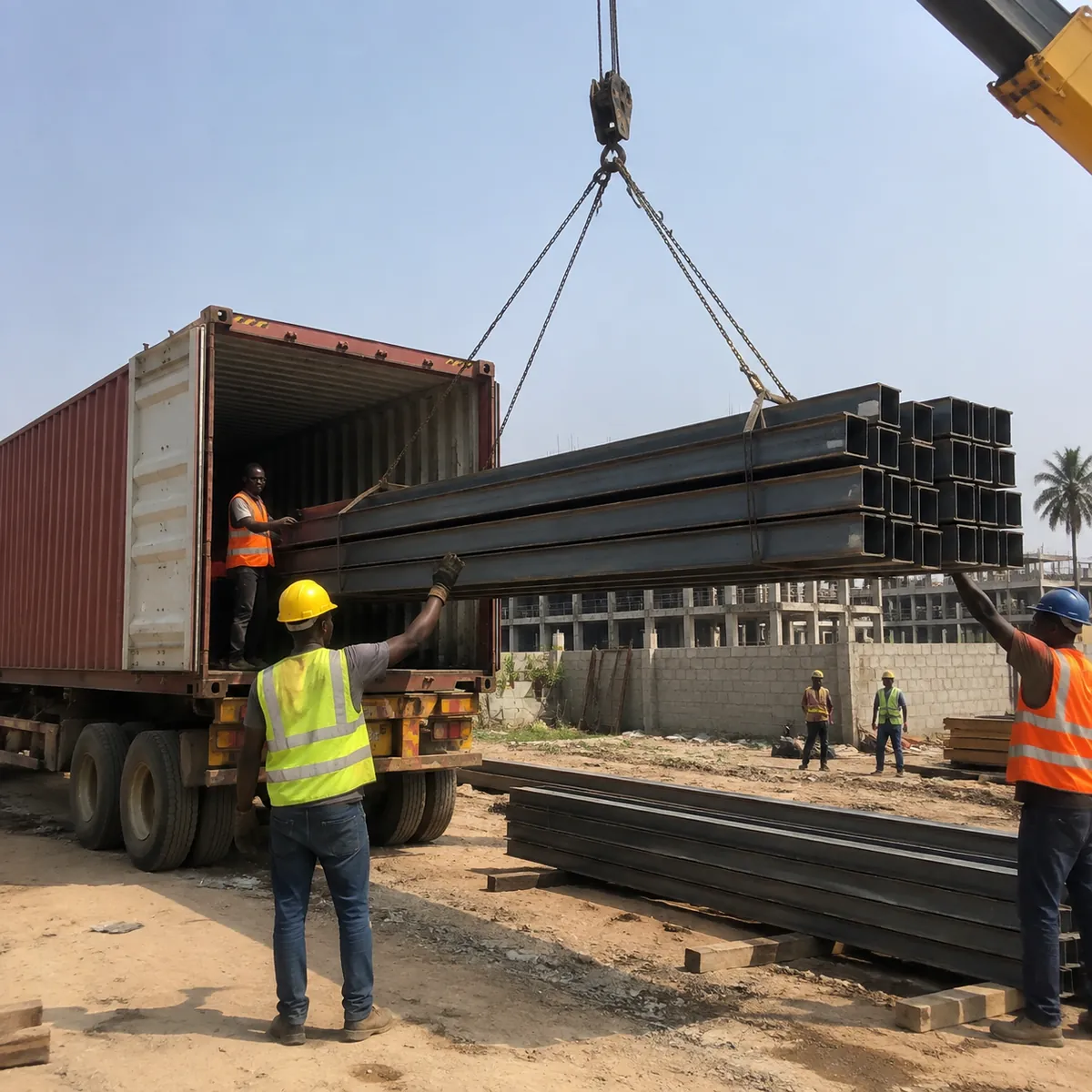
Most export steel for Nigeria lands at Apapa or Tin Can Island in Lagos, with some cargo going through Onne or Calabar depending on the region. The chain has four legs, and each one can stall the project: vessel discharge, customs clearance, port exit and inland trucking. Steel is heavy, so the freight bill and the trucking bill are significant; long members are usually shipped as breakbulk or in open-top/FR containers, while smaller parts travel in standard containers.
| Logistics leg | Who usually handles it | Typical delay risk |
|---|---|---|
| Vessel discharge and port stacking | Shipping line / terminal | Congestion at Apapa and Tin Can, weekend closures |
| Customs clearance | Licensed clearing agent | Missing documents, valuation queries, PAAR delays |
| Port exit and truck booking | Buyer’s forwarder | Truck queueing, road restrictions near the port |
| Inland trucking to site | Transport contractor | Route conditions, axle-load rules, security on long hauls |
Documentation is the lever you control. The commercial invoice, packing list, bill of lading, mill certificates and, where required, the certificate of origin should all be agreed with the clearing agent before the vessel sails. Our steel building export documentation guide lists the document set to request from the supplier.
Site preparation before the steel arrives
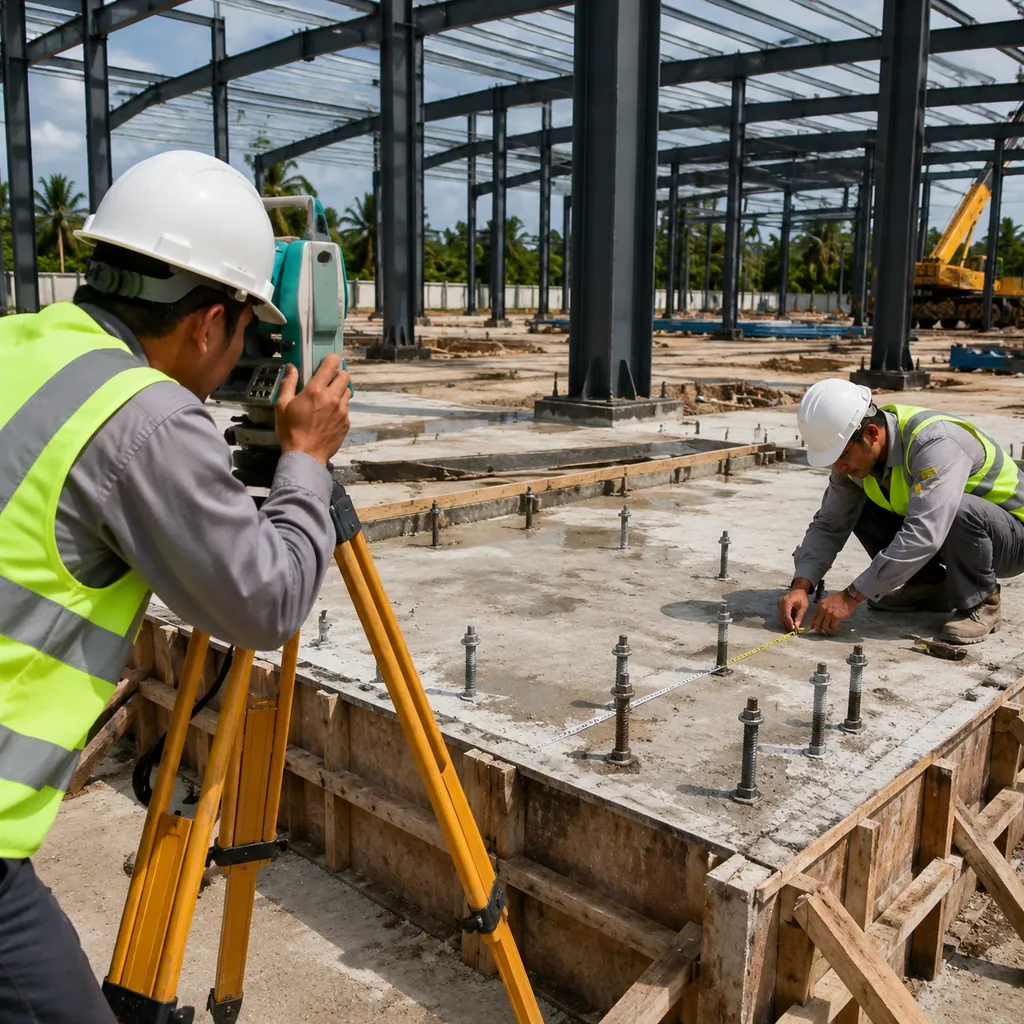
While the cargo is at sea, the site work should be moving. The critical path is the foundation: steel frames sit on anchor bolts cast into the foundation, and if the bolts are out of position the whole frame fights the concrete. Site preparation covers the survey and soil test, the foundation design from the supplier’s reaction data, the floor slab, the crane pad and the access route for the delivery truck.
| Site task | What it produces | Why it gates the steel |
|---|---|---|
| Land survey and soil test | Ground levels, bearing capacity | Foundation design cannot start without it |
| Foundation design and casting | Footings, anchor bolts, slab | Erection cannot start until bolts are set and cured |
| Access and crane pad | Hard-standing for truck and crane | Delivery and lifts need firm, level ground |
| Site office and storage | Secure area for members and tools | Steel must be stored dry and protected |
The anchor bolt plan is the single document that ties the supplier to your site; our prefab steel warehouse supplier foundation guide shows exactly what data to request before you pour concrete.
How long does site preparation take in Nigeria?
Allow the same realism you apply to the supply chain: soil testing and foundation design typically take weeks, casting and curing add more, and utility coordination can run in parallel. Start site work the day the order is confirmed, not the day the ship arrives.
Budget lines that get forgotten
Buyers who only budget the factory price discover the rest at the port. The realistic project budget separates the steel cost from port charges, demurrage and storage, inland freight, local erection, and the small items like crane hire and consumables. Port charges vary by terminal and by whether the cargo is containerized or breakbulk, so confirm the current schedule with your clearing agent before you commit — the numbers change and published ranges go stale quickly.
One practical tip: ask the supplier for the packed dimensions and weights of each package early, because terminal handling and trucking in Nigeria are priced by weight and by package count. A clean packing list is also what your clearing agent needs to move fast.
Sequence that keeps the schedule honest
Run the two streams in parallel: the supply stream (design, fabrication, packing, shipment, clearance, delivery) and the site stream (survey, soil test, foundation, slab, access, storage). Put a milestone date on each, and treat the later of the two as your real completion date. For site offices, storage or worker accommodation during construction, many Nigerian buyers add a modular unit from a container house supplier so the team is on site from day one without waiting for permanent buildings.
FAQ
How long does it take to clear steel building cargo in Nigeria?
It depends on documentation readiness and terminal congestion. With the full document set prepared in advance — invoice, packing list, bill of lading, mill certificates and origin certificate where required — clearance can move in days; missing documents can stretch it to weeks. Start clearance paperwork before the vessel arrives.
Do I need a local engineer for a steel building in Nigeria?
Yes, for the parts the supplier cannot cover: foundation design from the anchor bolt and reaction data, and local building approval. The supplier provides design calculations and drawings; a Nigerian engineer adapts the foundations and handles the local submission.
What documents should I ask the steel supplier for?
At minimum the commercial invoice, packing list, bill of lading, mill certificates and design drawings, plus certificate of origin or fumigation certificate where the route requires it. Agree the full list with your clearing agent before shipment.
Should I budget for erection separately?
Yes. Erection is normally a separate line: a local crew with a mobile crane, plus crane hire and site consumables. Ask the supplier for the erection manual and crew guidance, and price the local labor and crane separately from the steel supply.
Can site preparation run while the steel is in transit?
It should. Survey, soil test, foundation design and casting can all happen while the steel is at sea. The anchor bolt plan from the supplier is the document that lets your local engineer design the foundation early.
Planning a commercial steel building for Nigeria? Send your site location, building size and the port you intend to use, and we will confirm the supply scope, the document package and the anchor bolt data your local engineer needs.