
Steel Building Price in Kenya: Import Duty, VAT and Local Assembly Cost Breakdown

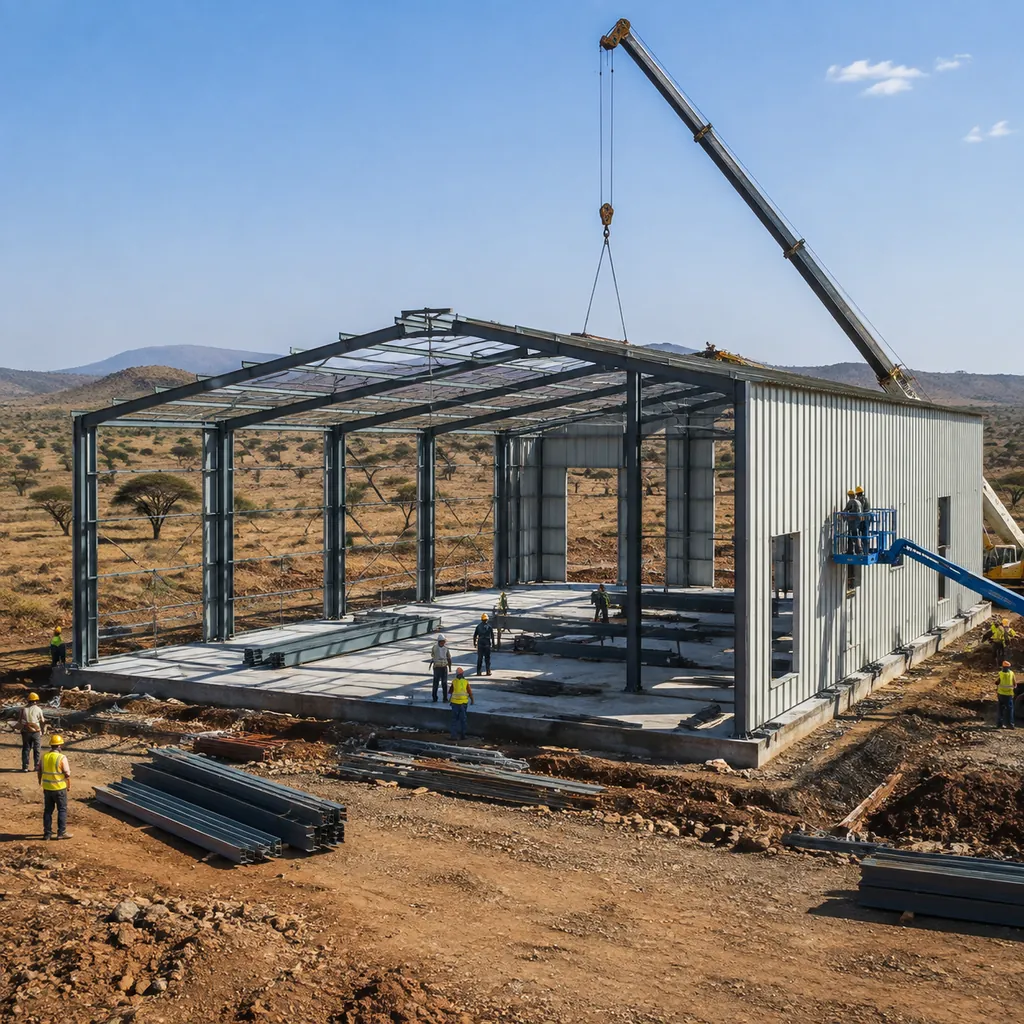
The final price of a steel building in Kenya is not the factory quotation — it is the quotation plus import duty, VAT, port handling, inland freight, foundations, erection labor, and permits. Buyers who plan only the steel cost are routinely surprised when the delivered and erected price comes out well above the FOB number. This guide breaks down the Kenya cost stack line by line so you can budget realistically and ask your supplier the right questions before you commit.
How the Kenya price stack is built
A steel building project in Kenya has roughly six cost layers: the steel structure itself (frame, cladding, fasteners, accessories), sea freight and insurance, import duty and VAT, port and customs clearance, inland transport to the site, and local works — foundations, erection, and permits. Each layer is priced by a different party, and the total depends on decisions you make in each one.
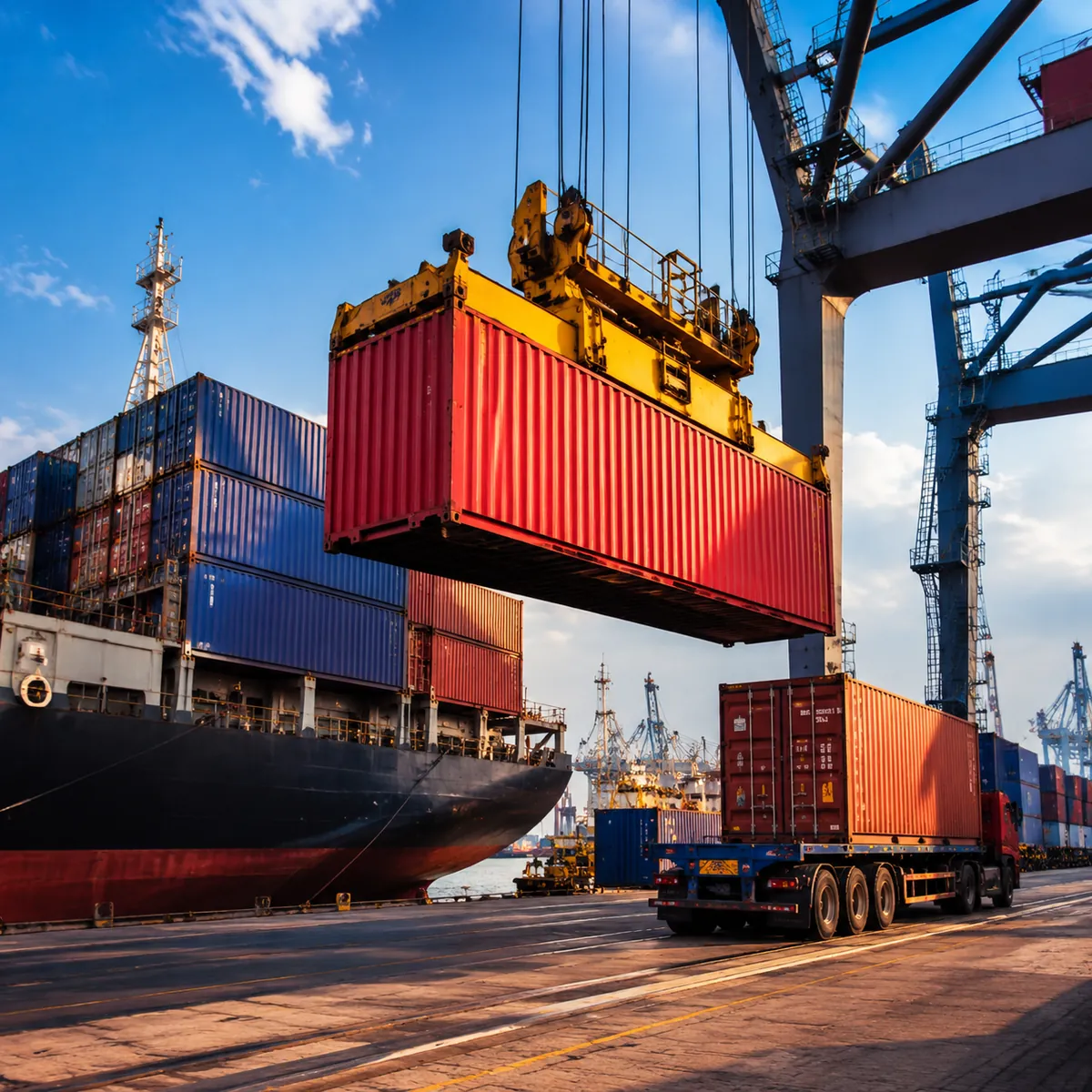
The steel structure price from a supplier is usually quoted on EXW, FOB, or CIF terms. If you compare two factory quotations, make sure they are on the same terms; the difference between EXW and CIF Mombasa can be significant. Most buyers of prefab steel buildings in Kenya work with a supplier who can quote CIF Mombasa and provide the shipping documents, then handle local clearance with a customs broker.
Import duty and taxes at the port
Steel building components are normally imported under HS Chapter 73 headings, and the Kenya Revenue Authority (KRA) applies the import duty rate for the specific commodity code, plus value-added tax on the duty-inclusive value. The exact duty rate depends on the tariff classification of the goods — a “steel structure kit” may classify differently from individual building materials — so confirm the applicable code with KRA or a licensed customs broker before finalizing your budget. VAT in Kenya is charged at the standard rate on most imports, and it is a cash-flow item you must include even when the duty rate itself is modest.
Because classification and rates change, the safe planning approach is: ask your supplier for the HS code they normally use for your building type, then have a customs broker confirm the current duty and VAT treatment for that code. Budget a small contingency for duty variations — customs decisions can differ from the estimate.
Port handling, clearance, and inland freight
Goods arriving at Mombasa go through terminal handling, customs declaration, and inspection before release. Clearance time depends on documentation quality — a complete packing list, commercial invoice, bill of lading, and any required import standard marks speed the process dramatically. After release, inland freight moves the steel from Mombasa to your site; Nairobi and the Rift Valley are the common destinations, with longer hauls for western Kenya or coastal projects. Inland freight is priced by weight and volume, and steel buildings are heavy, so this line is larger than many first-time buyers expect.
Quick question: Do steel buildings imported to Kenya need KEBS approval?
Certain imported goods are subject to Kenya Bureau of Standards (KEBS) conformity assessment before or at import. Whether your steel building components fall under a mandatory standard depends on the product and its use — confirm with your customs broker or KEBS for the specific commodity code.
Foundations and site works
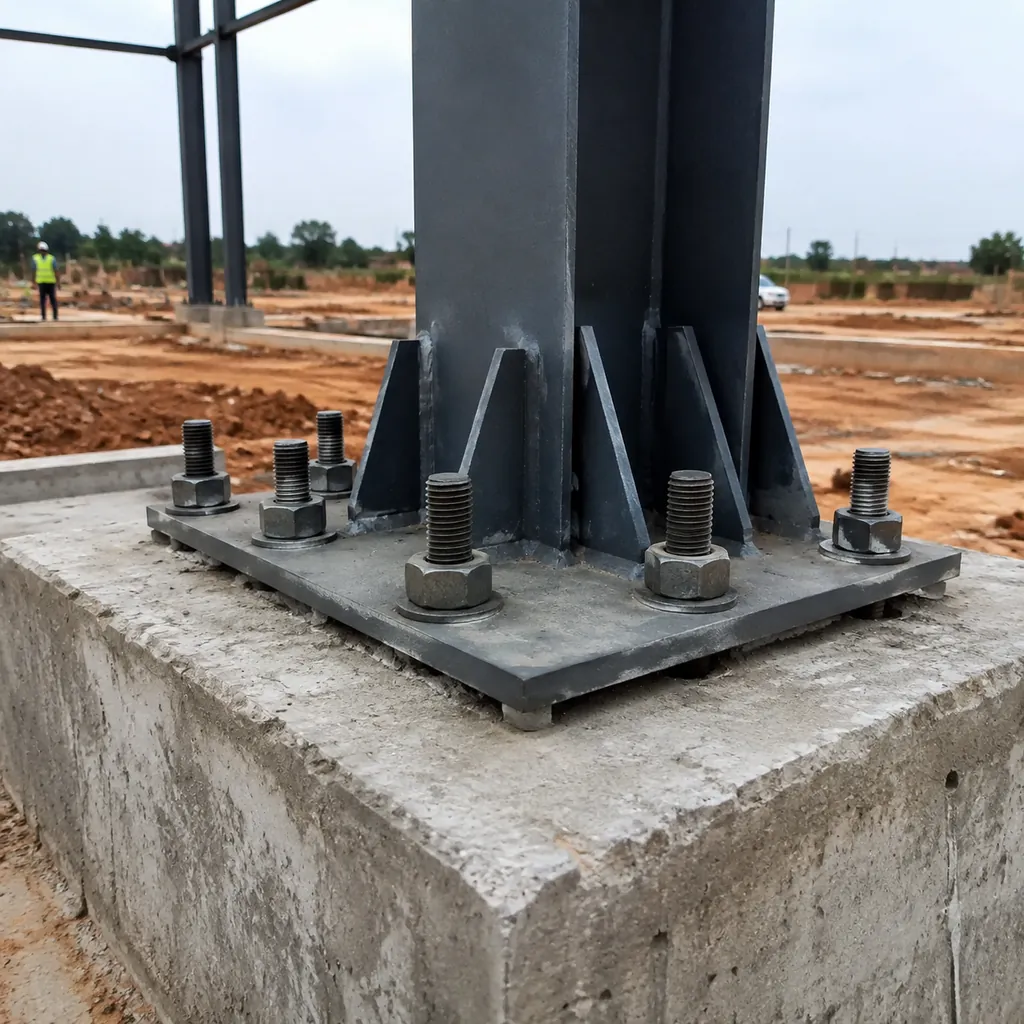
The foundation is designed locally because soil conditions vary — Nairobi soils, coastal sands, and volcanic soils in the Rift Valley behave very differently. The steel supplier provides the column reactions and anchor bolt layouts, and a local engineer designs the concrete pad or strip footings. Budget for the geotechnical check on larger buildings, concrete works, and any slab requirement. For an industrial steel building that will store heavy goods, the floor slab spec (thickness, reinforcement, and sub-base) is a significant local cost line.
Erection labor and crane
Portal frame steel buildings are bolted together on site, and local erection crews with steel experience are available in Kenya’s main construction markets. The erection cost depends on building size, the crane required for lifting the main frames, and crew productivity. Ask your supplier whether erection drawings and an installation guide are included, and whether remote or on-site technical support can be arranged for the first frames. Some buyers hire a local contractor supervised by the project engineer; others use a specialist steel erection subcontractor.
Permits and compliance
Building works in Kenya require approvals from the county government — typically a building permit covering the structural drawings and the proposed use. The structural documents usually need to be prepared or reviewed by a registered engineer, and the contractor needs to be registered with the National Construction Authority (NCA) for construction work. Confirm the county requirements for your site before erection starts, and include the permit fees and engineering review time in the schedule.
| Cost component | Main driver | Planning note |
|---|---|---|
| Steel structure (EXW/FOB/CIF) | Frame tonnage, steel grade, cladding, coating | Compare quotes on the same trade terms |
| Sea freight and insurance | Port pair, container count | CIF Mombasa quotes include freight and insurance |
| Import duty and VAT | HS classification, shipment value | Confirm the code and rates with KRA / customs broker |
| Port handling and clearance | Documentation quality, inspection | Complete documents = faster release |
| Inland freight | Weight, distance from Mombasa | Steel is heavy — budget realistically |
| Foundations and slab | Soil condition, floor spec | Local engineer design from supplier’s loads |
| Erection and crane | Building size, crew, crane type | Check if supplier provides erection drawings |
| Permits and compliance | County permit, NCA registration | Include review time and fees in schedule |
How to get an accurate Kenya price estimate
Follow this sequence and the estimate will be close to the final number:
- Send your supplier the building size, intended use, and site county, and ask for a CIF Mombasa quote with a named HS code.
- Ask the supplier to include the anchor bolt layout and foundation loads in the technical proposal so your local engineer can price the foundation.
- Get a customs broker to confirm duty and VAT on the stated HS code.
- Get local quotes for inland freight, concrete works, erection, and the crane.
- Add the permit fees and a contingency, then compare against your budget.
Price ranges in Kenya move with steel prices, exchange rates, and tariff decisions, so treat any published figure as an indicator rather than a quote. The components above are what turn a factory price into a project price — and they are all controllable once you know they exist.
Worked example: budgeting a 1,000 square meter warehouse in Kenya
To show how the cost stack works, walk through a planning estimate for a 1,000 square meter warehouse (for example 40 m by 25 m with a 6 m eave height) in Kenya. Every figure here is a planning range to illustrate the structure — your actual numbers come from the supplier’s quotation, the customs broker, and local quotes, and they will move with steel prices, exchange rates, and the specific site.
The steel structure itself — frame, cladding, fasteners, and accessories on CIF Mombasa terms — is the largest single line and the one the supplier quotes. On top of it, import duty applies at the rate for the HS classification, and VAT is charged on the duty-inclusive value. For planning purposes, set aside a combined taxes line that is clearly larger than a small percentage of the goods value, and confirm the exact treatment with the broker before committing.
Port handling and customs clearance add a fixed and variable component: terminal charges, documentation, and any inspection fees. Inland freight from Mombasa to Nairobi or the Rift Valley is priced by weight and volume — steel is heavy, so this line is meaningful. Foundations and the floor slab are priced locally and depend on soil and the slab specification; get a local contractor’s quote, not a guess. Erection with a crane is another local quote, and county permit fees and engineering review close the list.
The lesson of the worked example is the same at any size: the factory quotation is usually less than half of the delivered-and-erected project cost in Kenya. Budget the full stack, keep a contingency line, and the project will not run out of money halfway through.
Step-by-step import timeline
Knowing the sequence helps you order the paperwork correctly the first time:
- Confirm the HS classification and current duty and VAT treatment with a customs broker before the supplier loads the container.
- Ask the supplier for the complete shipping document set — commercial invoice, packing list, bill of lading, and any certificates required for the classification.
- On arrival at Mombasa, the terminal issues the arrival notice; the broker files the customs declaration with KRA.
- Customs may select the consignment for inspection; ensure the packing list matches the physical goods and the declaration.
- Pay the assessed duty and VAT, obtain the release, and arrange collection or delivery.
- Move the steel to the site with the inland transporter, and check the delivery against the packing list before unloading.
Document errors are the main cause of clearance delays. A packing list that does not match the invoice, or a missing certificate, can hold the container for days. Send the document set to the broker before the vessel arrives so they can pre-clear what is possible.
Choosing a customs broker and an erection contractor
Two local partners shape the success of a Kenya steel building project: the customs broker and the erection contractor.
For the broker, ask: Do you have experience with steel structure imports under HS Chapter 73? Can you confirm the current duty and VAT before shipment? What documentation do you need and when? What are your fees, and what do they include? A broker with steel experience will flag classification issues before they become delays.
For the erection contractor, ask: Have you erected portal frame steel buildings before, and can you show completed projects? Do you have the crane access and the crew for the frame size? Can you work from erection drawings and the installation manual? Will a qualified engineer supervise the lifting and bolting? Do you carry the required NCA registration and insurance? A contractor who has done steel before will price the work realistically and finish without surprises.
If your supplier offers a recommended contractor or a local partner, treat it as a starting point, not a decision — get two quotes and check references either way.
Common budgeting mistakes in Kenya projects
- Comparing factory quotations on different trade terms — always convert to the same incoterm before comparing.
- Ignoring VAT on the duty-inclusive value — the taxes line is bigger than many buyers expect.
- Underestimating inland freight because steel is heavy and the distance from Mombasa is long.
- Pricing foundations from a per-square-meter rule instead of a local quote based on soil.
- Forgetting the crane in the erection budget — frame erection without a crane is not realistic.
- Not including the county permit and the engineer’s review time in the schedule.
Financing and payment planning for Kenya projects
Steel building payments usually follow the deposit–progress–balance pattern: a deposit to confirm the order, a progress payment against a production milestone such as drawing approval or fabrication start, and the balance against the shipping documents. In Kenya, the buyer should also plan the foreign exchange path: suppliers quote in USD, and the Kenya shilling moves against the dollar, so the local currency cost can change between quotation and payment. Two planning steps reduce the risk: ask the supplier to hold the quotation price for a defined validity period, and convert your budget at a slightly conservative rate so a small depreciation of the shilling does not blow the contingency.
Payment methods also matter for trust. Many first-time buyers prefer a letter of credit (LC) for the balance, because it releases payment only against the shipping documents; suppliers accept LCs but factor their cost and bank charges into the price. Others use a telegraphic transfer (TT) against milestones with inspection before the final payment. Both structures work — the key is that the payment schedule is tied to verifiable events, and that the final payment happens only after a pre-shipment inspection confirms the goods match the contract.
Currency and exchange rate planning
For a project paid over several months, currency planning is part of cost control. The steel price itself is quoted in USD; the local currency equivalent moves daily. If your project budget is in Kenyan shillings, set the exchange rate assumption explicitly and review it at each payment milestone. A small buffer — for example converting your cost estimate at a rate a few percent weaker than the current spot — protects the budget without speculative hedging. For larger projects, a forward contract with your bank can fix the rate for the major payments; the bank can quote this once the payment schedule is fixed. Ask your bank about the minimum size for a forward, and weigh the cost against the protection it gives.
Project insurance: cargo, erection, and third-party cover
Three insurance lines complete a Kenya steel building project. Marine cargo insurance covers the steel from the factory to Mombasa (or to the port named in the policy), and it is usually arranged by the buyer or included in a CIF price. Check the policy covers the inland leg if you want protection all the way to the site. Erection insurance covers the construction phase — lifting damage, falls, and property damage during assembly — and it is normally arranged through the erection contractor, so verify their cover before they start. Third-party liability protects against damage to neighboring property and injuries to the public during the works; again, the contractor’s policy should name the project. Ask for the certificate of insurance with the contract documents, and confirm the sums are realistic for the site, not token amounts.
Who does what: responsibilities at a glance
A Kenya steel building project has four parties, and the handoffs between them are where cost and delay hide. The steel supplier provides the frame, cladding, drawings, foundation loads, and shipping documents; the customs broker handles classification, declaration, duty and VAT payment, and release; the local engineer designs the foundations, reviews the structural documents, and signs what the county requires; and the erection contractor builds on site with the crane and crew. The buyer coordinates the four and holds the budget.
| Party | Delivers | Your check |
|---|---|---|
| Steel supplier | Frame, cladding, drawings, foundation loads, shipping documents | Quote on clear trade terms; HS code named; drawings complete |
| Customs broker | Classification, declaration, duty/VAT payment, release | Confirm rates before shipment; full document set before arrival |
| Local engineer | Foundation design, structural review, permit documents | Give them the calculation report early |
| Erection contractor | Site works, crane, assembly, safety | Check steel erection experience and insurance |
Write the responsibilities into the contracts and define the handoff documents — for example, the supplier sends the anchor bolt layout to the engineer, the broker receives the shipping documents before the vessel arrives, and the contractor receives the erection drawings before mobilization. Clear handoffs are the cheapest schedule insurance available.
First shipment document checklist
Before the container leaves the factory, confirm every document that the Kenyan import chain needs. The commercial invoice must match the packing list item by item — quantities, descriptions, and the HS code. The bill of lading names the consignee exactly as the bank and the broker expect. The packing list shows the number of packages, weights, and dimensions so the terminal and the transporter can plan. If the goods require any conformity or inspection certificates, those must travel with the shipment or be filed electronically before arrival. Ask the supplier for the draft documents a few days before loading, review them against the contract, and send the set to the customs broker before the vessel arrives. A document error caught at the draft stage costs minutes; the same error at the port costs days and demurrage.
Compare like for like, then adjust for reality
The final cost comparison only makes sense when every quote is on the same basis. Put each supplier’s quotation on the same incoterm, the same cladding spec, the same door and window list, and the same coating system, then add the Kenya-specific layers — duty, VAT, clearance, inland freight, foundations, erection, permits — once. When the totals are side by side, adjust for the things the table cannot show: the supplier’s proposal quality, the references, the schedule honesty, and the local partners you will work with. The cheapest delivered price wins only when the soft factors are equal, and they rarely are. This is why the planning work pays for itself: the comparison is real, and the final decision is defensible.
FAQ
What import duty applies to prefab steel buildings in Kenya?
The duty rate depends on the HS classification of the components, usually under HS Chapter 73. Confirm the applicable code and current rate with KRA or a licensed customs broker, and remember VAT applies on the duty-inclusive value.
Do I need KEBS approval for a steel building import?
Some imported goods require KEBS conformity assessment. Whether your steel components fall under a mandatory standard depends on the commodity code and use — verify with KEBS or your customs broker for the specific classification.
Can local contractors erect a prefab steel building in Kenya?
Yes. Steel erection crews and contractors experienced with portal frame buildings are available in Kenya’s main markets. Confirm the erection drawings and installation guide come with the building, and consider remote supplier support for the first frames.
How long does clearance at Mombasa take?
It depends on documentation and inspection requirements. A complete and correct document set — invoice, packing list, bill of lading, and any required conformity documents — is the main factor in faster release. Plan clearance time into your project schedule.
What is the biggest hidden cost in a Kenya steel building project?
For most buyers it is the combination of import duty and VAT plus inland freight and local works — foundations, erection, and permits. These layers are easy to underestimate when you only look at the factory quotation.
Final recommendation
Budget the whole project, not the steel price. Ask your supplier for a CIF Mombasa quotation with the HS code and foundation loads, then build the full cost stack with a customs broker and local quotes. A prefab steel building is still one of the fastest and most cost-effective ways to get a warehouse or workshop in Kenya — but only when the delivered and erected price is planned from day one.
Plan your Kenya steel building budget accurately — request a CIF Mombasa quotation with HS code and foundation loads for your prefab steel warehouse.