Steel Building Factory Direct vs Trading Company: How to Verify Who You Are Buying From

The short answer: you can verify a steel building factory direct supplier by checking five things — the company’s registered business scope, its workshop and equipment evidence, its export track record, the drawing office behind the quote, and whether payment goes to a manufacturer account. Trading companies can pass some of these checks, but rarely all of them consistently.
Why the distinction matters for steel buildings
Steel buildings are engineered products. The price you pay includes structural calculation, shop drawing preparation, fabrication accuracy and after-sales support. A direct factory can control all of these; a trading company must relay them from a factory it may or may not know well. When problems appear in the drawing package or the fabrication, the difference between dealing with the source and dealing with a middleman becomes very visible.
That does not mean every trading company is bad — some are experienced exporters with strong factory relationships. The point is to verify what you are actually buying, then decide if that fits your project’s risk profile.
Five checks that separate a factory from a trader
1. Business registration and scope
Ask for the company’s business license or registration number and check the registered business scope. A factory’s scope typically includes fabrication, manufacturing or steel structure production. A trader’s scope usually lists import/export, sales or trade only.
2. Workshop and equipment evidence
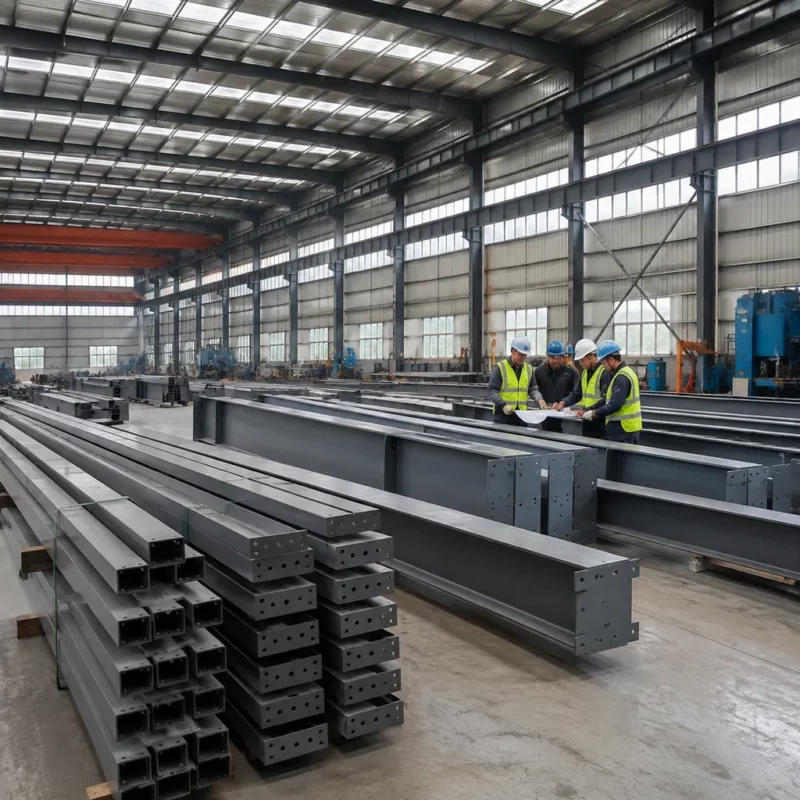
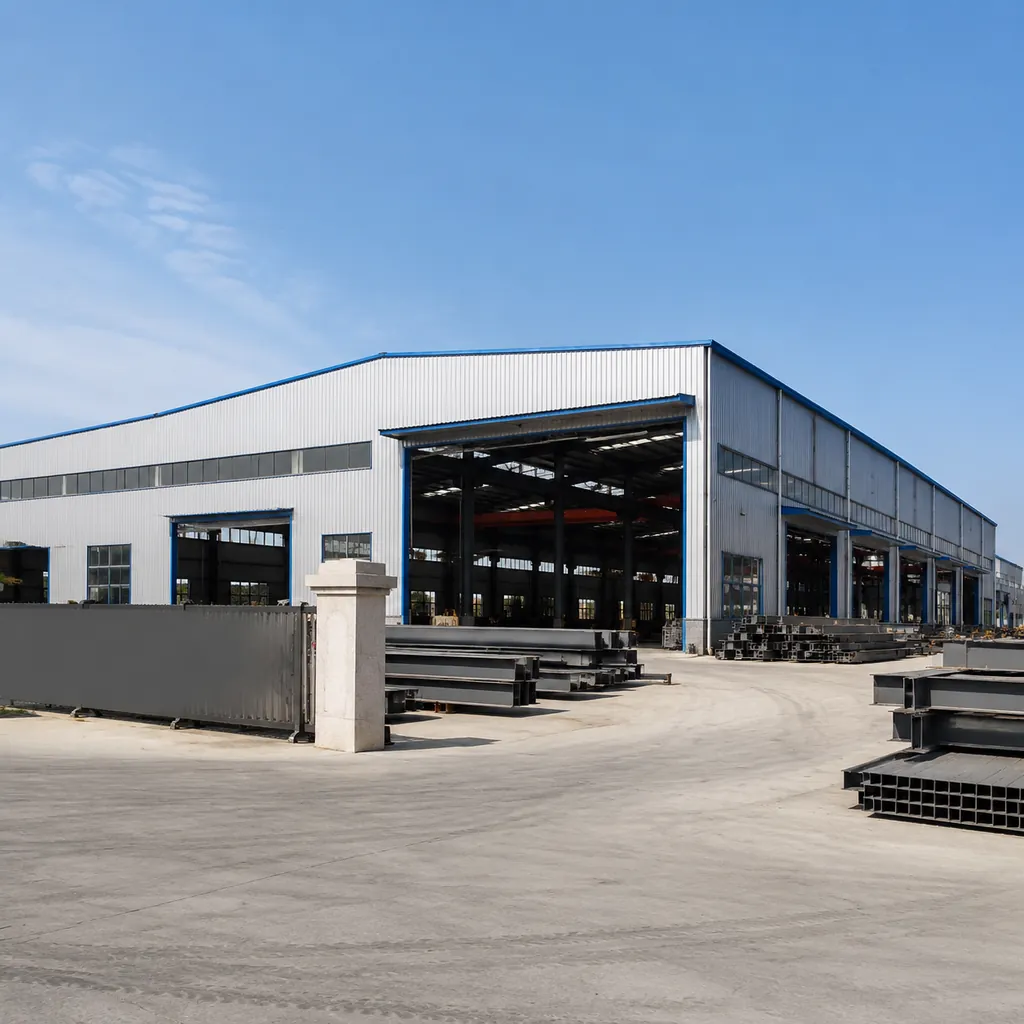
Request a live video call or recent photos of the workshop: cutting lines, welding bays, painting or galvanizing facilities, and the yard where fabricated members are stored. A factory can show you machines running; a trader can only show you the factory’s marketing photos.
3. Drawing and engineering capability
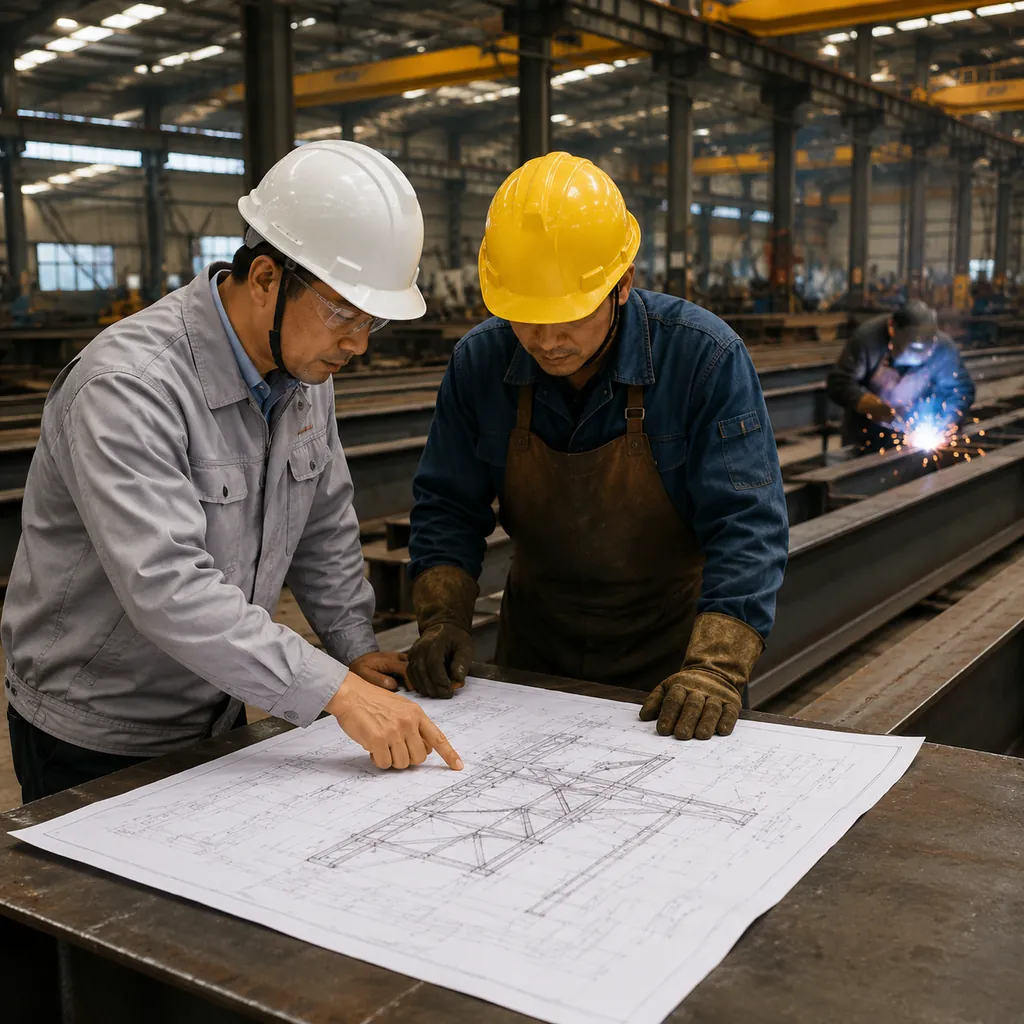
Ask who produces the structural calculation and shop drawings. A direct factory has an in-house engineering or detailing team. If the quote comes with drawings branded by the factory’s own engineers, that is a strong signal. If the drawings arrive from an unnamed third party, dig deeper.
4. Export track record
Ask for a few export references: destination countries, project types and contactable clients. Cross-check that the references match the factory’s claimed product range. Consistent, specific references are hard for a trader to fabricate in detail.
5. Payment and contract counterparty
Check the bank account name and contract entity against the company that signs the documents. A direct factory usually quotes and invoices under the manufacturing company name. If the invoice entity differs from the factory you visited on video, clarify why before paying a deposit.
Signs in the quote itself
- Vague descriptions like “partner factory” or “our cooperative plant” instead of a named production line
- No engineering office mentioned in the company introduction
- Price differences that seem too large to be explained by scale — sometimes a signal of a different steel grade or thinner gauge
- Pressure to pay before you have seen workshop evidence
When a trading company still makes sense
If your order is small, covers multiple product categories, or needs coordination across several factories, a reliable trading company can be the practical choice. The key is to verify the trading company itself: how long it has operated, which factories it works with, and what happens if a defect appears. For a single steel building, however, the direct factory route usually gives you more control over drawings, quality and schedule.
FAQ
Q: Is factory direct always cheaper than a trading company?
A: Not always. A direct factory may quote a higher unit price because it includes real fabrication and engineering cost; a trader may quote lower by sourcing a cheaper factory or thinner steel. Price alone does not tell you which is better — compare the specification and the engineering service included.
Q: Can a trading company provide shop drawings for a steel building?
A: Some can, by hiring a detailing service or using the factory’s drawing office. The risk is slower revision cycles and less accountability. Ask who exactly produces the drawings and whether you can communicate with that person directly.
Q: How do I confirm a factory is real before visiting?
A: Start with a video call inside the workshop, request a business license, check recent export references, and ask for photos with a current-date sign. For higher-value orders, consider a third-party factory audit before signing.
Q>What should I check in the contract with a trading company?
A:Clarify the actual factory name, the steel grade and thickness, the drawing approval process, the inspection and payment milestones, and who bears liability for fabrication defects. If the contract does not name the factory, ask why.
Q: Can I visit the factory before ordering?
A:Most direct factories welcome buyer visits and factory audits. If you cannot travel, a video walkthrough plus a third-party audit report is a reasonable substitute for the first order.
Buying a steel building means buying an engineered product, so verify the manufacturer behind the quote before you pay a deposit. Talk directly to the factory that will calculate, fabricate and ship your building.