
Inspecting Prefabricated Steel Buildings at the Factory: A Buyer’s Pre-Shipment Checklist

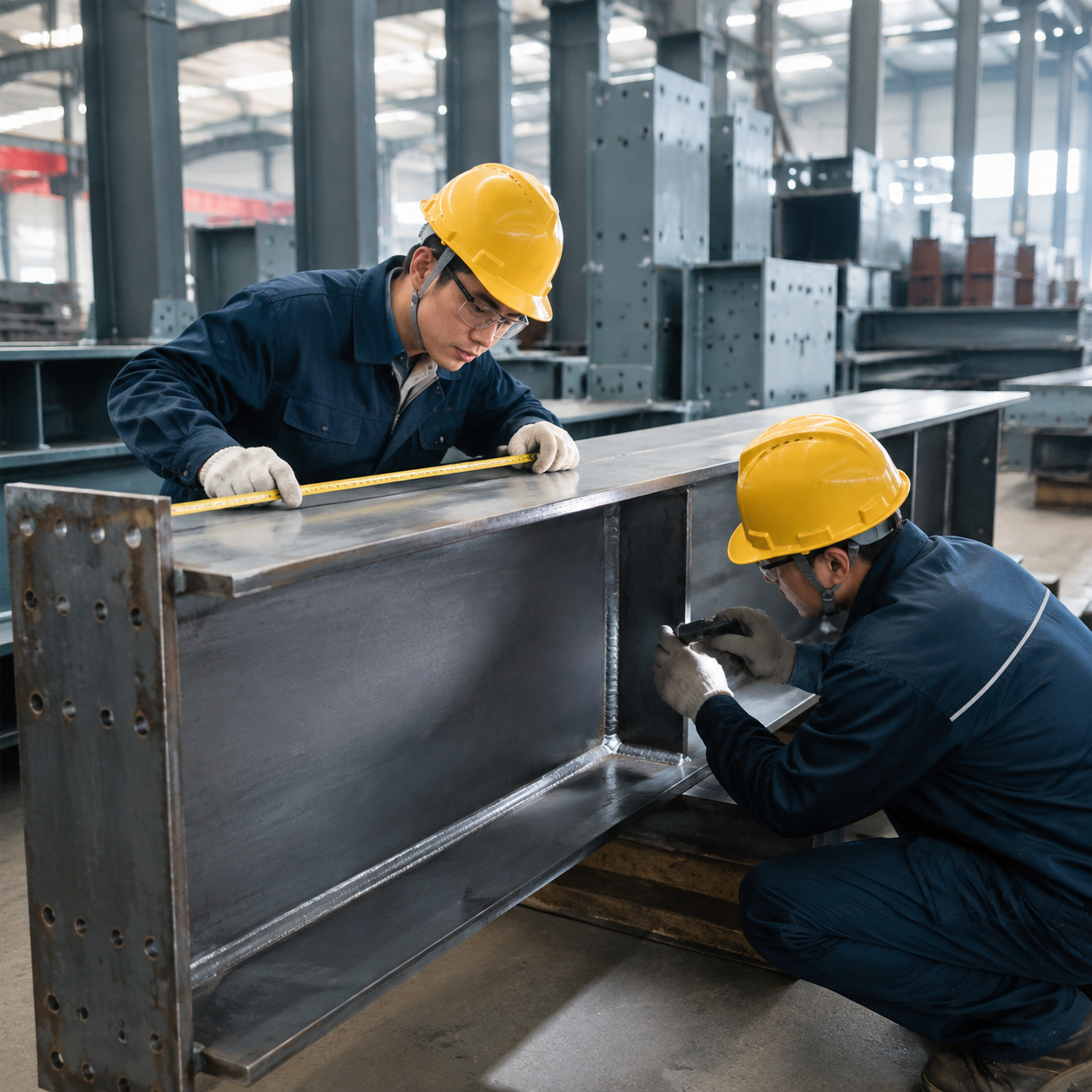
A prefabricated steel building is manufactured hundreds or thousands of kilometres from the site where it will be erected, and the buyer rarely sees the members again until they arrive in containers. Factory inspection is the buyer’s opportunity to verify that the fabrication matches the approved drawings, that the materials meet the specification, and that the packaging will protect the steel in transit. A structured inspection turns shipment into a controlled handover rather than a leap of faith.
This guide is written for project owners, procurement teams, site managers and quality engineers who plan to inspect steel buildings at the factory before shipment. It sets out the preparation, the inspection points, the records to collect and the decisions that can be made during the visit. The checklist is intended to be practical: it tells the buyer what to look for and what to ask for, without assuming specialist fabrication knowledge.
Why Factory Inspection Reduces Site Risk
The cost of finding a defect at the factory is a fraction of the cost of finding the same defect on site. At the factory, a wrong dimension can be corrected before painting and packing; on site, the same error stops the erection, delays the schedule and costs transport and labour. Factory inspection moves quality control to the point where problems are cheapest to fix.
Inspection also builds a record. The buyer who visits the factory, reviews the documents and signs the inspection report creates evidence that the shipment was checked against the contract. This record supports the later site inspection and the warranty process. A well-documented inspection is protection for both the buyer and the supplier.
What to Review Before the Inspection Date
A factory inspection should never start from a blank sheet. The buyer should send the approved drawings, the specification, the inspection and test plan, and the agreed acceptance criteria to the supplier before the visit, and ask the supplier to prepare the corresponding records. The inspection then checks the work against the documents rather than improvising standards on the day.
Ask the supplier for a draft inspection programme: which members are ready for inspection, which stages of fabrication can be seen, and which records will be available. Also confirm who will accompany the buyer and who has the authority to make decisions during the visit. Preparation turns the inspection from a tour into a verification.
Material Certificates and Traceability
The steel in the building should be traceable to its material certificates, which state the grade, the heat and the properties of the steel used. The buyer should ask for the mill certificates for the main structural sections and confirm that they match the specification. Traceability links every fabricated member to the material that was ordered.
Ask the supplier how members are marked so that the material identity can be followed from the certificate to the finished piece. Also check the certificates for the secondary steel, the bolts and the other specified materials. A supplier who cannot produce material certificates for the main members should be treated as a serious risk, regardless of the price.
Weld Quality and Inspection Records
Welding is the most controlled operation in steel fabrication, and the quality of the welds determines the strength and durability of the connections. The buyer should ask which welds are subject to visual inspection, which are tested by non-destructive methods, and who performs the tests. The inspection records should be available at the factory visit.
Ask the supplier about the welders’ qualifications and the welding procedure specifications used for the project. The buyer does not need to interpret the reports, but should confirm that the tests were performed to the agreed standard and that the results are documented. Any weld repair should also be recorded, because a repaired weld is a controlled change to the original work.
Surface Preparation and Coating
The corrosion protection of the steel depends on the surface preparation before painting or galvanizing, and on the coating system applied. The buyer should ask how the surface is prepared, what coating system is specified, and how the coating thickness is measured and recorded. The coating protects the steel for the life of the building, so it deserves attention at inspection.
Ask to see the coating records and the thickness measurements for representative members, and check the condition of the coating at the time of the visit. Also confirm how damaged coating is repaired during handling and erection, and what touch-up materials are supplied with the shipment. A coating that is well applied at the factory is the first line of defence against corrosion on site.
Galvanizing and Repair Policy
For members that are hot-dip galvanized, the inspection should cover the zinc coating appearance, the thickness and the repair of any damaged areas. Galvanizing standards describe how thickness is measured and what a satisfactory coating looks like. The buyer should ask the supplier how galvanizing quality is controlled and what the repair policy is for damaged coating.
Ask whether the galvanizing was performed after all fabrication and welding, and how the vent and drainage holes were provided for the process. Also confirm how the galvanized surface is protected during transport and storage. The inspection should include a visual review of representative members and a check of the thickness records.
Dimensional Checks on Fabricated Members
The most common fabrication error is a dimension that is correct on the drawing but wrong on the member. The buyer should ask the supplier how dimensional checks are performed, what tolerances are applied, and which members are measured. The inspection should include spot checks on representative columns, rafters, purlins and other fabricated items.
Ask the supplier to demonstrate the measurement of a few members and to explain the datum points used. Also check the overall lengths, the hole positions and the squareness of connections, because these affect the erection fit. The buyer should record the results of the spot checks in the inspection report.
Fit-Up of Bolted Connections
Prefabricated steel buildings are assembled with bolted connections on site, and the fit-up of the connection holes is critical to the erection. The buyer should ask how the connection holes are made and how the fit is verified at the factory. A trial assembly of a representative frame or connection can reveal fit problems before shipment.
Ask whether trial assembly is performed, and if so, for which parts of the building. Also confirm how the members are match-marked so that the site team knows which pieces connect to which. The inspection should check that the connection details match the approved drawings and that the bolt sizes and grades are correct.
Secondary Steel and Cladding Components
The secondary steel, purlins, girts, bracing and the cladding components complete the building, and they are often the parts where scope and quality issues hide. The buyer should confirm that the secondary steel quantities and sections match the design, and that the cladding sheets, flashings, insulation and fixings are included in the shipment scope.
Ask the supplier to show the packing list for the secondary steel and cladding components and to explain how the components are identified. Also check the condition of the cladding sheets and the protection of their finishes. A building with a perfect frame and a missing flashing schedule will still stop on site when the envelope cannot be finished.
Marking, Identification and Packing Lists
Every member in the shipment should be marked so that the site team can find it in the drawings and the packing list. Marking systems vary, but they must be consistent: the mark on the member matches the mark on the drawing and on the packing list. The buyer should confirm the marking convention and check it during the inspection.
Ask for the packing lists to be reviewed against the bill of materials, and for the marks to be checked on representative members. Also confirm how the packing lists will be shipped with the cargo and how the site team is expected to use them. Clear identification is the difference between a smooth erection and a site spent searching for pieces.
Packaging for Transport
Steel members travel by sea and road, and the packaging must protect them from corrosion, damage and loss. The buyer should ask how the members are packed, how the coating is protected at the contact points, and how the packages are marked for handling. The packaging plan should be reviewed before shipment, not discovered at the port.
Ask how the members are separated and secured in the containers or on the flat racks, and how the packages are protected from moisture in transit. Also confirm how the packaging is described in the shipping documents and how the site team is expected to open and check the packages. Good packaging prevents the most common source of arrival damage.
Load Counts Against the Bill of Materials
Before shipment, the quantity of every member and component should be counted against the bill of materials and the packing lists. The buyer should ask the supplier how the count is verified and should be prepared to sample the count during the inspection. A missing member in a shipment is not discovered until the erection needs it.
Ask the supplier to provide a count sheet for the shipment and to explain how the counts were verified. The inspection should include a check that the members marked as inspected are the members being packed. The count is the last check before the steel leaves the factory, and it is the cheapest time to find a shortage.
Photo Documentation and Defect Registers
The inspection report should be supported by photographs of the members, the connections, the coating and the packaging, and by a register of any defects found and their dispositions. The buyer should agree with the supplier how the documentation is recorded and shared. Photo records are valuable later, when the site team or the warranty process needs evidence.
Ask the supplier to provide the inspection records they already keep, and agree which new records the buyer’s inspection will produce. The defect register should show each issue, its severity, the agreed correction and the verification. A documented inspection is a record both parties can rely on.
Decisions That Can Be Made During the Visit
The purpose of the inspection is not only to find problems but to resolve them. The buyer should know in advance who can decide on corrections, rework, replacement and shipment timing during the visit. Without decision authority, the inspection becomes a report that must travel back to the office while the factory keeps working.
Agree the acceptance criteria before the visit, and define how a significant defect is handled: correction before shipment, replacement of the member, or release with a documented deviation. The buyer should also confirm how a release decision is recorded and how the final inspection report is issued. Decisions made at the factory are decisions made at the lowest cost.
Integrating Inspection Results into Handover
The factory inspection is one stage in the quality process that continues through shipment, delivery, site inspection and erection. The inspection records should be integrated into the project file so that the site team knows what was verified and what remains to be checked. The buyer should define which records travel with the shipment and which are delivered separately.
Ask the supplier for the final documentation package: the inspection reports, the material certificates, the coating records, the packing lists and the as-fabricated drawings. Then plan the site receiving inspection to confirm that the delivered members match the factory records. A complete handover record makes the site inspection faster and the warranty process clearer.
Sampling Strategy: What to Check When You Cannot Check Everything
A factory may fabricate hundreds of members, and the buyer cannot measure every one. The inspection should use a sampling strategy that focuses on the highest-risk items: the largest members, the connections that carry the highest loads, the pieces that are hardest to replace and the components with the most complex details. The buyer should agree the sampling plan with the supplier before the visit and record which items were checked.
Ask the supplier how their own quality control samples the production and where the buyer’s checks add the most value. Also ask whether the supplier can provide the results of their internal inspections for the members the buyer will not check. A sampling strategy that is risk-based and documented gives the buyer confidence without requiring every piece to be measured.
Welding Consumables and the Control of Materials
The quality of a weld depends not only on the welder but on the consumables: the electrodes, wires, fluxes and shielding gases used. These materials must be stored correctly and used within their specified conditions. The buyer should ask how the welding consumables are controlled and whether the welding procedures identify the consumables to be used.
Ask to see the storage conditions for the consumables and how the batch numbers are recorded against the welds. Also confirm how the welders are qualified for the procedures used on the project. The control of consumables is a sign of a well-managed fabrication shop, and it directly affects the quality of the connections in the building.
Checking Connection Details Against the Approved Drawings
The connections of a prefabricated steel building are where the design intent is realized, and they are also where drawing errors appear. The buyer should check representative connections against the approved drawings: the bolt sizes and grades, the hole patterns, the end plate thicknesses and the fit of the parts. A connection that is fabricated to the wrong detail will be discovered at erection, when it is most expensive to fix.
Ask the supplier how the connection details are transmitted to the shop floor and how the shop checks them against the drawings. Also confirm that the connection details used in fabrication are the approved revisions, not an earlier version. The inspection should include a sample check of the connections that are critical to the stability and the load path of the building.
Containers, Lashing and the Shipping Survey
The shipment is not complete when the steel is packed; it is complete when the cargo is secured and the shipping survey confirms the condition for transport. The buyer should ask how the containers or the flat racks are loaded, how the members are lashed and protected, and who performs the shipping survey. The survey records the condition of the cargo at the point of departure, which becomes the baseline for the arrival inspection.
Ask for the lashing plan and the container loading plan, and confirm that the weight distribution is within the transport limits. Also ask how the cargo is protected from condensation inside the container and how the opening instructions are provided to the site team. A well-secured, well-surveyed shipment arrives in the condition the factory intended.
After the Inspection: Releasing the Shipment
The inspection ends with a decision: the shipment is released as inspected, released with agreed corrections, or held until the corrections are verified. The buyer should make the release decision against the agreed acceptance criteria and record it in the inspection report. The release is the handover point where the buyer accepts the work and the supplier commits to the remaining schedule.
Ask how the correction items are tracked after the visit, how the buyer is notified when they are complete, and how the final documentation is issued. Also confirm how the release decision affects the payment schedule and the shipment date. An inspection that ends with a clear release and a clear list of follow-ups protects both parties and keeps the project moving.
Paint and Coating Touch-Up Kits
Even the best surface preparation suffers damage during transport and erection, so the shipment should include the materials and the instructions for touching up the coating on site. The buyer should ask what touch-up materials are supplied, how they are matched to the original finish and who is trained to apply them. The touch-up kit is the first line of repair for the coating of the building.
Ask the supplier for the coating system data, the application instructions and the touch-up quantities recommended for the project. Also confirm how the touch-up is recorded on site so that the coating protection is tracked. A coating that is repaired correctly after erection protects the steel for the life of the building; a coating that is left damaged becomes the start of corrosion.
The Role of an Independent Inspector
Some buyers appoint an independent inspector to attend the factory on their behalf, bringing a fresh pair of eyes and specialist knowledge to the inspection. An independent inspector can review the records, perform the checks and report without the relationship pressures that a buyer may feel with the supplier. The buyer should define the inspector’s scope, the reporting format and the authority to stop work.
Ask how the independent inspector coordinates with the supplier’s own quality team and with the buyer’s site team, and how the inspection findings are shared. Also confirm who pays for the inspection and how the inspection cost compares with the cost of a site failure. An independent inspection is an investment that pays for itself when it finds a problem at the factory instead of on site.
Timing the Inspection with the Fabrication Schedule
The factory inspection should be timed to catch the right stages: the material arrival, the fabrication, the surface treatment and the final packing. A single visit at the end may only see the finished members, while staged inspections see the quality of the work as it is made. The buyer should agree the inspection stages with the supplier and should book the visits against the fabrication schedule.
Ask the supplier which stages are open for inspection and which records are available at each stage, and plan the visits so that the critical controls are witnessed. Also confirm how the final inspection is scheduled against the packing date so that the release decision does not delay the shipment. A well-timed inspection programme is a better use of the buyer’s time than a single tour at the end.
Relevant building discussions
Buyers planning a similar project can compare the practical considerations discussed through Steel Structure Quality Control Guide, Quality Control, Factory Tour, Products. The final specification should remain specific to the project site, the operating process, the governing requirements and the agreed allocation of responsibility between buyer, supplier and site contractors.
Conclusion
Factory inspection is the buyer’s best opportunity to verify a prefabricated steel building before it is packed and shipped. Prepare the documents, inspect the materials, the welds, the dimensions, the coating and the packaging, and record every finding. An inspection that is planned and documented turns shipment into a controlled handover and protects the project from the most expensive kind of defect: the one discovered on site.