
Indonesia Prefab Steel Factory Building Guide for Jakarta, Surabaya and Batam Industrial Projects

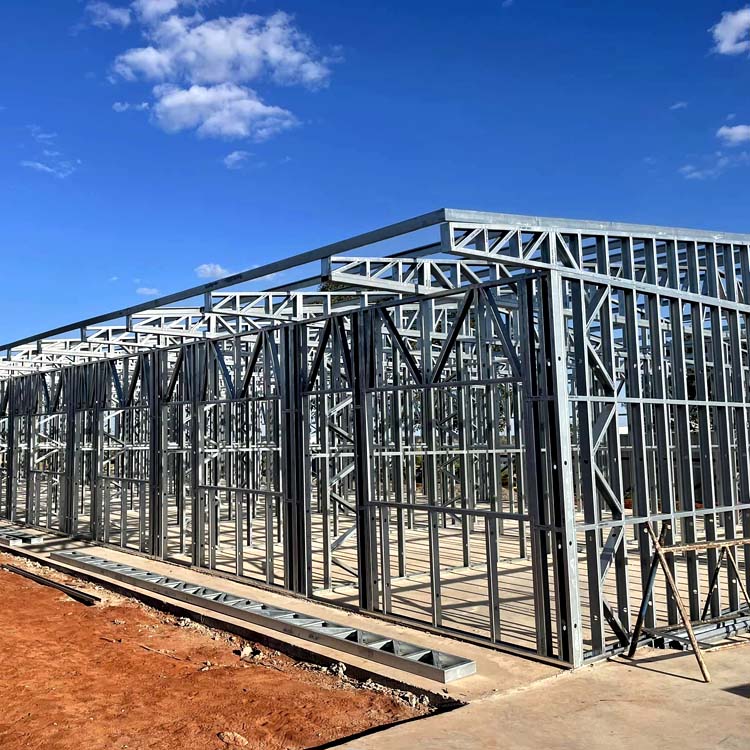
Indonesia Prefab Steel Factory Building Guide for Jakarta, Surabaya and Batam Industrial Projects
Indonesia buyers are asking for prefab steel factory building packages that can be priced early, shipped in containers, and installed without long site delays. This guide is written for engineering procurement teams, EPC contractors, architects, industrial park owners, logistics developers, and factory investors planning projects in Jakarta, Bekasi, Surabaya, Batam, Semarang, Makassar, and industrial estates near major ports. It explains the technical items that change the price and the project risk: bay spacing, clear span, roof slope, design load, corrosion class, fire access, crane runway allowance, cladding, fasteners, anchor bolts, packing, and erection sequence.
A prefabricated steel frame can reduce wet work and shorten the building enclosure schedule, but it is not a generic kit. The correct design for Indonesia must respond to local wind, rain, dust, humidity, seismic exposure, port conditions, road access, labor skill, and authority review. The best quotation starts with the building use, dimensions, loads, soil data, door schedule, insulation target, ventilation plan, and the local code route chosen by the project engineer.
For related specifications, review our prefab steel warehouse page, the steel structure products catalog, and our quality control process. If you already have layout drawings, send them through Contact Us. More planning notes are published in the steel structure blog.
1. Where this steel building type fits in Indonesia
The strongest fit for a prefab steel factory building in Indonesia is a project that needs long clear space, predictable fabrication, and future expansion. Warehouses need truck circulation, high doors, rack zones, and wide staging areas. Workshops need service trenches, ventilation, equipment foundations, and safe lifting paths. Factory buildings may need mezzanine offices, process platforms, pipe supports, exhaust fans, and fire separation. A steel portal frame allows the project team to adjust span, bay spacing, eave height, and roof form without waiting for a full concrete frame cycle.
Common project scenes include logistics hubs around Jakarta, Bekasi, Surabaya, Batam, Semarang, Makassar, and industrial estates near major ports, light manufacturing plants, food and beverage storage, equipment maintenance workshops, packaging halls, agricultural processing, and industrial estate rental units. Each scene has a different design priority. A bonded warehouse may focus on security and dock doors. A fabrication workshop may focus on crane beams and heavy floor loads. A cold storage shell may focus on thermal bridges and vapor control. A poultry or agribusiness support building may focus on ventilation, washable surfaces, and corrosion from ammonia or cleaning chemicals.
Procurement teams should avoid buying only by tonnage. A lower steel weight can be acceptable when the load data is correct, yet it can be dangerous when the quote excludes bracing, purlins, connection plates, high-strength bolts, gutters, downpipes, anchor bolts, edge trims, and installation drawings. Ask each supplier to state the design standard, load assumptions, steel grade, corrosion protection, excluded civil works, and drawing list. This makes comparison fair and reduces arguments after deposit payment.
Another useful rule is to separate the operating requirement from the shell requirement. The building operator may say only that the site needs a warehouse, but the engineer needs to know whether the building stores pallets, bulk bags, reefer goods, chemical drums, spare parts, or finished goods. Those storage patterns affect door count, rack impact zones, floor loading, air movement, and where the bracing can be placed. If the shell is wrong, later operational changes become expensive.
For industrial park developers, repeatability matters. If several units will be built on the same site, standardize the column grid, roof slope, gutter detail, fire wall line, and cladding color from the start. That reduces design time and helps future tenants move in faster. It also makes spare parts easier to stock because many panels, trims, and doors can be shared across the estate.
2. Structural design data to confirm before quotation
A serious quote for Indonesia should start with a design brief rather than a sketch alone. Minimum data includes length, width, eave height, roof slope, column grid, clear height below haunch, door sizes, wall opening positions, canopy dimensions, internal partitions, crane capacity, roof equipment, solar panels, suspended services, and whether future expansion is planned. If the buyer does not have final data, the supplier can issue a budget range, but the contract price should wait until the structural inputs are fixed.
Portal frames are often economical for 18 m to 36 m spans. Multi-span frames can be better for very wide buildings where interior columns do not block operations. Lattice columns or trusses may be selected for heavy cranes or very large spans. Cold-formed Z or C purlins reduce roof secondary steel weight, while hot-rolled members may be used in impact areas, crane beams, or locations with high local forces. The connection design should include slip-resistant bolts where needed and enough edge distance for fabrication tolerance.
Foundation design is normally completed by the local civil engineer because soil bearing capacity, settlement, uplift resistance, drainage, and seismic parameters are site-specific. The steel supplier should provide anchor bolt layout, column base reactions, shear forces, uplift forces, and base plate dimensions. Do not let site crews cast foundations from an old drawing revision. Anchor bolt errors are one of the most common reasons for delayed erection.
For tender comparison, request a general arrangement drawing that marks all grid lines, braced bays, door openings, wall cladding direction, roof slope, gutter sides, and expansion joints. Ask the supplier to add a preliminary reaction table, because foundation contractors cannot price accurately without column compression, uplift, and shear values. If a crane runway, mezzanine, rooftop unit, or solar array may be added in the future, reserve that load now. Retrofitting after fabrication is usually more costly than designing the allowance from the start.
In Indonesia, the design brief should also say how the building will be used on day one and in year five. A project that starts as a parts warehouse may later become a light assembly hall, or the owner may add mezzanine offices once rental demand rises. If this is likely, ask for end-wall framing and foundation layout that allow staged expansion. That small decision can save a large amount of redesign work later.
The quotation package should also state member camber, allowable tolerances, splice locations, and whether any members will be shop welded or field bolted. These items affect transport, erection speed, and inspection effort. For remote projects, a clean bolt-up solution is often easier than a design that depends on heavy on-site welding and local repair work.
3. Wind, snow, seismic, rain, and climate checks
Indonesia requires close attention to seismic design, heavy rainfall, humidity, and coastal exposure. A factory near Jakarta or Surabaya may have different wind, flood, and corrosion issues than a Batam or Makassar site. The structural engineer should define seismic parameters, soil class, importance factor, and load combinations before fabrication drawings are released.
High rainfall means roof drainage, valley details, flashing, and wall base protection need careful design. Coastal humidity and salt air can shorten the life of low-grade fasteners and thin paint. In some areas, volcanic ash or airborne industrial dust can add maintenance load and increase gutter cleaning needs. The proposal should state assumptions clearly so the buyer can review them with the local engineer.
The load table in a proposal should list basic wind speed or design wind pressure, exposure category or terrain class, internal pressure assumptions, roof live load, maintenance load, suspended load, crane load if any, seismic parameters if required, and load combinations. For snow-prone or highland areas, roof snow load and drift near parapets must be checked. For hot or humid zones, thermal movement and condensation control can be as important as gravity loads.
Roof drainage needs early attention. Long buildings with low roof slope may need larger gutters, more downpipes, overflow points, and clear maintenance access. If heavy rain is common, a blocked gutter can overload the edge member or send water into stored goods. In dusty desert areas, gutters and valley zones need inspection plans. In coastal zones, fasteners and lap joints need better coating because small scratches become corrosion points.
Wind load does not act only on the main frame. It also controls roof sheet pull-out, wall girt spacing, end-wall columns, canopy uplift, ridge ventilators, personnel doors, roller shutter supports, skylights, and the small trims that often fail first in storms. Ask the supplier to confirm screw spacing at edges and corners, not only in the field of the roof. For large doors, check whether the door supplier or steel frame supplier is responsible for jamb posts and wind locks.
Seismic design is equally important where local practice requires it. Even a light warehouse can suffer at the brace connections, base plates, roof diaphragms, and anchor rods if the lateral system is not laid out carefully. Ask the supplier to show the braced bay plan, collector paths, and any special detailing at end bays or crane bays. Good coordination at this stage avoids expensive field changes.
Climate also affects worker comfort and operating cost. Hot climates may need ridge ventilation, reflective cladding, insulation, and larger openings for air movement. Humid climates need better vapor control and more careful sealing around overlaps. Dry dust-prone climates need dust sealing, easy-clean gutters, and details that reduce dirt collection on ledges and flashings.
4. Materials, steel grades, cladding, and surface treatment
Primary members are usually fabricated from Q355, Q235, ASTM A572, ASTM A36, EN S355, or an equivalent grade agreed in the contract. The exact grade should match the engineer’s code route and the available mill certificates. Purlins and girts are often galvanized Z or C sections. Roof and wall cladding may be pre-painted steel sheets, aluminum-zinc coated sheets, sandwich panels, or site-assembled insulation with liner sheets. The right choice depends on heat gain, fire rating, acoustic needs, humidity, hygiene, and budget.
For Indonesia, surface treatment should be selected by exposure, not by habit. Inland dry industrial parks may work with shot blasting to Sa 2.5 plus epoxy zinc-rich primer and finish paint. Coastal or chemical exposure may need hot-dip galvanizing, higher dry film thickness, better edge sealing, stainless or bi-metal fasteners, and sealed laps. If the building is near a port, fertilizer plant, poultry operation, wastewater facility, or marine wind corridor, ask for a coating schedule with corrosion category and design life.
Bolts, washers, nuts, anchor rods, and self-drilling screws must be included in the material list. Substitution at site can weaken the envelope. Use compatible fasteners with cladding coating, specify EPDM washer quality, and request spare quantities. For insulated panels, ask for panel density, fire test data, joint detail, and closure pieces. For translucent roof sheets, check UV grade, fixing detail, and fall protection during maintenance.
Quality control should include material certificate review, dimensional inspection, welding visual checks, ultrasonic or magnetic particle testing where specified, coating thickness records, and packing inspection. For container shipment, every bundle should show part marks that match the erection drawings. Long plates, fragile trims, roof sheets, and bolts should be packed so that unloading crews can identify them without opening every bundle on the ground.
A buyer should also ask whether the supplier will provide touch-up material for damaged coating and a written maintenance note. Small field scratches are normal during erection, but they should be repaired with a compatible system before the handover. If that step is missed, corrosion often starts at the lifted edges, bolt heads, and cut ends.
5. Cost and specification table for early budgeting
The table below gives early budget guidance only. Final pricing depends on steel market movement, design load, clear span, bay spacing, roof system, coating, freight route, container loading plan, and installation scope. Buyers should use the table to prepare a first internal budget and then request a project quotation with drawings.
| Project item | Typical specification for Indonesia | Budget effect |
|---|---|---|
| Frame type | Portal frame or multi-span frame for large factory floors | Interior columns reduce steel weight but affect process flow |
| Seismic detailing | Engineer-defined seismic parameters and bracing layout | Higher seismic demand raises connection and bracing cost |
| Cladding | Pre-painted sheet or sandwich panel with sealed laps | Better envelope reduces leaks and heat gain |
| Surface treatment | Hot-dip galvanized secondary steel or epoxy paint in coastal areas | Improves service life in humid air |
| Installation period | 20-50 days for common mid-size buildings after foundations | Rain and site access can extend erection time |
As a broad export reference, light storage shells may start near USD 45-75 per square meter for the steel structure and basic envelope under moderate loads. Industrial workshops with higher eaves, heavier frames, insulation, more doors, and thicker paint often fall near USD 75-140 per square meter. Crane buildings, cold storage shells, coastal coating systems, and fire-rated panel packages can exceed that range. These numbers exclude land, foundation, local permits, taxes, utility connections, floor slab, and inland transport unless stated in a signed offer.
Price differences often come from hidden scope. One quote may include only main steel, while another includes secondary steel, roof and wall sheets, skylights, ridge vents, gutters, downpipes, bolts, anchor bolts, trims, touch-up paint, and packing. Freight terms also matter. EXW, FOB, CFR, and CIF create different responsibilities for inland haulage, port charges, insurance, and local unloading. For remote industrial sites, the cost of missing parts can exceed the value of the parts themselves.
When comparing budgets, ask each supplier to show tonnage, unit rate, envelope rate, coating rate, and installation support separately. That makes it much easier to see whether a lower quote is truly efficient or simply incomplete. If one supplier offers a lower steel tonnage but a much higher coating allowance, check the reason before rejecting it. The better offer is the one that matches the actual project exposure and the local operating plan.
For repeat projects, a standard cost library is useful. Keep a record of completed buildings by span, eave height, coating type, and roof system. Over time, that record helps procurement teams estimate a new warehouse much faster and spot outlier quotes before negotiations begin.
6. Installation sequence and realistic schedule
A normal prefab steel factory building project for Indonesia follows a sequence: concept layout, design brief, budget quote, structural calculation, shop drawings, approval, fabrication, blasting or galvanizing, trial assembly checks for special nodes, packing, sea freight, customs clearance, foundation preparation, anchor bolt survey, main frame erection, bracing, purlins, roof sheets, wall sheets, trims, doors, gutters, downpipes, touch-up paint, and final inspection.
For a 2,000-5,000 square meter building, factory fabrication often takes 25-45 days after drawing approval, depending on tonnage and coating. Sea freight varies by route. Site erection may take 20-45 days with a trained crew, crane access, finished foundations, and no major weather stoppage. Large buildings, heavy crane systems, high eaves, fire-rated walls, or limited site access need a longer schedule. A reliable supplier should provide an erection manual, bolt list, part marks, container packing list, and drawing set before the cargo arrives.
Safety planning is not optional. The erection contractor needs lifting plans, temporary bracing, fall protection, access platforms, torque control, hot work permits where needed, and weather stop rules. Many problems happen when roof sheets are installed before the frame is fully aligned and braced. The correct order is to stabilize the frame first, check plumbness, tighten bolts as specified, and then close the envelope.
The site team should survey anchor bolts before the first container is unloaded. Check grid dimensions, top-of-concrete levels, bolt projection, thread condition, and diagonal measurements. If a bolt is out of tolerance, repair it under engineer approval before the main frame is lifted. Keep roof sheets off wet ground, protect paint from chains, and separate stainless or coated fasteners from carbon steel items to prevent mix-ups.
If the project includes a tight handover deadline, ask the supplier to phase delivery by erection sequence. That way, the first truck unload contains the first bay steel, bracing, and the fasteners needed to start work immediately. This avoids the common situation where the site receives cladding before the frame is ready or a key brace is still waiting in a later container.
A practical schedule should include design approval time, because many project delays come from slow review rather than fabrication. If the owner, tenant, bank, or local engineer must approve drawings, include that period in the master programme. It is better to promise a slightly longer but realistic delivery date than to create pressure that forces rushed installation.
7. Local code, permit, and authority review points
Indonesia projects may refer to SNI standards, local building approvals, fire rules, environmental permits, and industrial estate regulations. Imported structural packages should be checked by a local engineer familiar with seismic requirements. Documents should include calculation basis, steel grades, welding records, bolt certificates, and coating reports because authority and tenant reviews often request them.
For import supply, the overseas manufacturer should not replace the local engineer of record. The best arrangement is clear division of work: the supplier designs and fabricates the steel package according to agreed standards, while the local engineer checks site data, permit drawings, foundation design, fire access, occupancy rules, and local submissions. This division protects the owner and keeps approval responsibilities clear.
Documentation should include structural calculations, general arrangement drawings, shop drawings, material certificates, welding records, bolt certificates, coating reports, packing list, installation guide, and maintenance advice. If the project is financed by a bank, insurer, public authority, or multinational tenant, ask early whether CE, ISO, AWS welding records, mill test certificates, or third-party inspection are required. Late document requests can delay cargo release or site acceptance.
Where the project is in an industrial park or free zone, ask whether the estate operator has its own façade, fire, access, drainage, or color rules. Some operators require specific roof heights, truck turning space, or sprinkler-ready layouts. Those details should be checked before final fabrication, because later changes can force panel replacement or steel modification.
The permit path should also be mapped against the export path. If the supplier sends the package in full containers, the port and customs documents need to match the packing list, invoice, and marked bundle numbers. The project team should know who is responsible for missing marks, damaged packing, and replacement delivery. A clean document trail is as important as the steel itself.
8. Procurement checklist for contractors and owners
Before issuing a purchase order, confirm these points with the supplier:
- Building use, dimensions, grid, eave height, roof slope, and future expansion side.
- Design standard, wind load, seismic data, roof live load, collateral load, and crane load.
- Steel grade, plate thickness range, welding standard, bolt grade, and inspection plan.
- Paint or galvanizing system, dry film thickness, surface preparation, and touch-up method.
- Roof and wall cladding thickness, coating mass, insulation, skylight, gutter, and downpipe details.
- Door schedule, canopy, ventilation, louvers, ridge vent, windows, and mezzanine interface.
- Packing marks, container loading plan, spare bolts and sheets, delivery terms, and installation support.
Ask for a drawing review meeting before production. In that meeting, check all opening positions against equipment layouts and truck paths. Confirm whether mezzanine stairs, handrails, roof ladders, safety lines, and service supports are included. If the building will be expanded later, request end-wall framing that can be removed or extended without replacing the first bay.
It is also wise to request sample photos of previous shipments and installation sequences. Those images help the buyer see whether the supplier packs steel in a way that protects the coating and makes site sorting easier. A clean packing method often reflects a disciplined fabrication shop.
For procurement teams handling multiple projects, make a standard checklist template. Include technical, commercial, and logistics questions in one sheet so every supplier answers the same way. That makes scorecard comparison faster and reduces the chance that someone forgets a critical item like base plate bolts or touch-up paint.
9. Common buyer questions
What information is needed for a firm quotation in Indonesia?
Send the building length, width, eave height, bay spacing preference, location, use, wind and seismic data if available, roof and wall material, door sizes, crane requirement, insulation need, and any local code notes. A sketch is acceptable for the first budget, but final price needs approved drawings.
Can the steel building be expanded later?
Yes, if expansion is planned in the first design. Tell the supplier which end or side may expand, because bracing, end-wall columns, gutters, and cladding edges should be detailed for future removal or connection.
Is hot-dip galvanizing always better than paint?
Not always. Galvanizing is strong for many exposed or coastal parts, but large welded members may be more economical with blast cleaning and a suitable paint system. The decision should follow corrosion exposure, design life, member size, appearance, repair access, and cost.
Who installs the building?
Many buyers use a local erection contractor with remote guidance from the manufacturer. For larger projects, the supplier can provide an installation supervisor. The local crew still needs cranes, lifting tools, safety gear, scaffolding or manlifts, and a site manager.
How can we reduce cost without reducing safety?
Use a regular column grid, avoid unnecessary clear span, confirm exact door sizes, choose coating based on exposure, finalize loads early, and keep architectural changes out of the fabrication stage. Do not reduce bracing, bolts, base plates, or load assumptions to save money.
What is the biggest scheduling risk?
In many projects, the biggest risk is not fabrication but late information. Missing soil data, delayed approvals, or repeated drawing revisions can hold the whole order. A clear early brief keeps the project moving and protects the installation window.
10. Practical purchase advice
For a Indonesia prefab steel factory building, the safest buying path is to treat the steel package as an engineered building system, not a commodity. Start with a clear design brief, let the supplier price a defined scope, and ask the local engineer to review code, foundations, fire access, and climate issues. Give special attention to wind, roof drainage, corrosion protection, anchor bolts, installation access, and documentation.
If you are comparing suppliers, request the same scope from each company and ask for exclusions in writing. A cheaper quotation may simply leave out gutters, downpipes, insulation, high-strength bolts, design drawings, touch-up paint, or site guidance. A good offer states what is included, what is excluded, how the building is packed, what drawings will be issued, and what information is still needed from the buyer.
Send your preliminary layout, location, and operating requirements to the engineering team before locking the budget. Early review can prevent oversize members, undersized drainage, missing bracing, and door conflicts. For industrial parks and repeat warehouse projects, standardizing the bay grid, eave height, cladding color, and door schedule can also reduce lead time across several buildings.
The owner should also ask for a post-handover maintenance plan. That plan should cover bolt retightening checks, gutter cleaning, coating inspection, sealant replacement, door alignment, and any periodic roof safety checks. A steel building lasts longer when maintenance is planned from the start instead of waiting for a leak or corrosion mark.
If the project is a repeat purchase, keep the approved drawings, list of exclusions, inspection reports, and photos of the finished building in one file. That creates a reference library for later warehouses or workshops and helps the procurement team quote the next project faster and more accurately.