
Fire Protection for Steel Structures: Fire Boards vs. Intumescent Coatings – A Comprehensive Comparison

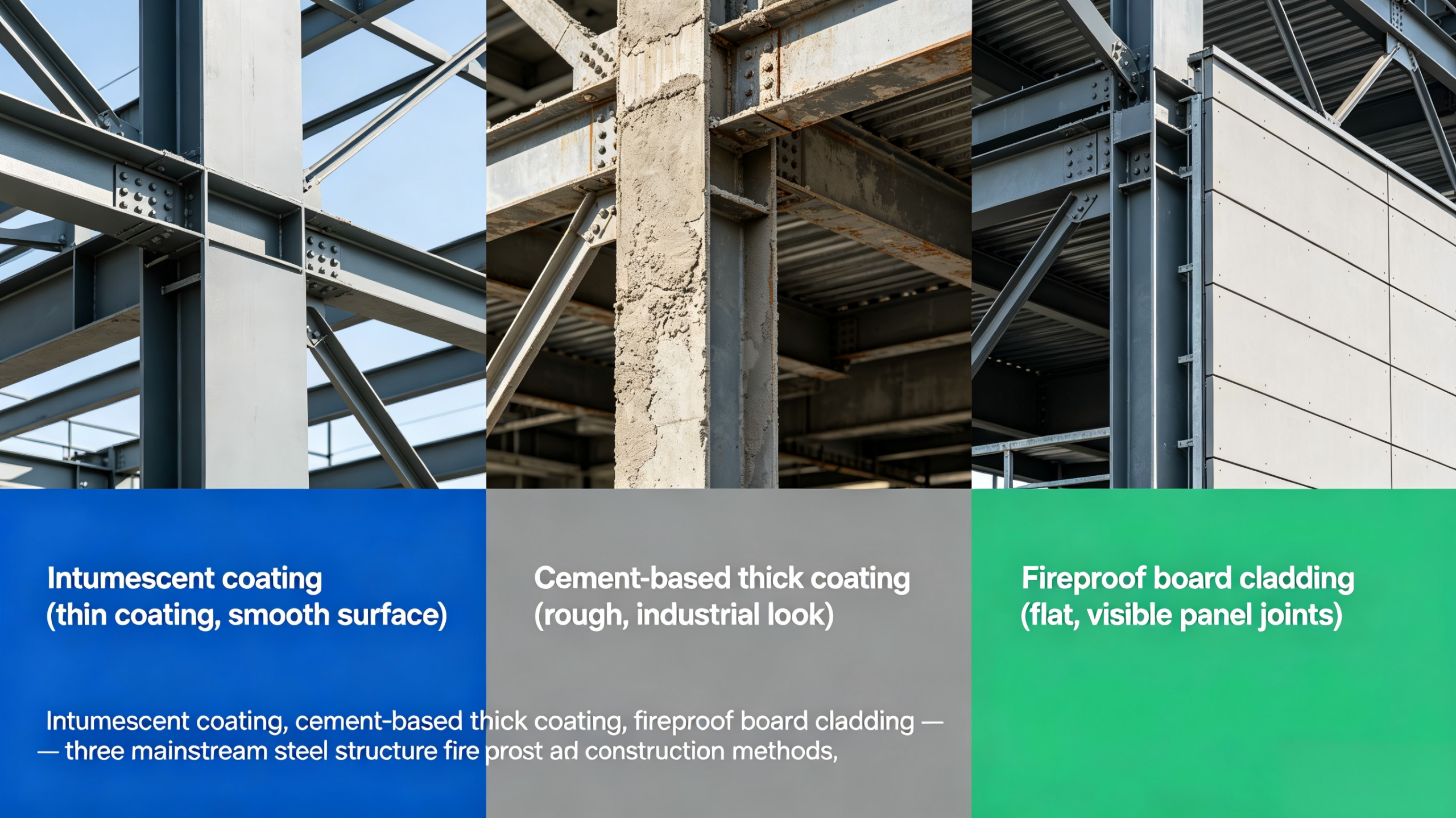
Compare fire boards, intumescent coatings, and cementitious sprays for structural steel. Understand fire resistance ratings, installation methods, durability, and code compliance for international projects.
When a fire breaks out, steel fails fast. At approximately 538°C (1000°F), structural steel loses half of its load-bearing capacity. In a typical building fire fueled by office contents, this temperature can be reached within minutes. This is why building codes worldwide mandate passive fire protection (PFP) for exposed structural steel.
For overseas clients, the choice between fire boards, intumescent coatings, and cementitious sprays is not merely a cost decision. It affects construction schedules, architectural aesthetics, long-term maintenance, and ultimately, life safety.
This guide provides a comprehensive comparison of fire protection methods, including fire resistance ratings, installation requirements, durability characteristics, and compliance with international standards (UL 263/ASTM E119, EN 13381-8, and GB 14907).
1. Why Steel Needs Fire Protection
Steel is strong at room temperature but weak in fire. The relationship between temperature and strength is critical:
| Temperature | Strength Remaining | Behavior |
|---|---|---|
| 20°C (ambient) | 100% | Normal |
| 200°C | ~90% | Minor reduction |
| 400°C | ~70% | Significant loss |
| 538°C (1000°F) | ~50% | Critical – code-defined failure point |
| 600°C | ~33% | Imminent failure |
| 800°C | ~10% | Collapse |
The takeaway: Unprotected steel in a standard building fire reaches critical temperature in 5-15 minutes. Fire protection extends this to 30, 60, 90, or 120+ minutes, allowing evacuation and emergency response.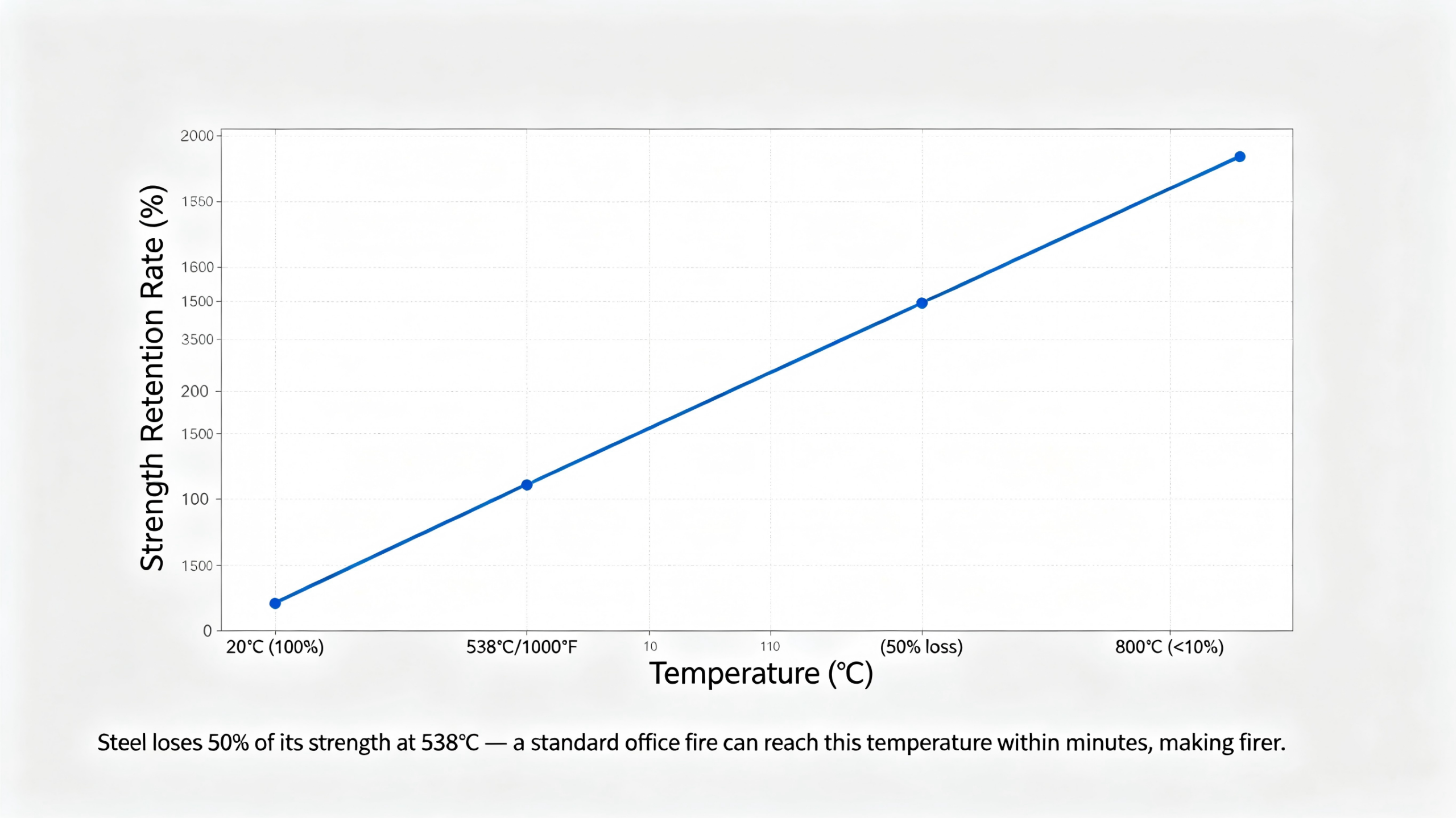
2. Overview of Fire Protection Methods
Steel structures can be protected using four primary methods:
| Method | Description | Typical Thickness | Fire Rating Range |
|---|---|---|---|
| Intumescent coating (thin-film) | Expands under heat to form insulating char | 0.5–3 mm | 0.5–2.0h (some up to 3.0h) |
| Cementitious coating (thick-film) | Non-expanding, inherently insulating | 7–50 mm | 0.5–3.0h |
| Fire board encasement | Rigid boards mechanically attached | 9–50 mm | 1.0–3.0h+ |
| Flexible blanket (mineral wool) | Wrapped around steel, pinned/wired | 20–50 mm | 1.0–2.0h |
This guide focuses on the three most common methods for visible and accessible steel: intumescent coatings, cementitious (non-expansive) coatings, and fire boards.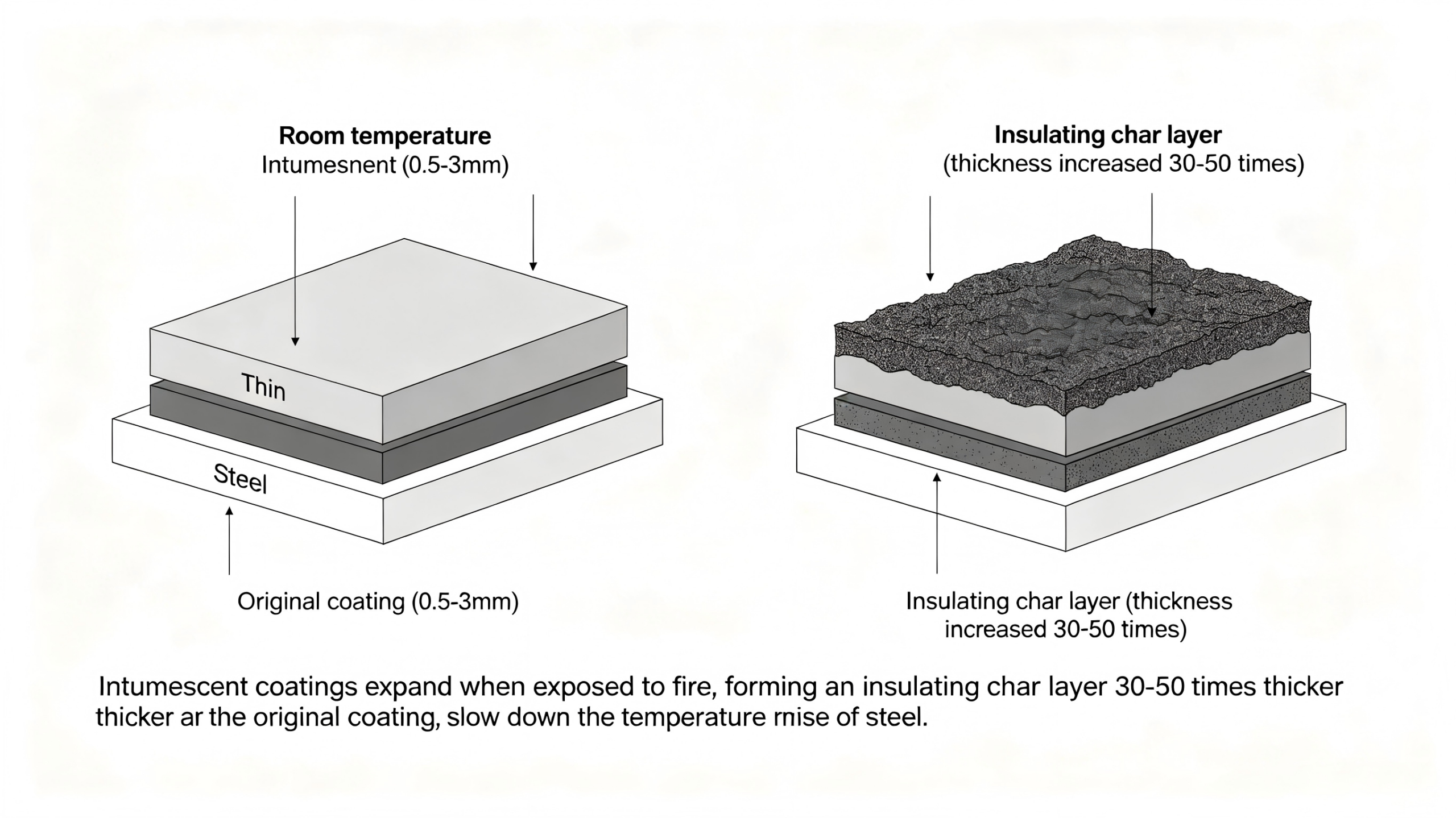
3. Intumescent (Thin-Film) Fire Protection Coatings
Intumescent coatings are thin-film systems (typically <3mm) that undergo a chemical reaction when exposed to heat. They expand (intumesce) to form a thick, insulating carbonaceous char—up to 30–50 times the original coating thickness.
How they work:
- At approximately 200-250°C, the coating’s binder softens.
- An acid source decomposes, reacting with a carbon source to form a char.
- A blowing agent releases gas, expanding the char into a foam-like insulating layer.
- The expanded char is up to 50mm thick, dramatically slowing heat transfer to the steel.
Classification by thickness (GB 14907):
| Type | Thickness Range | Fire Rating | Typical Application |
|---|---|---|---|
| Ultra-thin (Type B1) | ≤3 mm | 0.5–1.5h | Architectural, exposed steel |
| Thin (Type B2) | 3–7 mm | 1.0–2.0h | General interior |
| High-build | >7 mm | 2.0–3.0h | Special applications |
Advantages:
- Aesthetic: Smooth, paintable finish. Can match any color (decorative topcoat).
- Lightweight: Minimal added load to the structure.
- Design flexibility: Suitable for complex shapes (trusses, connections, open-web joists).
- Space efficient: Adds little to steel profile dimensions.
- Market preference: Growing market share, especially in Europe and North America.
Disadvantages:
- Higher material cost: More expensive per square meter than cementitious coatings.
- Durability concerns: Organic components (resins) can degrade over time; long-term aging not fully documented for products from the 1990s onward.
- Compatibility issues: Must be compatible with underlying primers and topcoats. Incompatible coatings can cause adhesion failure or reduced expansion.
- Environmentally sensitive: Generally for interior, dry environments unless specifically formulated for exterior use.
Application requirements:
- Surface preparation: Sa2.5 blast cleaning (ISO 8501-1)
- Primer: Compatible (check manufacturer data)
- Dry film thickness (DFT): Measured per square meter
- Application: Spray (airless), typically multiple passes
Best for: Architecturally exposed steel, office buildings, airports, stadiums, retail spaces—where appearance matters.
4. Cementitious (Non-Expansive / Thick-Film) Fire Protection Coatings
Cementitious coatings are thick-film systems (typically 7–50mm) composed of inorganic binders (cement) and lightweight aggregates (vermiculite, perlite, or mineral fibers). They do not expand when heated. Instead, they provide insulation through their inherent low thermal conductivity and the endothermic release of chemically bound water.
How they work:
- The thick layer acts as a physical barrier, slowing heat penetration.
- At high temperatures, chemically bound water in the cement matrix evaporates, absorbing significant heat (endothermic cooling).
- The remaining porous structure continues to insulate the steel.
Classification by type:
| Type | Binder | Aggregate | Application Method |
|---|---|---|---|
| Cement-vermiculite | Portland cement | Expanded vermiculite | Spray or trowel (wet mix) |
| Gypsum-based | Gypsum | Perlite/vermiculite | Spray (wet mix) |
| Mineral fiber | Inorganic binders | Mineral fibers | Spray (dry mix) |
Thickness vs. Fire Rating (Typical – varies by product):
| Fire Rating | Approximate Thickness | Notes |
|---|---|---|
| 1.0 hour | 10–15 mm | Minimum practical thickness |
| 1.5 hours | 15–22 mm | Common for industrial buildings |
| 2.0 hours | 22–30 mm | Standard for many applications |
| 2.5 hours | 30–38 mm | Higher requirement |
| 3.0 hours | 38–50 mm | Maximum typical |
Advantages:
- Low material cost: Cheaper per square meter than intumescent coatings or boards.
- Proven durability: Inorganic materials do not age or degrade like organics.
- Excellent insulation: Low thermal conductivity (k-value typically <0.2 W/m·K).
- Fire resistance: Can achieve 3-hour ratings reliably.
- No toxic fumes: Inorganic composition means minimal toxic off-gassing in fire.
Disadvantages:
- Rough appearance: Industrial, textured finish. Not suitable for exposed architectural steel without additional cladding.
- Heavy: Significant added weight to the structure.
- Thick coating: Adds volume to steel profiles (may affect clearances).
- Slower application: Multiple passes required to build thickness.
- Poor impact resistance: Can chip or crack under physical abuse.
- Moisture sensitivity: Some types degrade in high humidity or direct water exposure (requires sealing).
Best for: Concealed steel, industrial buildings, warehouses, parking garages, back-of-house areas, any application where aesthetics are not critical.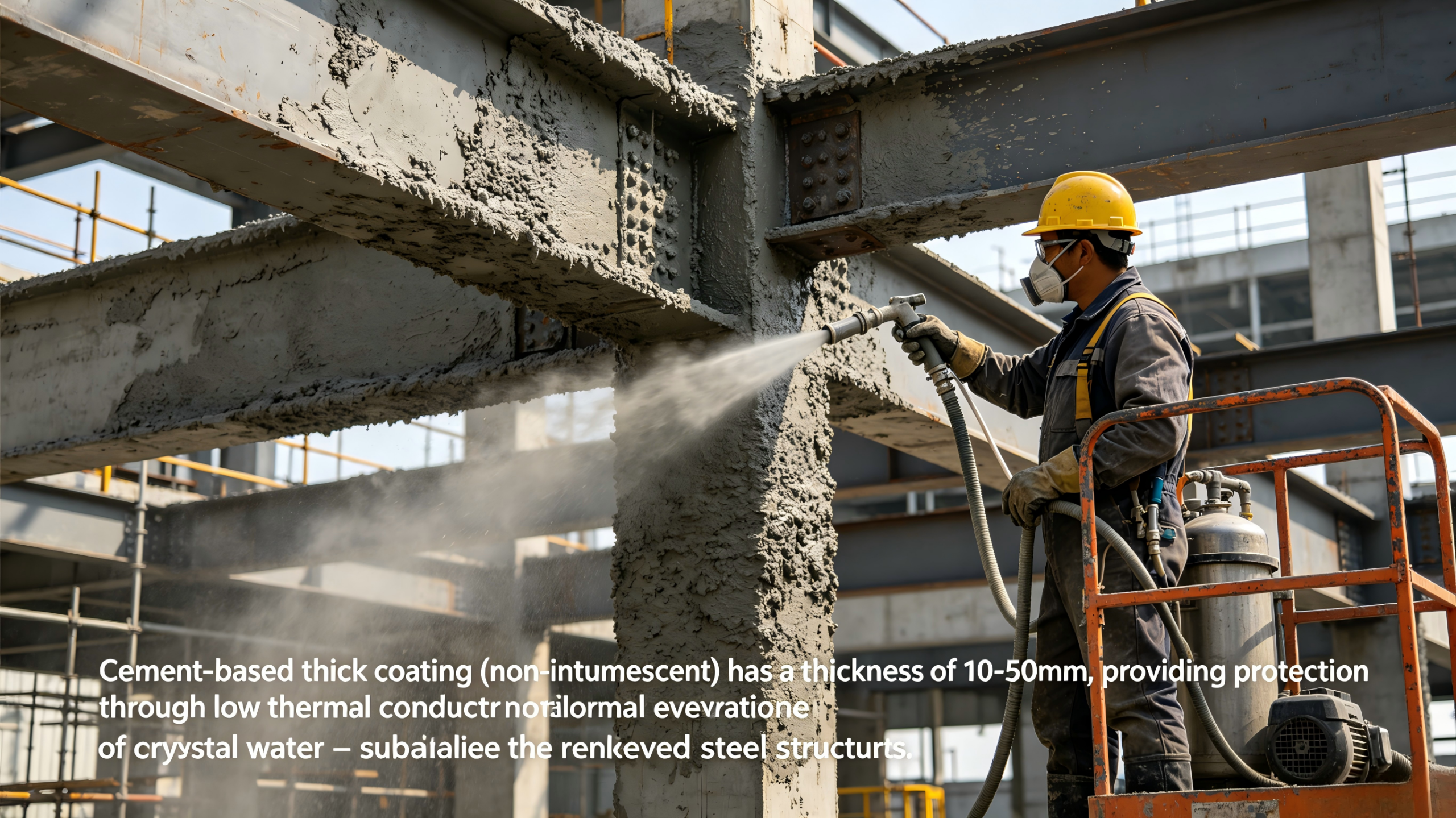
5. Fire Board Encasement Systems
Fire boards are rigid panels mechanically attached (screwed or pinned) to the steel profile, forming a complete enclosure. Common board materials include calcium silicate, gypsum, vermiculite, and fiber-reinforced cement.
Board types and properties:
| Board Type | Density (kg/m³) | Max Use Temp | Thermal Conductivity (W/m·K) | Typical Thickness |
|---|---|---|---|---|
| Calcium silicate board | 400–1000 | 1100°C | ≤0.08–0.28 | 12–50 mm |
| Vermiculite board | ~430 | 1000°C | ~0.11 | 20–65 mm |
| Gypsum board | ~800 | 600°C | ~0.19 | 9–18 mm |
| Fiber cement board | ~1700 | 600°C | ~0.35 | 4–8 mm |
Note: Low-density boards (vermiculite, calcium silicate) are suitable for direct fire protection. High-density boards (gypsum, fiber cement) are often used as decorative cladding over other fire protection systems, not as primary protection.
Construction details:
- Boards cut to size and attached using screws, pins, or adhesives.
- Corners reinforced with metal angles.
- Joints staggered and sealed with fire-rated mastic.
- System is dry-installed (no curing time).
Advantages:
- Excellent durability: Impact-resistant, withstands physical abuse.
- Long lifespan: Inorganic boards do not degrade; service life exceeding 30 years.
- Precision: Factory-manufactured to consistent thickness; no field variation.
- Dry installation: No curing time; unaffected by ambient humidity or temperature.
- Combined function: Can serve as both fire protection and architectural finish (smooth, paintable surface).
- Superior performance: For columns and high-risk areas, boards provide robust protection.
Disadvantages:
- Higher material cost: More expensive per square meter than coatings.
- Complex installation: Labor-intensive cutting, fitting, and detailing, especially around connections and complex geometries.
- Adds volume: Increases the steel profile’s footprint (reduces clear floor area).
- Heavy: Adds significant weight.
- Not suitable for complex shapes: Difficult and costly to apply to trusses, open-web joists, or heavily penetrated areas.
Best for: High-durability requirements (parking garages, industrial facilities, petrochemical plants), columns in high-traffic areas, projects where impact resistance is critical, and applications requiring a combined fire protection and finished surface (visible boards can be painted directly).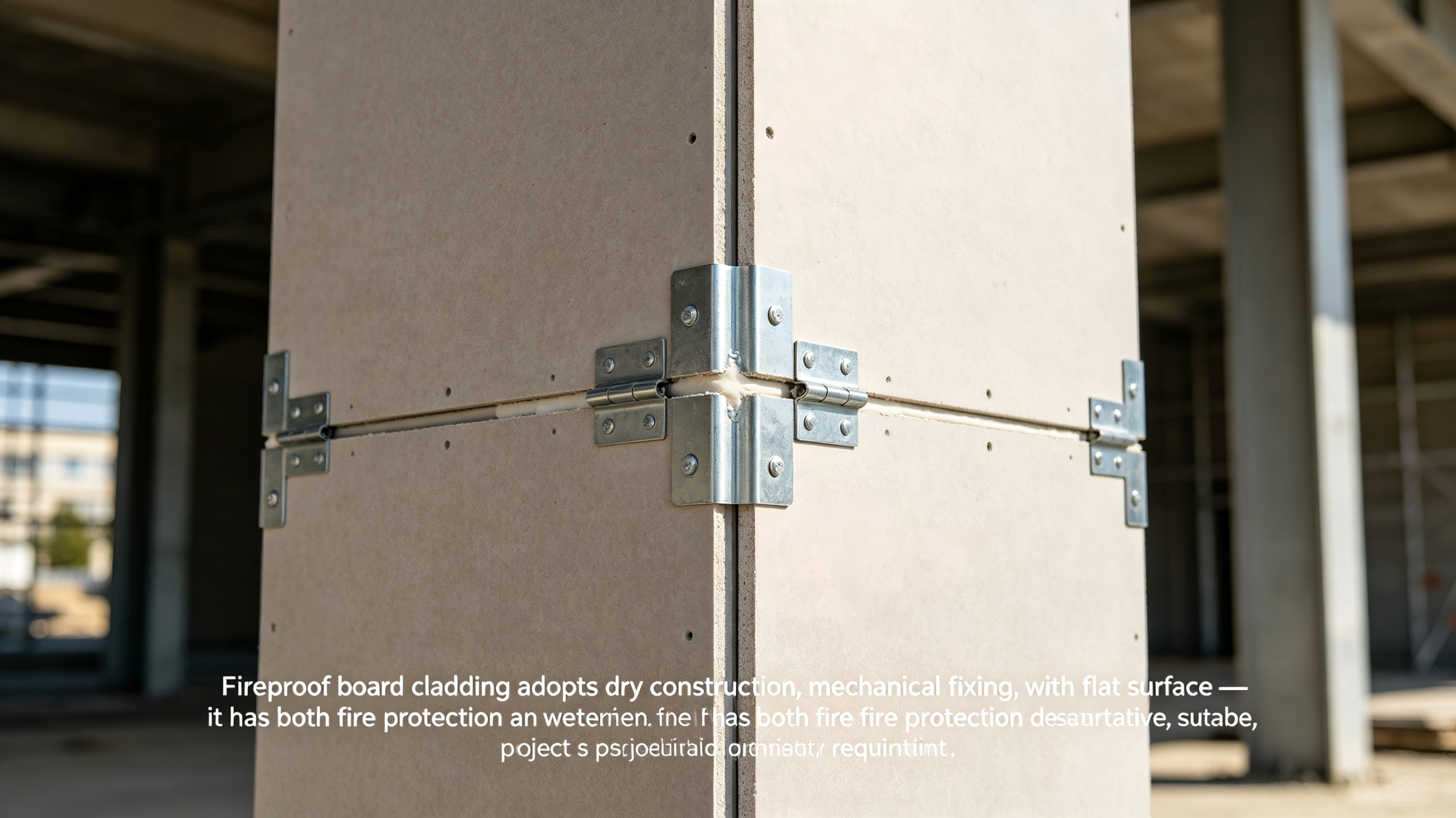
6. Head-to-Head Comparison: Fire Board vs. Coating
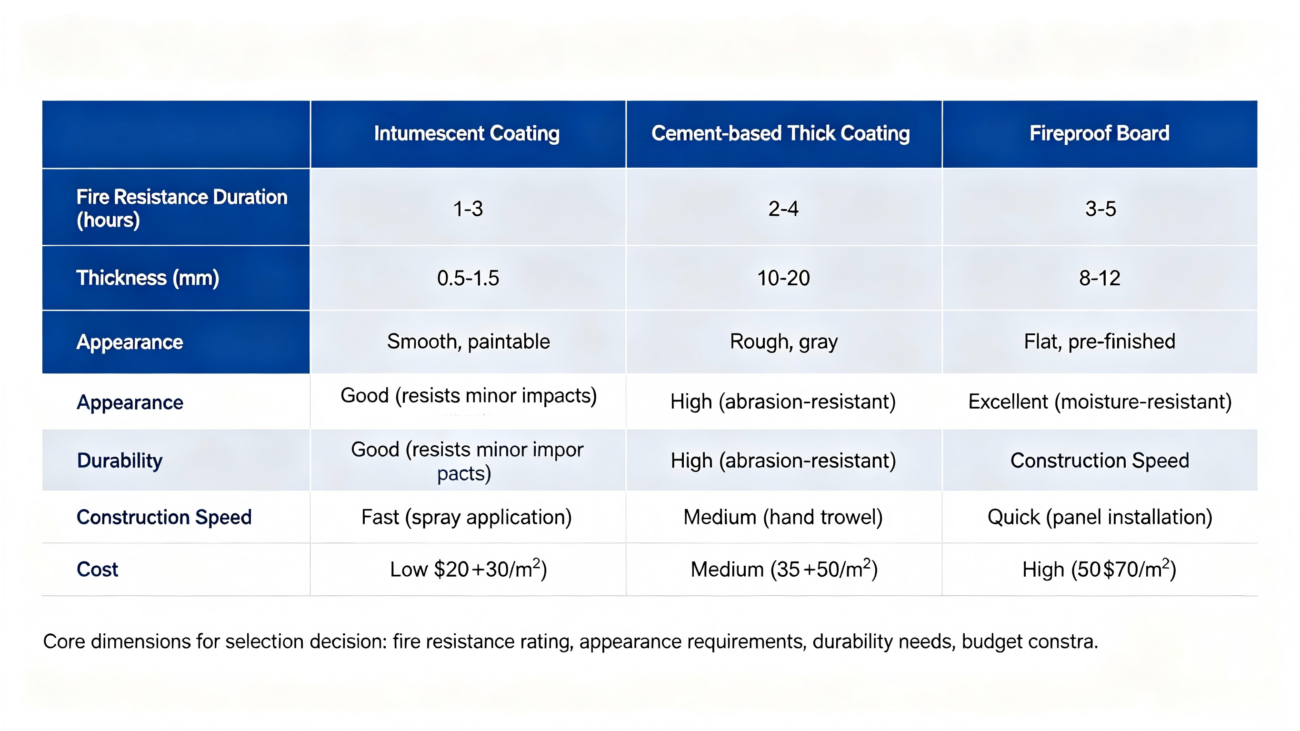
| Parameter | Intumescent Coating | Cementitious Coating | Fire Board |
|---|---|---|---|
| Fire resistance (max) | 2.0h (some 3.0h) | 3.0h+ | 3.0h+ |
| Typical thickness | 0.5–3 mm | 10–50 mm | 12–50 mm |
| Appearance | Smooth, paintable, decorative | Rough, industrial, textured | Smooth, paintable, decorative |
| Weight added | Very low | Medium | Medium-High |
| Material cost | High | Low | Medium-High |
| Installation speed | Fast (spray) | Moderate (multiple passes) | Slow (labor-intensive) |
| Installation complexity | Low (spray) | Medium | High (cutting/fitting) |
| Durability (impact) | Low | Medium | High |
| Durability (aging) | Moderate (organic components degrade) | Excellent (inorganic) | Excellent (inorganic) |
| Maintenance | Periodic inspection/recoating | Minimal | Minimal |
| Suitable for complex shapes | Excellent | Good | Poor |
| Suitable for exterior | Yes (with qualified topcoat) | Yes (sealed) | Yes |
| Space efficiency | Excellent (no added volume) | Moderate (added volume) | Poor (significant added volume) |
| Installation environment | Spray booth or controlled site | Site | Site |
| Best for | Visible steel, architecture | Concealed steel, industrial | High durability, impact zones |
Market trend: In the UK and Europe, intumescent coatings have gained significant market share since the 1990s, while fire boards remain preferred for high-durability applications.
7. Fire Resistance Ratings and Testing Standards
Fire resistance is measured in hours—the time a protected steel element can withstand a standard fire test without exceeding critical temperature (typically 538°C or 593°C for columns) .
Regional testing standards:
| Standard | Region | Application | Key Features |
|---|---|---|---|
| ASTM E119 / UL 263 | North America | Building construction | Standard time-temperature curve; restrained/unrestrained options |
| EN 13381-8 | Europe | Structural steel fire protection | Cellulosic fire curve; specific to steel members |
| GB 14907 | China | Steel fire protection coatings | Classification and test methods; ultra-thin/thin/thick categories |
| ISO 834 | International | Fire resistance tests | Standard time-temperature curve |
Important: A coating tested to ASTM E119 cannot be assumed compliant with EN 13381-8 or GB 14907. Each region requires its own test standard compliance.
Third-party certification: Look for UL, FM (Factory Mutual), or other approved agency certification to ensure the system has been tested under real-world conditions, including applied loads, weld seams, and assembly configurations.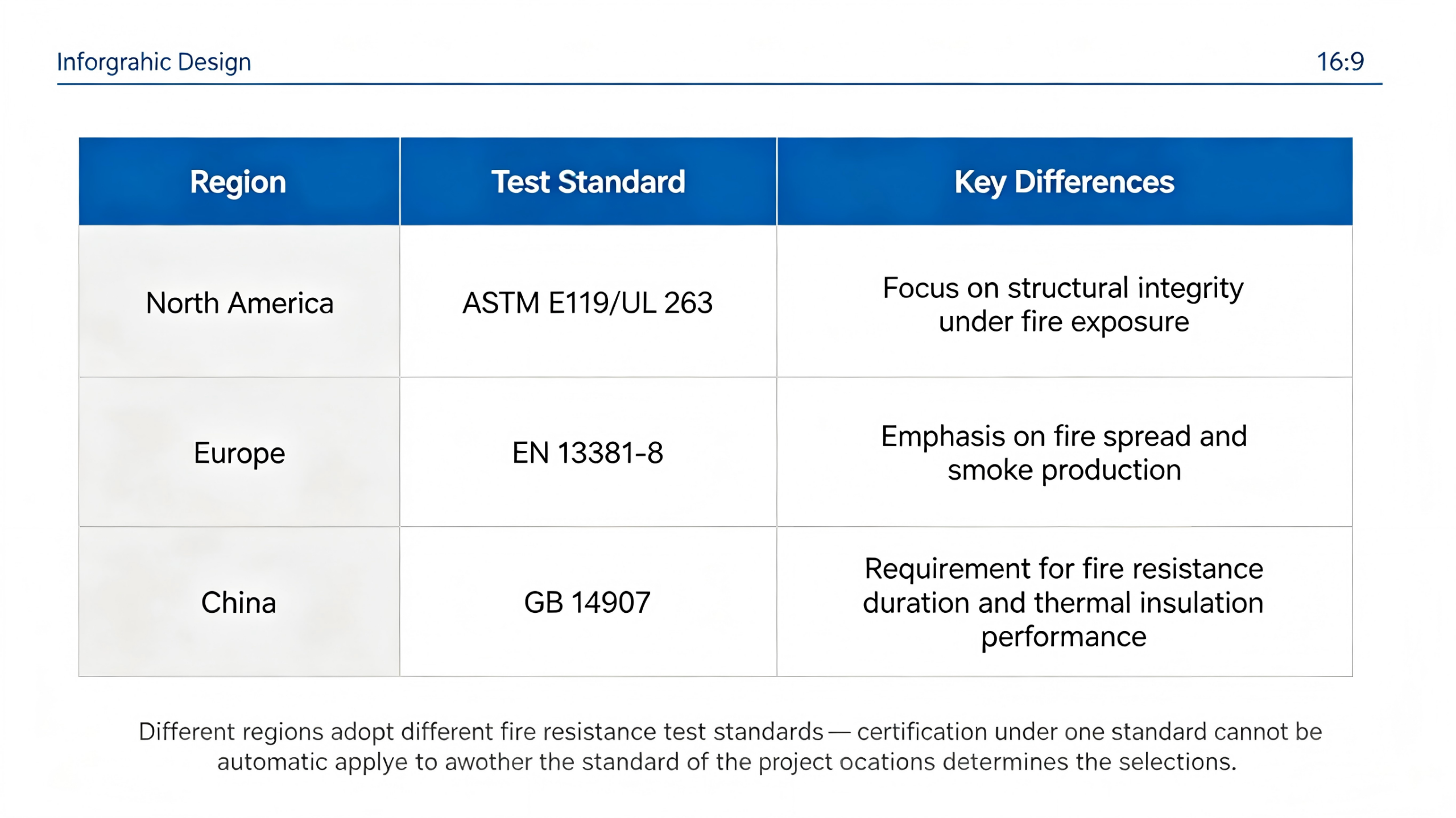
8. Building Code Requirements (Key Points)
China (GB standards):
- Structural fire protection measures must be specified in design documents (clause 5.1.2).
- For components with design fire resistance >1.5h, non-expansive (cementitious) coatings are preferred; expansive coatings are not recommended (clause 5.1.5).
- For indoor concealed components, non-expansive coatings are preferred (clause 5.1.5).
- Minimum thickness for non-expansive coatings: 10mm (clause 5.1.5).
- Fire boards must be non-combustible, with no cracking or penetration under fire. Fixing systems (studs, adhesives) must also be non-combustible (clause 5.1.6).
International codes:
- IBC (International Building Code) references ASTM E119/UL 263.
- Eurocode references EN 13381-8.
- All require documented fire test evidence for specified protection systems.
For overseas clients: Always verify the local building code’s specific requirements for fire protection materials. Substituting a system tested to a different standard may result in rejection during plan review or field inspection.
9. Installation Considerations
Intumescent coatings:
- Requires clean, primed steel (typically Sa2.5 blast).
- Apply by spray (airless or conventional) in controlled conditions.
- Dry film thickness (DFT) must be verified per square meter.
- Multiple thin coats are better than one thick coat.
- Curing time depends on ambient conditions (temperature, humidity).
Cementitious coatings:
- Steel must be clean (no oil, loose rust).
- Apply by spray (dry-mix or wet-mix) or trowel.
- Multiple passes required to build thickness.
- Curing time varies by product (typically 24-72 hours).
- Surface can be finished smooth (troweled) or left textured.
Fire boards:
- Steel must be accessible (no obstructions).
- Boards cut to fit profile (requires accurate measurement).
- Attach with screws, pins, or adhesives (must be non-combustible).
- Joints must be staggered and sealed with fire-rated mastic.
- Corners reinforced with metal angles.
- Detailing around connections and penetrations is critical.
- Dry installation—no curing time.
10. Durability and Life Cycle Cost
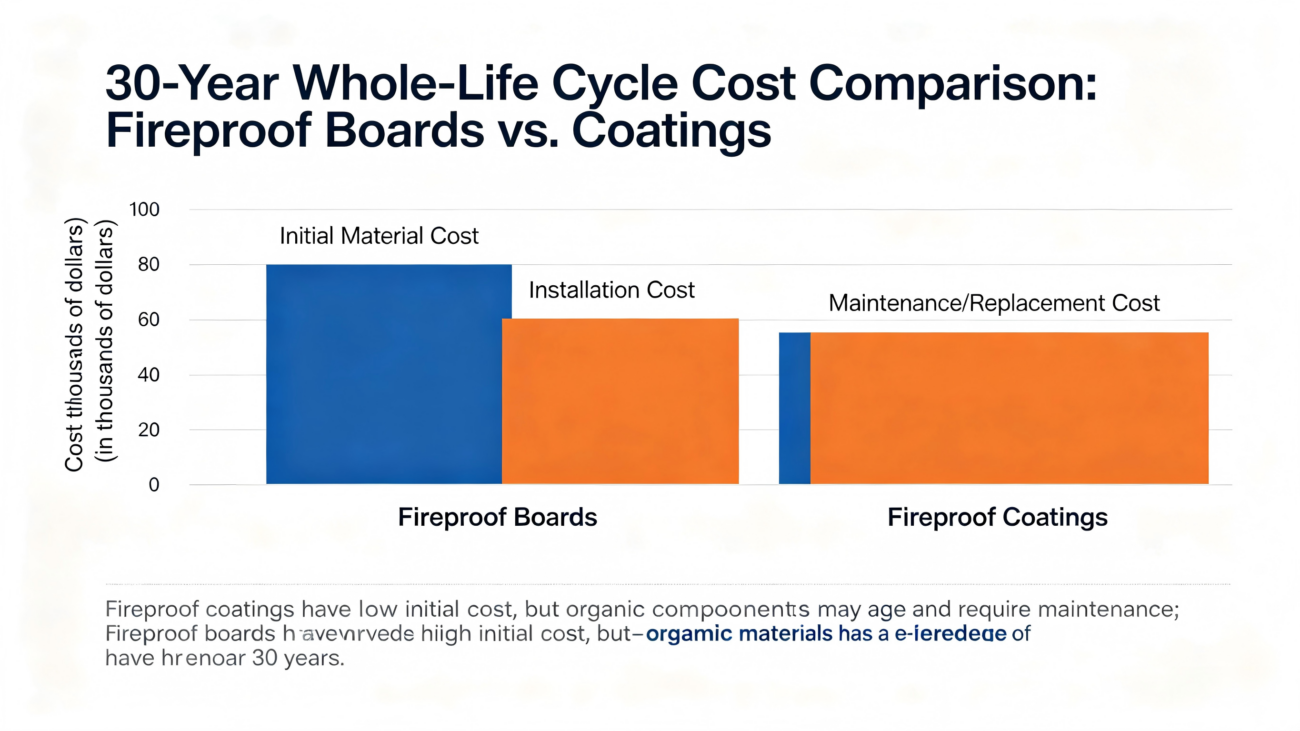
The long-term cost of fire protection includes not just initial installation but maintenance, repair, and replacement.
| Material | Expected Service Life | Maintenance Needs | Life Cycle Cost (30 years) |
|---|---|---|---|
| Intumescent coating (interior) | 15–25 years (varies) | Periodic inspection; repaint if damaged | Medium–High |
| Cementitious coating | 30+ years | Minimal; repair if chipped | Low–Medium |
| Fire board | 30+ years | Minimal; replace damaged boards | Medium |
Key durability points:
- Intumescent coatings contain organic resins that can degrade over time, especially with UV exposure or in humid environments. Their long-term performance beyond 20-25 years is less documented than inorganic systems.
- Cementitious coatings and fire boards are inorganic and do not age chemically. They remain effective indefinitely unless physically damaged.
- For buildings with a design life of 50+ years, inorganic systems (cementitious or board) may offer better long-term value despite higher initial cost.
11. Selection Decision Matrix
| Your Project Priority | Recommended Protection | Why |
|---|---|---|
| Architectural appearance (exposed steel) | Intumescent coating | Smooth, paintable finish. Can match any color |
| Lowest initial cost (concealed steel) | Cementitious coating | Lowest material cost per square meter |
| Longest lifespan / minimal maintenance | Fire board or cementitious coating | Inorganic materials do not age or degrade |
| High impact / abuse risk (parking garage, industrial) | Fire board | Impact-resistant; will not chip or spall easily |
| Complex steel geometry (trusses, open-web joists) | Intumescent coating | Spray application conforms to any shape |
| Fast installation / tight schedule | Intumescent coating or fire board (dry) | No curing time; spray application is fast |
| High fire rating requirement (>2.0h) | Cementitious coating or fire board | Proven performance for 2.0h+ ratings |
| Exterior / weather exposure | Cementitious coating (sealed) or exterior-rated intumescent | Both available with weather-resistant formulations |
| Space constraints (tight clearances) | Intumescent coating | Minimal added volume to steel profile |
| Retrofit / existing building | Fire board (dry installation) or intumescent coating | Board: no water/mess; Coating: lightweight |
12. Quality Control and Inspection
Regardless of the system chosen, quality control is essential.
Pre-application checks:
- Surface preparation meets specification (Sa2.5 for coatings).
- Primer compatibility verified (for intumescent coatings).
- Environmental conditions within limits (temperature, humidity).
- Material certificates (fire test reports, third-party certification).
During application (coatings):
- Wet film thickness (WFT) monitored per pass.
- Final dry film thickness (DFT) measured (minimum 5 points per 10m²).
- Visual inspection for runs, sags, bubbles, cracks.
During installation (boards):
- Board thickness verified.
- Joints staggered and sealed.
- Fasteners correctly spaced and driven.
- Corners reinforced.
- Penetrations sealed with fire-rated mastic.
Post-installation:
- Photographic record of installed protection.
- DFT map (for coatings) or as-built drawings (for boards).
- Certification of compliance with specified fire rating.
13. Link to Steel Structure Fire Protection Service
We provide complete fire protection solutions for structural steel, engineered to meet your local building code requirements.
Our fire protection services include:
- Intumescent coatings: Water-based and solvent-based systems. 0.5–3.0mm DFT. Fire ratings 0.5–2.0h (some to 3.0h). UL 263, EN 13381-8, or GB 14907 compliant. Decorative topcoat available.
- Cementitious coatings: Vermiculite/perlite-based. 10–50mm thickness. Fire ratings 1.0–3.0h. Spray or trowel application. Suitable for concealed steel and industrial environments.
- Fire board encasement: Calcium silicate or vermiculite boards. 12–50mm thickness. Fire ratings 1.0–3.0h. Dry installation with mechanical fixing. Impact-resistant. Combined fire protection and finish surface.
- Surface preparation: Sa2.5 blast cleaning, compatible primers, soluble salt testing (for coastal/industrial environments).
- Quality documentation: DFT maps, adhesion test reports, photographic records, material certificates, third-party test evidence.
- Code compliance: We reference UL 263, ASTM E119, EN 13381-8, GB 14907, and IBC/Eurocode requirements as specified.
For overseas clients:
We provide system recommendations based on your fire rating requirement, environmental exposure (interior/exterior/coastal), architectural visibility, budget, and design life. We supply full test documentation and can coordinate third-party inspection (SGS, BV, TÜV, Intertek) at our facility.
👉 [Request a fire protection quote]
Send us your required fire resistance rating (hours), building type and occupancy, whether steel is exposed or concealed, environmental conditions (indoor/outdoor/coastal), and local building code reference. We will return a protection system recommendation, thickness calculation, application method, and budget price within 48 hours.
Summary Table: Quick Fire Protection Selection
| Your Condition | Recommended System | Rating | Why |
|---|---|---|---|
| Office building, exposed steel, aesthetic required | Intumescent coating | 1.0–2.0h | Smooth finish, paintable, lightweight |
| Industrial warehouse, concealed steel, lowest cost | Cementitious coating | 1.0–2.0h | Lowest material cost |
| Parking garage, exposed, impact risk | Cementitious coating (sealed) or fire board | 1.5–2.0h | Durable, impact-resistant |
| High-rise building, high fire rating (>2.0h) | Cementitious coating or fire board | 2.0–3.0h | Proven performance for longer ratings |
| Complex steel trusses, exposed, aesthetic | Intumescent coating | 1.0–1.5h | Conforms to complex shapes, decorative |
| Retrofit / existing building, no water allowed | Fire board (dry installation) | 1.0–2.0h | Dry installation, no mess |
| Coastal / high humidity exterior | Cementitious coating (sealed) or exterior-rated intumescent | 1.5–2.0h | Weather-resistant formulations available |
| Building code requires >1.5h rating | Non-expansive (cementitious) preferred per GB 50016 | 1.5–3.0h | Code preference for longer ratings |