
Steel Workshop Building Supplier: Lead Times, Documentation and Delivery Terms

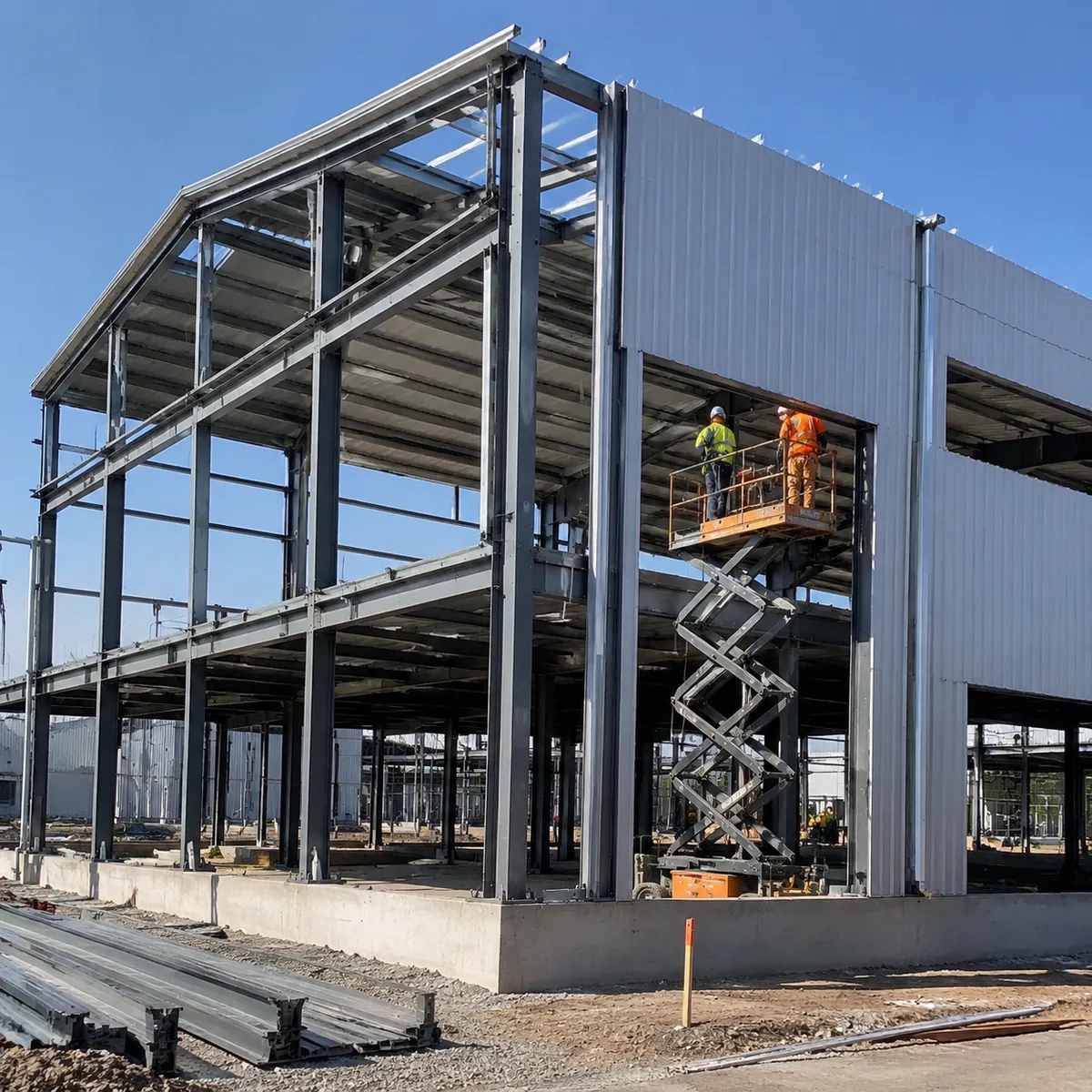
Three things decide whether a steel workshop building order goes smoothly: the lead time, the document package and the delivery term. The lead time tells you when production can start and finish, the documents decide whether customs goes fast or slow, and the delivery term sets who pays for freight and who carries the risk. Whether you are buying a small workshop or a large steel workshop building, this article explains each one and what you should lock in writing before you order.

Where the lead time actually goes
A steel workshop order has a predictable sequence, and each stage can be shortened or extended by how quickly decisions are made. Design approval is usually the first gate: every day spent reviewing drawings delays production. Material procurement follows, then fabrication, then quality control and packing, then loading.
| Stage | What happens | What speeds it up |
|---|---|---|
| Design and approval | Calculations, GA and shop drawings, buyer review | Send complete spec, approve drawings fast |
| Material procurement | Order steel plate and sections from mills | Standard grades, common section sizes |
| Fabrication | Cutting, welding, drilling, assembly | Confirmed drawings, no mid-order changes |
| QC and surface treatment | Inspection, shot blasting, painting | Agree inspection points in advance |
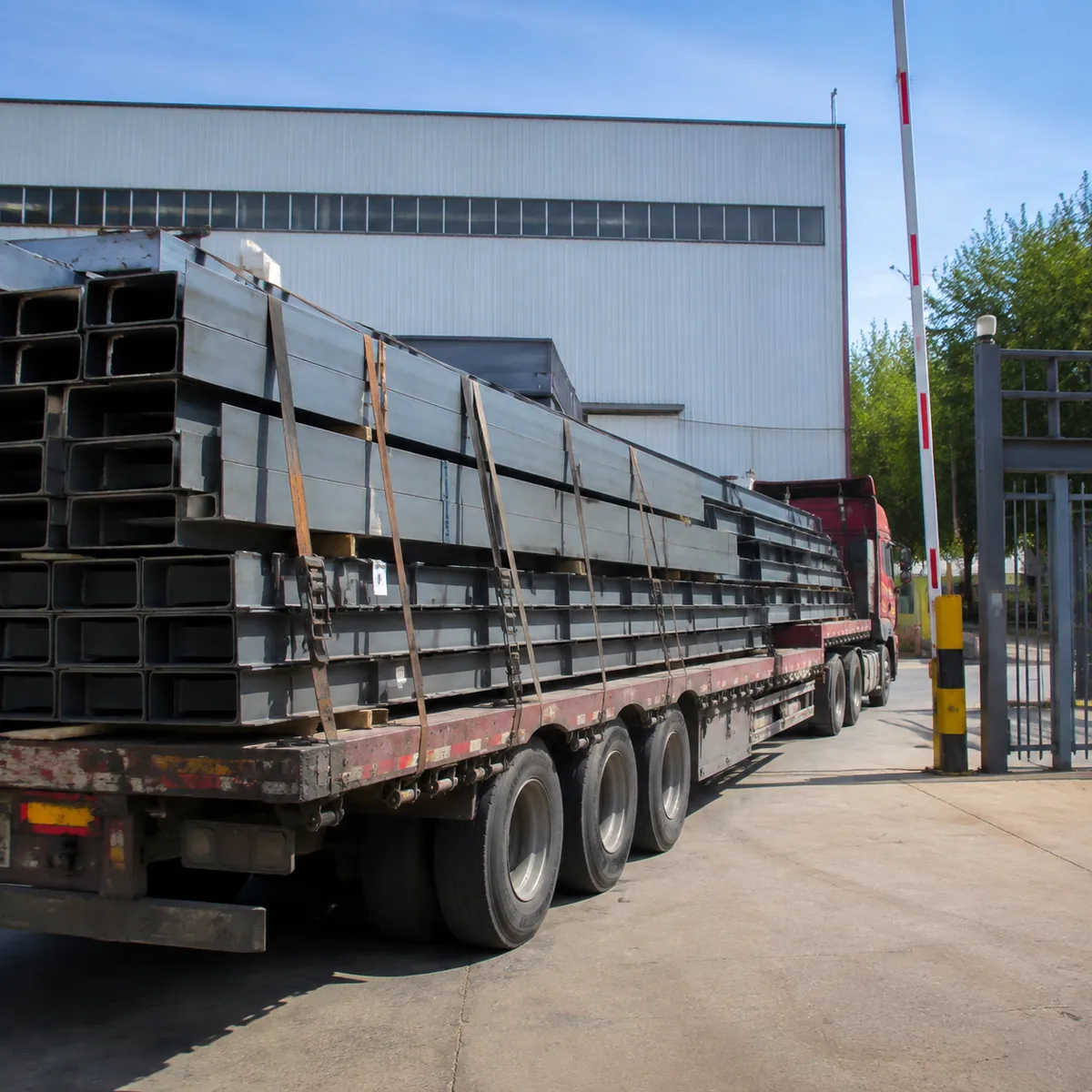
| Packing and loading | Sea-worthy packing, fumigation, container loading | Confirm packing method and port early |
Total lead time from confirmed drawings to shipment is typically a few weeks for a small workshop and several months for a large multi-bay facility. Ask the supplier for a stage-by-stage schedule, not just one total.
The document package that moves customs
Export steel needs a standard set of documents, and missing one of them can hold a shipment at the port. The commercial invoice and packing list are the baseline; the bill of lading proves ownership and shipment; mill certificates trace the steel back to the mill; and the design drawings support local approval. Some destinations also require fumigation certificates for wood packing and, in some regions, a certificate of origin. Confirm the full list with your forwarder before the order ships.
Our mill test certificate guide shows what to check in the material documents so the paperwork is not just present but correct.
What documents do I need to import a steel workshop building?
At minimum a commercial invoice, packing list, bill of lading and mill certificates; some destinations also need a certificate of origin and fumigation certificate. Confirm the exact list with your forwarder, because requirements vary by country.
Delivery terms: who pays, who risks
The delivery term decides where the supplier’s responsibility ends and yours begins. EXW means you collect from the factory; FOB means the supplier delivers to the port and loads; CFR and CIF add ocean freight (and insurance for CIF) to the supplier’s side. Each term changes the price you see and the risk you carry, so the “same” building can have very different totals under different terms.
| Incoterm | Supplier covers | Buyer arranges |
|---|---|---|
| EXW | Production and packing only | All transport, export/import formalities |
| FOB | Delivery to port and loading | Ocean freight, insurance, import customs |
| CFR | Delivery to port plus ocean freight | Insurance and import customs |
| CIF | Freight and insurance to destination port | Import customs and inland transport |
For a first import, many buyers prefer FOB or CFR and let a forwarder handle the ocean leg, because it keeps one party accountable for the freight. Whatever you choose, write the incoterm, the port and the split of costs into the contract.
What to lock in the contract
Beyond price and delivery term, four items belong in writing: the lead time with a start date (confirmed drawings, not order date), the document list and who prepares each item, the packing standard, and the revision procedure for design changes. A contract that states these clearly prevents most of the disputes that delay steel workshop projects. For site offices or storage next to the new workshop, a modular container house supplier can deliver a practical annex building on the same schedule.
Can I split a large workshop order into phases?
Yes, and it is common. Some buyers order the main frame first, then add cladding or an extension bay later. Confirm with the supplier that the design allows staged fabrication and that future bays can be matched to the existing frames.
FAQ
How long is the lead time for a steel workshop building?
From confirmed drawings, a small workshop can ship in a few weeks; larger multi-bay facilities typically take several months. Ask for a stage-by-stage schedule so you know when each milestone — design, material, fabrication, packing — is expected.
What is the difference between EXW, FOB, CFR and CIF?
They define where the supplier’s responsibility ends: EXW at the factory, FOB at the port of loading, CFR adds ocean freight, and CIF adds freight and insurance to the destination port. Each changes the price and the risk you carry.
What documents should a steel workshop supplier provide?
Commercial invoice, packing list, bill of lading, mill certificates and design drawings as a baseline, plus certificate of origin or fumigation certificate where required. Agree the list before shipment to avoid customs delays.
Can I order the steel frame first and add cladding later?
Yes, staged orders are common. Make sure the design allows it and that future bays or cladding can be matched to the existing frames — confirm this in writing before fabrication.
Planning a steel workshop building? Send your dimensions, destination port and preferred delivery term, and we will confirm the lead time and document package for your order.