
Steel Frame Installation Checklist: Procurement Handover Points Before Site Assembly

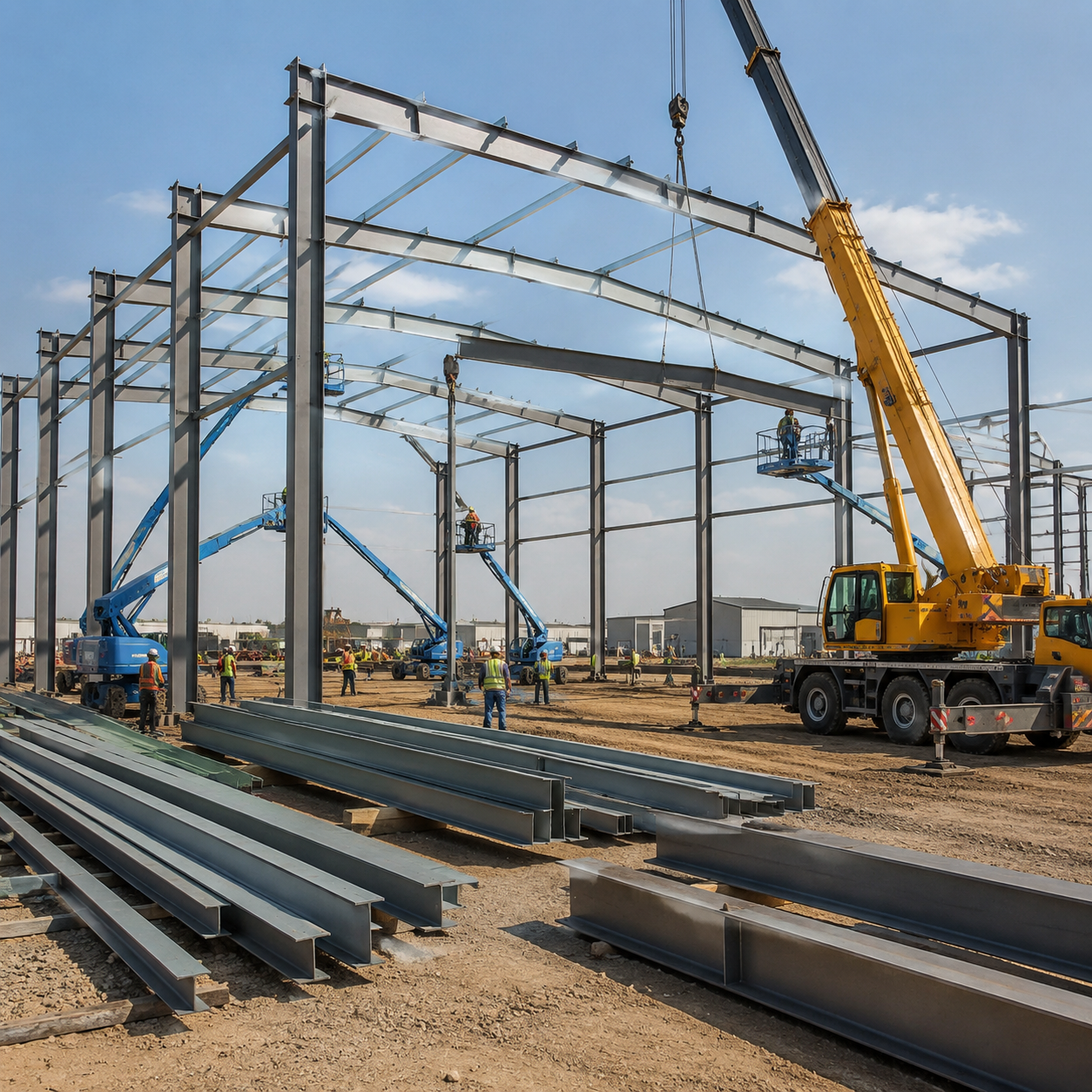
A procurement-facing steel frame installation checklist. This B2B buyer guide helps teams organize requirements, compare commercial scope and coordinate handover information for an industrial steel building project. It does not replace project-specific engineering, statutory approvals, supplier calculations or site safety planning. Its purpose is to make procurement questions explicit, preserve decisions in writing and give internal stakeholders a common document set.
Define the intended operation
Start by describing the building as an operating environment rather than a generic structure. State what will move through the building, how frequently it will move, which work areas need to remain clear, and what loading or storage activity will occur. Note internal routes, equipment interfaces, expected shifts, access controls and likely expansion needs. This establishes a shared commercial context before suppliers begin to interpret a request through their own assumptions. For this procurement activity, connect the checkpoint to the latest layout information, the project schedule and the internal owner of the next decision. Where an input is not finalized, label it as pending and request the supplier to state the assumption used. That approach makes revisions comparable and keeps an unanswered question from being silently converted into an inclusion or exclusion.
Collect the available site information
Gather the information already available about the location, plot layout, site access, delivery route, foundation planning, utilities and schedule. A buyer does not need to provide a completed engineering package to begin a discussion, but unknown conditions should remain visible. Identify which inputs are confirmed, which are provisional and which will need a project decision. This avoids a quotation being treated as a final commitment when it was priced against a preliminary site description. For this procurement activity, connect the checkpoint to the latest layout information, the project schedule and the internal owner of the next decision. Where an input is not finalized, label it as pending and request the supplier to state the assumption used. That approach makes revisions comparable and keeps an unanswered question from being silently converted into an inclusion or exclusion.
Build a controlled RFQ document
Use one working request document for drawings, quantities, opening requirements, preferred materials, project timing and questions. Mark the document revision date and the contact authorized to consolidate responses. A controlled RFQ helps the team compare like with like and reduces the risk of suppliers responding to different versions of a layout. It also gives the buyer a simple way to trace which commercial assumptions were known when each proposal was received. For this procurement activity, connect the checkpoint to the latest layout information, the project schedule and the internal owner of the next decision. Where an input is not finalized, label it as pending and request the supplier to state the assumption used. That approach makes revisions comparable and keeps an unanswered question from being silently converted into an inclusion or exclusion.
Separate included and excluded scope
Read every proposal line by line and classify each item as included, excluded, optional, conditional or awaiting confirmation. The structural frame alone may not tell a buyer what is covered by the building package. Review secondary members, cladding, openings, accessories, drawings, packing, transport, unloading support, installation work and project documentation. This comparison should be recorded in a table so that the commercial team can identify differences before it compares total values. For this procurement activity, connect the checkpoint to the latest layout information, the project schedule and the internal owner of the next decision. Where an input is not finalized, label it as pending and request the supplier to state the assumption used. That approach makes revisions comparable and keeps an unanswered question from being silently converted into an inclusion or exclusion.
Review structural and enclosure descriptions
Check that the proposal clearly describes the main frame, secondary members, roof system, wall system and any stated interfaces. The goal is not to replace engineering review. It is to make sure the procurement comparison uses the same described package for every bidder. If one supplier uses a different interpretation, record the difference as a question rather than assuming that the wording is equivalent. This is particularly important when a layout, opening or equipment interface changes the apparent scope. For this procurement activity, connect the checkpoint to the latest layout information, the project schedule and the internal owner of the next decision. Where an input is not finalized, label it as pending and request the supplier to state the assumption used. That approach makes revisions comparable and keeps an unanswered question from being silently converted into an inclusion or exclusion.
Control drawings and approvals
Set a drawing review route before production begins. Identify who receives drawings, who gathers comments, who can approve changes and how approved versions are stored. A buyer should be able to connect the final commercial scope with the drawing version that supports it. Written approvals help avoid a situation where a technical change is discussed informally while procurement and site teams continue to work from an earlier package. For this procurement activity, connect the checkpoint to the latest layout information, the project schedule and the internal owner of the next decision. Where an input is not finalized, label it as pending and request the supplier to state the assumption used. That approach makes revisions comparable and keeps an unanswered question from being silently converted into an inclusion or exclusion.
Evaluate delivery and receiving responsibilities
Connect delivery terms to the actual route, unloading location, storage area and receiving team. Confirm who provides transport information, who prepares unloading equipment, how packages are identified and how shortages or visible damage are reported. A stated delivery term is only one part of a workable site plan. The buyer should establish the practical actions needed before a truck arrives, especially when components will need to be stored and released in an installation sequence. For this procurement activity, connect the checkpoint to the latest layout information, the project schedule and the internal owner of the next decision. Where an input is not finalized, label it as pending and request the supplier to state the assumption used. That approach makes revisions comparable and keeps an unanswered question from being silently converted into an inclusion or exclusion.
Prepare installation handover points
Before site assembly, decide which drawings, packing records, component marks, contact details and issue procedures the installation team needs. Discuss lifting access, storage order and the expected sequence with relevant site stakeholders. Procurement does not need to manage installation itself to create a better handover. It can preserve the approved scope and delivery information in a form that allows the site team to identify components and ask precise questions quickly. For this procurement activity, connect the checkpoint to the latest layout information, the project schedule and the internal owner of the next decision. Where an input is not finalized, label it as pending and request the supplier to state the assumption used. That approach makes revisions comparable and keeps an unanswered question from being silently converted into an inclusion or exclusion.
Record changes as commercial decisions
Changes should be recorded with the affected scope item, drawing reference, reason, supplier response, schedule impact and final approval. This approach protects the buyer from relying on a message that has not been incorporated into the agreed package. It also gives suppliers a clear way to show the consequence of a change rather than absorbing it into an unclear revision. A compact change log is usually sufficient when it is maintained consistently. For this procurement activity, connect the checkpoint to the latest layout information, the project schedule and the internal owner of the next decision. Where an input is not finalized, label it as pending and request the supplier to state the assumption used. That approach makes revisions comparable and keeps an unanswered question from being silently converted into an inclusion or exclusion.
Use a final readiness review
Before confirming production, shipment or site handover, hold a structured readiness review. Compare the approved scope, current drawings, open questions, delivery plan and responsible contacts. Each unresolved item should have an owner and expected action. The result is not a claim that all project risk has disappeared. It is a practical checkpoint that prevents the team from moving forward while critical commercial or coordination questions remain unassigned. For this procurement activity, connect the checkpoint to the latest layout information, the project schedule and the internal owner of the next decision. Where an input is not finalized, label it as pending and request the supplier to state the assumption used. That approach makes revisions comparable and keeps an unanswered question from being silently converted into an inclusion or exclusion.
Maintain a close-out record
Keep the final quotation, approved drawings, key revisions, packing information and delivery correspondence in one project file. This record supports later maintenance, expansion discussions and future procurement. It also prevents new project participants from reconstructing decisions from disconnected messages. A clear close-out file is particularly useful when the buyer needs to compare the delivered package against the documents that were used when the order was placed. For this procurement activity, connect the checkpoint to the latest layout information, the project schedule and the internal owner of the next decision. Where an input is not finalized, label it as pending and request the supplier to state the assumption used. That approach makes revisions comparable and keeps an unanswered question from being silently converted into an inclusion or exclusion.
Align internal stakeholders
Procurement, engineering, logistics and the site team often see the same project through different operational questions. Set a short alignment meeting at defined milestones so each team can identify the information it needs from the supplier package. Procurement can document the commercial scope, engineering can identify drawing dependencies, logistics can confirm the route and receiving process, and the site team can state storage or lifting constraints. A common record prevents an assumption held by one team from being treated as a confirmed project decision by another. For this procurement activity, connect the checkpoint to the latest layout information, the project schedule and the internal owner of the next decision. Where an input is not finalized, label it as pending and request the supplier to state the assumption used. That approach makes revisions comparable and keeps an unanswered question from being silently converted into an inclusion or exclusion.
Protect the comparison baseline
A comparison becomes unreliable when one proposal has been revised but another remains attached to an earlier brief. Maintain a baseline that records the current drawing version, request date, scope table and outstanding questions. When a supplier response changes, note whether the change is a clarification, an option or a revised scope. This gives the buyer an orderly way to compare proposals over time without discarding useful earlier information or creating a false impression that every value was calculated on identical inputs. For this procurement activity, connect the checkpoint to the latest layout information, the project schedule and the internal owner of the next decision. Where an input is not finalized, label it as pending and request the supplier to state the assumption used. That approach makes revisions comparable and keeps an unanswered question from being silently converted into an inclusion or exclusion.
Check practical interfaces
Many procurement problems appear at interfaces: a door arrangement affects a loading route, a roof detail connects to an equipment requirement, a delivery package must match the available unloading space, or a drawing release must reach the team preparing foundations. Ask the project group to list these interfaces in plain language and attach each one to a responsible owner. This does not require the buyer to invent technical solutions. It ensures that a supplier question can be directed to the correct decision maker before it becomes a late change. For this procurement activity, connect the checkpoint to the latest layout information, the project schedule and the internal owner of the next decision. Where an input is not finalized, label it as pending and request the supplier to state the assumption used. That approach makes revisions comparable and keeps an unanswered question from being silently converted into an inclusion or exclusion.
Confirm documentation at each stage
At each stage, identify the documents that should be issued, reviewed or retained. Early documents may include the request brief and preliminary layout. Later documents may include drawings, scope schedules, approved changes, packing information and delivery contacts. State which file is authoritative and where it is stored. Consistent document control makes it easier to verify what has been agreed and helps the buyer communicate a precise request when clarification is needed. For this procurement activity, connect the checkpoint to the latest layout information, the project schedule and the internal owner of the next decision. Where an input is not finalized, label it as pending and request the supplier to state the assumption used. That approach makes revisions comparable and keeps an unanswered question from being silently converted into an inclusion or exclusion.
Buyer review checkpoint 1
At this review point, confirm the document version, the scope reference and the responsible person for follow-up. Compare the current proposal with the approved project objective, not merely with a previous total. Ask whether a stated assumption affects materials, drawings, delivery, unloading, installation coordination or the required schedule. Keep the response with the relevant RFQ item so the project team can understand it later. This disciplined review is useful for a procurement-facing steel frame installation checklist. because it makes commercial comparisons repeatable and highlights open decisions before they become delivery or site issues. When information changes, record whether the change affects price, timing or a site responsibility, then circulate the revised decision to all affected stakeholders.
Buyer review checkpoint 2
At this review point, confirm the document version, the scope reference and the responsible person for follow-up. Compare the current proposal with the approved project objective, not merely with a previous total. Ask whether a stated assumption affects materials, drawings, delivery, unloading, installation coordination or the required schedule. Keep the response with the relevant RFQ item so the project team can understand it later. This disciplined review is useful for a procurement-facing steel frame installation checklist. because it makes commercial comparisons repeatable and highlights open decisions before they become delivery or site issues. When information changes, record whether the change affects price, timing or a site responsibility, then circulate the revised decision to all affected stakeholders.
Buyer review checkpoint 3
At this review point, confirm the document version, the scope reference and the responsible person for follow-up. Compare the current proposal with the approved project objective, not merely with a previous total. Ask whether a stated assumption affects materials, drawings, delivery, unloading, installation coordination or the required schedule. Keep the response with the relevant RFQ item so the project team can understand it later. This disciplined review is useful for a procurement-facing steel frame installation checklist. because it makes commercial comparisons repeatable and highlights open decisions before they become delivery or site issues. When information changes, record whether the change affects price, timing or a site responsibility, then circulate the revised decision to all affected stakeholders.
Buyer review checkpoint 4
At this review point, confirm the document version, the scope reference and the responsible person for follow-up. Compare the current proposal with the approved project objective, not merely with a previous total. Ask whether a stated assumption affects materials, drawings, delivery, unloading, installation coordination or the required schedule. Keep the response with the relevant RFQ item so the project team can understand it later. This disciplined review is useful for a procurement-facing steel frame installation checklist. because it makes commercial comparisons repeatable and highlights open decisions before they become delivery or site issues. When information changes, record whether the change affects price, timing or a site responsibility, then circulate the revised decision to all affected stakeholders.
Buyer review checkpoint 5
At this review point, confirm the document version, the scope reference and the responsible person for follow-up. Compare the current proposal with the approved project objective, not merely with a previous total. Ask whether a stated assumption affects materials, drawings, delivery, unloading, installation coordination or the required schedule. Keep the response with the relevant RFQ item so the project team can understand it later. This disciplined review is useful for a procurement-facing steel frame installation checklist. because it makes commercial comparisons repeatable and highlights open decisions before they become delivery or site issues. When information changes, record whether the change affects price, timing or a site responsibility, then circulate the revised decision to all affected stakeholders.
Buyer review checkpoint 6
At this review point, confirm the document version, the scope reference and the responsible person for follow-up. Compare the current proposal with the approved project objective, not merely with a previous total. Ask whether a stated assumption affects materials, drawings, delivery, unloading, installation coordination or the required schedule. Keep the response with the relevant RFQ item so the project team can understand it later. This disciplined review is useful for a procurement-facing steel frame installation checklist. because it makes commercial comparisons repeatable and highlights open decisions before they become delivery or site issues. When information changes, record whether the change affects price, timing or a site responsibility, then circulate the revised decision to all affected stakeholders.
Buyer review checkpoint 7
At this review point, confirm the document version, the scope reference and the responsible person for follow-up. Compare the current proposal with the approved project objective, not merely with a previous total. Ask whether a stated assumption affects materials, drawings, delivery, unloading, installation coordination or the required schedule. Keep the response with the relevant RFQ item so the project team can understand it later. This disciplined review is useful for a procurement-facing steel frame installation checklist. because it makes commercial comparisons repeatable and highlights open decisions before they become delivery or site issues. When information changes, record whether the change affects price, timing or a site responsibility, then circulate the revised decision to all affected stakeholders.
Buyer review checkpoint 8
At this review point, confirm the document version, the scope reference and the responsible person for follow-up. Compare the current proposal with the approved project objective, not merely with a previous total. Ask whether a stated assumption affects materials, drawings, delivery, unloading, installation coordination or the required schedule. Keep the response with the relevant RFQ item so the project team can understand it later. This disciplined review is useful for a procurement-facing steel frame installation checklist. because it makes commercial comparisons repeatable and highlights open decisions before they become delivery or site issues. When information changes, record whether the change affects price, timing or a site responsibility, then circulate the revised decision to all affected stakeholders.
Buyer review checkpoint 9
At this review point, confirm the document version, the scope reference and the responsible person for follow-up. Compare the current proposal with the approved project objective, not merely with a previous total. Ask whether a stated assumption affects materials, drawings, delivery, unloading, installation coordination or the required schedule. Keep the response with the relevant RFQ item so the project team can understand it later. This disciplined review is useful for a procurement-facing steel frame installation checklist. because it makes commercial comparisons repeatable and highlights open decisions before they become delivery or site issues. When information changes, record whether the change affects price, timing or a site responsibility, then circulate the revised decision to all affected stakeholders.
Buyer review checkpoint 10
At this review point, confirm the document version, the scope reference and the responsible person for follow-up. Compare the current proposal with the approved project objective, not merely with a previous total. Ask whether a stated assumption affects materials, drawings, delivery, unloading, installation coordination or the required schedule. Keep the response with the relevant RFQ item so the project team can understand it later. This disciplined review is useful for a procurement-facing steel frame installation checklist. because it makes commercial comparisons repeatable and highlights open decisions before they become delivery or site issues. When information changes, record whether the change affects price, timing or a site responsibility, then circulate the revised decision to all affected stakeholders.
Buyer review checkpoint 11
At this review point, confirm the document version, the scope reference and the responsible person for follow-up. Compare the current proposal with the approved project objective, not merely with a previous total. Ask whether a stated assumption affects materials, drawings, delivery, unloading, installation coordination or the required schedule. Keep the response with the relevant RFQ item so the project team can understand it later. This disciplined review is useful for a procurement-facing steel frame installation checklist. because it makes commercial comparisons repeatable and highlights open decisions before they become delivery or site issues. When information changes, record whether the change affects price, timing or a site responsibility, then circulate the revised decision to all affected stakeholders.
Buyer review checkpoint 12
At this review point, confirm the document version, the scope reference and the responsible person for follow-up. Compare the current proposal with the approved project objective, not merely with a previous total. Ask whether a stated assumption affects materials, drawings, delivery, unloading, installation coordination or the required schedule. Keep the response with the relevant RFQ item so the project team can understand it later. This disciplined review is useful for a procurement-facing steel frame installation checklist. because it makes commercial comparisons repeatable and highlights open decisions before they become delivery or site issues. When information changes, record whether the change affects price, timing or a site responsibility, then circulate the revised decision to all affected stakeholders.
Frequently asked questions
What should a buyer send with an RFQ?
Send the intended use, available layout or drawing information, location, timing, access constraints, openings and the decisions that are still pending.
How should quotations be compared?
Compare scope, assumptions, exclusions, drawing status, delivery basis and responsibilities line by line before comparing total values.
When should the site team join the review?
Involve receiving and installation stakeholders before delivery so access, unloading, storage, sequence and issue reporting are understood.