Steel Building Manufacturer: How to Audit Factory Capability Before You Send an RFQ

The fastest way to avoid a bad steel building supplier is to audit the factory before you send the RFQ, not after you receive a cheap quotation. A steel building manufacturer’s real capability shows up in its certifications, equipment, engineering team, and quality control records — and most of that evidence can be collected by email and video call before you commit to a site visit. This guide gives you a practical factory audit checklist that works for first-time buyers of prefab steel buildings, whether you are ordering one prefab steel warehouse or a batch of workshops.
Why capability audits matter more than price per square meter
Steel building prices are quoted per square meter or per ton, but the delivered value depends on things that are invisible in the price: whether the shop drawings are accurate, whether the welding is done by certified welders, whether the coating survives sea freight, and whether the frame actually matches the calculation report. Two factories can quote the same number for the same building size and deliver very different quality. The audit is how you tell them apart before money moves.
For a B2B buyer, the audit also changes your negotiating position. A supplier that can show you its quality records knows you are a serious buyer, and it will typically answer technical questions faster. The audit is not about distrust — it is about collecting the evidence that makes the comparison fair.
Step 1: Check certifications and their scope
Certifications are only useful when you check what they actually cover. A certificate with the company name but a scope that does not include steel structure fabrication tells you nothing. Request the certificate PDF and read the scope line.
| Certificate / standard | What it covers | What to ask the supplier |
|---|---|---|
| ISO 9001 quality management | Process control in design, fabrication, inspection | Ask for the certificate scope and validity date |
| EN 1090 (CE marking) | Factory production control for structural steel in EU projects | Which execution class (EXC2/EXC3) is covered? |
| AWS D1.1 welding program | Welding procedure qualification and welder certification | Request WPS/PQR samples and welder certificates |
| ISO 3834 welding quality | Welding management system | Ask which level (full/standard/elementary) |
| Third-party inspection reports | Independent verification of a past project | Ask for reports from SGS, Bureau Veritas, TÜV or similar |
Be realistic about what a small or medium Chinese steel factory typically holds: ISO 9001 is common, AWS D1.1 welding programs are frequent for export shops, and EN 1090 appears on factories that serve European buyers. If a supplier claims a certification you cannot verify, ask for the certificate number and check it with the issuing body — a reputable factory will not mind.
Step 2: Review the engineering team
The engineering team is the difference between a steel building that is a pile of drawings and one that is a coordinated system. Ask for the team structure and the software they use. Most serious suppliers work with structural analysis software and detailing tools such as Tekla, STAAD, or MTS, and can produce general arrangement drawings, shop drawings, and a structural calculation summary.
Three questions reveal engineering depth:
- Who prepares the structural calculation, and can they design to your code (AISC, Eurocode, GB, or your local code)? Ask for a sample calculation cover page.
- Who produces the shop drawings, and how are revisions managed? Shop drawings are the file that actually drives fabrication — sloppy shop drawings mean rework and site mismatches.
- Can they provide erection drawings and an installation manual? A supplier that ships drawings plus an erection guide is easier to manage remotely.
If the factory’s engineering is outsourced, that is not automatically a problem — many good suppliers use specialized design institutes — but ask who is responsible when a drawing error is found. The accountable party should be named in the contract.
Step 3: Look at the equipment list
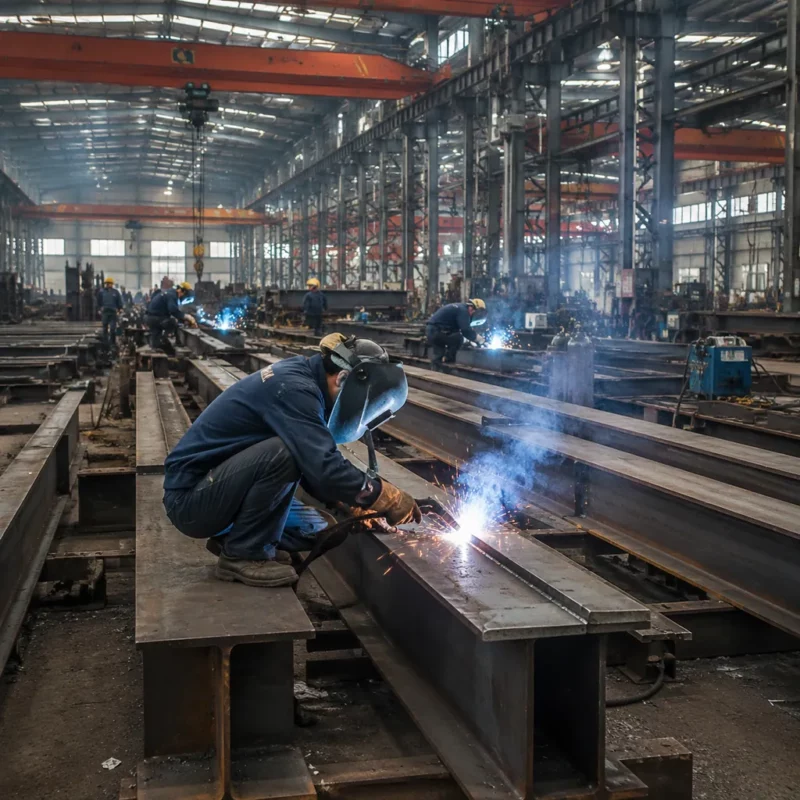
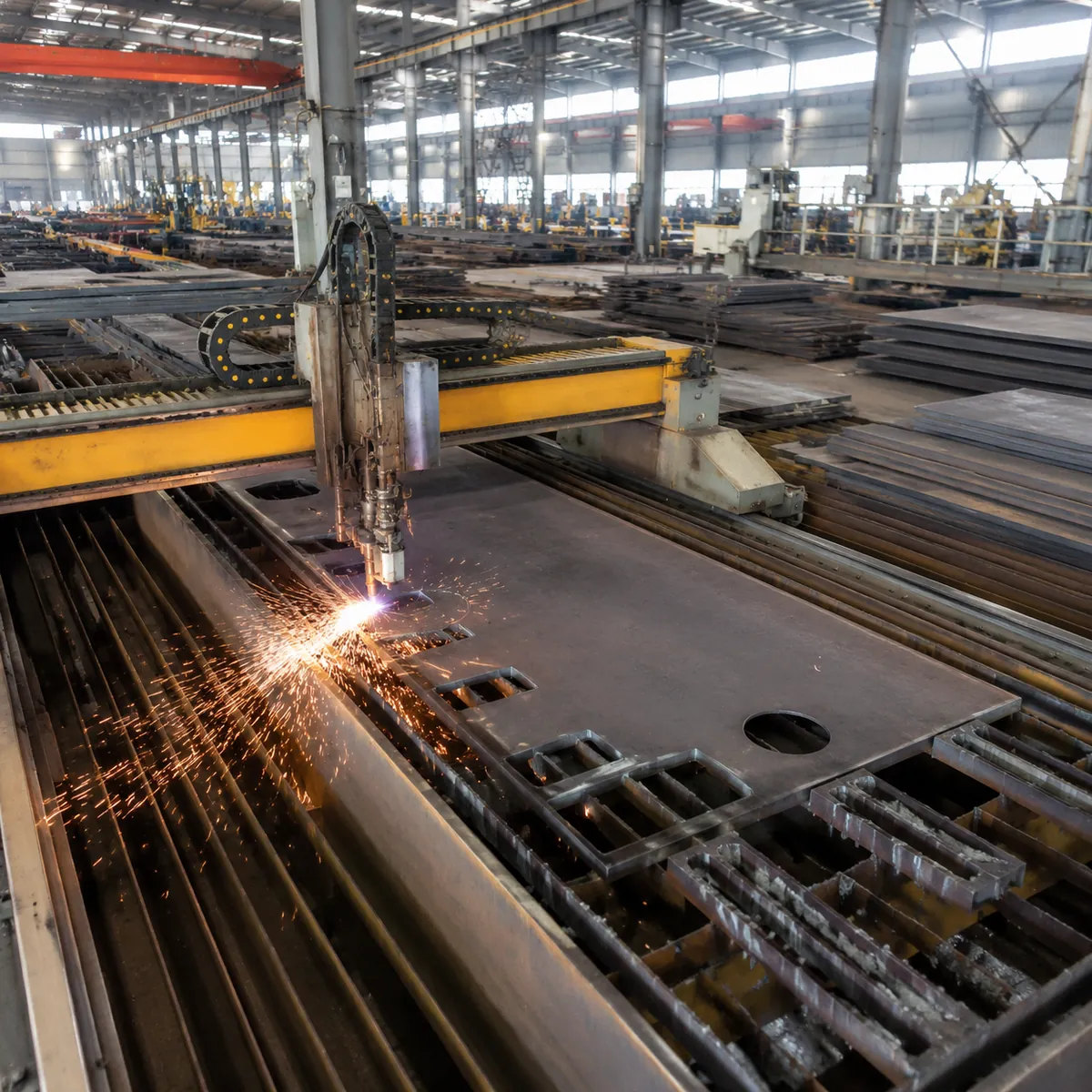
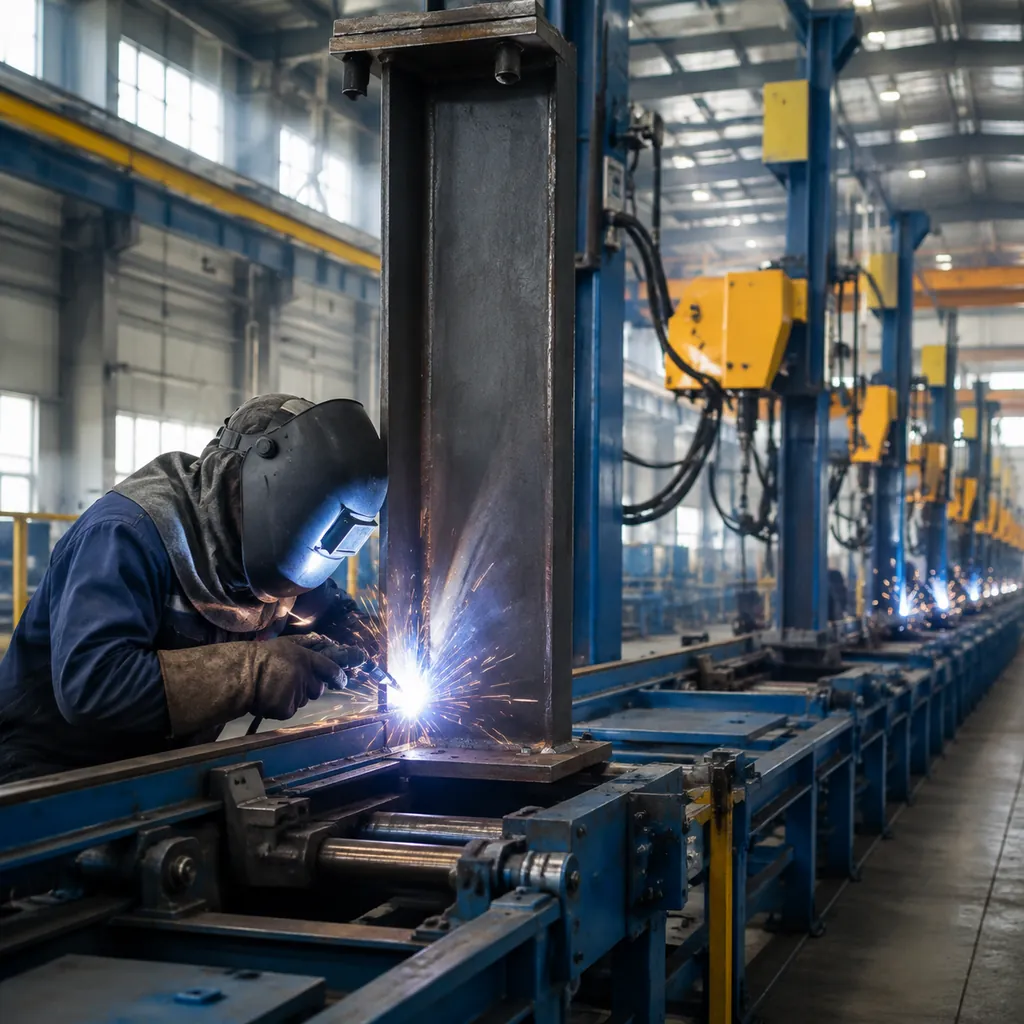
Equipment determines consistency. A factory with CNC cutting, automatic or semi-automatic welding lines, shot blasting, and a painting line can produce repeatable quality at volume. A factory doing manual cutting and hand grinding on every member will produce more variation, which matters for bolted connections that must line up on site.
- Cutting: CNC plasma or laser cutting produces accurate holes and profiles; manual cutting requires more site adjustment.
- Welding: automatic submerged arc or MIG welding for main members gives consistent penetration; welder qualification still matters for the rest.
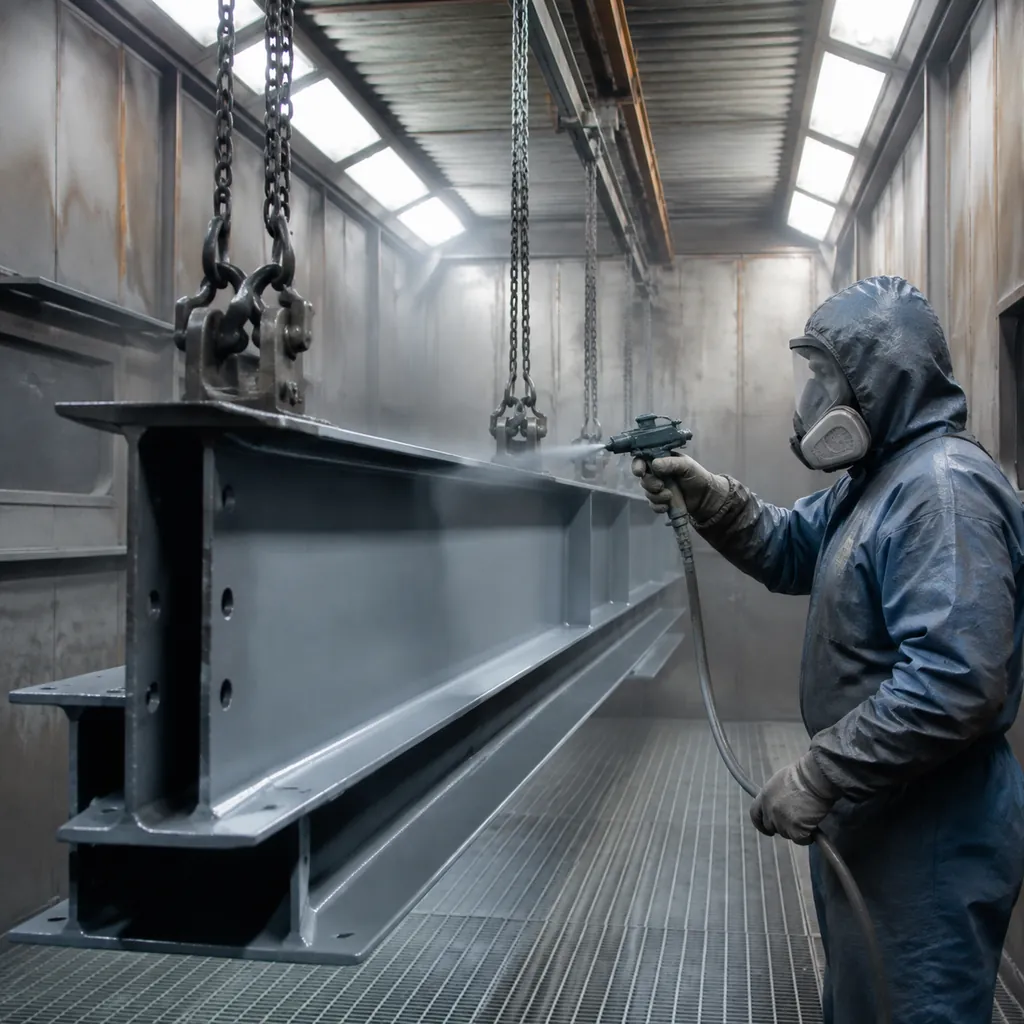
- Surface preparation: shot blasting to a specified grade (for example Sa2.5) before painting is the industry standard for export coating performance. Ask what blast grade and paint system they use.
- Painting: a controlled paint shop with specified DFT (dry film thickness) checks is a sign of a quality process. Ask for DFT records from a recent project.
- Drilling: pre-drilled bolted connections on CNC lines save huge site time compared to on-site drilling.
You do not need to visit to collect this information: ask for photos and short videos of each production line. A short video call walking through the workshop is even better and takes 20 minutes.
Step 4: Verify production capacity and lead time honestly
Capacity questions protect your schedule. Ask for the factory’s current monthly steel tonnage output and their current order load. A supplier that is overbooked will push your delivery date, and one that is empty may be desperate for work — neither is a disqualifier, but both change how you plan.
Check lead time components separately: drawing approval time, material procurement time, fabrication time, and loading time. Steel material procurement is often the long pole — if the factory does not stock the steel grade you need, add procurement weeks. Ask which steel mills they use and whether the grade (for example Q355B or S355) is readily available.
Step 5: Ask for project references and inspection records
References are the audit’s ground truth. Ask for 3 to 5 export projects of similar type and size to yours, with country, building size, and year. Then do three checks: look at the project photos (do the buildings look like real completed projects?), ask for the customer’s country, and — if the reference is a repeat client — ask how many orders they have placed. Repeat orders are the strongest evidence of satisfaction.
Inspection records matter even more than certificates: request a sample of the factory’s own QC records — material certificates (mill certificates) from the steel supplier, welding inspection logs, and painting DFT readings. If they can share these (with customer names redacted), the quality system is real.
Step 6: Decide between a remote audit and a site visit
A remote audit covers 80 percent of the risk for a standard pre-engineered steel building. A site visit adds value when the project is large, complex, or critical: you can watch a weld being made, check the paint booth, see the material storage, and meet the QC manager face to face. For large orders, many buyers also book a third-party inspection company to inspect before shipment, which is often cheaper than a full site visit and gives an independent report.
Quick question: Do I really need to visit the factory?
Not always. A structured remote audit — certifications, engineering samples, equipment videos, references, and QC records — is enough for many standard projects. Reserve a physical visit for large, complex, or high-value orders, and consider third-party pre-shipment inspection as a cost-effective middle option.
Common audit mistakes
- Accepting a certificate PDF without checking the scope line and validity date.
- Judging quality from product photos alone — ask for production-line videos and QC records instead.
- Skipping the reference check because the price looks great.
- Focusing on frame price per ton while ignoring cladding, fasteners, and coating specifications, where cost differences hide.
- Not agreeing on the inspection and acceptance criteria before the contract — define what a pre-shipment inspection will check.
Audit scorecard: how to compare factories objectively
Instead of scoring factories by gut feel, use a weighted scorecard. Assign weights to the audit areas that matter most for your project, score each supplier from 1 to 5, and multiply. A sample weighting for a typical export project looks like this:
| Audit area | Weight | What to score |
|---|---|---|
| Certifications and their scope | 15% | Relevant certificates, valid, scope matches fabrication |
| Engineering capability | 20% | In-house team, design software, code flexibility, sample quality |
| Equipment and process | 20% | CNC cutting, welding lines, shot blasting, painting control |
| Capacity and lead time honesty | 10% | Clear tonnage output, realistic schedule, material availability |
| References and QC records | 20% | Verifiable export projects, repeat clients, real inspection records |
| Communication and documentation | 15% | Response speed, clear proposal, drawing management |
Adjust the weights for your project: a complex multi-storey structure needs more engineering weight; a simple portal frame warehouse can weight process and references higher. The scorecard also creates a written record of why you chose a supplier, which is useful if the project board asks for justification later.
Questions to ask on the first call
A 20-minute call with the supplier’s sales engineer can surface more than ten email rounds. Ask these questions in order:
- Which design codes do you normally design to, and can you show a project in my region?
- Who prepares the structural calculation — in-house or outsourced?
- What steel mills do you use, and is my grade (for example S355 or Q355B) in stock?
- What is your current monthly tonnage, and how full is your production schedule?
- What is the lead time split between drawing approval, material, fabrication, and loading?
- What coating system do you ship for sea freight, and what blast grade?
- Can you share a sample drawing package and a mill certificate from a recent project?
- Which inspection companies have you worked with — SGS, Bureau Veritas, TÜV?
- Do you provide erection drawings and an installation manual?
- How are drawing revisions managed, and how many rounds are included?
- What payment terms do you offer, and what are the shipping milestones?
- Can I have two references from customers in similar countries?
Note which answers are concrete — a named mill, a named inspector, a sample file — and which are vague. Concrete answers are the audit working; vague answers are where the risk hides.
Red flags that should stop the negotiation
- A certificate that is out of date or whose scope does not mention steel structures.
- No structural calculation available at proposal stage, or “we will calculate after order”.
- Refusal to share a sample shop drawing or a mill certificate.
- Vague answers about which steel mill supplies the material.
- A coating specification that cannot be stated in terms of blast grade, paint type, and DFT.
- No named inspection experience and no interest in third-party inspection.
- References that cannot be described beyond “we have exported to many countries”.
- Lead time promises that do not add up — for example, fabrication of a large building in a week.
Any one of these is worth a follow-up question; two or more together are a reason to move to the next candidate. There are enough qualified steel building manufacturers that you do not need to rescue a risky one.
How to run the audit in five working days
You do not need a month to audit a factory. A structured five-day remote audit fits most projects:
Day 1: Documentation
Send the checklist and ask for certificates, company profile, equipment list, and two sample projects. Most suppliers reply within a day.
Day 2: Engineering review
Review the sample calculation cover page, drawing samples, and engineering team structure. Ask for one more sample if the first is thin.
Day 3: Video walkthrough
Book a 20-minute video call and ask to see the cutting line, welding area, shot blasting, and paint booth live. Record the call for the record.
Day 4: References and records
Call or email the references, and ask for QC records (mill certificates, welding logs, DFT readings) with customer names redacted.
Day 5: Score and decide
Fill in the scorecard, compare the top two suppliers, and decide whether a physical visit or third-party inspection is needed for the final shortlist.
This cadence keeps the audit rigorous without stalling the project, and it works whether you are buying one prefab steel warehouse or a multi-building program.
What to check during the RFQ round after the audit
The audit does not end when you shortlist a factory — it shifts to the documents they send next. As the RFQ responses come in, verify that the audited capability shows up in the quotation itself:
- Does the quotation name the design code and the load parameters for your site, or is it a generic price list?
- Does the proposal include a coating specification with blast grade and DFT, or just “standard painting”?
- Is the steel grade stated, and does it match what the factory confirmed it stocks?
- Does the delivery schedule break down drawing approval, material procurement, fabrication, and loading — the same components you discussed in the audit?
- Are inspection milestones mentioned, or will you have to negotiate them into the contract?
- Does the quotation include the drawing deliverables you verified exist (shop drawings, erection drawings, anchor bolt layout)?
A factory that passed the audit but sends a thin quotation is telling you the sales side is weaker than the production side. That is manageable — the audit evidence is what you negotiate with. Ask the supplier to align the quotation with the audited capabilities, and use the audit record as the technical appendix of the contract.
How factory capability translates into contract terms
Good contracts are written from audit findings, not templates. Turn what you verified into clauses:
- Material certificates: the contract lists the steel grades and requires mill certificates for the main members, matching the grade standard used in the design.
- Coating acceptance: the contract specifies the blast grade, paint system, and DFT targets, and defines how the coating is verified — for example DFT readings on a sample of members during pre-shipment inspection.
- Drawing approvals: the contract names the deliverables (GA, shop, erection, anchor bolt layout) and the revision allowance, and states that fabrication starts only after your written approval.
- Inspection milestones: the contract schedules third-party inspection points — material receipt, welding completion, and pre-shipment — and states who pays for the inspector and what happens on non-conformance.
- Payment milestones: payments are tied to verifiable events, not calendar dates, so a delay in one phase does not trigger a payment for uncompleted work.
- Warranty and support: the contract states the warranty period, what it covers, and the support commitment — erection guidance, drawing revisions, and spare parts.
None of these clauses is a negotiation battle with a good supplier; they are the written form of the capabilities you audited. A factory that is confident in its process signs them without drama, and a factory that is not will show its hesitation right there.
Auditing without a visit: what remote evidence looks like
When a physical visit is not possible, demand sharper remote evidence. Ask for a live video walkthrough where you name the equipment you want to see — the CNC cutting line, the welding area, the shot blasting chamber, the paint booth — and take screenshots for the record. Request short videos of a member being welded and a DFT reading being taken. Ask for the material stock area and the finished goods yard so you can see how the factory stores steel. Time-stamped photos of the same locations across two weeks prove the workshop is operating, not staged. This level of evidence is more persuasive than a glossy company brochure and is enough to shortlist a factory for a standard project.
The audit record: what to keep
The audit is only useful if its evidence survives into the project. Build an audit record folder for each shortlisted factory containing: the certificates with scope and validity, the sample drawings and calculation cover page, the equipment videos and photos, the QC record samples, the reference notes, and the scorecard. Keep the record until the building is delivered and inspected. When a later dispute arises — coating thickness, steel grade, drawing errors — the audit record is the baseline that shows what the supplier represented before the order, and it makes the conversation factual instead of emotional. It also speeds up the next order: the second building with the same supplier starts from a verified file, not a fresh negotiation.
FAQ
What certifications should a steel building manufacturer have?
At minimum, ISO 9001 with a scope covering steel structure fabrication. For export projects, AWS D1.1 welding programs and EN 1090 (for EU buyers) are strong signals. Always read the certificate scope and validity, not just the logo.
How do I verify a factory’s production capacity?
Ask for monthly steel tonnage output, current order load, and the lead time breakdown for drawing approval, material procurement, fabrication, and loading. Material procurement is often the longest step.
Can I hire a third party to inspect the steel building before shipment?
Yes. Inspection companies such as SGS, Bureau Veritas, and TÜV offer pre-shipment inspection of steel structures. Define the inspection checklist and acceptance criteria in the contract so the report is actionable.
Is a remote audit enough before placing an order?
For standard portal frame buildings, yes. Collect certifications, engineering samples, equipment videos, references, and QC records by email and video call. Use a physical visit or third-party inspection for large or complex projects.
What quality records should I ask to see?
Mill certificates for the steel, welding inspection logs, painting dry film thickness readings, and a sample structural calculation cover page. These prove the quality system is real rather than cosmetic.
Final recommendation
Run the audit before you compare quotations. Send the same audit request to two or three steel building manufacturers, score the answers, and only then evaluate price. You will find that the lowest-priced supplier is not always the cheapest once coating, drawings, and inspection are taken into account. A factory that passes the audit cleanly is also the one most likely to deliver on time, because its processes are repeatable.
Evaluate a steel building manufacturer with confidence — send your project size and requirements, and receive a capability overview plus a design-based quotation for your prefab steel warehouse.