8 Questions to Ask Before Signing a Steel Building Contract

What to check in a steel building contract before you sign
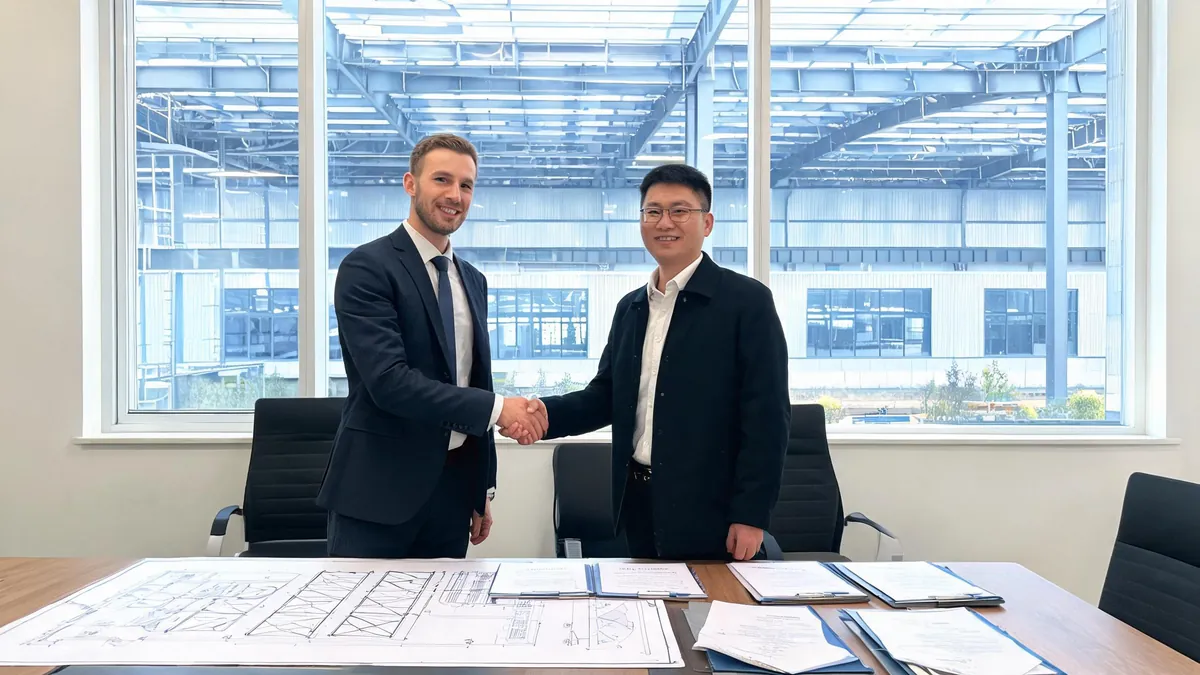
Before you sign a steel building contract, get written answers to eight questions: exactly what is included in the price, which design code and loads apply, what payment milestones look like, how revisions and changes are priced, what happens if delivery is late, what the warranty covers, which documents you receive before shipment, and who is responsible for foundations and erection. These eight items decide whether your project stays on budget and on schedule or turns into a series of surprise costs.
Most disputes on imported steel buildings do not start with bad steel. They start with a contract that never fixed the scope, never defined the payment milestones, and never said who pays for what when something changes. The quote looks clear. The contract reveals what the quote actually includes. The questions below are the ones buyers should ask their supplier before signing, and the answers should be written into the agreement, not left in email chat.
This guide follows the full procurement path: from scope and specifications, through payment and changes, to delivery, documents and erection responsibility. Use the checklist table at the end as a one-page review before you sign.
1. What exactly is included in the price?
The most common contract dispute is scope. A steel building quote can cover the bare steel frame, or it can include roof and wall cladding, insulation, doors, windows, gutters, downpipes, flashing, anchor bolts and even erection drawings. When two suppliers quote the same building, one may be quoting the frame only while the other includes a complete building envelope.
Ask the supplier to list, line by line, what the price covers. If the contract says "complete steel building" without a bill of materials and a scope list, that phrase means whatever the supplier wants it to mean on the day of dispute.
| Scope item | Usually included in supply-only | Usually included in turnkey | Ask in writing |
|---|---|---|---|
| Primary steel frame (columns, rafters, bracing) | Yes | Yes | Steel grade and tonnage |
| Secondary steel (purlins, girts, eave struts) | Yes | Yes | Spacing and section sizes |
| Roof and wall cladding | Optional | Yes | Panel type, thickness, coating |
| Insulation | Optional | Usually yes | Type, thickness, R-value |
| Doors and windows | Optional | Yes | Quantity, sizes, type |
| Gutters, downpipes, flashing | Optional | Yes | Material and color |
| Anchor bolts and base plates | Usually yes | Yes | Size and embedment detail |
| Erection drawings and documents | Yes | Yes | Format and revision limit |
| Erection labor | No | Optional | Crew size and duration |
| Freight and insurance | Separate | Sometimes | Incoterm and port |
If a line is not in the table and not in the contract, it is not included. Get the supplier to confirm each line in writing before you sign.
2. Which design code and site loads does the design follow?
A steel building designed to one code can be structurally different from a building designed to another, even at the same size. The contract should name the design code (for example AISC, Eurocode, GB, or a local code) and the design loads: wind speed, snow load, seismic zone and any imposed loads such as cranes or mezzanines.
Ask the supplier how they translated your site conditions into design loads. If your site is in a high-wind region, the contract should state the design wind speed. If you plan to add a crane later, say so before signing; adding crane loads after fabrication is expensive. The steel building quote process normally captures these inputs, so verify that the loads in the contract match what you gave the supplier during quotation.
3. What are the payment milestones, and what do you get at each one?
Payment terms are where buyers lose the most leverage. A typical schedule is a deposit to start design, a progress payment at drawing approval or fabrication start, and the balance against shipping documents. The exact percentages vary, but the principle is the same: every payment should be tied to a deliverable you can check.
| Milestone | Typical share | What you should receive before paying |
|---|---|---|
| Deposit / design start | 20-30% | Signed contract, design schedule, first structural drawings |
| Drawing approval | 20-30% | Approved shop drawings, bill of materials, load calculations |
| Fabrication progress | 20-30% | Production photos or inspection report, fabrication schedule |
| Before shipment | 10-30% | Packing list, inspection photos, shipping documents |
Ask what happens if you pay and the supplier does not deliver. A contract that only says "payments follow the schedule" without defining the deliverables is a one-way commitment. Write the deliverables into each milestone.
4. How are revisions and changes priced?
Design changes are normal. What matters is how the contract prices them. Some suppliers include two or three rounds of revisions in the price and charge for further changes; others charge for every revision after the first.
Ask: how many revision rounds are included? What is the rate for additional changes? What happens if the change happens after fabrication has started? A good contract defines a variation procedure: the supplier quotes the change, you approve it in writing, and only then does work continue. If the contract is silent on variations, the supplier can set any price for any change and stop work until you pay.
5. What happens if delivery is late?
Delivery dates on steel building contracts are often quoted as "about 4-6 weeks after drawing approval" without any consequence for lateness. If your project has a fixed opening date, ask what happens when the supplier is late. Some contracts include a liquidated damages clause; most small export contracts do not.
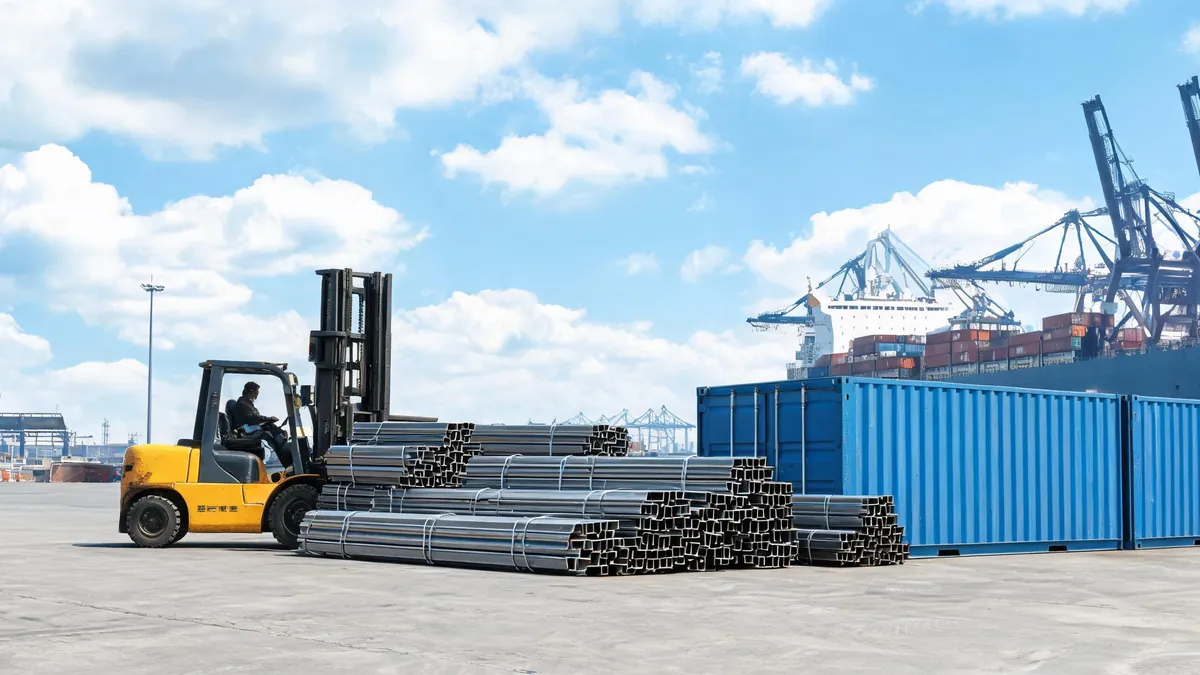
Even if you cannot negotiate a penalty, ask the supplier to commit to a production schedule with checkpoints and to tell you early if a delay is likely. A supplier who can show you a fabrication schedule with your order in it is more reliable than one who only promises a date. The delivery terms (Incoterm) also matter: "delivery" can mean loaded at the factory, loaded on the vessel, or delivered to your site. Confirm which one the contract means.
6. What does the warranty actually cover?
Warranty language is usually short and vague: "warranty against defects in materials and workmanship". Ask what that means for a steel building specifically. Cover three layers: the structural frame, the coating system, and the accessories (doors, fasteners, panels).
A structural warranty should cover design and fabrication defects for a defined period. The coating warranty depends on the system: hot-dip galvanizing lasts longer than paint in most environments, but the contract should state the film thickness and the expected life. Exclusions matter too. Most warranties exclude damage from misuse, alteration, natural disasters, or poor foundation work. If the local installer damages the coating, is that covered? Probably not, so know who is responsible for touch-up after erection.
7. What documents do you receive before shipment?
The documents you receive before and at shipment protect you at customs and during inspection. Ask the supplier to list them in the contract: commercial invoice, packing list, bill of lading, certificate of origin, material certificates, inspection reports, and any certificates required by your country. If a document is not in the contract, it may arrive late or not at all.
For many countries, the certificate of origin and material certificates are required for customs clearance and sometimes for duty exemption. Ask the supplier which documents they routinely provide and which ones cost extra. The contract should also state how photos and inspection evidence are shared during fabrication, so you can track progress without flying to the factory.
8. Who is responsible for the foundation and erection?
The boundary between the supplier’s scope and the buyer’s scope is a frequent source of extra cost. Ask who designs the foundation: the supplier usually provides anchor bolt plans and reaction loads, but the foundation design itself may be the buyer’s or a local engineer’s responsibility. Ask who provides erection drawings and assembly instructions. Ask who arranges local labor, cranes, and permits if erection is not included.
If the supplier offers erection support, confirm whether that means remote guidance, a supervisor on site, or a full erection crew. Each level costs differently and has different responsibilities. Also ask about the anchor bolts: are they shipped with the steel, and does the contract include enough bolts and base plate details for the local foundation contractor?
The eight-question checklist before you sign
| # | Question | Why it matters |
|---|---|---|
| 1 | What exactly is included in the price? | Prevents scope disputes |
| 2 | Which design code and loads apply? | Ensures the structure matches your site |
| 3 | What are the payment milestones? | Protects your leverage |
| 4 | How are revisions priced? | Controls change costs |
| 5 | What if delivery is late? | Protects your schedule |
| 6 | What does the warranty cover? | Defines after-sales protection |
| 7 | What documents come with shipment? | Protects customs clearance |
| 8 | Who handles foundation and erection? | Defines local responsibilities |
Before signing, walk through each question with the supplier and put the answers in the contract. If the supplier hesitates on any of them, that is a signal to slow down. A reliable prefab steel warehouse supplier will welcome clear scope and clear milestones, because those are what make a project predictable for both sides.
Payment method: T/T, L/C or something in between
The payment method is part of the contract, not an afterthought. A telegraphic transfer (T/T) with a deposit is the most common arrangement for imported steel buildings because fabrication is made to order. A letter of credit (L/C) gives the buyer more protection because the bank releases payment only against the shipping documents, but it adds bank fees and requires the documents to match the L/C terms exactly. Some buyers use a partial L/C and a partial T/T to balance cost and security.
Ask the supplier which payment methods they accept and what the fees look like. Ask whether a performance bond or a bank guarantee is available for larger projects. On a big warehouse or factory order, the difference between paying by T/T and paying by L/C can be significant, and the contract should state the method, the currency, the bank details and the exact triggers for each payment. Never rely on a verbal promise that "the deposit is refundable" — put the refund conditions in writing.
Who owns the drawings and design?
Steel building drawings have value beyond the project itself. The contract should state who owns the design and shop drawings after fabrication is complete. Some suppliers retain the copyright and only grant the buyer a license to use the drawings for erection and maintenance. That is workable, but you should also be able to reproduce the drawings if you need replacement parts, extensions or a second supplier later.
Ask for a deliverable set that includes the structural calculation summary, general arrangement drawings, shop drawings and erection drawings in a common format. Ask whether the supplier will keep the design files on record for future modifications. A buyer who has the full drawing set can plan extensions, get spare parts and evaluate a future expansion without going back to the original factory. If the contract is silent on drawings, the supplier may not release them after the final payment.
Inspection and acceptance: what you can verify before payment
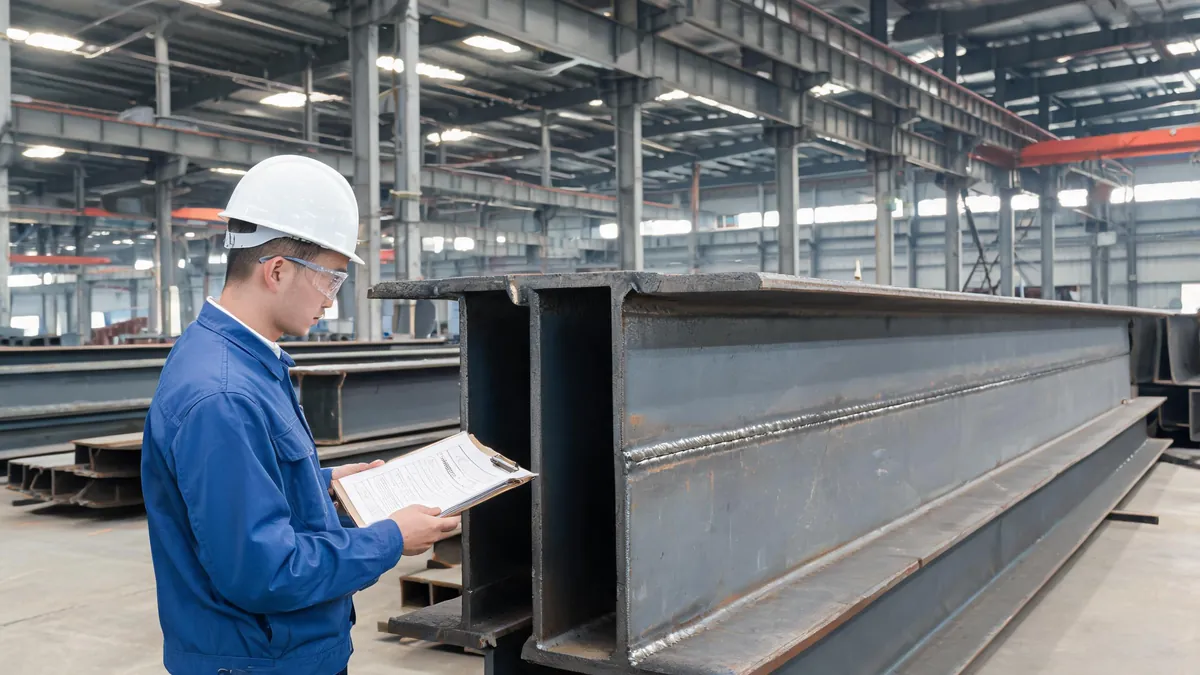
The contract should define how quality is checked and when you accept the goods. Ask whether you or a third-party inspector can visit the factory during production, and whether the supplier provides progress photos and inspection reports at each stage. A typical fabrication check covers material certificates, welding quality, dimensions, surface preparation and coating thickness.
Ask what happens if inspection finds defects. The contract should state that the supplier corrects non-conforming work at their cost before shipment, and what the timeline is for rework. Ask how coating thickness is measured and what standard is used, because paint and galvanizing thickness is one of the most common hidden-cost and hidden-risk areas in imported steel buildings. If you cannot visit the factory, ask whether the supplier accepts third-party inspection companies and what documents you receive with the shipment so you can verify the work remotely.
Dispute resolution and governing law
Cross-border contracts rarely include a court in both countries. The contract should name the governing law and the dispute resolution method. Many export contracts choose arbitration in a neutral venue because court judgments are hard to enforce across borders. Ask the supplier which arbitration rules apply and where the hearings would take place. Ask what the contract says about force majeure: events such as port closures, extreme weather or material shortages can delay production, and the contract should define how delays caused by these events are handled.
This is not about expecting the worst. It is about knowing the rules of the game before a problem appears. A supplier who has a standard dispute clause and can explain it clearly is usually more experienced than one who says "we have never had a problem" and refuses to discuss the clause. Ask to see the full contract text, not a summary, and have a local lawyer review it if the value justifies the cost.
Common contract traps on imported steel buildings
Several wording patterns cause disputes more often than others. Watch for a price that says "subject to final tonnage" without defining how tonnage is calculated and who approves the calculation. Watch for delivery dates expressed as "weeks after deposit" without a definition of when the deposit is considered received. Watch for warranties that cover "defects" but never define the standard of workmanship. Watch for scope lists that say "standard accessories" without listing them.
Each of these phrases shifts risk to the buyer at the moment of dispute. Before signing, ask the supplier to remove or clarify every phrase that is open to interpretation. A contract that reads cleanly and defines the key terms is a sign of a supplier who has learned from experience — the same experience that makes them safer to work with on fabrication, coating and delivery.
How the contract connects to the rest of your procurement
The contract sits at the end of a longer process. The steel building quote process defines the scope and the loads; the design phase turns those into shop drawings; the contract fixes the commercial terms; and the fabrication and shipping phases deliver against them. If you skip any step, the contract cannot save you. Review the quote against the contract line by line, check that the tonnage and scope match, and confirm that the payment milestones line up with the production schedule the supplier showed you during quotation.
For buyers who want to understand how the building itself is priced before signing, the breakdown of primary and secondary steel is a useful reference. The difference between primary and secondary steel pricing explains why two suppliers can quote the same building differently and what to compare when you review the contract’s bill of materials.
A 30-minute contract review routine
You do not need to be a lawyer to catch the problems that cause most disputes. A focused review routine takes about thirty minutes. First, print the quote and the contract side by side. Second, go line by line through the scope table and confirm every item in the quote appears in the contract, including quantities and materials. Third, mark every date in the contract: drawing approval, fabrication start, estimated loading, estimated arrival. Fourth, write down every number you were told in sales conversations that is not in the contract — promised delivery dates, coating thickness, revision rounds — and ask to have them added. Fifth, check the payment schedule against the deliverables you can actually verify at each milestone.
| Review step | What to compare | Result if missed |
|---|---|---|
| Scope match | Quote items vs contract bill of materials | Accessories charged later |
| Loads and code | Design code, wind and snow values stated | Structure mismatched to site |
| Dates | Every date defined, not "asap" | No basis to claim delay |
| Verbal promises | All sales commitments written in | Promises unenforceable |
| Payments vs deliverables | Each payment tied to a checkable output | No leverage at the end |
| Warranty exclusions | What is excluded in writing | Unexpected repair costs |
| Documents | Full document list for customs | Clearance delays and charges |
| Responsibility split | Foundation and erection boundaries | Extra site costs |
If the review surfaces more than two unclear items, ask for a revised contract rather than signing and hoping. Suppliers who push back on a clean contract are usually the ones who benefit from an unclear one. The extra day spent clarifying terms is cheaper than the month spent resolving a dispute after the steel has left the port.
FAQ
What should a steel building contract include before signing?
A complete contract should fix the scope (steel tonnage, cladding, accessories), design code and loads, payment milestones, revision limits, delivery date and penalty, warranty terms, document deliverables, and erection responsibilities. If any of these is missing, ask for it in writing before signing.
Can I change the building size after the contract is signed?
Usually yes, but only through a written variation clause. Most suppliers allow revisions before fabrication starts; after steel is cut, changes cost extra. The contract should state how many free revisions you get and how variation pricing is calculated.
What is a typical payment schedule for a steel building contract?
A common structure is 30% deposit to start design, 30-40% at drawing approval or fabrication start, and the balance before shipment or against shipping documents. The exact split varies by supplier and payment method, so confirm the milestones in writing and tie each payment to a deliverable you can verify.
What warranty should a steel building supplier provide?
Ask for separate warranties on structure, coating and accessories. A typical structural warranty covers design and fabrication defects for a defined period (often 5-15 years depending on the supplier and local practice), while paint and galvanizing have shorter terms. Confirm what is excluded, such as damage from misuse or natural disasters.
Who is responsible for the foundation and erection?
It depends on the scope. In a supply-only contract the buyer handles foundations and erection; in turnkey or supply-and-erect contracts the supplier includes them. The contract should state who designs the foundation, who provides anchor bolts and erection drawings, and who arranges local labor, cranes and permits.
Sign the contract, then protect it with verification
The contract is the first line of protection, but it is not the last. After signing, verify the production against the milestones you agreed: review the drawings, track the fabrication schedule, and inspect before shipment if you can. The pre-engineered steel building supplier you chose should give you visibility into production, not just a contract and a promise.
Ask your supplier for a contract review call before you sign. Walk through these eight questions together, confirm the answers in writing, and only then commit. That one conversation can save you months of delay and thousands in change orders.