Hot Rolled Steel Framing Cost: What Moves the Price From Enquiry to Delivery

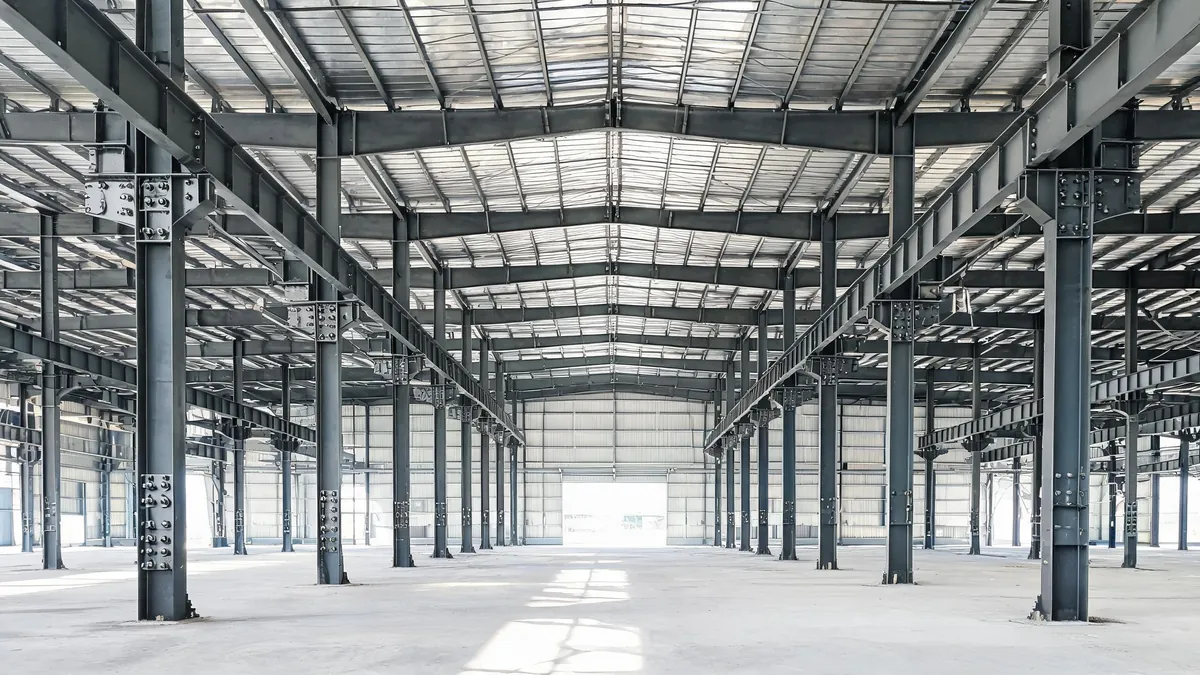
Hot rolled steel framing is priced by weight, and the weight is only part of the story. Between the day you ask for a price and the day the last beam lands on site, six things move the number: the mill material price and the date it locks, the section and grade mix your design needs, fabrication labour, surface preparation, packing and freight, and the commercial terms printed at the bottom of the quote. A frame that looks expensive on one line is often cheaper on the next, and the only way to see that is to read the quote as a set of cost drivers rather than one lump sum.
This guide breaks down each driver in the order it acts on your project, shows which ones you can influence before the design is frozen, and gives you a normalisation method so two quotes for the same frame can actually be compared.
Why hot rolled framing is priced by weight, not building area
Rolled sections are sold by mass per metre. A UB, UC, IPE or H-section of a given size has a fixed kilograms-per-metre figure published by the mill or by any national steel table. Your frame is a list of those sections, each with a cut length and a quantity, plus welded plates and cleats. Add it up and you have the theoretical weight; add fabrication, coating and margin and you have the price.
Building area enters the calculation only indirectly. Two warehouses of identical floor area can differ substantially in frame weight because their spans, bay spacings, eave heights, load cases and roof geometry differ. This is why a framing quote expressed only as “per square metre” tells you nothing about whether it is competitive — and why suppliers who quote per square metre without publishing the member schedule are usually guessing at the load case.
The corollary is useful in negotiation: frame price moves when the quantity of steel moves. Anything that reduces member sizes or member counts without weakening the building moves the price in your favour, and every one of those levers sits on the buyer’s side of the table.
Cost driver 1: mill material price and the date it locks
Hot rolled sections begin as steel produced to a mill order, and the mill price at that moment is the single largest block of material cost. How that price reaches your quote depends on when the supplier buys. A fabricator buying sections for confirmed projects passes through the price of the day, wins or loses on the spread, and prices accordingly. A fabricator buying ahead against stock may quote from inventory, which can be cheaper but also means your sections may not match a specific heat number you later want certificates for.
Three practical consequences follow. First, a quote issued today and a quote issued six weeks from now are not the same offer, even from the same factory, because the underlying material input has moved. Second, the validity window in the quote is a cost driver, not a formality — a supplier offering an unusually long validity has either hedged the risk into the price or is prepared to pass a rise through on a variation. Third, the moment you accept the quote is the moment the material position usually locks, so the sequence of approval, drawing and purchase order matters more than most buyers expect.
| Timing question | What it changes | What to ask for in writing |
|---|---|---|
| When is the material secured? | Whether you are priced on the mill price of the enquiry date or the order date | Confirmation of when sections are purchased against your project |
| How long does the price hold? | Whether a rise between quote and order becomes your cost | The validity date, and the wording that governs any change after it |
| Is any escalation clause included? | How a rise is shared between buyer and supplier after order | The index or evidence that triggers an adjustment, and any cap |
| Are mill certificates traceable to your project? | Traceability for inspection, insurance and local approvals | Whether certificates will match heat numbers on delivered material |
Our earlier guide to quote validity and revisions covers the drafting points in more depth, and it is worth reading before you accept any framing offer with a validity window shorter than your own approval process.
Cost driver 2: section and grade mix
Weight follows section size; price follows the combination of sections and steel grade. A heavy section costs more per metre than a light one of the same family, and a higher-strength grade costs more per tonne than a standard structural grade — but it may allow lighter members for the same load, which is where the trade-off lives.
| Member role | Typical section family | Cost consequence |
|---|---|---|
| Portal columns and rafters | Welded or rolled I-sections, sometimes tapered plate girders | Largest single weight block; span and load case dominate size |
| Bracing and tie members | Angles, flats, rounds, hollow sections | Small weight but labour-intensive ends and connections |
| Purlins and side rails | Cold formed C or Z profiles, or hot rolled angles in heavy-duty designs | Spacing decision shifts cost between secondary steel and cladding |
| Crane runway beams | Heavy rolled sections or welded plate girders | Adds weight and tight tolerances; usually the most expensive secondary item |
| Connection plates and cleats | Plate cut and drilled to detail | Counted in fabricated weight; a design with fewer, simpler details costs less |
Grade selection deserves its own conversation. Standard structural grades used in export projects, such as Q235B, Q355B and S355, differ in specified yield strength, which lets a designer use lighter members where the governing load allows. Moving up a grade increases material cost per tonne and sometimes complicates welding procedure qualification, so the question is never “is the stronger steel better” but “does the lighter member this allows come out cheaper overall”. Our comparison of Q235B, Q355B and S355 sets out where each grade earns its keep.
There is a documentation dimension too. If your local authority, insurer or third-party inspector requires certificates for a specific grade, substituting a similar grade later is not a cost saving — it is a compliance problem. Specify the grade, and require the mill certificates to match the delivered heat numbers.
Cost driver 3: fabrication labour
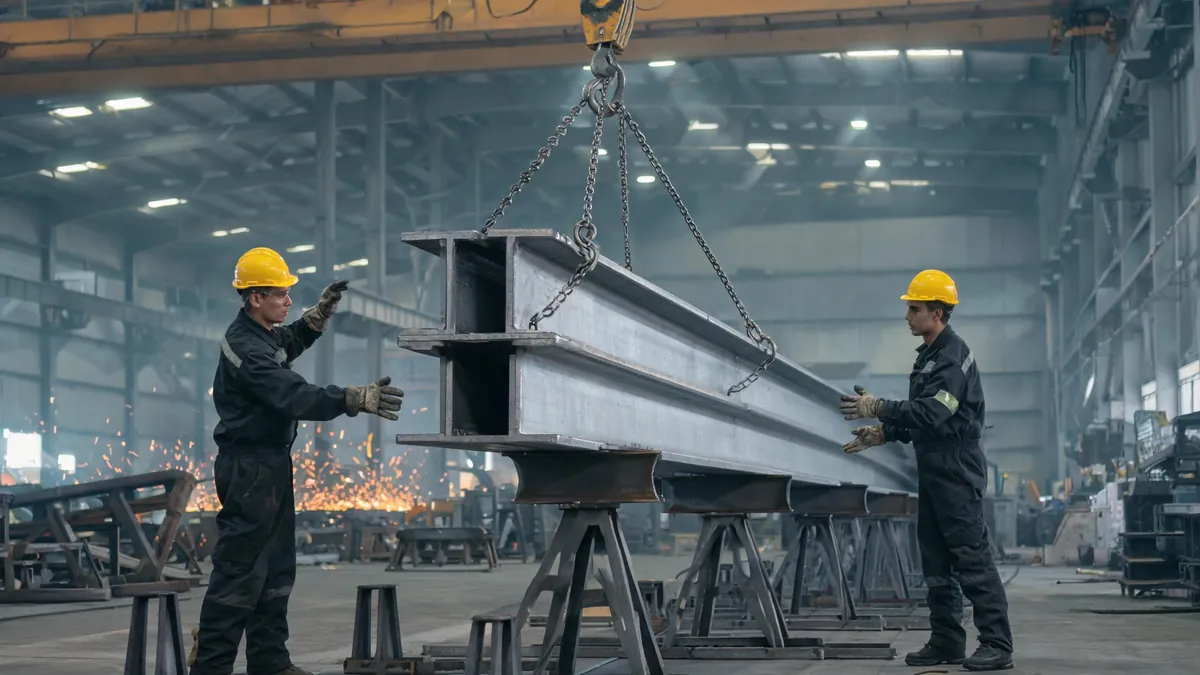
Two fabricators can buy the same sections at the same price and quote different rates per tonne. The gap is labour: how many cuts, holes, welds and trial assemblies the design demands, and how efficiently the shop sequences them. Labour is where a well-detailed drawing set quietly pays for itself and a complex one quietly costs you.
| Shop activity | Driven by | How to reduce the cost without losing quality |
|---|---|---|
| Cutting and coping | Number of unique member lengths and end preparations | Standardise lengths and repeat frame types across bays where the design allows |
| Drilling and punching | Hole counts, bolt grades and whether plates are CNC-processed or hand-marked | Standardise connection details so the same setting is reused |
| Welding | Weld volume, access, and whether procedure qualification is required | Choose details a welder can reach in position; specify weld class rather than over-specifying |
| Straightening and dimensional control | Tolerance requirements, distortion from heavy welding | Keep distortion-prone details to a minimum; agree tolerances up front |
| Trial assembly | Whether frames are pre-assembled before shipment | Trial assemble only where fit-up risk justifies it; document what was checked |
Buyers can influence this line more than they usually realise. Every additional custom detail, every “just in case” plate and every late change to a connection detail adds shop hours. Standardising bay types, keeping the number of distinct member lengths low and freezing the design before fabrication starts are the three levers with the largest effect.
Does a lower price per tonne mean a cheaper frame?
Not necessarily. A lower rate per tonne applied to a heavier, less efficient design can cost more than a higher rate on an optimised frame. Compare rate per tonne for sanity, then compare total tonnage and the inclusion list — bracing, purlins, plates, bolts and documentation — before deciding which quote is cheaper. A rate is a component of price, not the price itself.
Cost driver 4: surface preparation and coating
Coating is priced by surface area and by system, and both are easy to under-specify at enquiry stage. A single-coat shop primer behaves very differently from a multi-coat system with a defined dry film thickness, and a hot dip galvanised frame behaves differently again — in cost and in service life. The relevant question is not which system is best in the abstract but whether the system matches the corrosion environment the building will actually live in.
| Option | Generally best suited to | Cost and logistics implications |
|---|---|---|
| Shop primer only | Dry inland sites with a subsequent topcoat applied locally | Lowest initial cost; relies on site coating quality and access |
| Multi-coat paint system to a specified dry film thickness | Most industrial and coastal-adjacent sites | Cost scales with surface area and number of coats; needs inspection records |
| Hot dip galvanising | Humid, coastal or chemically exposed environments | Higher cost and needs bath size limits considered at design stage; very long maintenance interval |
| Galvanised plus topcoat (duplex) | Severe environments and long design life targets | Highest initial cost, lowest whole-life repaint cost |
| Fire protection applied on site | Where local fire approvals require rated members | Almost always a separate local contract; keep it out of the framing comparison |
Two decisions belong here and cost nothing to make early. First, agree the surface preparation standard, because blasting and priming requirements are quoted differently by every supplier. Second, decide whether damaged coating in transit will be touched up at the factory with the same system or repaired on site with whatever is available — that single sentence in the purchase order protects years of service life.
Cost driver 5: packing, container loading and freight terms
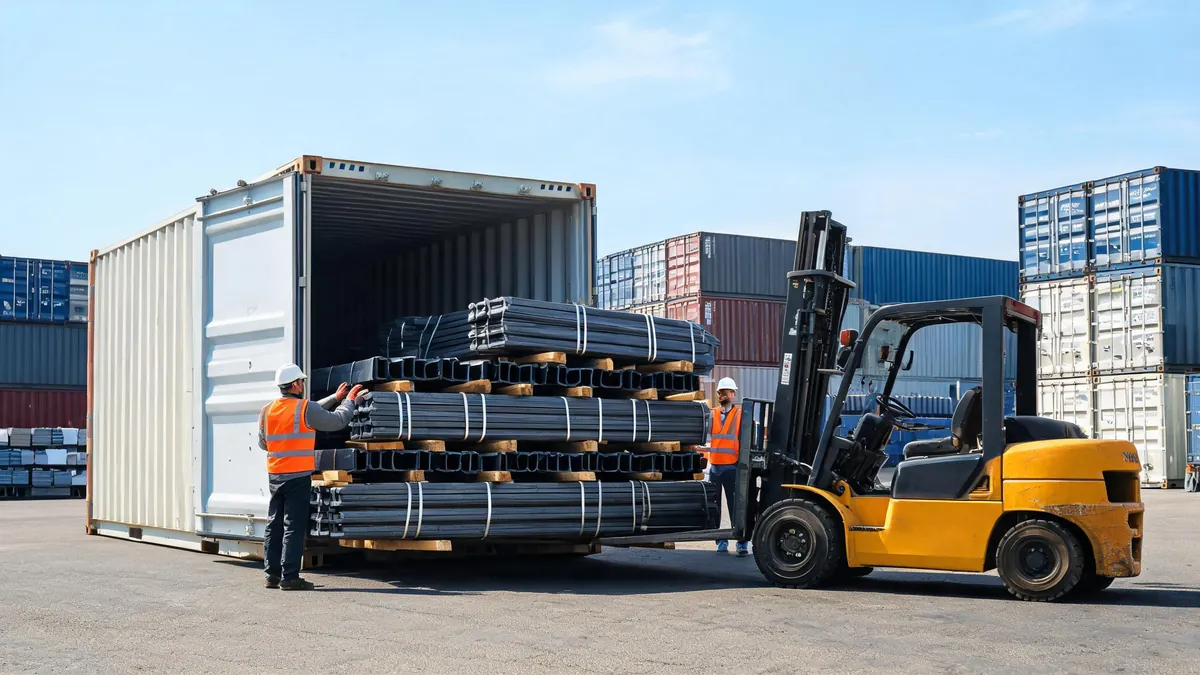
Hot rolled sections are dense. A container fills by weight long before it fills by volume, which means the container count for your frame is driven by tonnage and by how cleverly the packing plan nests members, purlins and plates together. Loose loading wastes slots; a packing plan that bundles by frame and marks every member saves both freight and site time.
| Packing decision | Effect on framing cost | What to require |
|---|---|---|
| Bundle by frame or by section type | Bundling by frame reduces site sorting but can waste container volume | Agree the principle in the purchase order and require a packing list matching it |
| Member marking | Clear marks cut erection time; poor marks create site rework | Marking scheme tied to the erection drawings |
| Protection of painted or galvanised surfaces | Reduces touch-up cost after transit | Specify separators and edge protection between bundles |
| Loose plates, bolts and small parts | Volume risk and loss risk | Boxed, counted and listed against the packing list |
| Loading supervision | Determines whether the plan survives contact with the port | Photographs of each container as loaded, sent before departure |
Freight terms belong on this line too. FOB and CFR transfer different responsibilities, and a delivered price quietly includes assumptions about port, duty and inland transport that may not match your project. Our guides to how a steel building is shipped overseas and to freight cost drivers cover the terms and the weight-versus-volume mechanics in detail.
Cost driver 6: commercial terms that change the total
The last driver is the set of conditions around the price rather than the price itself. Payment milestones change the financing cost you carry. Currency determines whether your cost moves with the exchange rate. Lead time determines whether you pay for expediting or for storage. Warranty wording determines who pays for a coating defect eighteen months from now.
| Term | How it changes the effective cost | Reasonable position for a buyer |
|---|---|---|
| Payment milestones | Large deposits transfer working capital to the supplier and increase your risk if delivery slips | Milestones tied to verifiable events: order, drawing approval, pre-shipment inspection, shipment |
| Currency | Quoting in a third currency adds exchange risk to your budget | Quote in the currency you must pay in, or agree who absorbs movement |
| Lead time and expediting | Compressed schedules usually carry a premium and raise defect risk | Agree a realistic fabrication window and tie it to the drawing approval date |
| Warranty and rectification | Determines the cost of a defect after handover | Written response times, and clarity on whether parts or labour are covered |
| Inspection and documentation | Third-party inspection and certificate packs are real cost items | Decide the scope of inspection before the price is closed, not after |
None of these terms is exotic, and none of them needs to be adversarial. They simply need to be visible at the comparison stage, because a two percent difference in headline price is easily reversed by a payment schedule that leaves you financing the whole fabrication.
What an ex-works framing price leaves out
A framing quotation is usually a supply price, and the gap between that price and the money that actually leaves your account is filled by items that never appear on it. Listing them before you compare quotes protects you from the most common budgeting failure on steel projects: approving a supply price and discovering the project total later.
| Item outside the framing price | Why it exists | How to budget it |
|---|---|---|
| Foundation and anchor bolt installation | The frame needs a surveyed concrete base before erection starts | Price the civil works separately and require setting-out drawings from the supplier |
| Inland transport and offloading at site | Export quotes usually end at a named port, not at your site gate | Get two or three local transport quotes before you commit to a delivery date |
| Erection labour and craneage | Framing is supplied as components, not as a standing building | Ask for supervision separately, and price the labour locally |
| Cladding, insulation and openings | Sometimes inside the steel package, sometimes a separate supply | Confirm which side owns each panel, trim and accessory |
| Fire protection and statutory approvals | Applied on site or enforced by the local authority | Identify the requirement at design stage so it can influence member selection |
| Site facilities and temporary works | Crew welfare, storage, security and access scaffolding | Treat as a project line, not a rounding error |
The size of this excluded block varies with the delivery basis. A framing quote that ends at your site gate with duties paid leaves fewer gaps than an ex-works price, but it also hides the assumptions made about ports, routes and formalities. Neither is wrong — what matters is that the boundary is named in writing before the comparison begins.
Does the cheapest framing quote always exclude the most?
Frequently, yes — not as a trick, but because a supply price naturally contains fewer items than a delivered-and-erected price. Two quotes at different scopes are not competing offers, so the first task is to align the boundary. Add the missing items to whichever quote omits them, using your own local costs, and only then compare the totals.
How to compare two hot rolled framing quotes
Put the two quotes side by side and rewrite both into the same seven rows. Where a row cannot be filled from the quote, that is a question for the supplier, not a gap to be estimated on their behalf.
| Row | What to write in both columns |
|---|---|
| Design basis | Code, loads, span, bay spacing, eave height, roof pitch |
| Fabricated weight | Tonnes, and whether bracing, purlins, plates and bolts are inside it |
| Section and grade list | Member schedule with sections and grades actually offered |
| Coating system | Preparation standard, system, dry film thickness, touch-up provisions |
| Packing and freight basis | Container count, packing principle, incoterm, named port |
| Documentation | Drawings, certificates, packing list, installation manual, inspection records |
| Commercial terms | Currency, milestones, validity, escalation, warranty, lead time |
Then apply the test that catches most of the problems: ask each supplier to send the member schedule and design basis behind the weight they quoted. If both can, you are comparing two engineered offers and the cheap one is genuinely cheap. If only one can, you already know where the uncertainty lives.
Common mistakes when buying hot rolled framing
- Comparing rates instead of totals. A low rate per tonne on a heavier frame can cost more than a higher rate on an efficient one.
- Ignoring the inclusion list. Bracing, purlins, plates, bolts, fasteners and the documentation set are commonly excluded from a headline framing rate.
- Treating validity as boilerplate. Short validity means the material price is genuinely open; long validity usually means a risk premium is already inside the number.
- Changing details during fabrication. Every change after cutting starts adds shop hours and often delays the whole shipment.
- Specifying galvanising after the design is fixed. Bath size limits and detailing rules can force member changes, which is expensive at that stage.
- Leaving site-applied work out of the budget. Fire protection, foundation works and local erection labour are real costs that never appear on a framing quote.
When hot rolled framing is not the cheap answer
Hot rolled sections win where spans are long, loads are heavy or the building carries cranes, mezzanines or solar arrays. They are not automatically the economical choice for short-span sheds or lightly loaded structures, where cold formed profiles can carry the load with less steel and simpler handling. If your building is in that category, the honest comparison is a cold formed option priced on the same design basis — our comparison of cold formed versus hot rolled framing for prefab warehouses sets out where the boundary sits, and if you want the specification detail behind a hot rolled package our guide to hot rolled steel framing specification covers sections, grades and mill documentation.
Frequently Asked Questions: Hot Rolled Steel Framing Cost
What actually determines the price of hot rolled steel framing?
Fabricated weight is the base: the tonnes of sections, plates and cleats your design requires. On top of that sit the mill material price at the date it is secured, fabrication labour, surface preparation and coating, packing and freight, and the commercial terms. Weight explains most of the material cost; detailing and labour explain most of the difference between two suppliers quoting the same weight.
Is it cheaper to buy the steel and have it fabricated locally?
Sometimes, but the saving is often smaller than it looks. Local fabrication avoids freight on heavy sections and can reduce lead time, while factory fabrication usually delivers more consistent welding quality, documented inspection and connection detailing proven against the same drawings. Compare landed cost per delivered tonne, and include the cost of managing the interface between two suppliers.
How much does coating add to a framing package?
It scales with surface area and with the number of coats, so a heavier section list carries more coating cost even at the same rate per square metre. Hot dip galvanising costs more initially than a paint system and requires bath-size limits to be considered at design stage, but it typically extends the maintenance interval considerably in humid or coastal environments.
Why did my framing price change after the drawing approval?
Usually because something that was assumed at enquiry stage was confirmed differently in the drawing: a span changed, an opening moved, a crane load was added, or the cladding decision changed purlin spacing. Anything that changes member sizes or counts changes weight, and weight is the base of the price. Freezing the brief before design is the cheapest protection.
Can I get a firm price with a fixed validity?
Yes, if the design is defined and the validity window is realistic. Suppliers can hold a price when the member schedule is fixed and the delivery window is agreed. Very long validity on an undefined scope is the combination that tends to produce variations later, so fix the scope first and then negotiate the window.
Get a framing price with the schedule attached
Send your building dimensions, load requirements and site location. We will return a hot rolled framing quotation with the member schedule, design basis, coating specification, packing plan and container count shown separately, so the price can be checked line by line.
Request a hot rolled framing quote or review the steel structure workshop building range to see the standard spans and crane bay configurations we fabricate regularly.