
Steel Building Price in Saudi Arabia: SASO Certification, Payment Terms and Incoterms That Change the Quote

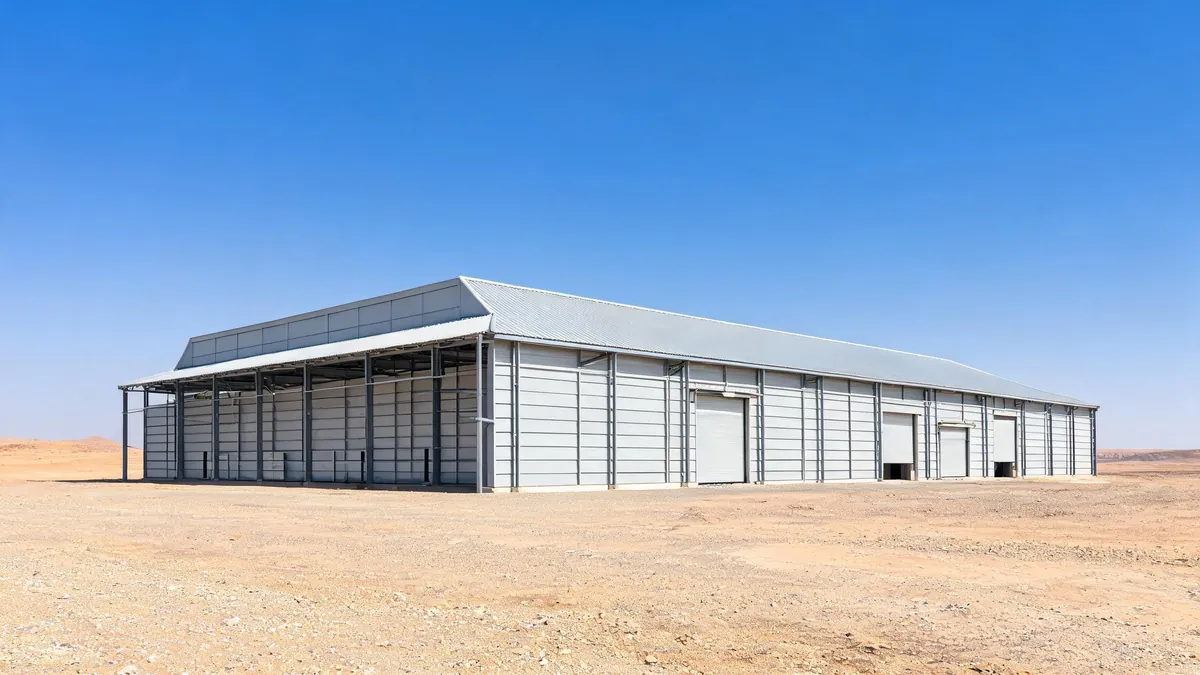
Two suppliers can quote the same steel building for a project in Saudi Arabia and land at numbers that differ by more than the steel itself. The gap usually comes from three line items that buyers overlook when comparing quotes: SASO certification and SABER registration, payment terms such as T/T versus L/C, and the incoterm — EXW, FOB, CFR, CIF or DDP. Understanding how each one moves the steel building price in Saudi Arabia is the difference between comparing apples to apples and approving a quote that doubles later. This guide breaks down each cost line, what to ask for, and how to build a realistic landed budget.
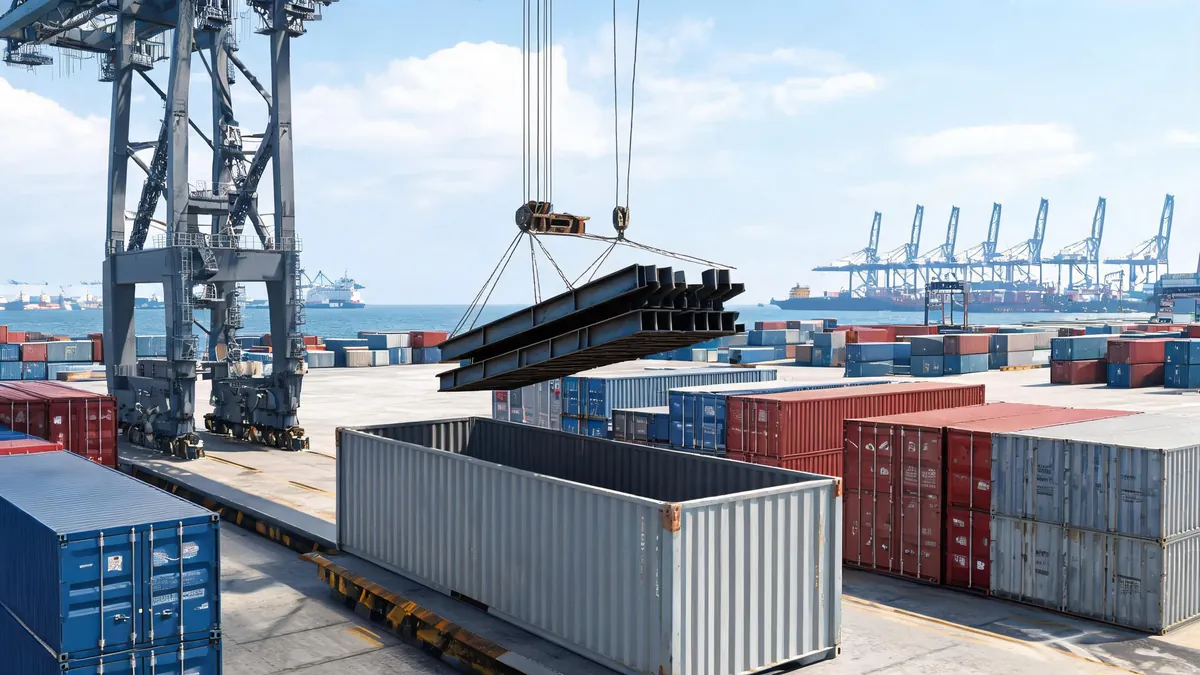
Why the Same Steel Building Can Cost Differently in Saudi Arabia
A steel building quotation for Riyadh, Jeddah or Dammam contains more than the fabricated frame. The final number is the sum of the ex-works price of the structure, the coating and cladding package, freight and insurance to a Saudi port, certification and customs clearance, inland delivery, and usually erection and site works. Two factories can quote identical frames and still differ by 10 to 20 percent or more once these surrounding lines are added — which is why comparing only the ex-works price is a common and expensive mistake.
For buyers in Saudi Arabia, three local realities make this worse. First, imports are processed through the SABER platform with conformity assessment requirements that vary by product and HS code. Second, the Kingdom is a large, fast-growing market for industrial steel buildings, so suppliers quote a wide range of commercial terms and not all of them include the same scope. Third, the climate — extreme heat, sandstorms and high humidity on the coast — pushes projects toward better insulation and coating systems, which change the price more than the frame weight alone.
The sections below walk through each cost driver in the order it appears in a real transaction, so you can mark up any quotation line by line.
SASO Certification and SABER Registration: What It Adds to the Price
Saudi Arabia’s conformity assessment system is built around the SABER platform, which electronic gates imports against the relevant technical regulations. Depending on the product classification, a steel building import may require a Product Certificate of Conformity (PCoC) issued by an approved conformity assessment body before shipment, followed by a Shipment Certificate of Conformity (SCoC) for each consignment. The exact requirements depend on the HS classification of the goods and the applicable technical regulation, so the first step on any project is to confirm which certificates apply — not to assume that steel structures are exempt or that every item follows the same rule.
What this means for your budget:
- Certification carries a cost. The conformity assessment body charges for product evaluation and certification, and the amount scales with the number of products, models and applicable regulations.
- There is also a time cost. Product registration must happen before the shipment is loaded, and SCoC issuance sits between load-out and customs clearance. Plan the schedule so certification work starts at the same time as production, not when the container is already at the port.
- Ask the supplier whether the quoted price includes certification. Some Chinese exporters include SASO/SABER fees and the work of their certification partner; others quote ex-works and leave the whole import-side process to you or your customs broker. This single line can change a comparison by more than the freight difference between two suppliers.
- Verify who holds the product certificate. A certificate in the name of a trading company or an unrelated brand may not cover the actual manufacturer’s production. The technical file should reference the factory that will produce your frame.
Because regulations and HS classifications change, treat any fixed percentage you read online as a starting point and confirm the current requirements with your supplier and a Saudi customs broker before you commit to a budget.
Incoterms: What EXW, FOB, CFR, CIF and DDP Each Add to the Quote
The incoterm defines where the seller’s responsibility ends and which costs are inside the quoted price. On steel building imports, the same goods can be quoted at several different levels, and the difference is exactly the cost of freight, insurance and clearance. A table is the clearest way to compare them.
| Incoterm | Seller Covers | Buyer Pays Separately | Typical Use in Steel Building Imports |
|---|---|---|---|
| EXW (Ex Works) | Goods made available at the factory | All inland transport in China, export formalities, freight, insurance, import clearance, inland delivery in Saudi Arabia | Buyers with their own freight forwarder and China-side logistics |
| FOB (named Chinese port) | Delivery and loading onto the vessel at the port of shipment | Ocean freight, insurance, import clearance, Saudi inland delivery | The most common basis for comparing factory quotes |
| CFR (Cost and Freight) | Ocean freight to the Saudi port | Insurance, import clearance, Saudi inland delivery | Buyers who want freight included but arrange their own insurance |
| CIF (Cost, Insurance, Freight) | Freight plus marine insurance to the Saudi port | Import clearance, port handling, Saudi inland delivery | Single-line freight-and-insurance pricing |
| DDP (Delivered Duty Paid) | Everything up to delivery at an agreed Saudi location, including import duties and taxes where permitted | Usually erection and site works | Turnkey procurement where the buyer wants one price and minimal import administration |
The practical rule: when you compare two suppliers, put both on the same incoterm first. A quote at FOB and a quote at DDP to Riyadh will look different even when the factory price is identical, and the difference is not a supplier discount — it is the logistics scope. Our general guide on shipping steel buildings overseas with the right incoterm explains the freight and insurance mechanics in more detail.
For a steel structure, freight deserves special attention because the cargo is a mix of heavy long members and bulkier cladding panels. A 40-foot container of frame members and a break-bulk shipment of long rafters follow different pricing rules. Ask the supplier for the cargo breakdown — number of containers, estimated volume and weight, and whether long members force break-bulk or split shipments — because this determines the freight line you are actually comparing.
Payment Terms: How T/T, L/C and Milestones Change the Quoted Price
Payment terms affect price because they change the supplier’s risk and financing cost. A quotation is not just a price for steel; it is a price for steel plus the commercial risk the seller carries until they are paid.
Common structures for steel building exports to Saudi Arabia include:
- T/T with deposit and milestones: typically a deposit at order (often 30 percent), a progress payment during fabrication (often 40 percent), and the balance before shipment (often 30 percent). The balance-before-shipment structure gives the supplier cash before the cargo leaves, which usually produces the lowest quoted price.
- T/T with a longer payment tail, such as a balance after delivery or after erection: the supplier carries working capital for longer and typically prices that risk into the quote.
- L/C at sight: the bank adds confirmation, documentation and interest costs, and the supplier prices for the additional banking complexity. L/C is common for larger or first-time transactions where trust is still being built.
When comparing quotes, write down the payment schedule next to each price. A quote that is three percent lower with a 30/40/30 T/T schedule may actually be more expensive than a quote with the same price and a deposit-only-plus-balance-on-documents schedule, once you account for the timing of your cash and the supplier’s risk premium. The milestone logic also protects you: tying payments to document delivery — approved drawings, mill test certificates, NDT reports, packing list — keeps the supplier motivated to produce the evidence you need for customs and for your own quality review. Our steel building payment terms guide covers T/T, L/C and incoterm combinations in depth.
Two Saudi-specific points are worth raising with your supplier. First, bank charges for L/Cs to Saudi banks can add up; ask the supplier to itemize banking fees so you can compare them across quotes. Second, some buyers in the region prefer to pay a portion after the goods clear customs, which effectively shifts the import risk to the supplier — expect that preference to be reflected in the price.
Other Cost Lines That Move the Quote: Port, Customs, Inland Delivery and Climate
Once the cargo reaches Dammam, Jeddah or Jeddah Islamic Port, more costs appear before the frame reaches your site.
- Port handling and terminal charges at the Saudi port, including demurrage and detention risk if documents are late.
- Import duty and VAT, which apply according to the current tariff classification and rates. Rates change, so confirm them for your HS code at the time of your project rather than relying on an old figure.
- Inland transport from the port to the site. Saudi Arabia is a large country; delivery to Riyadh from Dammam is not the same cost as delivery within Dammam’s industrial area. Ask for a delivery quotation with the site location named.
- Climate-driven specification: for most Saudi projects you will want insulated sandwich panels rather than single-skin cladding, higher-grade coating systems for desert and coastal corrosion, and ventilation or insulation packages for heat control. These choices move the price more than the frame itself, which is why a bare structural quote is never the real budget.
- Erection and site works: crane hire, bolting crews, foundation work and supervision. Whether the supplier provides erection support or you use a local contractor changes both the total and the risk allocation.
For a fuller picture of the regional specification choices and their budget impact, our guide to prefab steel warehouses in Saudi Arabia covers design loads, coatings and procurement from the design side, and the Saudi steel warehouse procurement guide walks through the buying process for warehouses in the Kingdom.
Desert Climate Specification: Where the Real Budget Goes
In Saudi Arabia the specification choices are often a bigger price driver than the frame itself, because the climate punishes underspecified buildings with high running costs. When you build the budget, compare these options side by side.
| Building Element | Budget Baseline | Recommended for Saudi Sites | Budget Impact |
|---|---|---|---|
| Cladding | Single-skin profiled sheet | Insulated sandwich panels (typical thicknesses 50–100 mm depending on cooling needs) | Moderate to high increase in material cost, offset by lower cooling load |
| Coating system | Standard shop primer and topcoat | Higher-grade anti-corrosion system; coastal sites (Jeddah, Jubail, Dammam) need stronger protection than inland Riyadh | Moderate increase; corrosion protection is a lifecycle cost saver |
| Roof ventilation | None or basic | Ridge ventilators or louvred wall openings matched to the building use | Low to moderate; directly affects internal temperatures |
| Roof and wall insulation value | Minimum | Matched to the cooling strategy and local energy costs | Driven by panel thickness and specification |
| Doors and openings | Standard roll-up doors | Insulated doors where the building is air-conditioned or used for storage of heat-sensitive goods | Low to moderate per opening |
The right way to decide is to model the building’s use: what is stored or manufactured inside, what temperature is acceptable, and what the local electricity cost is over ten years. A building that saves a little on cladding but costs much more to cool every year is not a saving at all.
Erection, Approvals and the Saudi Project Schedule
The delivered price is only part of the project. The schedule is where steel building projects in Saudi Arabia most often slip, and schedule slippage is a cost in its own right.
| Project Phase | What Happens | Cost and Time Drivers |
|---|---|---|
| Design and drawings | Structural design to local loads, shop drawings, approval | Design iterations, load data for the site, approval cycles |
| Certification and registration | Product conformity assessment, SABER registration before shipment | Number of products, conformity body workload |
| Fabrication | Cutting, welding, drilling, coating, QC and NDT | Frame complexity, steel availability, inspection hold points |
| Shipping | Container or break-bulk to Dammam/Jeddah, customs clearance | Port, container count, document accuracy, demurrage risk |
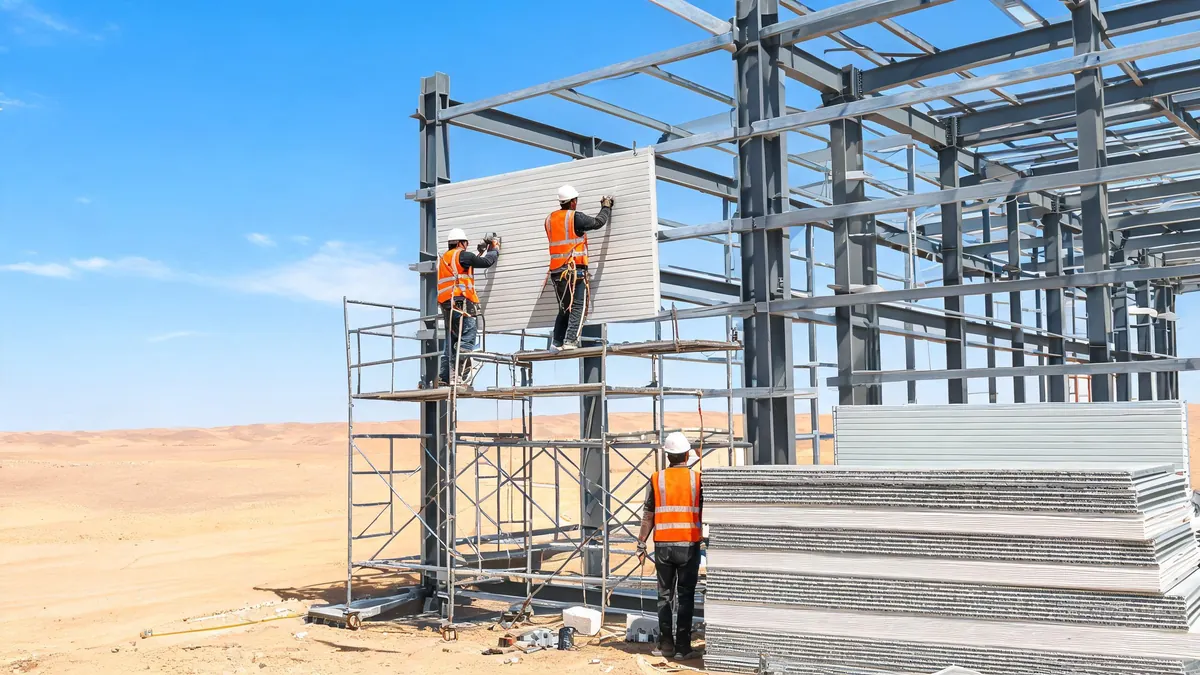
| Erection | Crane, crews, bolting, cladding installation | Crew size, crane availability, weather windows, site access |
| Handover | Final inspection, snag list, documentation pack | Coordination between supplier support and local contractor |
Ask the supplier for a phase-level timeline with named dates, not a single “lead time” number. The question that matters is not only when the frame is ready, but when the certificates will be issued, when the vessel sails, and when the erection crew can start. A supplier who cannot sequence these steps on paper will struggle to sequence them on your site.
How to Compare Saudi Steel Building Quotes Apples-to-Apples
Use a comparison table with a fixed scope before you receive the quotes. A scope matrix forces every supplier to quote the same building and makes the price differences meaningful.
| Scope Line | What to Standardize Across Quotes | Why It Matters |
|---|---|---|
| Building size and use | Same footprint, clear height, bay layout, door openings | Frame weight and steel tonnage scale with these |
| Design code and loads | Same wind, sand and seismic loads for the site region | Heavier loads mean heavier members and higher price |
| Frame specification | Steel grade, connection type, coating system, bolt spec | Coating and steel grade are major price drivers |
| Cladding package | Sandwich panel thickness and skin material, or single-skin gauge | Cladding is often 20–35% of a building’s material cost |
| Accessories | Doors, windows, louvres, gutters, downpipes, flashing | Small items add up and are the easiest place to hide scope gaps |
| Incoterm | Same incoterm for all suppliers | Otherwise you are comparing different logistics scopes |
| Certification | SASO/SABER included or excluded, named explicitly | One of the largest hidden line items for Saudi imports |
| Documentation | MTCs, NDT reports, load-out photos, packing list | Required for your quality review and customs |
| Erection support | Included, optional, or excluded | Changes the total and your project risk |
When the matrix is filled, the remaining price difference is the real commercial difference between suppliers — not the noise from different scopes. A supplier whose quote is lower but excludes certification, freight or cladding is not cheaper; it is incomplete.
What a Realistic Budget Structure Looks Like
No two projects are identical, and exact percentages depend on your building and site. But a rough budget structure helps you sanity-check any quotation before you get deep into negotiations. For a typical export steel warehouse to Saudi Arabia, the delivered cost usually splits roughly as:
- Frame and fabrication (steel, processing, welding, shop primer): often the largest single share.
- Cladding and insulation package: usually a substantial share of the material cost, driven by sandwich panel selection.
- Freight, insurance and inland delivery: variable with port, container count and site distance.
- Certification, customs and import duties: depends on HS classification, rates and whether the supplier includes them.
- Erection, foundations and site works: when in scope, typically a large share of the total project cost.
Treat any single percentage you see in an article or blog as a planning hint, not a quotation. The reliable path is the scope matrix above: lock the building specification, then ask every supplier for the same line items.
Common Mistakes Buyers Make With Saudi Steel Building Quotes
- Comparing FOB quotes from one supplier against DDP quotes from another without normalizing the incoterm.
- Assuming SASO/SABER certification is included because the supplier “handles exports to the Middle East.” Certification scope must be written in the quotation.
- Choosing the lowest ex-works price and discovering freight, certification and inland delivery add more than the difference.
- Ignoring the payment schedule when comparing prices, so the cheaper-looking quote actually costs more in financing and risk.
- Budgeting with an old duty rate or an assumed exemption for steel structures without confirming the current classification.
- Specifying single-skin cladding to save money in a climate where insulated panels are necessary, then paying more to fix the mistake on site.
FAQ
Do steel buildings imported into Saudi Arabia need SASO certification? Imports into Saudi Arabia are processed through the SABER platform, and the certificates required depend on the product classification and the applicable technical regulation for the HS code. Confirm the exact requirement with your supplier and a Saudi customs broker before production, because the certification timeline must fit the shipping schedule.
Which incoterm is best for a steel building project in Saudi Arabia? If you want the simplest comparison and one accountable supplier, DDP to your site gives a single landed price, though it includes the supplier’s risk premium. If you have your own logistics partners, FOB or CFR lets you control freight and insurance costs directly. Use the same incoterm for every supplier you compare.
How much does certification add to a steel building quote for Saudi Arabia? The certification cost depends on the number of products, the conformity assessment body and the applicable regulations, and it can be a meaningful line item when freight and duties are already included. Ask each supplier to itemize certification separately so you can compare it like any other cost line.
Should I pay the balance before shipment or after delivery? A balance before shipment is normal in export steel building trade and usually produces the lowest price, but protect yourself by tying the payment to document delivery — approved drawings, mill test certificates, NDT reports, packing list and load-out photos. If the supplier accepts a payment tail, expect the price to rise to cover their risk.
Why is the same building quoted differently by two Chinese suppliers for Riyadh? The usual reasons are scope (cladding, accessories, certification), incoterm (freight and insurance inside or outside the price), payment terms (risk premium), and specification (coating system, insulation, steel grade). A scope matrix that standardizes these lines turns the price difference into a real comparison.
Final Recommendation
Build the budget in layers: frame and cladding specification, then freight and insurance, then certification and customs, then inland delivery and erection. Put every supplier on the same incoterm, the same payment schedule and the same scope matrix, and ask each one to itemize certification and banking fees. The supplier who can explain every line in your budget is the one you can plan a project around; the supplier who only answers with a total price will cost you surprises.
Planning a steel warehouse, workshop or industrial building in Saudi Arabia? Send us your project brief — floor size, clear height, site city, crane or mezzanine requirements, and your target timeline. We will confirm the certification scope, the coating and insulation package for your climate, and a quotation with the freight, payment and delivery terms written out line by line. Start with the prefab steel warehouse page to see the scope we cover, or contact us directly with your drawings and site data.