Steel Building MOQ: How Suppliers Set Minimum Orders for Frames, Panels and Accessories

Yes, you can order a single steel building — most steel structure suppliers accept one-building orders for warehouses, workshops, and agricultural buildings. But the practical minimum order (MOQ) question is not about the number of buildings; it is about how the order fills a container and how the factory batches its production. This guide explains how steel building suppliers actually set minimum orders, what changes the price when your project is small, and how to structure a small order so it does not cost you twice.
What “MOQ” really means for steel buildings
In consumer goods, MOQ is a quantity of identical products. In steel structures, an order is usually one building or a small number of buildings, and the “minimum” is set by three constraints: steel procurement, container loading, and production efficiency.
Steel is bought by the mill in set sizes, and a factory that cuts and fabricates a very small frame uses the same setup time as a larger one — so the cost per ton is higher. Shipping is priced by container: a building that fills 80 percent of a 40-foot container still pays for the full container. And production lines run in batches: stopping a line for a small order costs the factory money, so small orders carry a higher overhead share. These three forces are why a smaller building costs more per square meter than a bigger one, and why suppliers quote MOQs in terms of tonnage, container space, or a minimum project value.
How suppliers set the minimum order
| MOQ basis | Typical trigger | What it means for you |
|---|---|---|
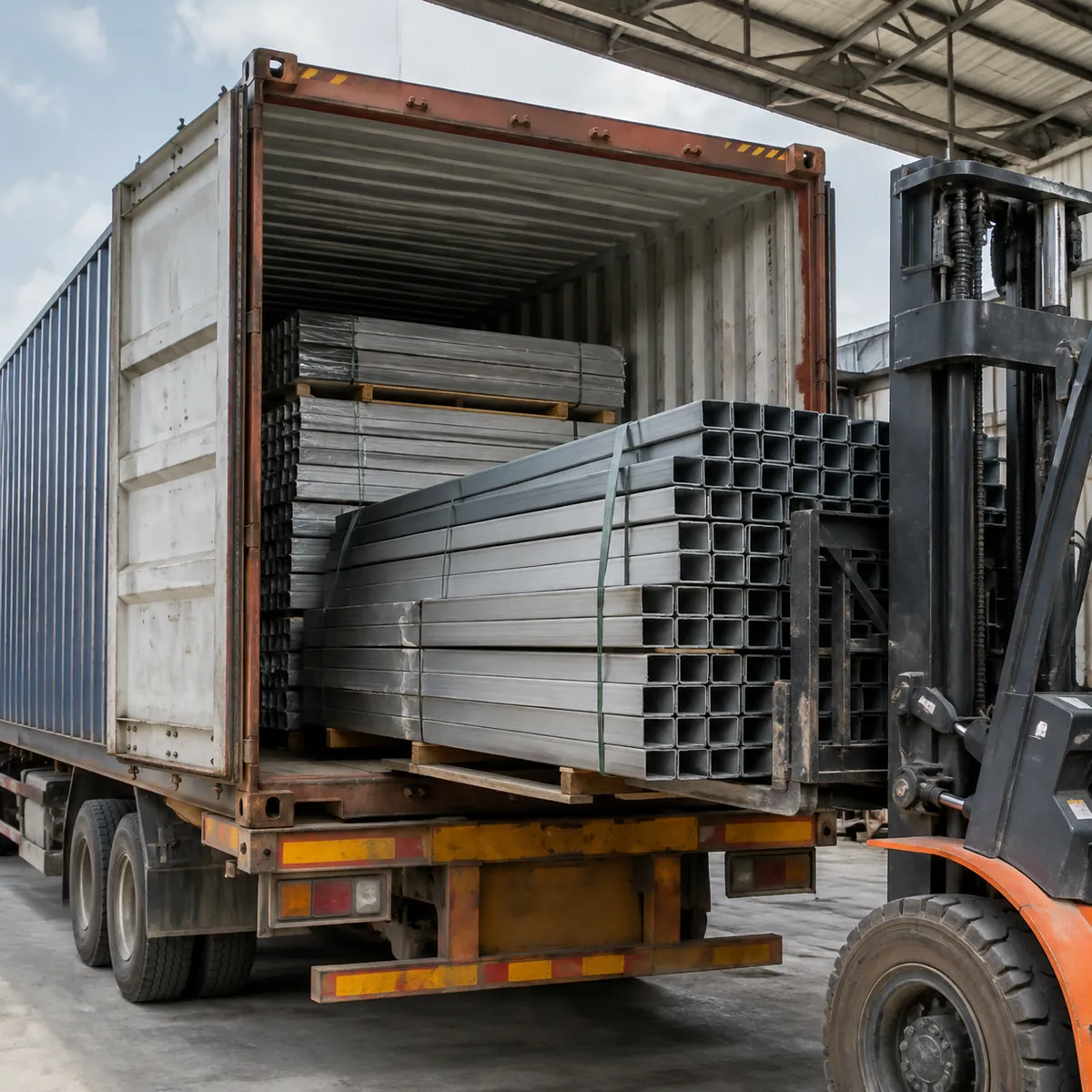
| Container loading | Frames + cladding sized to a 20ft or 40ft container | Your building should be designed to pack efficiently; leftover space is paid for anyway |
| Steel tonnage | Factory minimum fabrication batch (for example, a few tons of main steel) | Very small frames may hit a tonnage floor; the price per ton rises |
| Project value | Supplier minimum order value for export paperwork | Below a certain order value, export documentation is not worth the supplier’s time |
| Panel production | Cladding panel minimum run | Custom panel lengths are cut to order; short runs carry a setup cost |
Ask the supplier directly: “What is the minimum order for a building of this size?” The answer usually comes back as a tonnage, a container count, or a value — and it varies by supplier. Comparing these answers tells you which factories are set up to serve small projects and which are geared to bulk orders.
Ordering a single small warehouse or workshop
A single small building — for example a 300 to 800 square meter prefab steel warehouse or workshop — is a normal order for export-oriented suppliers. The practical path is:
- Design the building to fit the container: span, length, and eave height are flexible, and a supplier experienced with export can adjust the design so the frame and panels pack tightly.
- Group your accessories: doors, windows, gutters, and fasteners ride in the same container, so include everything you need for the envelope in one order.
- Consider adding a second structure later: some buyers order one building now and plan a second identical bay later. Tell the supplier this — they can design for future extension, which saves money on the second phase.
- If your project is genuinely below the supplier’s minimum, ask whether they can combine it with another order in production or ship it consolidated with other cargo.
Quick question: Can I order just the steel frame without cladding?
Usually yes — many buyers supply cladding locally to save cost or to match a local material standard. The frame-only order still needs to be designed for the cladding weight and wind loads, so tell the supplier what cladding you plan to use.
Why the price per square meter rises on small orders
Fixed costs are spread over less area: design and drawing work, export paperwork, container freight, and setup time. A 500 square meter industrial steel building will carry a higher cost per square meter than a 5,000 square meter one even from the same factory with the same spec. Do not treat the higher unit price as a bad quote — it reflects real fixed costs. The question is whether the supplier is transparent about them: a good supplier breaks the quote into frame, cladding, accessories, and freight so you can see where the cost concentrates and what you can trim.
Sample orders and prototypes
Some buyers want a sample before a full order. For steel buildings, a physical sample is usually impractical — the product is a building. Instead, suppliers offer design-stage samples: a drawing package, a structural calculation summary, a material sample (a piece of cladding, a bolt and washer set, a paint sample), or a small fabricated component such as a truss node or a base plate. Ask for these before ordering; they verify the engineering and the finish without the cost of a full prototype.
If the supplier offers a “sample order” at a small scale, read the terms carefully: it is normally a full small building at a higher unit price, not a prototype discount. That can be a good way to test a supplier on a real project — for example a small storage shed — before committing to the main building.
How to reduce the cost of a small order
- Standardize: use the supplier’s standard spans, eave heights, and panel widths. Custom dimensions raise design and fabrication cost on any order size.
- Bundle the envelope: order frame, cladding, trim, fasteners, and doors together so the container is full and the paperwork is one shipment.
- Plan for expansion: design the first building with an end wall that can be removed, so the second phase connects without rework.
- Compare MOQ policies: a supplier whose minimum is a half-container of frame steel is a better fit for small projects than one that batches by the full production run.
- Ask about consolidation: if your building is small, a supplier that ships consolidated with other cargo can reduce your freight cost.
Worked example: sizing a small warehouse order to the container
Container logic is the easiest way to understand steel building MOQ. A typical small prefab warehouse is designed so its frame members, cladding panels, and accessories pack into one or two containers — usually 40-foot high-cube containers for the main volume.
Imagine a small workshop of about 400 square meters. The main frames are disassembled into columns, rafters, and base plates; purlins and girts are bundled; cladding panels are packed flat or in small stacks; and fasteners, bolts, and trims go into crates and boxes. A well-designed export building fits this packing pattern almost exactly, because the design team sizes members and panels with container dimensions in mind. The practical MOQ question is therefore: “How many containers does my building fill?” If the answer is one, you are at the natural minimum order for most suppliers.
If your building is slightly too large for one container and not large enough to justify two, the price per square meter rises — the freight is paid for two containers either way. That is a design input, not a penalty: a supplier who knows export packing can adjust the eave height, bay spacing, or panel lengths to fit the container better, sometimes without changing the usable space at all.
MOQ by building type
| Building type | Typical MOQ behavior | Practical minimum |
|---|---|---|
| Small warehouse / workshop | Container-driven; one 40ft container is a natural minimum | One building, ~300–800 sqm depending on design |
| Agricultural shed / equipment hall | Light frames, fewer panels; often packs below a full container | May need consolidated shipping or a small top-up order |
| Large warehouse / factory | Multi-container; tonnage-driven batching | Multiple containers; volume pricing applies |
| Multi-bay or multi-building program | Batch-friendly; best pricing per ton | Any number of bays, designed as one program |
Use the table as a guide, then confirm with the supplier. Their actual MOQ depends on their production schedule, steel procurement, and export paperwork minimums — and it changes over time with their order book.
What to send in the first inquiry
A complete first inquiry gets you a useful MOQ answer and an accurate quote faster. Include:
- Building dimensions: width, length, and eave height, or the usable area you need.
- Intended use and location, including wind and snow conditions if you know them.
- Cladding preference: single-skin sheet or insulated panels, and any thickness requirements.
- Doors, windows, and accessories needed for the envelope.
- Your design code or project standard, if you have one.
- Delivery destination, so the supplier can estimate freight and container count.
- Whether future expansion is planned — this changes the design and the second-phase cost.
With those details, a supplier can tell you the container count, the MOQ position, and the price per square meter in one response. With only “how much is a warehouse?”, you will get a range that means little.
When a higher MOQ is actually fine
A supplier with a high minimum order is not automatically a bad match. If the MOQ is high because the factory serves large projects efficiently, their per-ton pricing on a big order can be excellent — and if your project will grow, starting with a supplier geared to volume can pay off later. The problem is only when a high MOQ is combined with a small project and no path to grow. Before you disqualify a supplier, ask two questions: “Can you serve a project of my size, and at what unit price?” and “If I order a second building later, does the design connect cleanly?” The answers tell you whether the MOQ is a wall or just a doorway.
Reading a small-order price breakdown
When a supplier quotes a small order, the price breakdown tells you where the cost sits and what you can trim. Ask for the quotation split into four lines: the steel frame (usually the largest share), the cladding and accessories, the engineering and documentation, and the freight and packing. On a small order, the engineering and documentation line is proportionally large because the design, drawings, and export paperwork cost the same whether the building is 400 or 4,000 square meters.
Three practical trims follow from the breakdown. First, standardize the design — using the supplier’s standard spans and eave heights reduces the engineering line. Second, bundle the full envelope into one order so the documentation is one shipment, not several. Third, ask whether the freight line is based on your actual container count; a building redesigned to fit one 40-foot container instead of spilling into a second can cut the freight line sharply. None of these trims reduces the building’s quality — they reduce the fixed-cost share that small orders carry.
Designing for expansion: the second phase is cheaper
Many buyers order a small building first and plan a larger one later. Tell the supplier this in the inquiry, and the design can be prepared for expansion at almost no extra cost: an end wall designed to be removed, foundations placed so a future bay can connect, and bracing arranged so a future extension does not fight the existing frame. When the second phase comes, the supplier reuses the same drawings and the same production setup, which lowers the second building’s cost per square meter and shortens its lead time. Expansion-ready design is one of the highest-value free options in steel building procurement — it costs nothing at the first order and saves real money at the second.
Common small-order mistakes to avoid
- Choosing a custom span or eave height when a standard size would work — custom dimensions raise the engineering and fabrication cost.
- Ordering the frame only, then discovering the local cladding does not match the wind design — tell the supplier your cladding plan up front.
- Ignoring the container fit — a building that just misses one container pays for two.
- Skipping the material samples and drawing package, then being surprised by the finish or the connection details on delivery.
- Not planning the second phase — a later extension becomes a full redesign instead of a bolt-on bay.
- Accepting a “sample order” at a small scale without checking whether it is a discount or just a small building at a higher unit price.
Each mistake is avoidable with one question at the inquiry stage. The supplier’s answers will also show you which factories understand small projects — and those are the ones to keep on the shortlist.
Lead time expectations for small orders
A small order does not automatically mean a fast order — the factory’s production queue sets the pace. For a single small warehouse or workshop, a realistic expectation is a few weeks for design and drawing approval after the order is confirmed, then a fabrication window that depends on the factory’s current load, then loading and sea freight to your port. The drawing approval step is usually in the buyer’s control and is the most common source of delay: agree on the revision allowance and respond to drawing queries quickly, because every day of approval delay pushes fabrication back by a day.
Ask the supplier for the lead time split — design, material procurement, fabrication, loading — the same way you ask for the price split. A supplier that gives a clear split has a real production plan; a supplier that gives only a total lead time is quoting hope. If the schedule matters, ask which production slot your order would occupy and whether a deposit holds that slot. That question alone separates the organized factories from the rest.
Payment terms for small orders
Small orders follow the same payment logic as large ones, with less room for negotiation. Expect a deposit to confirm the order, a progress payment against a production milestone (drawing approval or fabrication start), and the balance against the shipping documents. For a small first order, some suppliers ask for a higher deposit because the order value is too small to carry much credit risk — that is normal, not a warning sign. What matters is that each payment is tied to a verifiable event, and that the final payment happens after a pre-shipment inspection if you booked one. On a small order, a full pre-shipment inspection may cost more than the value it protects, so many buyers rely on the drawing approval and the supplier’s QC records instead — but the milestone structure should still be written down.
Questions suppliers will ask you
A good supplier does not quote blind — they ask questions that make the quote accurate, and the questions themselves reveal how professional the factory is. Expect to answer: the exact building dimensions and the intended use; the site location and the wind and snow conditions; the cladding preference and any insulation requirement; the door, window, and accessory list; whether the steel will be designed to a specific code; the delivery destination and the port; and the planned schedule. A supplier that asks these questions is designing your building; a supplier that quotes from a price list without questions is quoting a guess. Answer promptly and completely — the quality of the quotation depends directly on the quality of the inquiry, and the same discipline that makes your inquiry clear will make the whole project smoother.
Small orders build supplier relationships
A small first order is often the beginning of a long relationship, and both sides know it. Suppliers treat a clean, well-specified small order as a test of a serious buyer: pay on the agreed milestones, respond to drawing queries on time, and inspect the shipment professionally, and the next order gets better pricing and priority in the production queue. Buyers who treat the small order as a throwaway negotiation get the same treatment back. Approach the first small building as the pilot project it is: document everything, verify everything, and use the experience to build the shortlist for the larger projects that usually follow.
The same logic applies to the inquiry itself. A supplier that receives a complete inquiry — dimensions, use, location, cladding preference, delivery port — can quote accurately in one round. A supplier that has to extract every detail by email is spending their engineering time on administration, and that cost shows up somewhere in the price. Good inquiries produce good quotes, and good quotes produce good buildings. It is one of the few places in procurement where spending fifteen minutes on your side saves both sides real money.
FAQ
Can I order just one steel building?
Yes. Single-building orders for warehouses, workshops, and agricultural buildings are standard for export-oriented steel structure suppliers. The unit price will be higher than a multi-building order because fixed costs are spread over less area.
What is the typical minimum order for a small warehouse?
Suppliers express MOQs in different ways — a minimum steel tonnage, a container count, or a minimum order value. Ask your supplier for their specific policy for your building size; a building that fits one 40ft container is a common practical minimum.
Do steel building suppliers accept sample orders?
Physical building samples are impractical, but suppliers commonly provide design-stage samples: drawing packages, calculation summaries, material samples, and small fabricated components. Some accept a small real building as a trial order, usually at a higher unit price.
Why is the price per square meter higher for a small building?
Design, export paperwork, container freight, and production setup are fixed costs. On a small building they are spread over less area, so the unit price rises. Compare quotes that break out frame, cladding, accessories, and freight to see where the cost sits.
How can I reduce MOQ cost on a small project?
Use standard spans and sizes, bundle the full envelope into one container, design for future extension, and choose a supplier whose MOQ policy fits small projects. Ask about consolidated shipping if your building does not fill a container.
Final recommendation
Treat MOQ as a design input, not an obstacle. Tell the supplier your building size and ask for their minimum order policy in the same message — then let the design adapt: standard sizes, a full-envelope order, and an expansion-ready end wall turn a “small order” into a normal one. A single steel warehouse is a realistic project at almost any budget level when the order is structured to fit the factory’s production and the container.
Ordering one prefab steel warehouse or workshop? Send your building size and location, and the supplier will confirm the minimum order policy and a design-based quotation for your project.