
Steel Building Price in Saudi Arabia: Comparing Factory Quotes on Tonnage, Coatings and Delivery

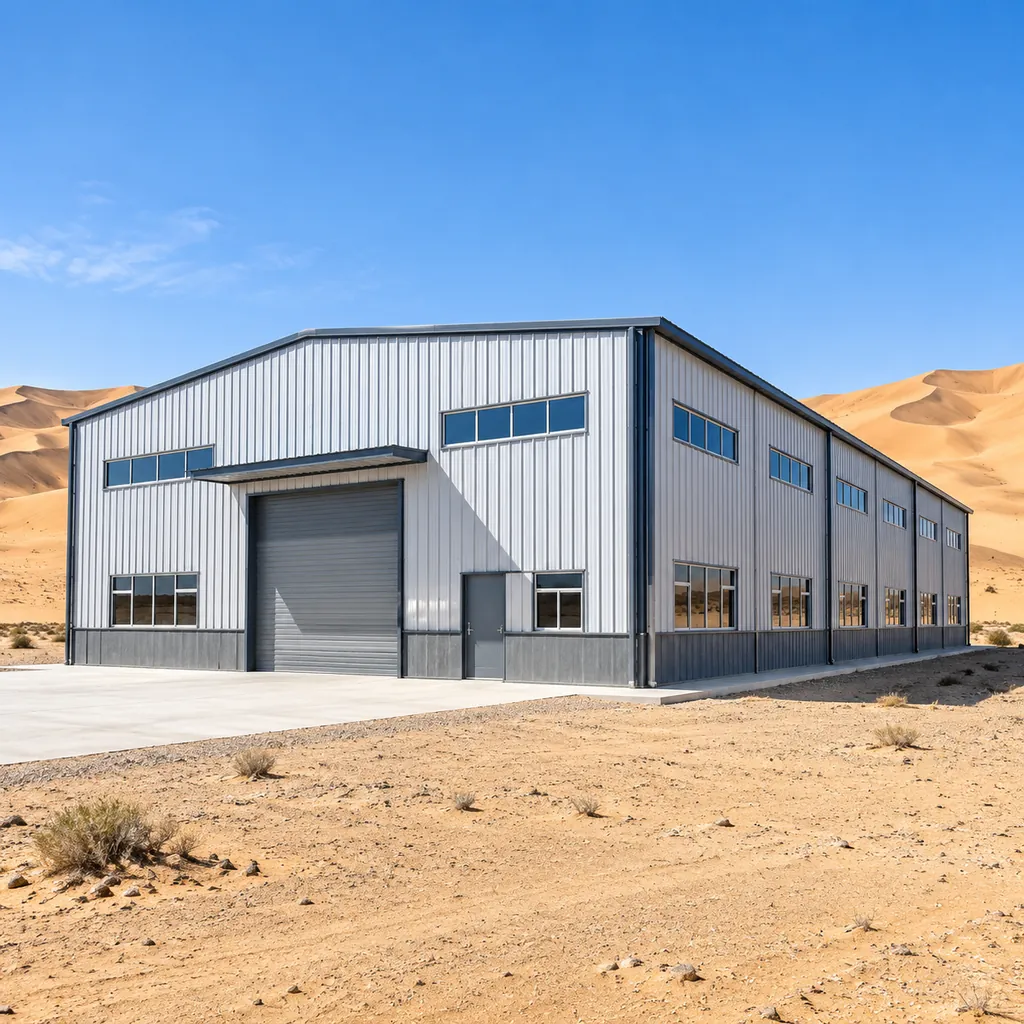
The steel building price in Saudi Arabia varies widely between factory quotes — often 20-40% for the same nominal size — because quotes are rarely comparing the same thing. The price differences come from three places: how much steel tonnage each supplier assumed, what coating system they specified for desert corrosion, and which delivery term (EXW, FOB, CFR, DDP) the number actually covers. Learn to read those three lines and you can compare Saudi quotes fairly, negotiate with evidence, and avoid surprises after signing.
Why Saudi quotes differ by so much
Saudi Arabia is a price-sensitive but specification-heavy market: buyers ask for quotes across Chinese, Turkish, Indian and local suppliers, and each one prices a slightly different building.
The four hidden variables
1. Design loads: a building designed to Saudi Building Code wind loads uses more steel than one designed to a mild generic code. 2. Coating spec: a C4/C5 corrosion system with hot-dip galvanized purlins costs much more than a simple painted frame. 3. Accessories: doors, windows, gutters, insulation and ventilation are often excluded from the ‘building price’ and quoted separately. 4. Delivery term: EXW stops at the factory gate, while DDP includes freight, insurance, customs and delivery to your site.
A buyer who compares four quotes without checking these variables is comparing apples, oranges and lemons. The good news: once you standardize them, the market becomes transparent and negotiation becomes factual.
The Saudi-specific cost layer
Beyond the factory price, Saudi projects carry port handling (Dammam, Jeddah or Yanbu), customs duties, inland transport to the site, and erection labor with Saudi visa and accommodation costs. These can add meaningfully to the landed and installed cost, so the factory quote is only the first layer of the budget.
Q: Why did I get two quotes 30% apart for the same warehouse size?
A: Almost always the quotes differ in steel tonnage, coating system, included accessories or delivery term. Ask both suppliers to break the price into tonnage, coating, accessories and freight, then compare line by line.
Reading a quote: the tonnage line
Price per tonne hides the real number
Suppliers quote in USD per tonne or per square meter. Per tonne is the more honest measure, but only if the tonnage is comparable. A heavier design at a lower per-tonne price can still cost more in total — and more steel is not always better; it depends on whether the loads justify it.
Ask for the design tonnage split: main frame, secondary steel (purlins, girts, eave struts), and cladding/fasteners. Compare each category. If supplier A quotes 35 kg/sqm and supplier B quotes 28 kg/sqm for the same building and loads, either A is over-designed or B is under-designed — the calculation report settles it.
Steel grade and section sizes
Most Chinese export quotes use Q235B or Q355B (similar to S235/S355). Q355B allows lighter members for the same strength, but costs more per tonne. A quote should state the steel grade and the design standard. If it only says ‘steel structure,’ ask for the grade in writing.
Coating and corrosion protection for Saudi conditions
Desert and coastal exposure classes
The Saudi environment is aggressive: high UV, sand abrasion, and near the Gulf coast, salt-laden air. International practice maps these to corrosivity classes C3 (inland desert, moderate) to C5 (coastal, severe). The coating system should match the class: for coastal sites, hot-dip galvanized secondary steel or a zinc-rich primer system is common.
A cheap quote may assume a single coat of alkyd paint (suitable for C2/C3 interior or mild sites). The same building on the Dammam coast needs a fundamentally better system. Specify the corrosivity class in your inquiry and ask each supplier what system they price.
What the coating line should state
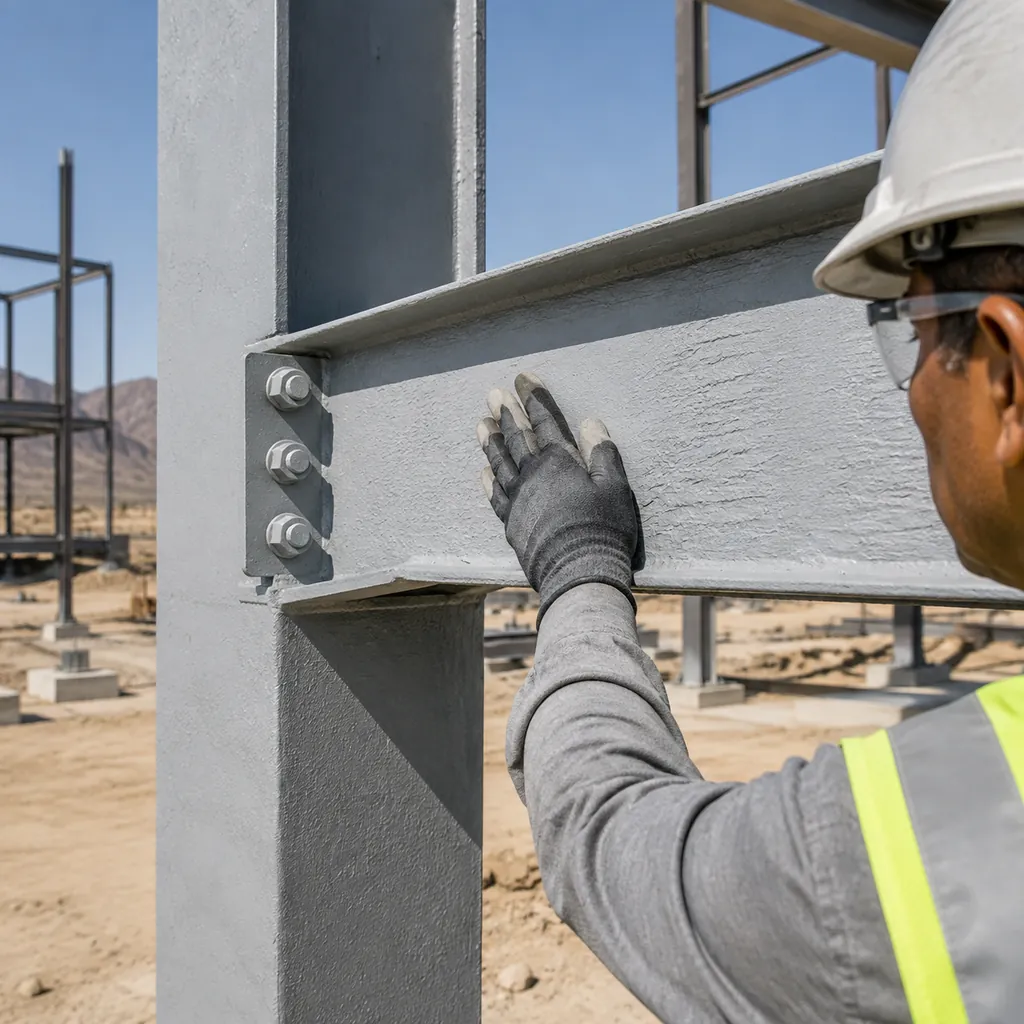
Request the coating specification: surface preparation (Sa 2.5 shot blasting), primer type and dry film thickness, intermediate and topcoat DFT, and whether galvanizing is included for purlins and girts. A quote that lists ‘painted’ without DFT numbers is incomplete — the difference between 60 and 120 microns of DFT is a real price and a real service life difference.
Q: Do I need hot-dip galvanized steel for a warehouse in Riyadh?
A: For inland sites like Riyadh, a high-quality paint system with proper surface preparation is usually sufficient. For coastal sites like Dammam or Jubail, galvanized secondary steel or a C5-grade coating system is strongly recommended. Confirm the corrosivity class with your supplier.
Delivery terms: what each price actually covers
EXW, FOB, CFR, CIF and DDP in one table
The delivery term defines where the supplier’s responsibility ends and your cost begins. Comparing quotes across different terms without adjusting is the most common mistake in Saudi steel buying.
| Term | Supplier covers | Buyer covers | Typical use |
|---|---|---|---|
| EXW (Ex Works) | Production and factory loading | All transport, insurance, export/import formalities | Buyers with own freight agent |
| FOB (Free on Board) | Delivery to port + loading on vessel | Ocean freight, insurance, destination costs | Most common for Saudi imports |
| CFR (Cost and Freight) | Ocean freight to Saudi port | Insurance + destination costs | When buyer arranges insurance |
| CIF (Cost, Insurance, Freight) | Ocean freight + marine insurance | Port handling, customs, inland transport | Full door-to-port price |
| DDP (Delivered Duty Paid) | Everything to your site | Only unloading and local permits | Turnkey convenience, higher price |
Convert all quotes to one basis before comparing
Pick one basis — usually CFR Dammam or DDP site — and ask every supplier to quote that. If a supplier will only quote EXW, add freight, insurance and customs estimates yourself so the numbers are comparable. Keep the freight line separate: ocean freight to Dammam or Jeddah fluctuates and should not be hidden inside the steel price.
Comparing quotes: a worked framework
Build a comparison table like this
Put every supplier in a table with: total price, price per tonne, steel tonnage, steel grade, coating system and DFT, accessories included, delivery term, lead time, payment terms, and validity period. Then normalize delivery terms and add the missing layers (customs, inland transport, erection) so the final column is ‘estimated delivered and installed cost.’
The supplier whose per-tonne price is lowest is not necessarily cheapest — the one with the clearest scope usually gives the most predictable total.
Get the calculation basis in writing
Ask each supplier to confirm the design loads (wind speed, exposure), the coating spec, and the exact list of included accessories. Lock those into the comparison. If a supplier cannot or will not state them, treat the quote as provisional and price the difference in your risk.
Saudi-specific costs that appear after the factory quote
Port, customs and inland transport
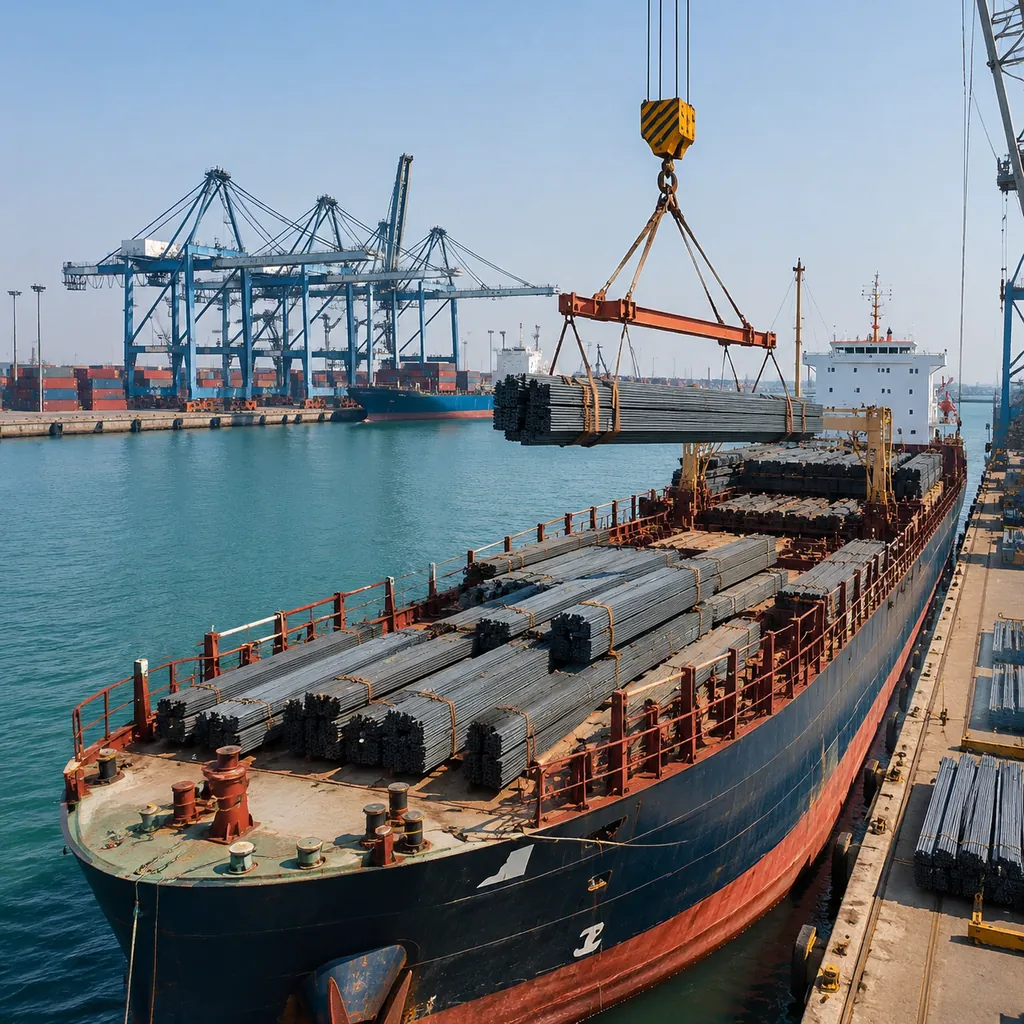
Arrival at Dammam or Jeddah triggers port handling, customs clearance and possible inspection fees. Import duties on steel structures apply at the rate in force at the time of import — confirm the current rate with your customs broker rather than relying on last year’s figure. Inland transport from the port to Riyadh or other inland sites adds a per-truck cost that can be significant for wide or heavy members.
Erection and site works
Erection labor in Saudi Arabia is typically organized by specialist contractors, often with a mobilisation cost, crew visas and accommodation. Foundation, concrete and site works are always separate from the steel package. Include a contingency of 5-10% of the total project budget for site variations — the industry norm for steel building projects.
Saudi design basics every buyer should know
The code framework
Saudi projects are commonly designed to the Saudi Building Code (SBC), which aligns closely with US codes such as ASCE 7 and IBC. Wind loads follow the SBC wind provisions or ASCE 7 depending on the project; seismic requirements apply in parts of the country. A supplier’s quote should state which code it used.
If the quote does not name the design code, the loads are unverifiable. Ask for the code and the governing wind speed for your site location before comparing prices.
Sand, dust and thermal movement
Desert conditions add two practical design considerations beyond loads: sand abrasion on coatings and significant thermal expansion on long buildings. Expansion joints are needed on long elevations, and the coating must tolerate sandblasting from wind-blown dust.
These are not exotic requirements — they are standard practice for Gulf projects. A supplier experienced with Saudi work will include them in the design; one quoting a generic temperate-climate design may not.
Q: What design code applies to steel buildings in Saudi Arabia?
A: Most Saudi projects follow the Saudi Building Code (SBC), which is closely related to US practice (ASCE 7 for loads, AISC for steel design). Confirm with the supplier which code and edition the quote is based on, and verify it is accepted by your local authority.
Erection and site costs in Saudi Arabia
Labor, mobilisation and crane hire
Erection is usually contracted locally or arranged by the steel supplier’s partner network. Crew rates, accommodation, visas and crane hire vary by city and season. Mobilisation to remote sites adds travel and setup days that are often quoted as a fixed line.
Ask for the erection estimate in two parts: the crew day rate and the crane package, so you can compare fairly across contractors.
Foundation and civil works
Concrete, rebar and site works are priced locally and fluctuate with the market. The foundation design comes from the steel supplier’s reactions, so the civil quote depends on getting the reaction table early. Send the reactions to three local contractors for a budget range before you commit to the steel order.
Payment terms and currency in Saudi steel imports
Standard terms and what they mean
Chinese and Turkish suppliers commonly ask for 30-50% deposit with the balance against shipping documents (typically against a copy of the bill of lading) or by letter of credit. The exact split is negotiable and reflects the supplier’s confidence and your payment history.
For Saudi buyers, T/T in USD is standard; SAR-denominated quotes are less common from overseas factories. If your budget is in SAR, fix the exchange rate assumption in the quote or accept the currency risk consciously.
Price validity and steel price movement
Steel prices move weekly, so quotes carry a validity period — typically 15-30 days. If the validity expires, the supplier may adjust for steel cost changes. Ask for the adjustment formula in writing: for example, the quote is fixed if the steel price index moves less than 5%, with the difference shared beyond that.
Worked example: comparing three quotes
The same warehouse, three numbers
Imagine a 1,200 sqm warehouse quoted by three factories. Supplier A quotes the lowest total with no tonnage breakdown. Supplier B quotes a higher total but itemizes 40 tonnes of frame, a C4 coating system and CFR Dammam delivery. Supplier C quotes between the two, with 35 tonnes, a standard painted system and EXW terms.
After adding freight and customs to C and checking the coating spec on A, the ranking often changes completely. The ‘cheapest’ quote is frequently the one with the least protection and the most excluded costs.
The comparison table to build
Create one table with columns: total price, price per tonne, tonnage, steel grade, coating system with DFT, accessories included, delivery term, lead time, validity, and payment terms. Convert every row to a common delivery basis, then add the local cost layer. The final ‘estimated delivered cost’ column is the only honest ranking.
Import duties, compliance and documentation
Duties and certification in Saudi Arabia
Steel structure imports into Saudi Arabia may be subject to import duty at the rate in force at the time of import, plus VAT where applicable. Confirm current rates with a licensed customs broker before you finalize the budget — relying on last year’s figure is a common budget error.
Depending on the product classification, shipments may also need SABER/SASO-related conformity documentation. Your supplier’s export documentation set should include the commercial invoice, packing list, bill of lading, mill certificates and, where required, certificates of origin. Ask for the full document list at the quotation stage so nothing delays clearance.
Who handles compliance in the quote
Some suppliers offer DDP delivery including customs clearance; others deliver FOB/CFR and hand the clearance to your broker. DDP removes compliance work from your side but prices the service in. Compare the two on total cost, and ask exactly which fees the DDP price includes — port handling, customs duty, inland transport — so there are no surprises at the port.
| Document | Purpose | Provided by |
|---|---|---|
| Commercial invoice | Customs valuation and payment | Supplier |
| Packing list | Cargo identification and inspection | Supplier |
| Bill of lading | Title and freight evidence | Carrier / supplier |
| Mill certificates | Steel grade and traceability | Supplier |
| Certificate of origin | Duty assessment | Supplier / chamber |
| Insurance certificate | Cargo risk cover | Buyer or supplier per terms |
Q: Should I buy DDP or handle customs myself in Saudi Arabia?
A: If you have a customs broker and want control over clearance timing, CFR plus your broker often works well. If you prefer a single delivered price, DDP is convenient — but confirm exactly which fees it covers in writing. Compare both on total cost before deciding.
Regional cost patterns within Saudi Arabia
Riyadh, Dammam and Jeddah differ in real ways
Inland sites like Riyadh typically have lower corrosion requirements (C3 class is usually adequate) but higher inland transport costs from the port. Coastal sites like Dammam and Jubail need stronger corrosion protection and carry higher coating costs, while their port proximity lowers freight. Jeddah balances both: coastal humidity plus a longer overland leg to southern projects.
These differences matter when you compare quotes from suppliers who price ‘to Saudi Arabia’ as one destination. Ask each supplier to price to your specific city and port, not to the country.
Seasonal and market factors
Erection crews and crane availability tighten in peak construction months and around major religious holidays when schedules compress. Concrete and rebar prices move with the local market. If your project can be scheduled in a quieter window, both price and availability improve.
Currency and payment terms
Chinese factories commonly quote in USD, while your local costs are in SAR. The exchange rate between quote and payment affects the real price, so compare quotes with the same currency basis and note the validity of the exchange rate assumption.
Payment terms also vary: 30/70 (deposit/balance) is common for exports, while local suppliers may offer progress-based terms. Convert all payment schedules to the same timeline when comparing total cost.
The design code question
Saudi projects are typically designed to US-style codes such as AISC and ASCE 7 or to international standards, depending on the municipality and the engineer of record. Confirm with your supplier which code their design follows and whether it satisfies your local permitting requirements.
This is a permitting and insurance issue, not a paperwork detail: a building designed to the wrong code for your site can be stopped at the permit stage. Ask before you order, and have the code and loads written into the contract. A supplier that has exported to Saudi before will confirm the code in one sentence; a first-timer may need your engineer’s help.
Q: Is a warehouse cheaper to build in Riyadh than in Dammam?
A: Not simply. Riyadh saves on corrosion protection (lower coating spec) but pays more for inland transport from the port. Dammam saves on freight but needs stronger corrosion systems and often higher-grade coastal design. Compare the delivered and installed total for your specific site.
Checklist before you compare Saudi factory quotes
The ten-line checklist
1. Same building dimensions and loads. 2. Same steel grade stated. 3. Tonnage split: frame, secondary, cladding. 4. Coating spec with DFT values. 5. Same accessories list. 6. Same delivery term, converted. 7. Lead time in calendar days with start trigger. 8. Payment terms and milestones. 9. Validity period of the price. 10. Calculation report available.
Go through this list once and the comparison becomes quick and fair — and you will also learn which suppliers are serious about engineering and which are quoting from a template.
Negotiation with evidence
When you have standardized quotes, you can negotiate specific lines: ‘Supplier B includes the galvanized purlins at this price; can you match that spec at your price?’ Price discussions based on spec differences are productive; blanket ‘reduce the price’ requests just invite scope reduction.
Frequently Asked Questions
What is a reasonable steel building price in Saudi Arabia?
Prices vary with design loads, coating spec, accessories and delivery term, so a single number is misleading. Ask for price per tonne with the tonnage and coating spec stated, then add freight, customs and erection to get the delivered and installed cost. Compare quotes on that total, not on the headline number.
Should I compare quotes as FOB or DDP for a Saudi project?
Convert every quote to the same basis before comparing — either CFR Dammam/Jeddah or DDP to your site. FOB-to-FOB comparison ignores freight differences, and EXW-to-DDP comparison mixes supplier and buyer responsibilities.
Why is the steel tonnage different between quotes for the same building?
Different suppliers assume different wind loads, steel grades, frame systems and member sizes. The calculation report explains the difference. A lighter design is only a bargain if it still satisfies the local code and your project loads.
Is a painted frame enough for a coastal Saudi site?
For coastal areas with salt exposure, a standard paint system is usually not enough. Specify a C5-grade system or hot-dip galvanized secondary steel. State the corrosivity class in your inquiry so every supplier prices the same protection.
What should the quote include besides steel?
Ideally the quote itemizes the steel package, coating, accessories (doors, windows, gutters, insulation, ventilation), packing, freight and payment terms. Anything not itemized is likely to appear later as an extra cost.
A fair comparison starts with a complete specification. Send your building size, site location and required coating class to a factory that will break its quote into tonnage, coating and delivery lines — then compare on the delivered total.