
Steel Building Price in UAE: Ex-Works vs CFR vs DDP and Which Quote to Compare

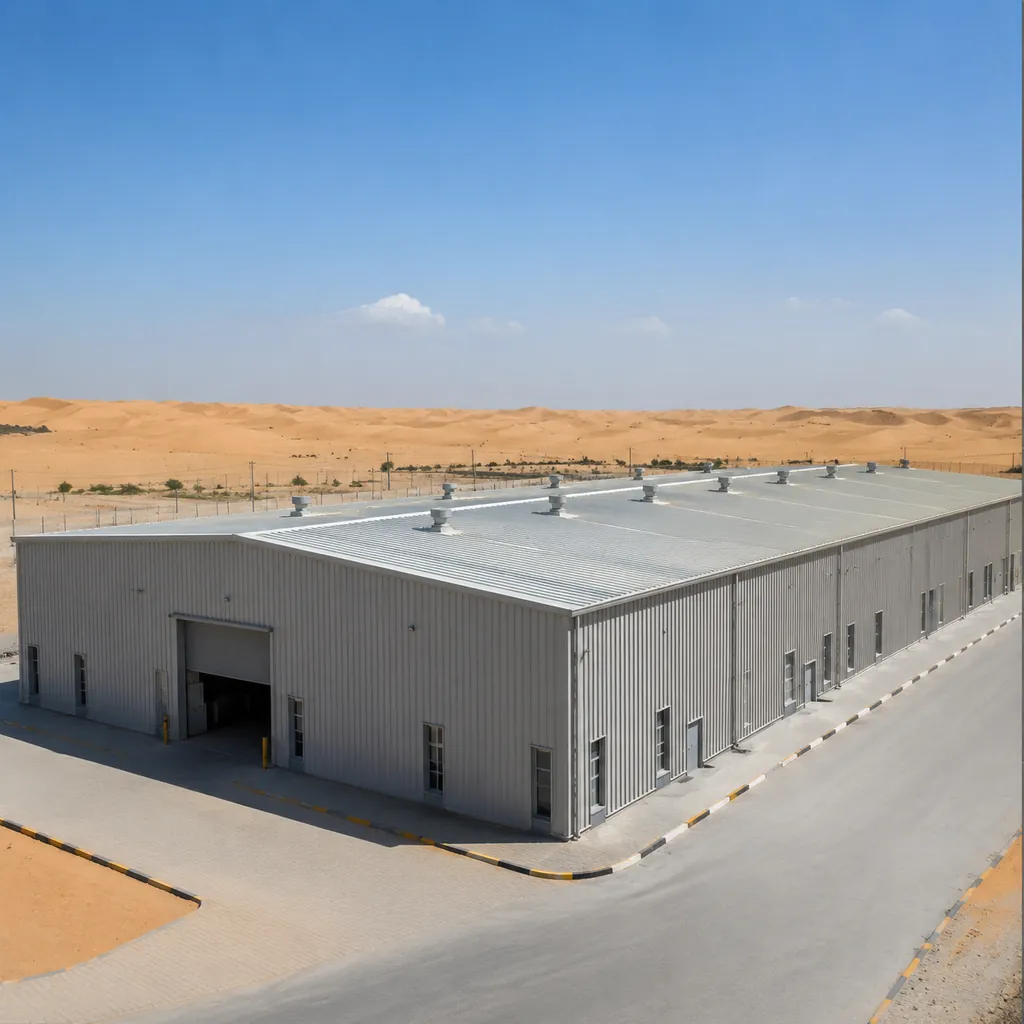
When a supplier in China quotes a steel building price for the UAE, the number on the paper means very little until you know which trade term it is based on. Ex-works, FOB, CFR and DDP are not shipping jargon — they decide which costs are inside the quote and which appear later as separate invoices. For a UAE project the difference is substantial because freight to Jebel Ali, insurance, customs duties and local delivery can add a significant share on top of the factory price. This article explains what each term covers, how to compare quotes fairly, and the cost items you should plan for when budgeting a steel building delivered to the UAE.
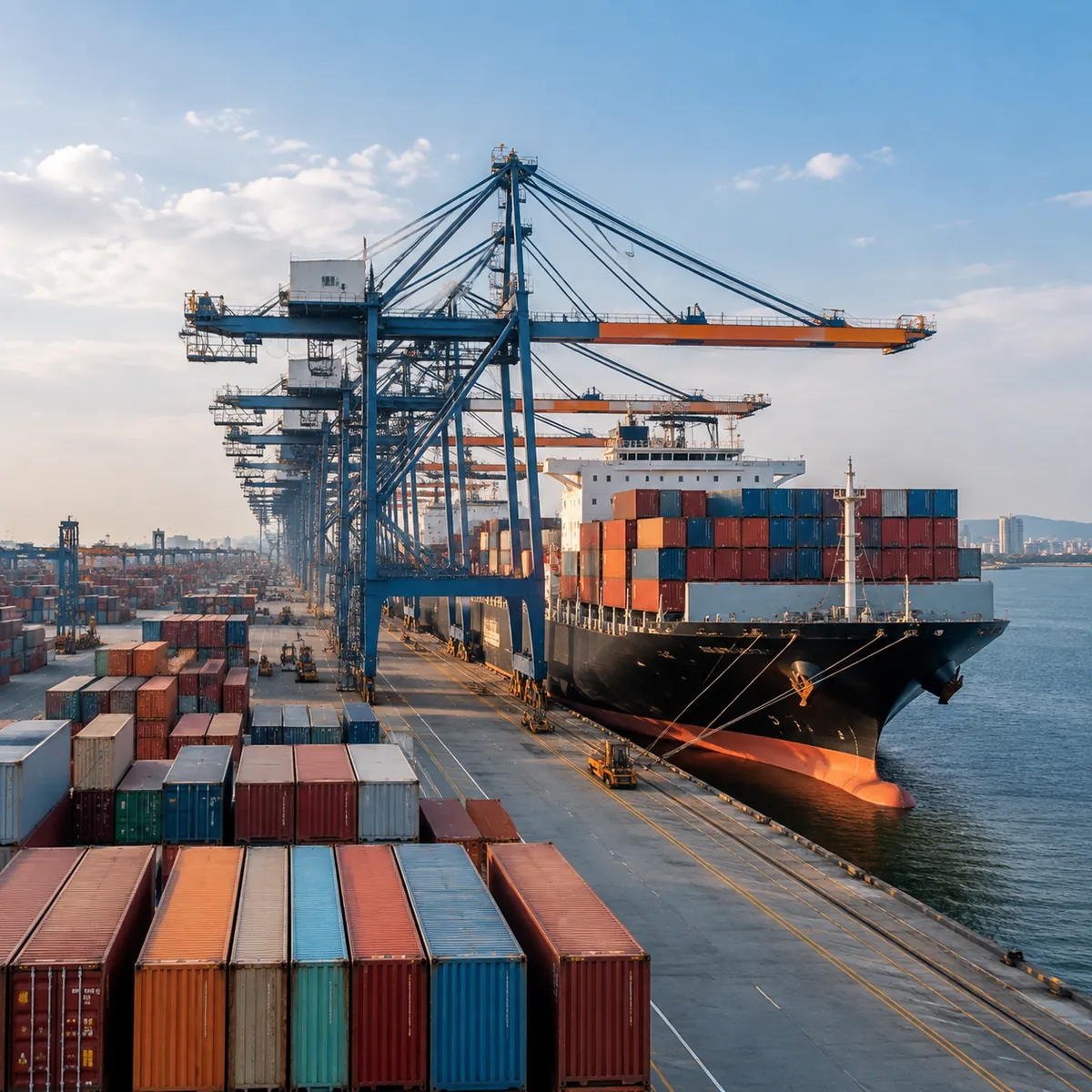
What each trade term includes
Trade terms (Incoterms) define where the seller’s responsibility ends and where the buyer’s begins. The four terms you will meet most often in steel building quotes are:
| Term | Seller covers up to | Buyer arranges and pays | Typical use in steel buildings |
|---|---|---|---|
| EXW (Ex-Works) | Steel ready at the factory gate | All transport, export, freight, insurance, customs, local delivery | Buyers with their own freight agent in China |
| FOB (Free On Board) | Goods loaded on the vessel at the Chinese port | Ocean freight, insurance, destination customs and delivery | Common for buyers using their own forwarder |
| CFR (Cost and Freight) | Goods loaded and freight paid to the destination port (Jebel Ali) | Insurance (under CFR insurance is the buyer’s), customs, local delivery | Common when the supplier arranges shipping |
| DDP (Delivered Duty Paid) | Goods delivered to your site, duties paid | Little — unloading and site readiness | Buyers who want one landed price |
The price difference between EXW and DDP on the same building can be large — enough to change your project decision if you compare an EXW quote from one supplier with a DDP quote from another. Always convert every quote to the same term before comparing.
Cost items between the factory and your UAE site
If your quote is EXW or FOB, these are the cost layers you will manage or pay separately. Knowing them helps you build a realistic budget and ask suppliers the right questions.
- Export packing — steel members are packed for container or flat-rack shipment; packing cost is usually inside the supplier’s price but confirm it.
- Inland transport in China — trucking from the factory to the Chinese port.
- Export customs and documentation — export declaration, certificates and paperwork.
- Ocean freight — container or breakbulk freight to Jebel Ali; steel is heavy and freight is quoted per container or per ton.
- Marine insurance — usually a small percentage of the cargo value, but essential; under CFR it is the buyer’s responsibility.
- UAE import duty — customs duty applies on steel building imports; the rate depends on the tariff classification, so confirm the current rate with your customs broker.
- Import clearance and port charges — broker fees, terminal handling and storage at Jebel Ali or other UAE ports.
- Local transport and delivery — trucking from the port to your site, with over-dimension permits if members exceed standard vehicle limits.
- VAT — the UAE applies VAT on imports; check the current rate and whether it is reclaimable for your business.
None of these are hidden costs — they are normal layers of an import project. The mistake is assuming they are included in an EXW or FOB price. Our guide to UAE steel building pricing from Jebel Ali clearance to erection covers the destination-side budget in detail.
Why DDP quotes cost more — and when they are worth it
A DDP quote bundles freight, insurance, duty and delivery into one price. It will look higher than the same building quoted EXW, and it is — but the comparison is not apples to apples. DDP transfers the logistics risk to the supplier: if freight rises, if the vessel is late, or if customs asks for additional documentation, the supplier manages it inside the agreed price. For a buyer who imports once and does not have a UAE logistics network, DDP is often the lowest-risk way to buy. For an experienced importer with a broker and forwarder, EXW or FOB may give better control and transparency.
The practical rule: ask for the same building quoted on two terms (for example EXW and DDP) and review the delta. The difference tells you what freight, duty and delivery actually cost in the supplier’s estimate, and it exposes surprises before you sign.
What moves the steel building price in the UAE
Beyond trade terms, the factory price itself depends on the usual drivers — dimensions, span, eave height, loads, cladding spec and steel grade. For UAE projects, several factors get extra weight:
- Wind design — the UAE’s coastal and desert wind environment affects bracing and cladding wind-load design; a quote based on a “standard” design may not suit the site.
- Hot climate cladding — insulated sandwich panels and proper thermal design matter more in the UAE than in temperate markets; cladding spec is a large share of the total.
- Sand and humidity — coating and sealing details for coastal sites affect long-term corrosion performance.
- Steel grade and coating choice — higher-grade steel reduces weight; better coating systems add cost but extend life in the Gulf environment.
- Freight and packing — heavier buildings cost more to ship; packing method (container vs flat-rack) changes the freight line.
Because price ranges for steel buildings vary widely with spec and current steel and freight markets, treat any number you see online as a planning figure only, and get current quotes with a defined scope. Price articles that quote exact per-square-meter figures without scope are not usable for budgeting.
Comparing UAE quotes: the checklist
| Check | What to confirm |
|---|---|
| Trade term | EXW, FOB, CFR or DDP — convert all quotes to one term |
| Scope of supply | Primary steel, secondary steel, cladding, doors, gutters — list explicitly |
| Packing | Included in price? Container or flat-rack? |
| Design basis | Loads and code for the UAE site, wind design confirmed |
| Steel weight | Tonnage breakdown — the number that exposes design quality |
| Freight estimate | If FOB/EXW: expected container count and freight estimate |
| Customs support | Documents supplied for UAE import (packing list, invoices, certificates) |
| Validity period | How long the price holds — steel and freight move |
Documents the UAE import needs
Plan the document pack with your supplier: commercial invoice, packing list, bill of lading, and certificates as required by the tariff classification (steel building structures may need specific conformity documentation — confirm the current requirement with a UAE customs broker before shipping). A supplier that has exported to the UAE before will know the routine; a supplier that cannot name the documents is a risk.
Building a step-by-step budget for a UAE import
Whether you buy EXW, FOB, CFR or DDP, build your total landed-cost budget layer by layer so no line surprises you:
- Factory price (EXW) — the steel building cost as quoted by the supplier.
- Export packing — confirm whether the quoted price includes packing; steel frames are heavy and packing is not trivial.
- Inland transport in China — trucking from factory to the export port.
- Export customs and documentation — export declaration and any required certificates.
- Ocean freight — per container or per ton; get a freight quote from the supplier or your forwarder for the expected container count.
- Marine insurance — cover the cargo value for the voyage; under CFR this is your responsibility.
- UAE import duty — based on the tariff classification of steel structures; confirm the current rate with a broker.
- Port charges and clearance — handling, storage and broker fees at Jebel Ali or the entry port.
- Local delivery — trucking to site, including over-dimension permits for long members if needed.
- VAT — the UAE applies VAT on imports; check the current rate and your reclaim position.
- Contingency — logistics markets move; a small contingency line on freight and duties is prudent for a first import.
Adding these layers to an EXW price gives you the number to compare against a DDP quote. If the DDP quote is close to your own estimate, DDP is usually the better deal because the supplier carries the risk.
Jebel Ali and other UAE entry points
Most steel building imports to the UAE arrive at Jebel Ali, one of the region’s busiest container ports. A few things to plan around:
- Port handling and storage — containers and flat racks have free storage periods, then daily charges; plan clearance promptly.
- Over-dimensional cargo — long steel members on flat racks may need special handling and permits for road transport to your site.
- Customs classification — steel building structures clear under the relevant HS code; the classification affects the duty rate, so confirm it with a licensed broker before shipping.
- Broker and documentation — a local customs broker handles the declaration; they need the commercial invoice, packing list, bill of lading and certificates from the supplier.
Other emirates and free zones may have different procedures or incentives; if your project is inside a free zone, check the specific rules with the zone authority. The supplier cannot manage this part for you under EXW or FOB — the practical choice for a first-time importer is often CFR or DDP so that freight and documentation are handled by people who do it daily.
Hot climate design: what the UAE adds to the specification
The UAE environment changes more than the logistics; it changes the building specification, and that changes the price:
- Insulation — roof and wall insulation is not optional in a hot climate; the cladding spec (single skin vs insulated sandwich panels) is a major cost line and an energy decision for the life of the building.
- Ventilation and airflow — ridge ventilators, louvres and fan placement reduce heat buildup; each adds design and supply scope.
- Coating for the environment — coastal humidity and desert sand affect the coating system; confirm the surface treatment is specified for the site, not a temperate default.
- Thermal movement — long buildings in strong sun need expansion details; a supplier experienced in Gulf projects handles this in the design.
- Wind design — the UAE’s wind environment drives bracing and cladding wind-load design; the design basis should state the site wind speed used.
When comparing quotes for the UAE, check that both suppliers designed for these conditions. A lower price that assumes a temperate spec is not a lower price for the same building.
How to ask suppliers for comparable terms
Use this short script when you request a UAE quote:
- “Please quote the same scope on EXW and DDP, so I can compare the landed cost.”
- “Please list what the DDP price includes: ocean freight, insurance, UAE import duty, port charges and delivery to site.”
- “Please state the expected number of containers/flat racks and the packing method.”
- “Please confirm which import documents you will provide and which I must arrange locally.”
- “How long does the price remain valid?”
A supplier that answers all five clearly is managing the UAE route competently. A supplier that cannot state what DDP includes should not be quoting DDP.
Common pitfalls in comparing UAE quotes
| Pitfall | Result | Fix |
|---|---|---|
| Comparing EXW from one supplier with DDP from another | Totals look different for the same building | Convert to one term before comparing |
| Assuming freight is included in a CFR price | Fine — but insurance and customs are still yours | Confirm exactly what each term includes |
| Ignoring the cladding spec difference | Comparing insulated with uninsulated prices | Line-by-line scope comparison |
| Forgetting duty and VAT | Budget shortfall at clearance | Add duty and VAT to the budget |
| No validity period | Price changes before you order | Confirm validity in writing |
| No document commitment | Customs delays at the port | List required documents in the contract |
UAE steel building buying is not difficult, but it rewards discipline: one term, one scope, one document list, and a realistic landed-cost budget.
Estimating the freight line before you ask
You do not need a freight quote to sanity-check the logistics line in a supplier’s estimate. A few planning signals help:
- Steel weight and volume — the building’s tonnage and the packing method (containers for secondary steel and cladding, flat racks for long primary members) drive the freight cost. Ask the supplier for the expected container and flat-rack count.
- Primary members — long columns and rafters usually travel on flat racks; their length determines how many racks and whether over-length surcharges apply.
- Secondary steel and accessories — these pack efficiently into containers; count them to estimate container usage.
- Current market movement — ocean freight rates change; any quote’s freight line is valid only for its validity period. Ask how the supplier handles rate changes between quote and shipment.
Freight is often a large share of the landed cost for steel buildings, so it deserves the same scrutiny as the steel price. A supplier that gives you a container count and a freight line is helping you budget; one that quotes “shipping extra” without numbers is leaving the biggest variable open.
Payment and deposit considerations for UAE orders
International steel building orders follow a deposit-and-balance pattern, and the structure affects your risk:
- Deposit — typically a percentage of the order value at contract signing; it funds material procurement. The rest is usually linked to milestones (design approval, fabrication progress, pre-shipment).
- Payment method — bank transfer (T/T) is the norm; letters of credit are used for larger or more formal transactions. Confirm the payment terms in the contract before ordering.
- What the deposit buys — your deposit should be matched by a proforma invoice, a design basis and a production schedule. If the supplier cannot define the deliverables that accompany each payment, the payment plan is too loose.
- Balance at shipment — the balance is typically due before or at loading; your pre-shipment inspection and packing list confirmation are the evidence that the balance is justified.
For a first order, consider third-party inspection before the balance payment. It is a small cost compared with discovering a problem after the container is on the water.
What to do after the quote: the ordering checklist
Once you have compared quotes and chosen a supplier, work through this checklist before transferring the deposit:
- Confirm the scope in writing — every line from the proposal repeated in the contract.
- Confirm the trade term and what it includes — the same term you compared on.
- Confirm the document pack — MTCs, inspection reports, drawings, packing list.
- Confirm the schedule — design approval, fabrication, packing, shipment dates.
- Confirm the payment milestones and evidence at each one.
- Confirm the design basis — loads, code, steel grade, coating system.
- Arrange your side — customs broker, forwarder (if EXW/FOB), site readiness, permits.
- Agree on the revision process — how changes after order are priced and tracked.
Most disputes are avoided by writing down what was already agreed. The quote conversation produced the information; the contract should repeat it.
Risks in UAE procurement to plan for
Every import market has its own risk profile. For steel buildings entering the UAE, plan for these:
- Freight volatility — ocean freight to the Gulf moves with global markets; fix what you can in the contract and keep a contingency for what you cannot.
- Customs classification — the duty rate depends on how the goods are classified; a wrong classification can delay clearance or increase duty. Confirm with a broker before shipment.
- Documentation completeness — missing or mismatched documents stop clearance at the port. Have the supplier commit to a document list and check it before loading.
- Hot-season logistics — summer temperatures affect delivery planning and on-site work; align the schedule with the climate.
- Payment risk — use milestone payments tied to evidence, and consider third-party inspection before the balance.
- Site readiness — steel arriving before foundations are ready creates storage and damage risk; coordinate the schedule with your concrete work.
None of these should stop a well-planned import; they are the reasons to plan one. The suppliers with UAE export experience will already manage most of them — which is itself a good selection criterion.
Working with a freight forwarder and customs broker
If you buy EXW or FOB, your forwarder and customs broker become critical partners. Give them the same information you gave the supplier: cargo description, dimensions, tonnage, packing method and the HS classification you plan to use. Confirm which documents they need from the supplier and in what format, then put that list in the contract so the supplier produces the right documents the first time. A forwarder with steel building experience will also flag over-dimension issues and storage limits before they become delays. The broker and forwarder are the team that turns a good factory price into a good landed cost.
Frequently Asked Questions
What does DDP mean for a steel building import to the UAE?
DDP (Delivered Duty Paid) means the supplier bears the cost and risk of delivering the goods to your site, including freight, insurance and import duty. You get one landed price; the supplier manages the logistics. It usually costs more than EXW or FOB but removes most import risk for a one-time buyer.
Is it cheaper to buy steel buildings EXW and arrange shipping myself?
It can be, if you have a forwarder and know the UAE import routine — you pay only actual costs. But you carry the risk of freight changes, documentation problems and delays. Compare an EXW plus your logistics estimate against a DDP quote before deciding.
What customs duty applies to steel buildings imported into the UAE?
Import duty on steel building structures depends on the tariff classification of the goods. Confirm the current rate and any applicable exemptions with a UAE customs broker before finalizing the order, because classification determines the rate.
How should I compare two steel building quotes for the UAE?
Convert both to the same trade term, compare the same scope line by line (steel weight, cladding spec, packing, documents), and check the design basis for the UAE site. Do not compare totals from different terms or different scopes.
Do I need special packing for steel buildings shipped to the UAE?
Steel members ship on flat racks or in containers depending on length and weight. Long members typically use flat racks, which have their own freight and handling rules. Confirm the packing method and whether packing cost is included in the quote.
Get a UAE quote on the terms you can compare
SteelStructurePrefab exports steel buildings to the UAE and can quote your project EXW, FOB, CFR or DDP with the scope, steel weight and documents listed clearly. Send your dimensions, site location and cladding preference for a price you can compare — and a delivery plan that reaches Jebel Ali.