
Steel Building MOQ: Container Loading Limits and How They Set Minimum Order Sizes

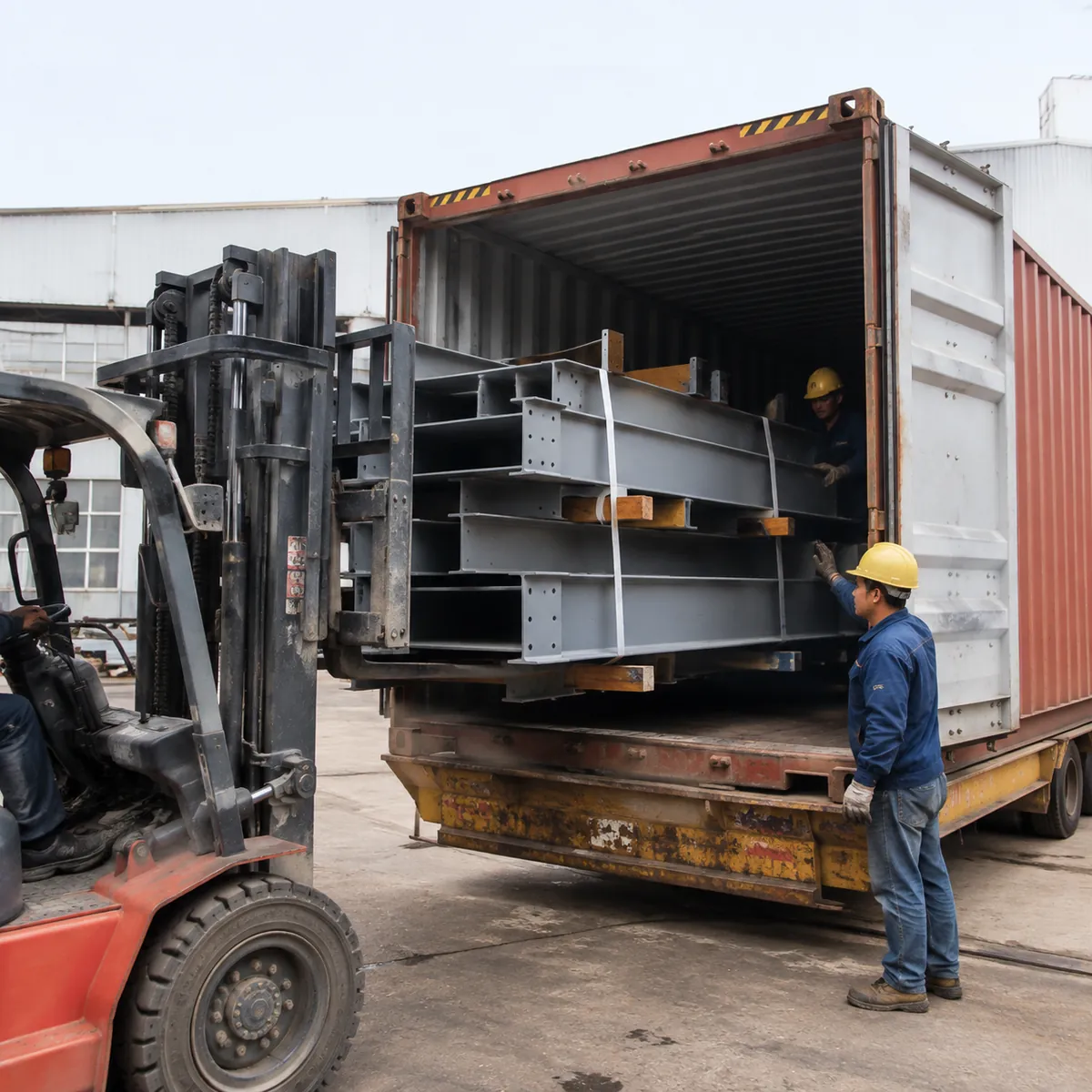
A steel building MOQ is often set by what fits in a container, not by a number of buildings. Long columns and rafters load differently from cladding panels, so the factory’s minimum order usually reflects the smallest shipment that can be packed efficiently and still reach your port at a sane freight cost. Understanding the container logic explains why some suppliers say yes to small orders and others refuse, and it shows you how to plan an order that fits the loading limits instead of fighting them.
Why factories talk in containers
Export steel buildings ship in 40ft containers and, for long members, in open-top or flat-rack containers. The factory’s fixed costs — engineering setup, drawing preparation, production line setup, export paperwork — are the same whether the container is full or half full, so the per-ton price rises as the order shrinks. The MOQ is the size at which the supplier can still absorb those fixed costs at a competitive rate. That is why the practical minimum is expressed in container loads and tonnage rather than in square meters alone.
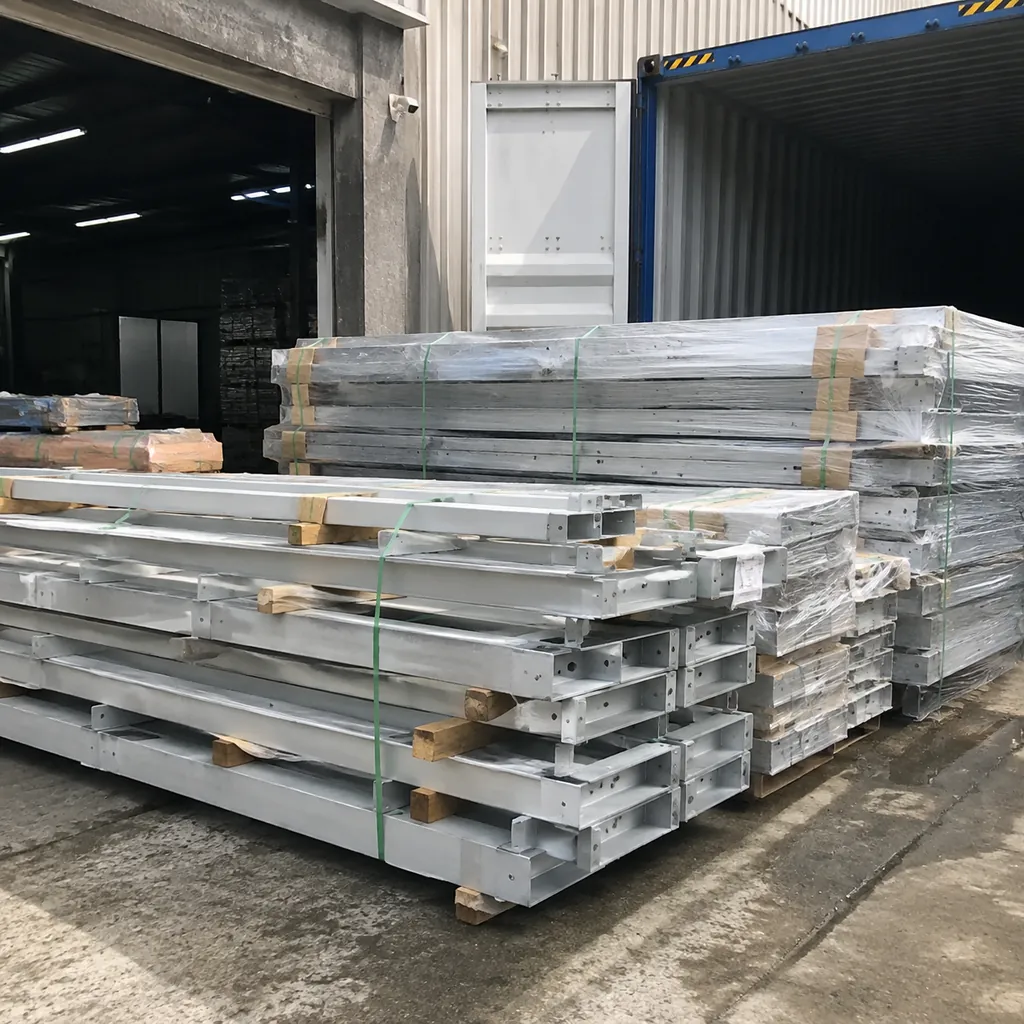
For the general MOQ calculation, our steel building MOQ guide explains tonnage, floor area and bay-count minimums.
What fits in a 40ft container
Steel members are long and heavy, so volume and weight both matter. A 40ft standard container can carry roughly 25-28 tons of cargo at full weight, but steel members reach the weight limit long before the space is full. Long columns and rafters waste length when they cannot be broken down, which is why PEB members are designed with splices — the ability to join shorter pieces on site is what lets a frame fit a container. Cladding panels, purlins and small parts pack densely and are usually the easy part of the load.
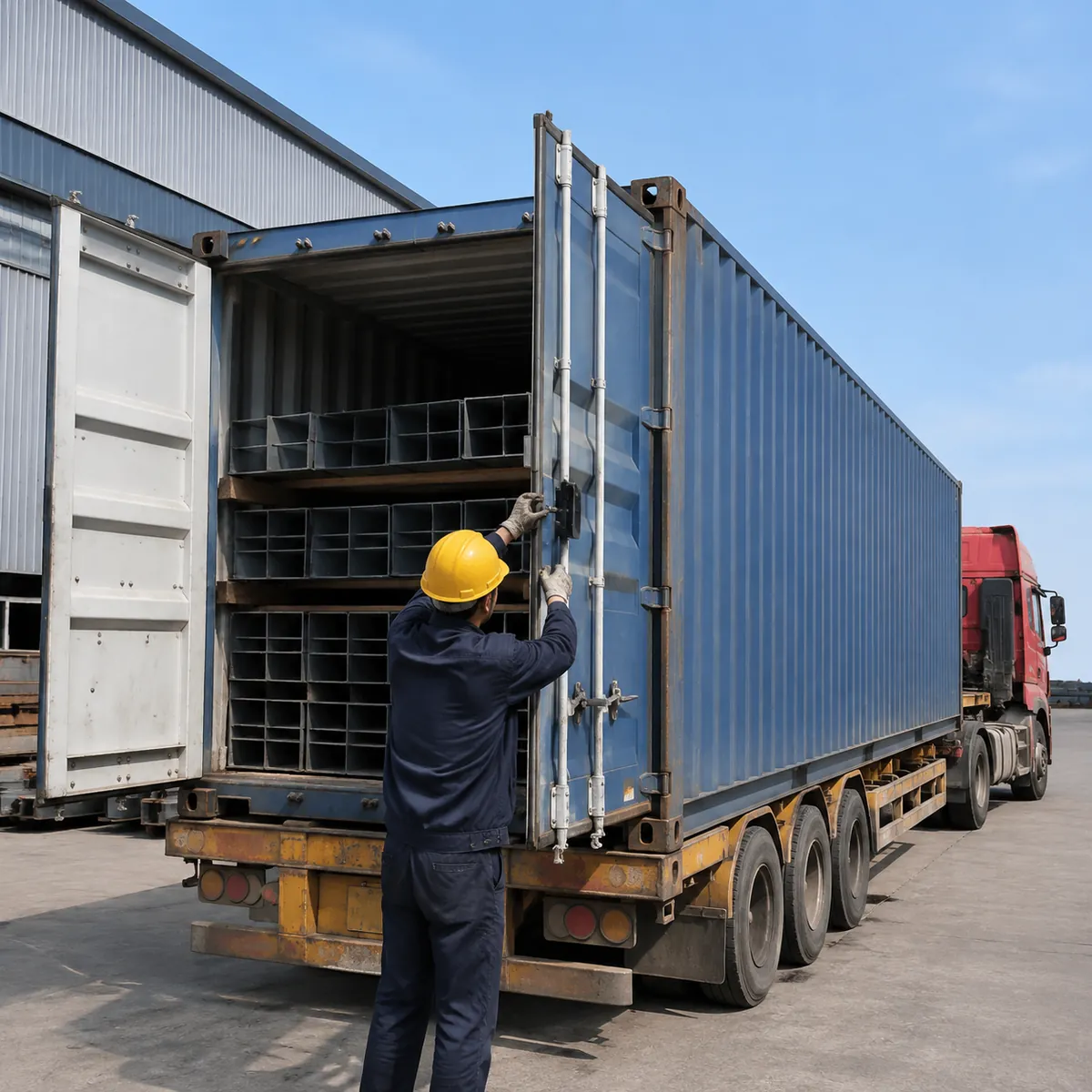
| Component | How it loads | Effect on minimum order |
|---|---|---|
| Columns and rafters | Long, heavy, needs splices | Sets the length and weight limit |
| Purlins and girts | Long but light, bundles | Fits around frame members |
| Cladding and panels | Dense, stacks flat | Fills remaining volume |
| Bolts and small parts | Boxed, packs anywhere | Fills gaps in the container |
Why is my small steel building more expensive per ton?
Because the fixed costs — engineering, drawing, production setup and export paperwork — are spread over less tonnage. The container freight also does not shrink proportionally. The total may still be reasonable for a one-off project; compare the total, not the per-ton rate.
When a project fits half a container
A small workshop or an extension bay may occupy only part of a container. Suppliers handle this in a few ways: they charge the fixed engineering cost transparently, they raise the per-ton price to cover the unused space, or they group your order with another buyer’s cargo (consolidation) — which is common for small cladding and accessory orders but rare for structural steel, because mixing heavy frames with other cargo is risky. The honest question to ask is not “do you have an MOQ” but “what happens to the price if my order fills only half a container”.
For how the rest of the quote is built, our steel building quote process guide covers price validity and revisions.
How to plan an order around loading limits
Start from the container, not the building. Ask the supplier for the proposed loading plan early: how many containers, which members go in each, and what the total weight is. If the building fits one 40ft container, the order is a natural single shipment; if it needs two, the split between them — frame in one, cladding in the other — affects the packing and the site sequence. Confirm the container type (standard, open-top or flat-rack) because it changes the freight and the handling at your port.
Designing the frame with splices, standard bay sizes and a cladding package that matches the container volume are the levers that keep a small order viable. Our prefab steel warehouse pages show the standard configurations that pack efficiently.
Can I ship a frame in an open-top container?
Yes, and it is common for long members that cannot be spliced or that exceed the door height. Open-top and flat-rack containers allow top loading and longer cargo, but they cost more and are handled differently at the terminal. Confirm availability and the freight difference before you design around them.
FAQ
What sets a steel building MOQ?
The MOQ is usually set by the smallest shipment that can be packed efficiently — container loading limits, minimum tonnage for the fixed costs, and the freight economics. It is rarely a fixed number of buildings.
How much steel fits in a 40ft container?
A 40ft standard container can carry roughly 25-28 tons of cargo at full weight, but long steel members hit practical length limits before weight. Frames are designed with splices so long members can be broken down for container loading.
What if my steel building only fills half a container?
The supplier will either charge the fixed engineering cost transparently, raise the per-ton price, or consolidate with other cargo where the cargo mix allows. Ask directly how a partial-container order is priced.
Should I use an open-top or flat-rack container for steel?
Only when members cannot be spliced or exceed the door height. They allow longer cargo and top loading but cost more and need different terminal handling. Design around standard containers where possible.
How do I plan a steel building order around container limits?
Ask for a loading plan early: container count, member split and total weight. Design with splices and standard bays, match the cladding package to the container volume, and confirm the container type before fabrication.
Planning a small steel building order and unsure about MOQ? Send your dimensions and intended use, and we will propose a container loading plan and a transparent quote for your exact order size.