
Brazil Industrial Steel Building: Specification and Procurement Guide

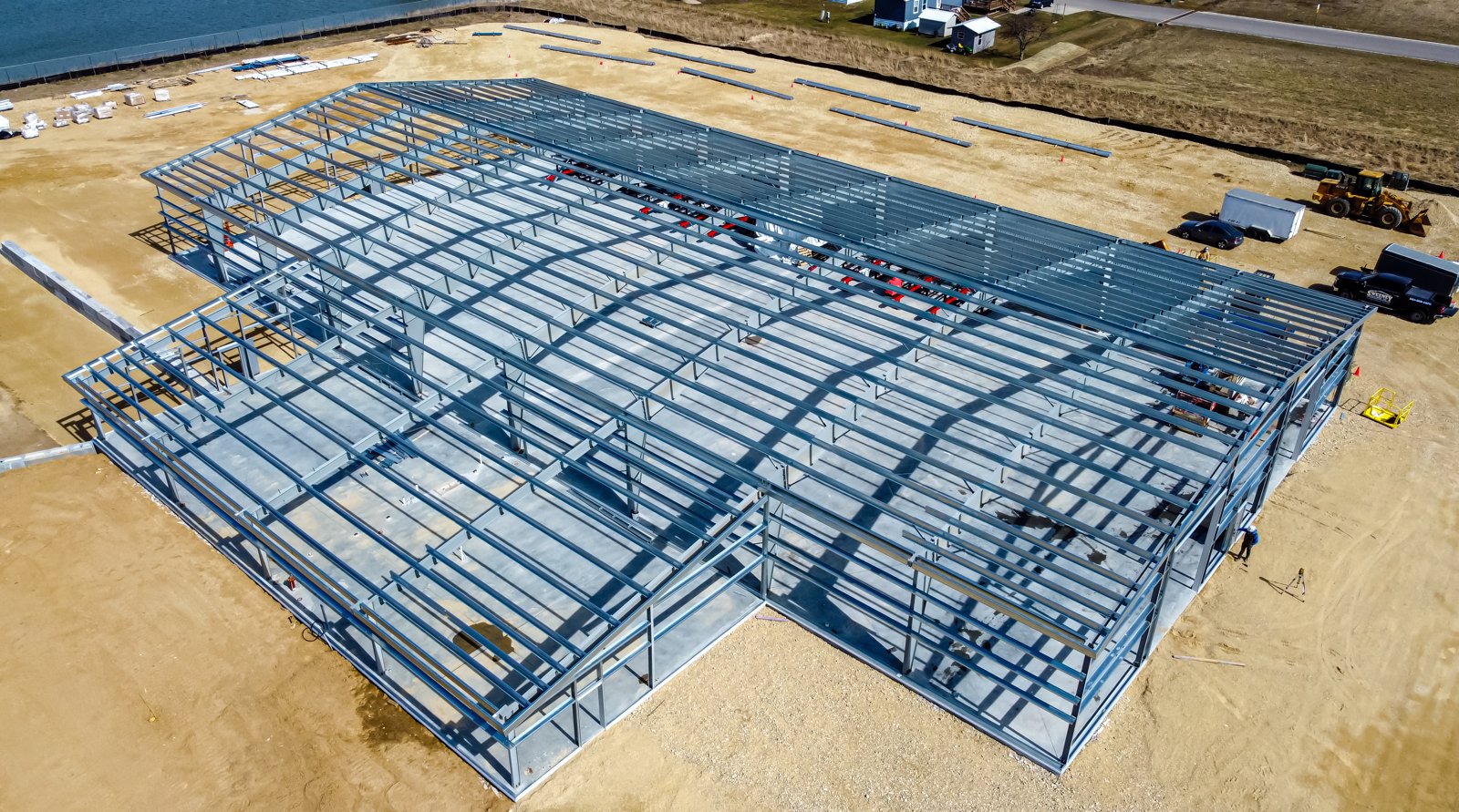
Brazil’s industrial buildout is concentrating around logistics condominiums, agro-processing plants, and manufacturing parks that need large clear spans, fast delivery, and predictable cost. A prefab industrial steel building in Brazil answers all three. Steel frames reach the column spacing that distribution and production lines require, arrive as engineered kits that cut on-site labor, and carry a cost basis buyers can lock before fabrication starts. For procurement teams, project owners, and contractors working in São Paulo, Minas Gerais, the Northeast, or the southern states, the decision is rarely whether to build in steel. It is how to specify the frame so it matches Brazilian loads, codes, and site logistics.
This guide covers structural design, wind and seismic basis, material grades, corrosion protection for coastal and industrial environments, installation timelines, budget ranges, and the local rules that shape a project. It closes with buyer questions and a clear procurement recommendation.
Why Prefab Steel Fits Brazil’s Industrial Demand
Brazilian industrial demand splits into a few repeating building types: logistics warehouses in condominium parks along the Anhanguera and Bandeirantes corridors, agro-industrial sheds in the Center-West, and factory buildings near the ABC region and the Manaus free zone. Each one rewards a clear-span steel frame.
- Clear span and rack density. Logistics tenants want 12 m to 18 m clear height and column grids that fit standard pallet racking. Steel portal frames and trusses deliver spans of 30 m to 50 m without internal columns.
- Speed to revenue. Built-to-suit logistics parks run on tight handover dates. A fabricated steel kit erects faster than cast-in-place concrete, so tenants start operating sooner.
- Cost control against inflation. The real has seen sharp swings. Fixing steel tonnage and fabrication scope early protects the budget from material drift during a long build.
- Expandability. Agro and manufacturing clients often phase capacity. Bolted steel frames let owners extend a bay line without demolishing finished structure.
For a feature-by-feature look at how these frames are configured, the prefab steel warehouse and steel workshop pages show typical layouts that map onto Brazilian park and factory requirements.
Structural Design and Code Basis
Brazil designs steel structures to its own ABNT NBR standards rather than to Eurocode or AISC directly, though the underlying mechanics are shared. A supplier exporting to Brazil should engineer to these references or provide calculations a local engineer can check and stamp.
- ABNT NBR 8800 governs the design of steel and composite structures for buildings. It sets the limit-state method, member capacities, and connection rules.
- ABNT NBR 14762 covers cold-formed steel members, relevant for purlins, girts, and light-gauge secondary framing.
- ABNT NBR 6123 defines wind loads, the dominant lateral action across most of Brazil. It maps basic wind speeds by region and applies topography and terrain factors.
- ABNT NBR 8681 sets the actions and safety combinations used to mix dead, live, wind, and other loads.
Seismic action is minor across most of Brazil compared with the Andes, but NBR 15421 covers seismic design where it applies. Wind, not earthquake, usually drives the lateral system. A foreign fabricator should request the project’s basic wind speed (V0) and terrain category up front, because a coastal site in the Northeast can sit well above an inland park near Goiânia.
Loads That Shape the Frame
| Load case | Typical Brazil basis | Design note |
|---|---|---|
| Dead load | Self-weight + roofing + services | Standing-seam or trapezoidal steel roof, 0.10-0.20 kN/m2 |
| Roof live / maintenance | 0.25 kN/m2 per NBR 8800 practice | Concentrated load check at panel points |
| Wind (V0) | 30-50 m/s by region, NBR 6123 | Coastal NE and South higher; verify per municipality |
| Crane load | Project specific | Add runway beams and bracing for factory bays with overhead cranes |
Material Specifications
Frame steel for the Brazilian market is usually specified to ASTM or equivalent grades that local mills and importers recognize. Common choices:
- Primary frame: ASTM A572 Grade 50 (345 MPa yield) for hot-rolled and welded built-up sections, or equivalent Q355 plate for tapered members.
- Secondary members: cold-formed Z and C purlins and girts in galvanized coil, typically G350 to G550 base steel.
- Bolts: ASTM A325 / A490 high-strength structural bolts for moment and bracing connections.
- Roof and wall cladding: pre-painted Galvalume (AZ150) trapezoidal sheet, a standard finish in Brazilian industrial builds.
When the supplier issues a material list, buyers should confirm mill certificates accompany each heat of steel. The steel structure quality control guide sets out the documentation a project file should hold before any steel ships.
Surface Treatment and Corrosion Protection
Corrosion exposure varies sharply across Brazil. A frame for a dry inland park near Uberlândia faces a mild C2 to C3 environment. A plant near Salvador, Recife, or the Santos port belt sits in C4 or even C5 marine territory where salt aerosol accelerates rust. The protection system must match the site, using ISO 12944 corrosivity categories as the common reference.
| Environment | ISO 12944 category | Recommended system |
|---|---|---|
| Inland dry park | C2-C3 | Sa2.5 blast + zinc-rich primer + topcoat, 160-200 microns |
| Industrial / urban | C3-C4 | Blast + epoxy primer + polyurethane topcoat, 240-280 microns |
| Coastal / marine | C4-C5 | Hot-dip galvanizing or 3-coat epoxy system, 320 microns+ |
For coastal Northeast plants, hot-dip galvanizing of secondary steel plus a high-build epoxy on primary members is a durable combination. Buyers should state the target durability range (for example, high durability of more than 15 years to first major maintenance) so the supplier can size the coating system to it.
Application Scenarios
- Logistics condominium warehouses with 12 m clear height, dock levelers, and ESFR sprinkler provision for São Paulo and Rio corridors.
- Agro-processing and grain sheds in Mato Grosso and Goiás with wide spans and high ventilation.
- Manufacturing and assembly plants in the ABC industrial belt and Manaus free zone, often with overhead crane runways.
- Cold-chain and food plants in the South where insulated panel cladding pairs with the steel frame.
- Retail and building-material big-box units needing fast, repeatable construction.
Installation Timeline
A prefab steel building reaches site as a marked, drilled, and coated kit. Local crews bolt it together, which compresses the schedule against concrete. A representative mid-size logistics shed (say 5,000 m2) runs roughly like this:
| Phase | Indicative duration |
|---|---|
| Design, approval, shop drawings | 3-5 weeks |
| Fabrication | 4-7 weeks |
| Ocean freight to Brazilian port + customs | 5-8 weeks |
| Foundations (parallel with fab/freight) | 3-5 weeks |
| Steel erection | 3-6 weeks |
| Cladding, doors, finishes | 3-5 weeks |
Foundations should run in parallel with fabrication and shipping so the frame lands on cured footings. The steel building installation timeline breaks down how to overlap these phases without idle crews.
Budget and Cost Ranges
Pricing depends on span, height, crane provision, cladding, and corrosion class. As an indicative guide for landed steel building packages destined for Brazil, before foundations and local installation labor:
| Building type | Indicative USD / m2 (structure + cladding) |
|---|---|
| Basic logistics shed, C2-C3 | 45-70 |
| Standard industrial building, C3-C4 | 65-95 |
| Heavy plant with crane, C4-C5 coating | 95-140 |
These figures exclude import duties, ICMS and other Brazilian taxes, foundations, and site works, which vary by state. Buyers should add a line for customs and local taxation early, since Brazilian import charges can be a significant share of landed cost. The steel building cost guide explains what sits inside each line, and the steel building quote requirements page lists the data a supplier needs to price accurately.
Local Regulations and Climate Considerations
Brazilian projects face approval at the municipal level (alvará de construção) plus fire-brigade approval (Corpo de Bombeiros) that governs egress, fire compartmentation, and sprinkler provision. Steel members in fire-rated areas may need intumescent coating or board protection sized to the required fire-resistance rating. A supplier should ask early whether fire protection is in their scope or the local contractor’s.
- Wind: coastal and southern sites carry higher basic wind speed under NBR 6123; bracing and anchor design follow from it.
- Rain and drainage: tropical rainfall is intense; gutter and downpipe sizing must match short-duration storm intensity.
- Heat: roof ventilation, ridge vents, and insulated panels keep working temperatures manageable in the Center-West and Northeast.
- Taxation and documentation: Brazilian customs require detailed packing lists and certificates; a clean document set speeds clearance.
Foundation Design for Brazilian Sites
Brazilian soils range from stiff lateritic clays on the central plateau to soft alluvial deposits near rivers and the coast. The steel frame is light relative to concrete, which reduces foundation demand, but column base reactions still drive footing design. A supplier should issue base reaction tables (vertical, horizontal, and uplift) so the local geotechnical engineer can size isolated footings or piles. Where soft soils appear, driven or bored piles with pile caps are common; on firm plateau ground, isolated pad footings usually suffice. Anchor bolt templates shipped with the frame keep holding-down bolts in tolerance, which is the most common cause of erection delay when it goes wrong.
Prefab Steel Versus Concrete Frame in Brazil
Concrete remains common in Brazilian construction, so buyers often weigh the two. Steel wins on speed and clear span; concrete can win on raw material cost where local cement is cheap and labor is plentiful. The deciding factors usually are:
- Schedule: steel erection is faster and less weather-sensitive than forming and curing concrete.
- Span: steel reaches 30-50 m clear spans that concrete struggles to match economically.
- Future change: bolted steel extends and re-fits more easily than cast frames.
- Fire: concrete is inherently fire-resistant; steel needs applied protection in rated zones, which adds cost.
For logistics and large-span industrial work, steel is usually the stronger fit. For small heavily compartmented buildings, the gap narrows.
Quality Control and Documentation
A frame built offshore for Brazil should arrive with a complete document file: mill certificates per heat, welding procedure specifications and welder qualifications, coating thickness and adhesion records, bolt certificates, and as-built marking drawings. Welding should follow a recognized code such as AWS D1.1 or the equivalent referenced in NBR 8800 practice, with visual inspection on all welds and non-destructive testing on a sampled or full basis for critical joints. Buyers should require photographic records of blast profile and coating steps, because once members are painted the surface preparation underneath cannot be re-checked.
Logistics from Factory to Brazilian Site
Most prefab steel for Brazil ships through Santos, Paranaguá, Itajaí, or Suape depending on the destination region. Frames are nested into containers or shipped as breakbulk for long members. Key logistics points:
- Port choice should match the destination state to cut inland haulage; Suape suits the Northeast, Itajaí and Paranaguá the South.
- Customs documentation must be complete and consistent; mismatches between invoice, packing list, and certificates cause clearance delays.
- Inland transport over long distances (for example to Mato Grosso) adds cost and time; plan delivery windows around it.
- Container packing should group members by erection sequence so the site team unloads in build order.
Maintenance and Lifecycle
A well-coated steel building in an inland Brazilian park needs little beyond periodic inspection of the coating, gutters, and bolted connections. Coastal plants need a planned repaint cycle tied to the coating system’s durability rating. Buyers should ask the supplier for a maintenance schedule covering coating touch-up intervals, bolt re-torque checks after the first year, and drainage clearing before the rainy season. Keeping the as-built document file accessible makes future extensions and insurance assessments straightforward.
Built-to-Suit and Speculative Park Requirements
A large share of Brazilian logistics demand runs through condominium parks developed by specialized real-estate operators. These developers build either speculative (spec) sheds to attract tenants or built-to-suit (BTS) units for a named occupier. The steel specification differs between the two.
- Spec buildings are designed to a flexible standard: 12 m clear height, a regular column grid that suits common racking, generic floor loading, and dock provision that most tenants accept. The steel frame is kept neutral so the unit leases to the widest pool.
- Built-to-suit buildings follow a tenant’s process. That can mean higher clear height for automated storage, heavier floor and crane loads, special bay spacing for production lines, or cold-chain insulation. The frame is tuned to that brief.
For a supplier, the practical difference is how early the loading and geometry freeze. Spec work fixes a standard envelope quickly; BTS work waits on the tenant’s equipment layout. Buyers should tell the fabricator which model applies so the engineering team holds or releases the design at the right moment. Class-A park standards in Brazil increasingly expect documented structural design, fire-brigade compliance, and a durable corrosion system, all of which favor an engineered steel kit over an ad-hoc build.
Roofing, Drainage, and Thermal Performance
Brazil’s tropical and subtropical climate puts heavy demands on the roof. Intense, short-duration rainfall means gutters and downpipes must be sized for high instantaneous flow, not just annual averages. Internal box gutters need overflow provision so a blocked outlet does not pond water on the roof and overload the frame. On the thermal side, solar gain through a bare steel roof can push internal temperatures uncomfortably high in the Center-West and Northeast.
- Roof pitch: a modest slope (typically 5 to 10 percent) sheds tropical rain quickly and suits standing-seam or trapezoidal sheet.
- Ventilation: ridge vents and wall louvers drive stack-effect airflow that lowers working temperatures without mechanical cost.
- Insulation: a glass-wool or PIR insulated panel, or a sandwich roof, cuts heat gain for food, pharma, and comfort-controlled spaces.
- Skylights: translucent roof panels reduce daytime lighting energy but should be detailed for the same wind uplift as the steel sheet around them.
These details belong in the supplier’s scope discussion. A frame priced without adequate gutter and ventilation provision looks cheap on paper and disappoints in the first rainy season.
Connection Design and Erection Tolerance
Bolted moment connections at the eaves and apex of a portal frame carry the lateral load path, so their detailing decides how the building behaves in a storm. End-plate connections with high-strength bolts are the norm; the supplier should provide a connection schedule that the local erector follows exactly. Erection tolerance is the other quiet risk. Anchor bolts set out of position, columns out of plumb, or rafters out of line all show up as forced-fit problems on site. A factory that ships drilled, match-marked members with anchor-bolt templates and a clear erection sequence drawing removes most of that risk. Buyers should ask to see a sample erection manual before placing the order; its quality is a fair proxy for how the real project documents will look.
Corrosion Strategy for Coastal and Inland Sites
Brazil’s corrosion map is wide. A distribution park in Guarulhos or Cajamar sits in a relatively benign inland atmosphere, while a port-side plant in Santos, Suape, or Pecem faces chloride-laden marine air that attacks unprotected steel quickly. The coating system should follow the ISO 12944 environment class for the actual site, not a single national default.
- Inland C2 to C3: a hot-dip galvanized or zinc-rich primer with a polyurethane topcoat gives long maintenance-free life.
- Coastal C4 to C5: a heavier duplex system (galvanizing plus a high-build epoxy and topcoat) is the safer specification, with attention to bolt and connection detailing where corrosion starts.
Specifying the right class up front avoids early repainting and protects the warranty. A supplier should state dry-film thickness, surface-preparation grade, and the expected durability range in the quotation so the buyer can compare offers on equal terms rather than on headline price alone.
Common Buyer Questions
Will a frame engineered abroad satisfy Brazilian code?
It can, provided the supplier designs to ABNT NBR references (NBR 8800, 6123, 14762) or provides calculations a local engineer can verify and stamp. Always confirm a Brazilian responsible engineer will sign off the design for municipal and fire-brigade approval.
How are Brazilian import taxes handled?
Import duty, IPI, ICMS, PIS, and COFINS apply to imported steel building kits and vary by classification and state. These are outside the supplier’s ex-works price. Budget for them as a separate, significant line and work with a local customs broker.
What corrosion system should a coastal Northeast plant use?
Treat it as C4 to C5 marine. Hot-dip galvanizing of secondary steel plus a high-build epoxy/polyurethane system on primary members, total dry film thickness above 320 microns, is a durable baseline. State your target maintenance-free period so the supplier sizes the system to it.
Can the building be expanded later?
Yes. Bolted portal frames extend along the ridge by adding bays. If you anticipate growth, tell the supplier at design stage so the end frame and bracing are detailed as a future internal frame, which avoids rework when you expand.
What lead time should I plan for?
From design freeze to a weather-tight building, plan roughly 18 to 28 weeks including fabrication, ocean freight, customs, and erection. Running foundations in parallel with fabrication and shipping is the main lever for keeping the program tight.
Who handles fire protection of the steel?
Clarify scope early. Intumescent coating or board protection in fire-rated zones can be applied at the factory or by the local contractor. The fire-brigade approval defines what rating each area needs, so secure that requirement before fixing the protection scope.
Procurement Recommendation
For a Brazilian industrial project, choose a supplier that engineers to ABNT NBR standards or supports a local stamping engineer, matches the corrosion system to your site’s ISO 12944 category, and issues complete mill, weld, and coating documentation. Lock the steel tonnage and fabrication scope early to protect against currency and material swings, run foundations in parallel with fabrication, and budget Brazilian import taxes as a distinct line from day one. Send your basic wind speed, soil report, clear-height and crane needs, and target handover date to request a quote, and the engineering team can return a frame design, corrosion system, and landed cost that fit your park or plant.
For wider context on regional projects, see the country examples in the global prefab steel building country guides. Authoritative external references include the ISO 12944 corrosion protection standard and the American Institute of Steel Construction for general steel design practice that underpins NBR methods.
Buyers who treat the first project as a template tend to do better on the second and third. Keeping the connection details, coating system, and document package consistent across a multi-site rollout shortens each later approval cycle and gives maintenance teams a single standard to learn. That repeatability is often worth more than a small per-tonne saving on any single building.