
Prefab Steel Warehouse in Qatar: Specification and Procurement Guide for Industrial Buyers

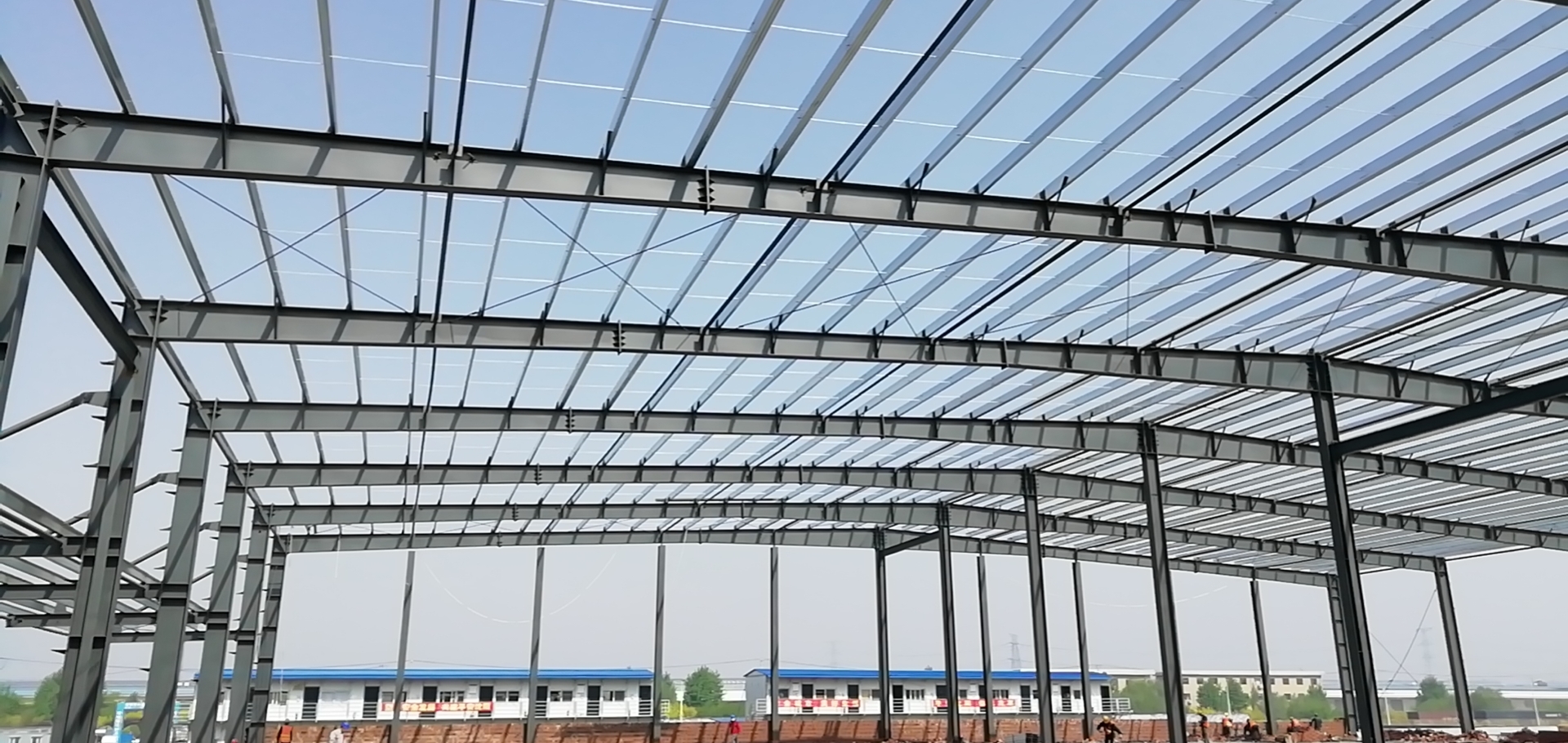
Qatar’s push to diversify beyond hydrocarbons has put industrial and logistics real estate at the center of capital planning. For procurement managers, contractors, and project owners working around Doha, Mesaieed, Ras Laffan, and the Umm Alhoul Special Economic Zone, a prefab steel warehouse in Qatar is often the fastest route from a signed land lease to an operating facility. This guide covers structural design, loading conditions, material specifications, corrosion protection, installation timelines, and budget ranges so you can specify a building that passes Qatar Civil Defence (QCD) review and holds up in a Gulf climate.
We supply pre-engineered steel buildings to contractors and end users across the GCC. The notes below reflect what actually gets asked during tendering and what reviewers in Qatar look for before they stamp a drawing set.
Why Prefab Steel Suits Qatar’s Industrial Market
Land allocations in zones like Umm Alhoul and the Qatar Free Zones come with build-out deadlines. A clear-span steel portal frame lets you enclose large floor areas without internal columns, which matters for warehousing, light manufacturing, and cold-chain logistics serving Hamad Port. Compared with concrete-frame construction, a prefabricated approach shortens the on-site program because the primary frame is fabricated off-site and bolted together on a prepared foundation.
- Clear spans from 18 m up to 40 m and beyond using tapered built-up sections, freeing the floor for racking and forklift traffic.
- Speed of erection that suits the tight handover dates attached to zone leases.
- Predictable cost because steel tonnage and cladding areas are quantifiable at the design stage.
- Expandability by adding bays along the ridge line as throughput grows.
Structural Design and Code Basis
Most steel buildings delivered into Qatar are designed to the Qatar Construction Specifications (QCS 2014) framework, which references international standards including ASCE 7 for loads, AISC 360 for steel design, and Eurocode where the client’s engineer prefers it. The Qatar Civil Defence Department reviews fire and life-safety provisions, so the design package has to align mechanical, structural, and fire strategy from the start.
For a typical single-story warehouse, the structural system is a series of moment-resisting portal frames spaced 6 m to 9 m apart, tied together with cold-formed Z purlins and wind bracing. The choice of frame spacing trades steel weight in the main frame against purlin and sheeting cost. Closer spacing means lighter purlins; wider spacing means heavier frames but fewer of them.
Wind, Seismic, and Roof Loads in Qatar
Qatar sits in a low-seismic but high-wind, high-temperature environment. The governing actions for most warehouse frames are wind uplift and the thermal regime, not earthquake.
| Design action | Typical basis for Qatar | Design note |
|---|---|---|
| Basic wind speed | ~44-45 m/s (3-sec gust, ASCE 7 / QCS) | Uplift on roof sheeting and purlin fixings often governs cladding screws. |
| Seismic | Low (Seismic Design Category A-B) | Rarely controls portal frame sizing; detailing still checked. |
| Roof live / maintenance load | 0.57-0.75 kN/m2 | Access for maintenance only; no snow. |
| Design temperature range | Up to ~50 C ambient, higher surface | Expansion joints for buildings over ~90 m; light roof colors. |
| Internal pressure | Depends on opening ratio | Large roller doors raise internal pressure coefficients; declare openings early. |
The high ambient temperature has two practical effects. First, long buildings need expansion joints to manage thermal movement in the frame and sheeting. Second, roof color and insulation matter for both energy use and the comfort of workers below an uninsulated deck. We usually recommend a reflective roof finish and a minimum insulation specification for any conditioned space.
Material Specifications
The frame and envelope specification drives both durability and price. The table below is a representative specification for a Qatar logistics warehouse.
| Component | Typical specification | Standard |
|---|---|---|
| Primary frame (columns, rafters) | Welded built-up H-sections, Q355B / S355JR, yield 355 MPa | GB/T 1591 / EN 10025 |
| Secondary members (purlins, girts) | Cold-formed Z/C galvanized, Z275 coating | EN 10346 |
| Roof / wall cladding | 0.5-0.6 mm color-coated steel, PVDF top coat | AZ150 / PVDF |
| Insulation | Glass wool or PU sandwich panel, 50-100 mm | Project-specific U-value |
| Anchor bolts | Grade 8.8, hot-dip galvanized | ISO 898-1 |
| High-strength bolts | Grade 10.9 friction-grip at moment joints | ASTM A325 / A490 equivalent |
For coastal sites near Hamad Port or Mesaieed, the airborne chloride load is significant. That pushes the corrosion specification harder than an inland Doha site, which we cover next.
Surface Treatment and Corrosion Protection
Gulf coastal exposure is classified around C4 to C5-M under ISO 12944, depending on proximity to the shoreline. The protective system has to match that category and the intended maintenance interval.
- Inland Doha (C3-C4): Surface preparation to Sa 2.5, zinc-rich epoxy primer (60-80 micron) plus polyurethane topcoat, total dry film thickness 200-240 micron.
- Coastal / port-adjacent (C5-M): Hot-dip galvanizing of secondary steel, plus a three-coat epoxy/PU system on primary steel, total 280-320 micron, or full hot-dip galvanizing of the frame where budget allows.
- Fasteners: Hot-dip galvanized or stainless where condensation is expected.
- Cut edges and welds: Stripe-coated before the main topcoat, the usual failure point if skipped.
Specifying corrosion protection by ISO 12944 category, rather than by a generic two coats of paint, is the single most useful thing an owner can do to control whole-life cost in Qatar.
Application Scenarios
The same structural system adapts to several uses common in the Qatari market:
- Distribution and 3PL warehouses near Hamad Port and Logistics Village, with high eaves (10-12 m) for multi-level racking.
- Light manufacturing and assembly in Mesaieed and Ras Laffan industrial areas, often with overhead crane provision.
- Cold storage for food import and distribution, using insulated sandwich panels and vapor-sealed details.
- Workshops and equipment maintenance sheds for the oil, gas, and construction sectors.
If your project includes an overhead crane, declare the capacity and duty cycle early. Crane loads change column sizing and bracing layout, and retrofitting a crane into a frame designed without one is expensive.
Installation Timeline
A realistic program for a mid-size Qatar warehouse, from order to handover, looks like this. Foundations are usually a separate local civil package running in parallel with fabrication.
| Phase | Indicative duration |
|---|---|
| Design, approval drawings, QCD coordination | 2-4 weeks |
| Fabrication of primary and secondary steel | 4-7 weeks |
| Sea freight to Hamad Port + customs clearance | 3-5 weeks |
| Foundation works (local, parallel) | 3-6 weeks |
| Frame erection | 2-4 weeks |
| Cladding, doors, finishes | 3-5 weeks |
For a 3,000-5,000 m2 building, plan on roughly 4-6 months from order to a weather-tight envelope, assuming approvals and foundations stay on track. Our steel building installation timeline guide breaks down each stage in more detail.
Budget and Cost Ranges
Pricing varies with eaves height, span, crane provision, insulation, and corrosion class. The figures below are indicative supply-and-erect ranges for the steel building package landed and erected in Qatar; they exclude land, foundations, MEP fit-out, and racking.
| Building type | Indicative rate (USD/m2) | Notes |
|---|---|---|
| Basic dry-storage warehouse | 90-140 | Single skin roof/wall, no crane |
| Insulated logistics warehouse | 140-210 | Sandwich panel, high eaves |
| Workshop with overhead crane | 170-260 | Crane beams, heavier frame |
| Cold storage envelope | 230-330 | Thick PU panel, vapor sealing |
These ranges move with global steel prices and the corrosion specification. For a firm number, share your span, length, eaves height, location, and any crane or insulation requirement. See our steel building cost guide and quote requirements page for the inputs we need to price accurately.
Local Regulations and Climate Considerations
Beyond structural code, a Qatar project touches several approval and climate factors:
- Qatar Civil Defence (QCD) approval for fire strategy, exits, and fire-rated separation, required before occupancy.
- Municipality building permit through the relevant baladiya, with drawings stamped by a locally registered engineer.
- Zone authority requirements in free zones and special economic zones, which can set their own setback, height, and cladding rules.
- Thermal design for ambient temperatures that routinely exceed 45 C in summer, affecting insulation, ventilation, and any conditioned space.
- Dust and sand management at door seals and ventilation intakes.
Authoritative references worth keeping on hand are the American Institute of Steel Construction (AISC) for steel design provisions and the ISO 12944 corrosion protection standard for matching coatings to the Gulf environment.
Maintenance and Lifecycle Planning
A prefab steel warehouse in Qatar is a 30 to 50 year asset when the coating system and connections are maintained on schedule. Buyers who plan maintenance from day one avoid the premature corrosion that shortens building life in coastal Gulf conditions. The maintenance burden is low compared with concrete, but it is not zero, and the salt-laden air around Doha, Mesaieed, and Ras Laffan accelerates coating breakdown on any exposed edge.
The first inspection should happen within 12 months of handover, then every 24 to 36 months after that. Inspectors look at the same points each time: coating condition at cut edges and welds, bolt tightness at primary moment connections, sealant condition around wall and roof penetrations, and signs of water tracking inside the cladding. Catching a failed sealant joint early costs a few hundred riyals. Letting it run for three years can mean replacing a purlin line and repainting a bay.
| Maintenance Item | Interval | Typical Action |
|---|---|---|
| Visual coating inspection | 12 months | Photograph and log edge corrosion, touch up bare spots |
| Bolt torque check (primary connections) | 24 months | Re-torque sample of moment-connection bolts to spec |
| Roof and wall sealant | 24 to 36 months | Reseal penetrations, ridge, and flashing laps |
| Gutter and downpipe clearing | 12 months, before wet season | Clear sand and debris to prevent ponding |
| Full repaint of exposed steel | 15 to 20 years | Abrasive clean and recoat to original spec |
Galvanized secondary steel and a properly applied three-coat system on primary members push the first major repaint well past the 15 year mark in most inland Qatar locations. Sites within a few kilometres of the coast should budget for a shorter cycle. Ask the supplier to supply the coating data sheets and the dry film thickness records at handover, because those documents set the baseline for every future inspection.
Procurement Checklist for Qatar Buyers
Before issuing a purchase order for a prefab steel building, work through a short checklist. It keeps quotes comparable and prevents the scope gaps that cause variation claims later.
- Confirm the design code basis in writing: wind speed, exposure category, and any seismic or snow values the engineer used.
- State the corrosion category for your site so the coating spec matches the real exposure, not a generic inland assumption.
- List exactly what is in the supply scope: primary frame, secondary steel, cladding, fasteners, accessories, and whether anchor bolts are included.
- Ask whether erection, cranage, and site supervision are in the price or quoted separately.
- Request the welding and inspection plan, including the standard used for weld acceptance and the proportion of welds tested.
- Get the lead time and delivery terms in writing, with the Incoterm named so port and inland transport responsibility is clear.
- Confirm what documentation arrives with the building: mill certificates, coating records, as-built drawings, and bolt certificates.
A supplier who answers these points clearly is usually one who has shipped to Qatar or the wider Gulf before. Vague answers on coating category or inspection standard are a sign to slow down and ask for detail before committing budget.
Project Scenarios Across Qatar
Buyers in Qatar typically fall into a few project profiles, and the steel package shifts with each one. A logistics operator near Hamad Port or the Ras Bufontas free zone usually needs clear-span warehouse bays of 30 to 45 metres, eaves heights of 10 to 12 metres for racking, and wide roller-shutter or dock-leveller openings. A light manufacturer in the Mesaieed or Umm Alhoul industrial areas leans toward a workshop layout with an overhead crane runway, reinforced columns at crane brackets, and a mix of natural and mechanical ventilation. A poultry or agribusiness operator inland needs tighter envelope control, insulated panels, and corrosion detailing that accounts for ammonia exposure inside the building.
Mapping your project to one of these profiles early helps the factory quote the right frame rather than a generic shed. The table below shows how common Qatar project types translate into structural priorities.
| Project type | Typical span / height | Structural priority | Envelope focus |
|---|---|---|---|
| Port-side distribution warehouse | 35-45 m / 10-12 m eaves | Clear span, dock openings, wind bracing | Insulated roof, reflective coating |
| Light manufacturing workshop | 24-30 m / 8-10 m eaves | Crane runway, column reinforcement | Ventilation, daylighting |
| Cold or controlled storage | 20-30 m / 7-9 m eaves | Panel support spacing, vapour control | Thick PU/PIR panels, sealed joints |
| Agribusiness / poultry house | 12-18 m / 4-6 m eaves | Corrosion detailing, hygiene finishes | Insulated panels, controlled ventilation |
For most Qatar projects the long-lead items are the same regardless of profile: primary steel members, sandwich panels, and any crane equipment. Confirming these three early in the order keeps the rest of the schedule from slipping. If your scope includes an steel workshop bay alongside warehouse storage, ask the factory to detail the shared wall and any differential settlement at the interface during design rather than on site.
Foundation Design for Qatar Soil Conditions
The steel frame is only as reliable as what it sits on. Much of Qatar’s developed land sits on weak near-surface sabkha (salt flat) deposits, fill, or weathered limestone. Soil conditions vary sharply between inland Doha plots and reclaimed coastal land, so a geotechnical investigation is not optional. The frame designer needs the allowable bearing pressure and the groundwater chemistry before finalizing column bases.
Two foundation patterns cover most warehouse projects:
- Isolated pad footings under each column where competent ground is shallow. These are the most economical and suit firm limestone or compacted engineered fill.
- Pile caps on bored piles where sabkha or deep fill cannot carry pad loads, common on reclaimed land near the coast.
Qatar’s groundwater frequently carries high sulphate and chloride levels, which attack ordinary concrete. Specify sulphate-resisting cement and an appropriate concrete cover and crack-width limit so the foundation lasts as long as the steel above it. The slab-on-grade also needs attention: warehouse floors carrying racking legs and forklift wheel loads are usually 150-250 mm reinforced slabs on a compacted sub-base, with the joint layout coordinated against the racking grid. We provide column base reactions and anchor-bolt setting plans so the local civil contractor can design and pour foundations that match the frame.
Prefab Steel Versus Concrete Frame in the Gulf
Owners in Qatar often weigh a steel portal frame against a reinforced concrete or block-and-beam structure. Each has a place, but for single-story industrial buildings the trade-offs usually favor steel.
| Factor | Prefab steel frame | Concrete frame |
|---|---|---|
| Clear span | Easily 30-40 m column-free | Limited; needs internal columns or heavy transfer beams |
| Construction speed | Fast; fabrication parallel to foundations | Slower; formwork, pour, cure cycles |
| Site labor in Gulf heat | Lower; mostly bolting | Higher; wet trades affected by temperature |
| Future modification | Bolt-on extensions, simple openings | Harder to alter once cast |
| Fire resistance | Needs intumescent or board protection where rated | Inherently better |
| Maintenance | Recoat per ISO 12944 cycle | Lower coating need, but cracking risk |
The honest summary: steel wins on speed, span, and adaptability, which is why pre-engineered buildings dominate the warehouse and workshop segment. Concrete still earns its place where fire rating, blast resistance, or very heavy floor loading drives the brief. Many Qatar projects end up hybrid, with a steel superstructure on concrete foundations and a few concrete-rated zones for plant rooms or fire compartments.
Energy, Ventilation, and Worker Comfort
Running a warehouse through a Qatari summer is an energy challenge. The roof is the dominant heat-gain path, so the envelope specification has a direct effect on operating cost and on conditions for staff working inside.
- Reflective roof coatings with a high solar reflectance index cut surface temperature and heat gain.
- Insulated sandwich panels (50-100 mm PU or rock wool) for any conditioned or semi-conditioned space.
- Ridge ventilators and wall louvers to drive natural cross-ventilation in non-conditioned storage.
- Turbine or powered extract fans to remove the heat layer that builds under the roof deck.
- Roller-door air curtains at loading docks to limit conditioned-air loss.
Specifying insulation and ventilation at the design stage costs far less than retrofitting comfort cooling into a single-skin shed that turned out to be unworkable in July.
Quality Control and Documentation
Qatar reviewers and serious end users expect a documented quality trail. Before steel ships, the package should include mill certificates for the plate and sections, welding procedure specifications and welder qualifications, and a coating inspection record showing dry film thickness against the specified ISO 12944 system. For the primary moment connections, non-destructive testing (ultrasonic or magnetic particle) of critical welds is standard practice.
On arrival, a receiving inspection should confirm member marks against the erection drawings and check for transit damage to the coating. Our steel structure quality control guide sets out the checks we run at each stage, from raw material to final erection.
Logistics from Factory to Qatar Site
Most prefabricated steel for Qatar arrives by sea through Hamad Port. Primary members are loaded in 40-foot containers or as break-bulk for longer rafters, with secondary steel, purlins, and cladding nested to use container volume efficiently. A few practical points keep the delivery on schedule:
- Packing lists tied to erection sequence so the first containers opened hold the steel needed first.
- Bundle weights sized to the crane and forklift capacity available on site.
- Customs documentation prepared in advance, including certificates of origin and conformity where the zone authority requires them.
- Cladding protected with edge packing and film to avoid coil-coat damage in transit.
Coordinating the shipping schedule with foundation completion is what keeps the erection crew from standing idle or, worse, steel sitting in a yard accruing storage charges.
Common Buyer Questions
How long does a prefab steel warehouse take to build in Qatar?
For a 3,000-5,000 m2 building, expect about 4-6 months from order to a weather-tight envelope, including fabrication, shipping to Hamad Port, and erection, assuming approvals and foundations run in parallel.
What corrosion protection do I need near the coast?
Sites close to the shoreline or port fall under ISO 12944 category C5-M. That calls for hot-dip galvanizing of secondary steel plus a multi-coat epoxy/polyurethane system on the primary frame, or full galvanizing where budget allows.
Can the building take an overhead crane later?
Only if it was designed for crane loads from the start. Crane duty changes column and bracing design, so declare the capacity at the quotation stage rather than retrofitting.
Who handles approvals with Qatar Civil Defence?
The local contractor or consultant of record typically submits to QCD and the municipality, using drawings stamped by a registered engineer. We provide the structural design package and calculations that feed that submission.
What is the realistic budget per square meter?
Indicative supply-and-erect rates run from about 90 USD/m2 for basic dry storage to 230-330 USD/m2 for cold storage, excluding land, foundations, and fit-out. Span, eaves height, insulation, and crane provision drive the final figure.
Procurement Recommendation
For a Qatar project, lock down three things before requesting a firm quote: the corrosion class based on distance from the coast, the eaves height needed for your racking or crane, and the approval route through QCD and the municipality. Getting these right at the start avoids the costly re-design that happens when a crane or a higher rack layout appears after the frame is sized.
If you are scoping a warehouse, workshop, or distribution center in Qatar, our team can size the frame and return a specification-backed quotation. Start with our steel warehouse page or request a quote with your basic dimensions and location.