
Saudi Arabia Prefab Steel Warehouse Guide for Riyadh, Jeddah and Dammam Logistics Projects

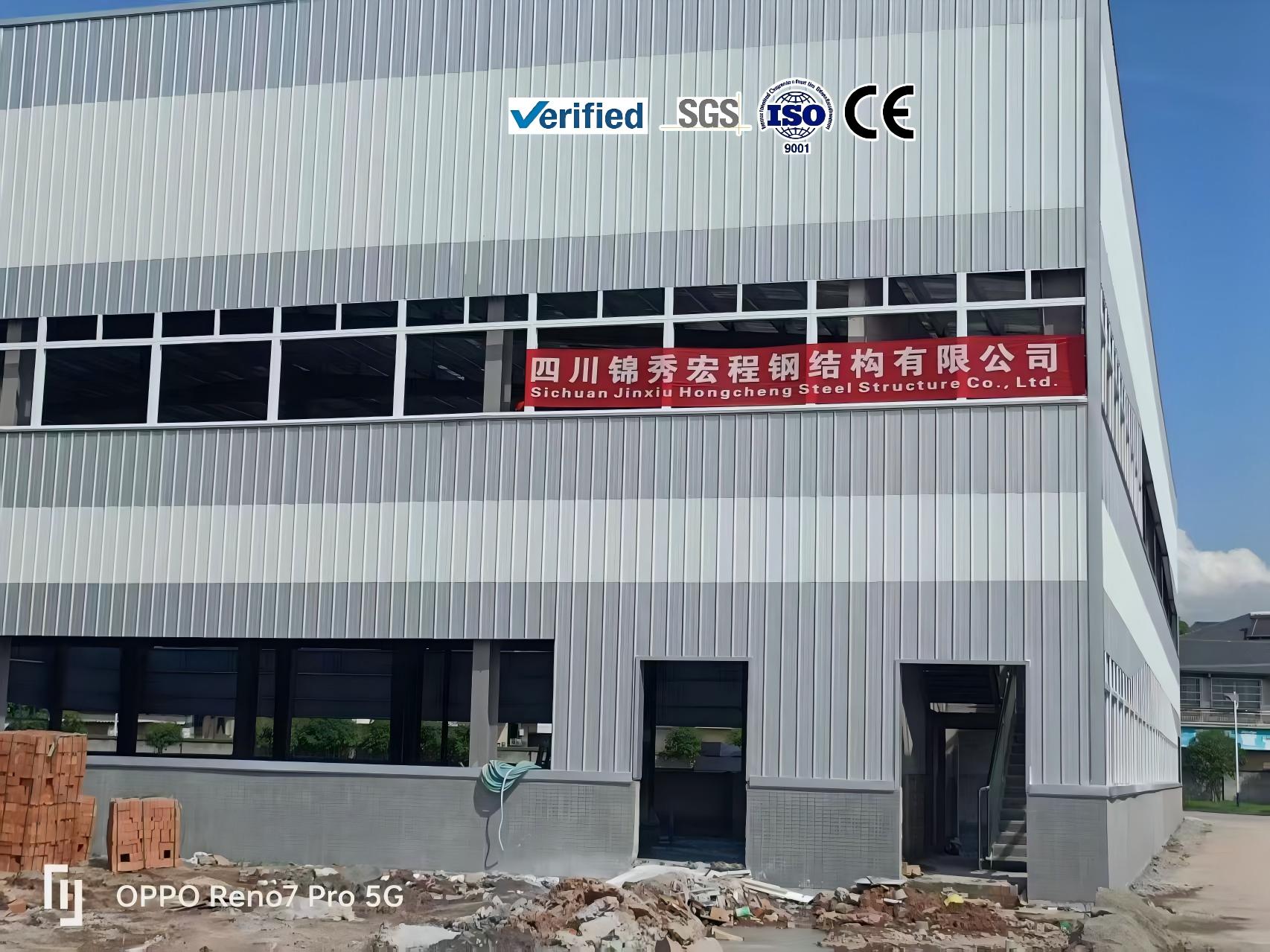
Saudi Arabia is building distribution capacity faster than almost any market in the Gulf, and a prefab steel warehouse sits at the center of that push. Between the logistics targets in Vision 2030, the expansion of dry ports along the Riyadh corridor, and the cold-chain demand feeding grocery and pharma networks, procurement teams in the Kingdom are specifying steel-framed storage at a pace that traditional concrete construction struggles to match. This guide is written for project owners, contractors, and supply-chain managers who need to understand what a prefab steel warehouse should deliver for Riyadh, Jeddah, and Dammam projects, and how to budget and specify one without surprises.
Why Saudi Buyers Choose Prefab Steel Warehouses
The case for steel in the Kingdom is practical, not theoretical. A pre-engineered steel frame reaches clear spans of 30 to 60 meters without internal columns, which is exactly what a 3PL operator or a national distributor needs for racking flexibility and forklift movement. Concrete and block construction cannot offer the same column-free floor plate at a competitive cost, and the build time difference is measured in months, not weeks.
Three drivers come up repeatedly in Saudi tenders:
- Speed to operation. A 5,000 square meter prefab warehouse frame can be erected in 8 to 12 weeks once foundations are ready. For tenants signing leases tied to Vision 2030 logistics zones, that schedule certainty protects revenue.
- Heat performance. Insulated sandwich panel cladding keeps interior temperatures manageable through Riyadh and Dammam summers that routinely pass 45 C. Cold-chain and ambient storage both benefit from the right panel core.
- Expansion logic. Bolted portal frames let an owner extend a building along its length later without demolishing existing structure. Phased rollouts in King Salman Energy Park and similar zones rely on this.
If you are weighing the broader product range before settling on warehousing specifically, our prefab steel warehouse page lays out the standard configurations we supply across the Gulf.
Reading the Saudi Climate and Load Picture
Specifying a warehouse for the Kingdom means designing for conditions that differ sharply between regions. A building in Jeddah faces coastal humidity and salt-laden air off the Red Sea. A building in Riyadh deals with dust storms, high diurnal temperature swings, and dry heat. The Eastern Province around Dammam combines Gulf humidity with industrial atmospheres near Jubail and Dhahran.
Wind Loads
The Saudi Building Code (SBC 301) governs structural loading, and basic wind speeds across most populated zones fall in the 130 to 165 km/h range for design purposes, with coastal and open desert sites at the higher end. A competent steel designer applies gust factors and exposure categories based on terrain, so a warehouse on an open industrial plot outside Dammam carries heavier frame and bracing requirements than one shielded within a built-up zone in Riyadh.
Seismic Considerations
Most of central and eastern Saudi Arabia sits in low to moderate seismic categories, but the western escarpment near the Red Sea rift carries higher seismic demand. SBC 301 maps these zones, and a steel portal frame handles seismic energy well because of its ductility. The connections, not the members, usually decide seismic performance, so bolt grades and gusset plate detailing matter more than raw steel tonnage.
Thermal and Dust
Roof and wall systems carry the real burden in Saudi heat. A reflective roof finish plus 75 to 100 mm of insulation core reduces cooling load and protects stored goods. Dust ingress is managed through sealed ridge details, gasketed flashings, and properly lapped panel joints. These are cheap details that get skipped by low-bid suppliers and cause years of grief.
Structural Design and Material Specifications
A prefab steel warehouse for Saudi conditions is built around a clear-span or multi-span portal frame. The table below shows typical specifications we quote for Kingdom projects across three common building sizes.
| Parameter | Small Warehouse (1,500 m2) | Mid Warehouse (5,000 m2) | Large DC (12,000 m2) |
|---|---|---|---|
| Clear span | 24 m | 36 m | 2 x 30 m multi-span |
| Eave height | 7.5 m | 10 m | 12 m |
| Main frame steel | Q355B welded H-section | Q355B welded H-section | Q355B welded H-section |
| Roof slope | 5% | 5% | 5% |
| Roof cladding | 0.5 mm color steel, single skin | 75 mm PU sandwich panel | 100 mm rock wool panel |
| Wall cladding | 0.5 mm color steel | 50 mm EPS/PU panel | 75 mm rock wool panel |
| Design wind | 140 km/h | 150 km/h | 160 km/h |
| Foundation | Isolated footings | Isolated + tie beams | Pile caps where needed |
Key material notes for Saudi specification:
- Steel grade. Q355B (equivalent to S355 in EN 10025) is the workhorse for primary frames. It carries more load per kilogram than Q235, which trims shipping weight and cost on long Gulf hauls.
- Purlins and girts. Z and C cold-formed sections in Z275 galvanized steel, typically 1.5 to 2.5 mm thick depending on span and wind uplift.
- Bolts. Grade 8.8 high-strength bolts for primary connections, hot-dip galvanized for coastal Jeddah and Dammam sites.
- Anchor bolts. Grade 8.8 with adequate embedment, set with templates to hold tolerance during erection.
For a deeper view of how we approach frame design across building types, the steel structure design guide walks through span selection, bracing, and connection logic.
Surface Treatment and Corrosion Protection
This is where Saudi coastal and inland projects diverge most. Jeddah and the Eastern Province carry corrosion category C4 to C5 conditions near the water and around heavy industry, while inland Riyadh sits closer to C3. Matching the protective system to the actual site saves money and avoids premature failure.
| Environment | Corrosion Category | Recommended System | Life to First Maintenance |
|---|---|---|---|
| Inland Riyadh, dry | C3 | Sa 2.5 blast + zinc-rich primer + epoxy + PU topcoat, ~160 microns | 12-15 years |
| Coastal Jeddah | C4 | Sa 2.5 blast + zinc primer + 2 epoxy + PU, ~240 microns | 10-15 years |
| Industrial Dammam/Jubail | C5-I | Hot-dip galvanizing or zinc metallizing + epoxy + PU, 280+ microns | 15-20 years |
Cold-formed purlins and girts should be hot-dip galvanized to Z275 as a minimum, stepping up to Z450 for coastal builds. The point is to match coating spend to the corrosion load. Over-coating an inland Riyadh ambient warehouse wastes budget; under-coating a Jeddah port-side building invites rust within a few seasons.
Installation Timeline for Saudi Projects
Realistic scheduling keeps a project credible with tenants and lenders. The figures below reflect a 5,000 square meter warehouse on a prepared site, assuming materials clear customs at Jeddah Islamic Port or King Abdulaziz Port in Dammam without delay.
- Design and approval: 2 to 4 weeks for drawings, calculations, and municipality review.
- Fabrication: 4 to 6 weeks in the factory, running parallel with foundation work on site.
- Sea freight and customs: 3 to 5 weeks from a Chinese port to a Saudi port, plus clearance.
- Foundation: 3 to 5 weeks depending on soil and pile requirements.
- Steel erection: 4 to 6 weeks for frame, purlins, and bracing.
- Cladding and finishes: 3 to 4 weeks, overlapping the tail of erection.
From contract signing to a weathertight building, plan for 16 to 22 weeks. Our steel building installation timeline breaks these phases down further, including the overlaps that trim weeks off the critical path.
Cost Range and Budgeting
Buyers always want a number. Pricing moves with steel markets, building height, snow and wind demand, cladding choice, and how much finishing scope sits with the steel supplier versus local trades. The ranges below are indicative for the supply of a complete prefab steel warehouse package delivered to a Saudi port, excluding foundations, local labor, and MEP.
| Building Type | Cladding Level | Indicative Supply Cost (USD/m2) |
|---|---|---|
| Basic ambient warehouse | Single-skin roof and wall | 45 – 65 |
| Insulated distribution center | PU sandwich panel | 70 – 100 |
| Cold-chain warehouse shell | Rock wool / thick PU panel | 95 – 140 |
Add foundations, slab, MEP, fire systems, and local erection labor to reach a turnkey figure. In the Saudi market, foundations and slab often add 25 to 40 percent on top of the steel supply, depending on soil and floor loading. The steel building cost guide explains the line items in more detail so you can build a defensible budget for your board or lender.
Regulations and Approvals in the Kingdom
Compliance is straightforward when planned early and painful when left late. Key points for Saudi warehouse projects:
- Saudi Building Code (SBC): Structural design follows SBC 301 for loads and SBC 306 for steel. A licensed Saudi engineer of record typically reviews and stamps imported designs.
- Civil Defense (Directorate General of Civil Defense): Fire safety approval covers compartmentation, exits, and where required, sprinkler and alarm systems. High-pile storage triggers stricter fire requirements.
- Municipality (Amanah) permits: Building permits run through the local Amanah and increasingly the Balady platform.
- Economic city and zone rules: Projects inside KAEC, the Special Integrated Logistics Zone, or MODON industrial cities follow the zone authority’s own submission process, often faster than standard municipal routes.
Reference material worth bookmarking: the Saudi Building Code National Committee for code documents, and the Saudi national services portal for permit pathways. Always confirm current requirements with your local engineer, since zone rules update regularly.
Project Scenarios Across Saudi Arabia
Riyadh Inland Distribution Hub
A national grocery chain consolidating regional stock outside Riyadh wants a 10,000 square meter ambient and chilled facility. The brief calls for a 36 m clear span, 10.5 m eave for double-deep racking, and a fire-rated separation between ambient and chilled zones. Dry inland conditions allow a C3 coating system, and the reflective insulated roof manages cooling load through the long summer.
Jeddah Port-Adjacent Logistics
A freight forwarder near Jeddah Islamic Port needs fast cross-dock capacity. Salt air pushes the specification to a C4 coating, hot-dip galvanized secondary steel, and stainless fixings at exposed details. The building runs long and narrow to suit dock-high loading along one face, with canopies over the loading aprons.
Dammam and Jubail Industrial Storage
A petrochemical supplier in the Eastern Province needs covered storage near Jubail with C5-I corrosion protection. Hot-dip galvanizing on primary and secondary steel plus a heavy-duty topcoat handles the aggressive industrial atmosphere. Crane-ready frame design supports a future overhead crane for handling heavy spares.
Common Buyer Questions
How long does a prefab steel warehouse last in Saudi conditions?
With the right corrosion system matched to the site, the structural frame readily lasts 30 to 50 years. Cladding and coatings need periodic maintenance, with first repainting typically due in 10 to 15 years depending on coastal exposure. The frame itself rarely limits building life when specified correctly.
Can a steel warehouse handle Saudi summer heat without excessive cooling cost?
Yes, when the roof and wall systems do their job. A reflective roof finish, 75 to 100 mm insulation core, sealed details, and adequate ridge ventilation cut heat gain substantially. Many Saudi operators add roof turbine vents or powered extraction for ambient warehouses to manage interior temperatures economically.
What information do you need to quote a warehouse for our site?
At minimum: building dimensions and eave height, location, intended use, racking or crane loads, and any local code or zone requirements. A site plan and soil report sharpen the foundation advice. Our quote requirements page lists everything that speeds up an accurate proposal.
Do you supply only the steel, or a turnkey building?
Both models work. Many Saudi contractors buy the engineered steel package and insulated panels from us and handle foundations and erection locally. Others want a wider scope. We scope the split clearly in the contract so there is no gap between supply and site work.
How do we handle customs and delivery to a Saudi port?
Shipments are containerized or sent as breakbulk for larger frames, cleared at Jeddah or Dammam. We provide full packing lists, certificates of origin, and material certificates to support smooth clearance. Coordinating with an experienced Saudi customs broker is the single biggest factor in avoiding port delays.
Procurement Recommendations
For Saudi warehouse buyers, a few decisions carry the most weight:
- Match the coating to the actual site, not a generic spec. Coastal Jeddah and industrial Jubail need heavier protection than inland Riyadh.
- Lock the design to SBC early and engage a local engineer of record before fabrication, not after the steel arrives.
- Plan the foundation interface carefully. Most schedule slips come from foundation tolerances and anchor bolt placement, not steel.
- Specify expansion from day one if growth is likely. Designing end frames for future extension costs little now and saves a fortune later.
- Get material certificates in writing. Q355B steel, Z275 galvanizing, and 8.8 bolts should all be backed by mill and test documentation.
If you are comparing options across the Gulf and beyond, our country guides cover regional specifics for buyers in different markets. When you are ready to move, send your building parameters through our quote request page and we will return a detailed proposal sized to your Saudi project.
Steel Versus Concrete for Saudi Warehouses
Saudi developers still debate steel against concrete and block construction for storage buildings. Both work, but they suit different briefs. The comparison below reflects what matters to a procurement team weighing total project outcome rather than headline material price.
| Factor | Prefab Steel Frame | Concrete / Block |
|---|---|---|
| Clear span without columns | Up to 60 m, easy | Limited, needs internal columns or costly beams |
| Construction speed | 16-22 weeks typical | 30-40 weeks typical |
| Future expansion | Bolt-on extension along length | Difficult, often new structure |
| Weight on foundations | Light, smaller footings | Heavy, larger foundations |
| Heat behavior | Needs good insulation, then performs well | High thermal mass, slow to cool |
| Modification | Easy to add doors, mezzanines, cranes | Cutting concrete is slow and costly |
For most distribution, logistics, and light industrial uses in the Kingdom, steel wins on span, speed, and flexibility. Concrete still has a place for fire-sensitive storage or where heavy abuse-resistant walls are needed at low level, which is why many Saudi warehouses combine a steel frame with a concrete block dado wall to about 2.5 m, then steel cladding above.
Roof and Cladding Systems in Detail
The envelope decides how a Saudi warehouse performs and how much it costs to run. The frame is a one-time spend; cooling runs every day for decades.
Roof Options
- Single-skin color steel: Lowest cost, suited to ambient storage where temperature control is not critical. Add a reflective topcoat to cut solar gain.
- PU sandwich panel (50-100 mm): The common choice for insulated distribution centers. Good thermal performance and quick to install.
- Rock wool sandwich panel: Where fire rating matters, rock wool cores give a non-combustible option that satisfies Civil Defense requirements for many occupancies.
- Standing seam with under-purlin insulation: A premium leak-resistant roof for large clear spans where roof penetrations are minimal.
Wall Options
Wall systems follow the same logic. A common Saudi build uses a concrete block dado at low level to resist forklift and pallet impact, with insulated panel above. This protects the cladding where damage is most likely and keeps the upper wall light and well insulated. Personnel doors, sectional overhead doors, and dock levelers are integrated into the wall framing during design so that openings do not weaken the bracing.
Foundations and Floor Slabs
Steel buildings are light, so foundations are usually modest, but the floor slab is where warehouse money concentrates. A distribution center floor carries point loads from racking legs and dynamic loads from forklifts. Getting the slab wrong is expensive to fix.
- Footings: Isolated pad footings under each column suit most firm Saudi soils. Soft or made-ground sites near coastal Jeddah may need piles or ground improvement.
- Slab design: Floor flatness and joint layout matter for narrow-aisle racking and automated handling. Specify the flatness class early.
- Slab thickness: Typically 150 to 250 mm with reinforcement or steel fiber, sized to racking leg loads and axle loads.
- Anchor bolt setting: Templates and survey control keep anchor bolts within tolerance, which is the single most common cause of erection delay.
Fire Safety for Saudi Storage Buildings
Civil Defense approval is mandatory and shapes the building more than many buyers expect. High-pile storage above defined heights triggers sprinkler requirements, smoke venting, and tighter compartmentation. Steel members can be left exposed in many low-occupancy warehouse cases, but where fire rating is required, intumescent coatings or board encasement protect key members. Planning fire strategy with the steel design, rather than bolting it on later, avoids reworking the frame and roof. Discuss the intended commodity classification and storage height with your engineer at concept stage so the structure, sprinklers, and venting are coordinated from the start.
Logistics, Shipping, and Site Logistics in the Kingdom
Getting a steel building from a factory to a working warehouse in Saudi Arabia is a logistics exercise in its own right. The two big ports, Jeddah Islamic Port on the Red Sea and King Abdulaziz Port in Dammam on the Gulf, handle most containerized building shipments. Riyadh projects usually rail or truck components inland from Dammam, while western and central projects draw from Jeddah.
Practical points that protect a Saudi project schedule:
- Container versus breakbulk. Standard frames pack into 40-foot containers. Very long members ship as breakbulk or in open-top containers, which need extra handling planning at the port.
- Marking and bundling. Clear member marking and an erection-sequenced packing list let the site crew unload and stage steel without searching through bundles in 45 C heat.
- Customs documentation. Certificates of origin, material test certificates, and accurate commercial invoices keep clearance moving. Saudi customs scrutiny is real, and missing paperwork costs days.
- Site access. Confirm crane access, laydown area, and ground bearing for the mobile crane before steel arrives. A congested urban Jeddah plot needs a different lift plan than an open MODON plot near Riyadh.
Coordinating delivery windows with erection crews avoids demurrage and double-handling. The most common avoidable cost on Saudi projects is steel sitting in a port yard because the site was not ready to receive it.
Maintenance and Lifecycle Planning
A steel warehouse is low-maintenance, not no-maintenance. A simple inspection and upkeep plan keeps the building performing and protects the asset value.
- Annual visual inspection of coatings, fasteners, and flashings, with attention to coastal-facing elevations in Jeddah and Dammam where salt accelerates wear.
- Touch-up coating at any scratches or impact damage before corrosion takes hold, especially at dock and door areas.
- Gutter and downpipe clearing ahead of the rare but intense rain events that hit the Kingdom, which can overwhelm neglected drainage.
- Fastener checks on roof and wall panels after the first year, since thermal cycling can loosen fixings on large roofs.
- Repaint cycle planned for years 10 to 15 inland and sooner on aggressive coastal or industrial sites.
Budgeting for these small items keeps a 30 to 50 year structural life realistic rather than theoretical. Owners who track coating condition and act early spend a fraction of what owners who defer maintenance eventually pay in steel repair.
A prefab steel warehouse is one of the most predictable buildings a Saudi developer can procure when the specification is right. Get the loads, coatings, and approvals settled early, hold your supplier to documented materials, and the building will serve Riyadh, Jeddah, or Dammam operations for decades.