
Prefab Steel Factory Building Guide for GCC Buyers: Heat, Cladding, Ventilation, Cranes, and Shipping Planning

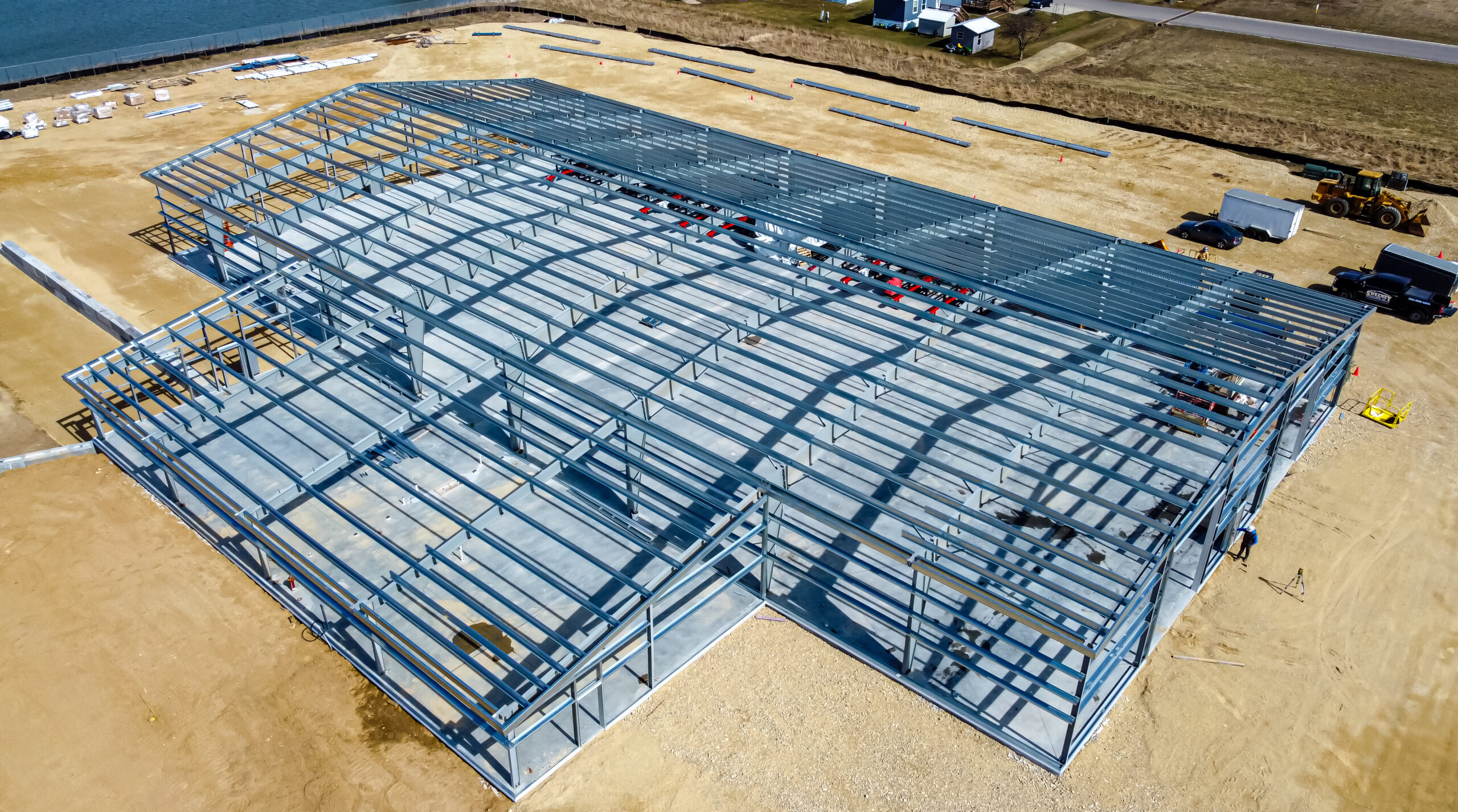
This guide is written for contractors, developers, distributors, project buyers, builders, importers, and channel partners evaluating a prefab steel factory building for GCC. The objective is to make the building safe, buildable, easy to ship, realistic to install, and practical to maintain. A steel structure package should be compared by design assumptions, fabrication scope, cladding, accessories, documents, delivery responsibility, and installation support rather than only by square-meter price.
Related resources: steel warehouse buildings steel structure workshop buildings aircraft hangar buildings poultry farm buildings commercial steel buildings steel building cost guide quote requirements steel structure design guide installation timeline quality control guide. External references: ASHRAE standards and guidelines OSHA steel erection safety ICC code resources.
Project brief and procurement scope
For a prefab steel factory building in GCC, project brief and procurement scope should be treated as a decision item before purchase order confirmation. Buyers should document the required span, clear height, bay spacing, wind load, snow load where applicable, seismic load, roof live load, local code path, insulation, cladding, crane system, ventilation, installation method, delivery time, budget control approach, and maintenance expectations. A written project brief lets the supplier calculate the frame and accessories on the same basis used by the local engineer and contractor.
Clear scope reduces redesign and prevents missing items. The inquiry should state building length, width, eave height, clear internal height, site exposure, desired roof slope, doors, windows, louvers, skylights, gutters, downpipes, surface treatment, destination port, and whether the buyer needs anchor bolts, erection drawings, packing lists, or remote technical support. If the project includes a crane, include lifting capacity, runway length, hook height, duty level if known, and future expansion expectations.
Quotations should be checked line by line. Compare steel grade or equivalent specification, main frame sizes, purlin and girt system, bracing arrangement, high-strength bolts, roof and wall panel thickness, insulation type, trims, flashing, fasteners, corrosion protection, packaging method, and exclusions. A lower initial number may exclude panels, doors, ventilation accessories, coating thickness, spare bolts, or documents needed by the installer. Good budget control removes unnecessary scope, not essential structural safety.
Installation must be planned with the local team. Foundation dimensions and anchor bolt positions should be verified before shipment arrival. The site needs access roads, unloading space, crane availability, temporary bracing, safety supervision, and weather management. Erection drawings must match part labels and packing lists. For overseas projects, delivery time includes drawing confirmation, procurement, fabrication, welding inspection, painting or galvanizing where specified, packing, inland transport, export customs, ocean freight, destination clearance, and site assembly.
Span and clear height
For a prefab steel factory building in GCC, span and clear height should be treated as a decision item before purchase order confirmation. Buyers should document the required span, clear height, bay spacing, wind load, snow load where applicable, seismic load, roof live load, local code path, insulation, cladding, crane system, ventilation, installation method, delivery time, budget control approach, and maintenance expectations. A written project brief lets the supplier calculate the frame and accessories on the same basis used by the local engineer and contractor.
Clear scope reduces redesign and prevents missing items. The inquiry should state building length, width, eave height, clear internal height, site exposure, desired roof slope, doors, windows, louvers, skylights, gutters, downpipes, surface treatment, destination port, and whether the buyer needs anchor bolts, erection drawings, packing lists, or remote technical support. If the project includes a crane, include lifting capacity, runway length, hook height, duty level if known, and future expansion expectations.
Quotations should be checked line by line. Compare steel grade or equivalent specification, main frame sizes, purlin and girt system, bracing arrangement, high-strength bolts, roof and wall panel thickness, insulation type, trims, flashing, fasteners, corrosion protection, packaging method, and exclusions. A lower initial number may exclude panels, doors, ventilation accessories, coating thickness, spare bolts, or documents needed by the installer. Good budget control removes unnecessary scope, not essential structural safety.
Installation must be planned with the local team. Foundation dimensions and anchor bolt positions should be verified before shipment arrival. The site needs access roads, unloading space, crane availability, temporary bracing, safety supervision, and weather management. Erection drawings must match part labels and packing lists. For overseas projects, delivery time includes drawing confirmation, procurement, fabrication, welding inspection, painting or galvanizing where specified, packing, inland transport, export customs, ocean freight, destination clearance, and site assembly.
Wind load, snow load, seismic load and local code
For a prefab steel factory building in GCC, wind load, snow load, seismic load and local code should be treated as a decision item before purchase order confirmation. Buyers should document the required span, clear height, bay spacing, wind load, snow load where applicable, seismic load, roof live load, local code path, insulation, cladding, crane system, ventilation, installation method, delivery time, budget control approach, and maintenance expectations. A written project brief lets the supplier calculate the frame and accessories on the same basis used by the local engineer and contractor.
Clear scope reduces redesign and prevents missing items. The inquiry should state building length, width, eave height, clear internal height, site exposure, desired roof slope, doors, windows, louvers, skylights, gutters, downpipes, surface treatment, destination port, and whether the buyer needs anchor bolts, erection drawings, packing lists, or remote technical support. If the project includes a crane, include lifting capacity, runway length, hook height, duty level if known, and future expansion expectations.
Quotations should be checked line by line. Compare steel grade or equivalent specification, main frame sizes, purlin and girt system, bracing arrangement, high-strength bolts, roof and wall panel thickness, insulation type, trims, flashing, fasteners, corrosion protection, packaging method, and exclusions. A lower initial number may exclude panels, doors, ventilation accessories, coating thickness, spare bolts, or documents needed by the installer. Good budget control removes unnecessary scope, not essential structural safety.
Installation must be planned with the local team. Foundation dimensions and anchor bolt positions should be verified before shipment arrival. The site needs access roads, unloading space, crane availability, temporary bracing, safety supervision, and weather management. Erection drawings must match part labels and packing lists. For overseas projects, delivery time includes drawing confirmation, procurement, fabrication, welding inspection, painting or galvanizing where specified, packing, inland transport, export customs, ocean freight, destination clearance, and site assembly.
Insulation, cladding and condensation control
For a prefab steel factory building in GCC, insulation, cladding and condensation control should be treated as a decision item before purchase order confirmation. Buyers should document the required span, clear height, bay spacing, wind load, snow load where applicable, seismic load, roof live load, local code path, insulation, cladding, crane system, ventilation, installation method, delivery time, budget control approach, and maintenance expectations. A written project brief lets the supplier calculate the frame and accessories on the same basis used by the local engineer and contractor.
Clear scope reduces redesign and prevents missing items. The inquiry should state building length, width, eave height, clear internal height, site exposure, desired roof slope, doors, windows, louvers, skylights, gutters, downpipes, surface treatment, destination port, and whether the buyer needs anchor bolts, erection drawings, packing lists, or remote technical support. If the project includes a crane, include lifting capacity, runway length, hook height, duty level if known, and future expansion expectations.
Quotations should be checked line by line. Compare steel grade or equivalent specification, main frame sizes, purlin and girt system, bracing arrangement, high-strength bolts, roof and wall panel thickness, insulation type, trims, flashing, fasteners, corrosion protection, packaging method, and exclusions. A lower initial number may exclude panels, doors, ventilation accessories, coating thickness, spare bolts, or documents needed by the installer. Good budget control removes unnecessary scope, not essential structural safety.
Installation must be planned with the local team. Foundation dimensions and anchor bolt positions should be verified before shipment arrival. The site needs access roads, unloading space, crane availability, temporary bracing, safety supervision, and weather management. Erection drawings must match part labels and packing lists. For overseas projects, delivery time includes drawing confirmation, procurement, fabrication, welding inspection, painting or galvanizing where specified, packing, inland transport, export customs, ocean freight, destination clearance, and site assembly.
Crane system, mezzanine, doors and ventilation
For a prefab steel factory building in GCC, crane system, mezzanine, doors and ventilation should be treated as a decision item before purchase order confirmation. Buyers should document the required span, clear height, bay spacing, wind load, snow load where applicable, seismic load, roof live load, local code path, insulation, cladding, crane system, ventilation, installation method, delivery time, budget control approach, and maintenance expectations. A written project brief lets the supplier calculate the frame and accessories on the same basis used by the local engineer and contractor.
Clear scope reduces redesign and prevents missing items. The inquiry should state building length, width, eave height, clear internal height, site exposure, desired roof slope, doors, windows, louvers, skylights, gutters, downpipes, surface treatment, destination port, and whether the buyer needs anchor bolts, erection drawings, packing lists, or remote technical support. If the project includes a crane, include lifting capacity, runway length, hook height, duty level if known, and future expansion expectations.
Quotations should be checked line by line. Compare steel grade or equivalent specification, main frame sizes, purlin and girt system, bracing arrangement, high-strength bolts, roof and wall panel thickness, insulation type, trims, flashing, fasteners, corrosion protection, packaging method, and exclusions. A lower initial number may exclude panels, doors, ventilation accessories, coating thickness, spare bolts, or documents needed by the installer. Good budget control removes unnecessary scope, not essential structural safety.
Installation must be planned with the local team. Foundation dimensions and anchor bolt positions should be verified before shipment arrival. The site needs access roads, unloading space, crane availability, temporary bracing, safety supervision, and weather management. Erection drawings must match part labels and packing lists. For overseas projects, delivery time includes drawing confirmation, procurement, fabrication, welding inspection, painting or galvanizing where specified, packing, inland transport, export customs, ocean freight, destination clearance, and site assembly.
Fabrication quality, coating and packing
For a prefab steel factory building in GCC, fabrication quality, coating and packing should be treated as a decision item before purchase order confirmation. Buyers should document the required span, clear height, bay spacing, wind load, snow load where applicable, seismic load, roof live load, local code path, insulation, cladding, crane system, ventilation, installation method, delivery time, budget control approach, and maintenance expectations. A written project brief lets the supplier calculate the frame and accessories on the same basis used by the local engineer and contractor.
Clear scope reduces redesign and prevents missing items. The inquiry should state building length, width, eave height, clear internal height, site exposure, desired roof slope, doors, windows, louvers, skylights, gutters, downpipes, surface treatment, destination port, and whether the buyer needs anchor bolts, erection drawings, packing lists, or remote technical support. If the project includes a crane, include lifting capacity, runway length, hook height, duty level if known, and future expansion expectations.
Quotations should be checked line by line. Compare steel grade or equivalent specification, main frame sizes, purlin and girt system, bracing arrangement, high-strength bolts, roof and wall panel thickness, insulation type, trims, flashing, fasteners, corrosion protection, packaging method, and exclusions. A lower initial number may exclude panels, doors, ventilation accessories, coating thickness, spare bolts, or documents needed by the installer. Good budget control removes unnecessary scope, not essential structural safety.
Installation must be planned with the local team. Foundation dimensions and anchor bolt positions should be verified before shipment arrival. The site needs access roads, unloading space, crane availability, temporary bracing, safety supervision, and weather management. Erection drawings must match part labels and packing lists. For overseas projects, delivery time includes drawing confirmation, procurement, fabrication, welding inspection, painting or galvanizing where specified, packing, inland transport, export customs, ocean freight, destination clearance, and site assembly.
Installation planning and site responsibilities
For a prefab steel factory building in GCC, installation planning and site responsibilities should be treated as a decision item before purchase order confirmation. Buyers should document the required span, clear height, bay spacing, wind load, snow load where applicable, seismic load, roof live load, local code path, insulation, cladding, crane system, ventilation, installation method, delivery time, budget control approach, and maintenance expectations. A written project brief lets the supplier calculate the frame and accessories on the same basis used by the local engineer and contractor.
Clear scope reduces redesign and prevents missing items. The inquiry should state building length, width, eave height, clear internal height, site exposure, desired roof slope, doors, windows, louvers, skylights, gutters, downpipes, surface treatment, destination port, and whether the buyer needs anchor bolts, erection drawings, packing lists, or remote technical support. If the project includes a crane, include lifting capacity, runway length, hook height, duty level if known, and future expansion expectations.
Quotations should be checked line by line. Compare steel grade or equivalent specification, main frame sizes, purlin and girt system, bracing arrangement, high-strength bolts, roof and wall panel thickness, insulation type, trims, flashing, fasteners, corrosion protection, packaging method, and exclusions. A lower initial number may exclude panels, doors, ventilation accessories, coating thickness, spare bolts, or documents needed by the installer. Good budget control removes unnecessary scope, not essential structural safety.
Installation must be planned with the local team. Foundation dimensions and anchor bolt positions should be verified before shipment arrival. The site needs access roads, unloading space, crane availability, temporary bracing, safety supervision, and weather management. Erection drawings must match part labels and packing lists. For overseas projects, delivery time includes drawing confirmation, procurement, fabrication, welding inspection, painting or galvanizing where specified, packing, inland transport, export customs, ocean freight, destination clearance, and site assembly.
Delivery time, shipping documents and customs interface
For a prefab steel factory building in GCC, delivery time, shipping documents and customs interface should be treated as a decision item before purchase order confirmation. Buyers should document the required span, clear height, bay spacing, wind load, snow load where applicable, seismic load, roof live load, local code path, insulation, cladding, crane system, ventilation, installation method, delivery time, budget control approach, and maintenance expectations. A written project brief lets the supplier calculate the frame and accessories on the same basis used by the local engineer and contractor.
Clear scope reduces redesign and prevents missing items. The inquiry should state building length, width, eave height, clear internal height, site exposure, desired roof slope, doors, windows, louvers, skylights, gutters, downpipes, surface treatment, destination port, and whether the buyer needs anchor bolts, erection drawings, packing lists, or remote technical support. If the project includes a crane, include lifting capacity, runway length, hook height, duty level if known, and future expansion expectations.
Quotations should be checked line by line. Compare steel grade or equivalent specification, main frame sizes, purlin and girt system, bracing arrangement, high-strength bolts, roof and wall panel thickness, insulation type, trims, flashing, fasteners, corrosion protection, packaging method, and exclusions. A lower initial number may exclude panels, doors, ventilation accessories, coating thickness, spare bolts, or documents needed by the installer. Good budget control removes unnecessary scope, not essential structural safety.
Installation must be planned with the local team. Foundation dimensions and anchor bolt positions should be verified before shipment arrival. The site needs access roads, unloading space, crane availability, temporary bracing, safety supervision, and weather management. Erection drawings must match part labels and packing lists. For overseas projects, delivery time includes drawing confirmation, procurement, fabrication, welding inspection, painting or galvanizing where specified, packing, inland transport, export customs, ocean freight, destination clearance, and site assembly.
Budget control and commercial comparison
For a prefab steel factory building in GCC, budget control and commercial comparison should be treated as a decision item before purchase order confirmation. Buyers should document the required span, clear height, bay spacing, wind load, snow load where applicable, seismic load, roof live load, local code path, insulation, cladding, crane system, ventilation, installation method, delivery time, budget control approach, and maintenance expectations. A written project brief lets the supplier calculate the frame and accessories on the same basis used by the local engineer and contractor.
Clear scope reduces redesign and prevents missing items. The inquiry should state building length, width, eave height, clear internal height, site exposure, desired roof slope, doors, windows, louvers, skylights, gutters, downpipes, surface treatment, destination port, and whether the buyer needs anchor bolts, erection drawings, packing lists, or remote technical support. If the project includes a crane, include lifting capacity, runway length, hook height, duty level if known, and future expansion expectations.
Quotations should be checked line by line. Compare steel grade or equivalent specification, main frame sizes, purlin and girt system, bracing arrangement, high-strength bolts, roof and wall panel thickness, insulation type, trims, flashing, fasteners, corrosion protection, packaging method, and exclusions. A lower initial number may exclude panels, doors, ventilation accessories, coating thickness, spare bolts, or documents needed by the installer. Good budget control removes unnecessary scope, not essential structural safety.
Installation must be planned with the local team. Foundation dimensions and anchor bolt positions should be verified before shipment arrival. The site needs access roads, unloading space, crane availability, temporary bracing, safety supervision, and weather management. Erection drawings must match part labels and packing lists. For overseas projects, delivery time includes drawing confirmation, procurement, fabrication, welding inspection, painting or galvanizing where specified, packing, inland transport, export customs, ocean freight, destination clearance, and site assembly.
Maintenance, corrosion protection and future expansion
For a prefab steel factory building in GCC, maintenance, corrosion protection and future expansion should be treated as a decision item before purchase order confirmation. Buyers should document the required span, clear height, bay spacing, wind load, snow load where applicable, seismic load, roof live load, local code path, insulation, cladding, crane system, ventilation, installation method, delivery time, budget control approach, and maintenance expectations. A written project brief lets the supplier calculate the frame and accessories on the same basis used by the local engineer and contractor.
Clear scope reduces redesign and prevents missing items. The inquiry should state building length, width, eave height, clear internal height, site exposure, desired roof slope, doors, windows, louvers, skylights, gutters, downpipes, surface treatment, destination port, and whether the buyer needs anchor bolts, erection drawings, packing lists, or remote technical support. If the project includes a crane, include lifting capacity, runway length, hook height, duty level if known, and future expansion expectations.
Quotations should be checked line by line. Compare steel grade or equivalent specification, main frame sizes, purlin and girt system, bracing arrangement, high-strength bolts, roof and wall panel thickness, insulation type, trims, flashing, fasteners, corrosion protection, packaging method, and exclusions. A lower initial number may exclude panels, doors, ventilation accessories, coating thickness, spare bolts, or documents needed by the installer. Good budget control removes unnecessary scope, not essential structural safety.
Installation must be planned with the local team. Foundation dimensions and anchor bolt positions should be verified before shipment arrival. The site needs access roads, unloading space, crane availability, temporary bracing, safety supervision, and weather management. Erection drawings must match part labels and packing lists. For overseas projects, delivery time includes drawing confirmation, procurement, fabrication, welding inspection, painting or galvanizing where specified, packing, inland transport, export customs, ocean freight, destination clearance, and site assembly.
Procurement checklist
- Confirm project country, city, code route and environmental loads
- State span, clear height, bay spacing and future extension needs
- Confirm wind load, snow load, seismic load, collateral load and crane load
- Select cladding, insulation, ventilation and roof drainage details
- Check crane system, doors, docks, louvers, skylights and mezzanine loads
- Review coating, corrosion exposure, packing, labels and installation drawings
- Compare exclusions, optional items, payment milestones and delivery terms
- Plan maintenance checks for bolts, fasteners, gutters, coating and moving doors
FAQ: prefab factory for GCC buyers
What information should buyers send before requesting a quote?
Send location, building use, size, span, clear height, wind load, snow load if relevant, seismic requirement, cladding, insulation, crane data, openings, drawings or sketches, destination port, and target schedule.
How should local code be handled?
Use the supplier proposal for technical coordination, but confirm final code requirements with the local engineer or authority before production. Imported components should match the approved assumptions.
How can budget be controlled without weakening the building?
Standardize the layout, avoid unnecessary openings, confirm real crane and insulation needs, and compare complete scopes. Do not reduce design loads, bracing, coating, or fasteners below project requirements.
What affects delivery time?
Drawing approval, material procurement, fabrication volume, surface treatment, inspection, packing, shipping route, customs clearance, inland transport, foundation readiness, and local erection resources all affect delivery time.
What should be maintained after handover?
Inspect bolts, roof fasteners, gutters, downpipes, panels, door tracks, ventilation devices, coating damage, and corrosion-prone areas. Keep drawings and part lists for future repairs or expansion.