Steel Warehouse Building Cost Guide: 7 Factors That Affect Your Project Budget

One of the first questions customers ask when planning a warehouse project is:
“How much will a steel warehouse building cost?”
The answer depends on multiple factors, including building size, structural requirements, material selection, and local environmental conditions.
Understanding these factors can help investors make better decisions and optimize project budgets without compromising building quality and safety.
This guide explains the seven major factors that influence steel warehouse building costs.
1. Building Size
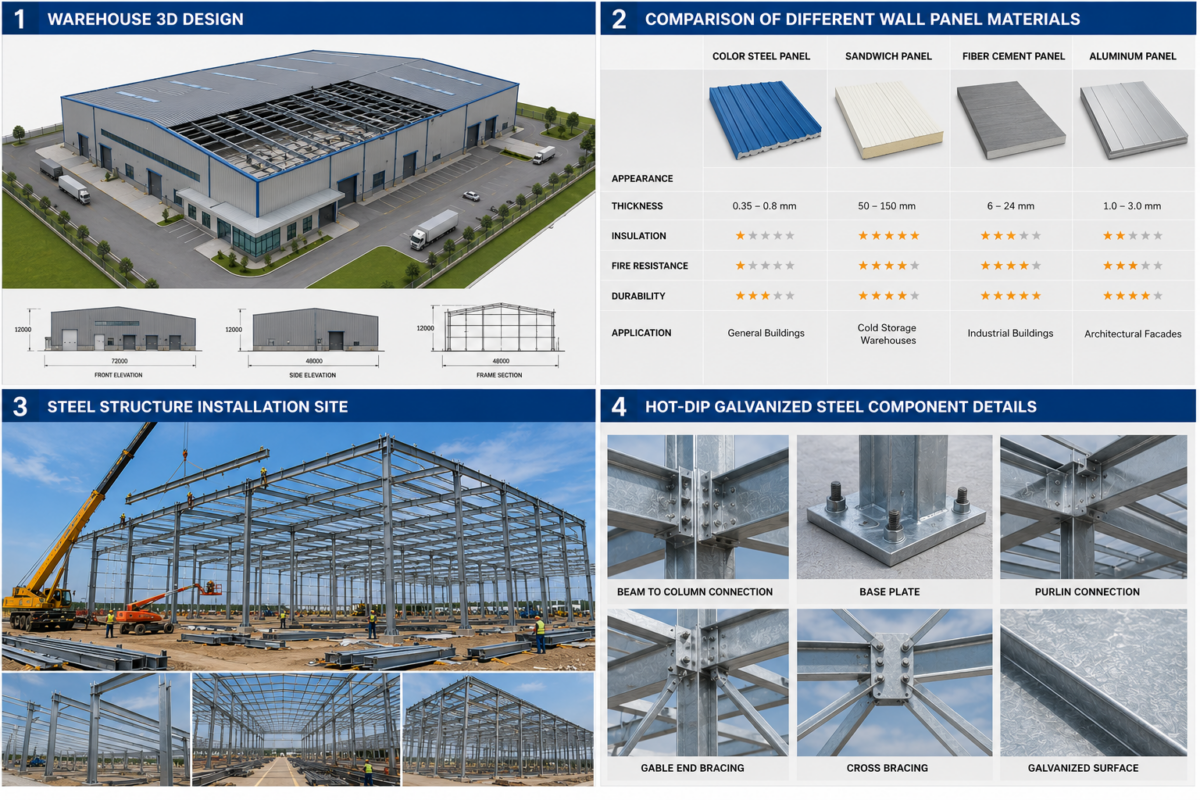
The overall dimensions of the warehouse directly affect material consumption and fabrication costs.
Important dimensions include:
- Building width
- Building length
- Building height
Generally, larger projects benefit from economies of scale, resulting in a lower average cost per square meter.
2. Structural Design Requirements
Different warehouse applications require different structural designs.
Factors affecting structural complexity include:
- Crane systems
- Mezzanine floors
- Large-span requirements
- Special equipment loads
More complex structures usually require additional steel materials and engineering work.
3. Steel Material Specifications
The type and grade of steel used in the project have a direct impact on cost.
Common steel grades include:
- Q235 Steel
- Q355 Steel
Higher-strength steel can improve structural performance while meeting demanding engineering requirements.
4. Roof and Wall Systems
Customers can choose from various cladding options:
- Corrugated steel sheets
- EPS sandwich panels
- Rock wool panels
- PU sandwich panels
Insulated panels offer better thermal performance but may increase initial project costs.
5. Wind and Snow Load Requirements
Building location significantly affects structural design.
Projects located in regions with:
- High wind speeds
- Heavy snowfall
- Seismic activity
often require stronger structural systems and additional steel consumption.
Proper engineering design ensures safety and compliance with local standards.
6. Surface Treatment Options
Steel structures commonly use:
- Hot-dip galvanizing
- Anti-corrosion painting
- Powder coating
Galvanized steel structures typically provide longer service life and lower maintenance costs, especially in coastal and humid environments.
7. Transportation and Installation
Project location also affects total investment.
Transportation costs depend on:
- Shipping distance
- Container requirements
- Project volume
Installation costs may vary according to local labor rates and construction conditions.
How to Optimize Warehouse Costs
To improve project value, customers should:
- Select suitable building dimensions
- Avoid unnecessary structural complexity
- Choose appropriate insulation systems
- Work with experienced steel structure suppliers
Professional design optimization can significantly reduce material waste and construction expenses.
For customized warehouse solutions, visit us:
Conclusion
Steel warehouse building costs depend on many factors, but proper planning and engineering design can help optimize investment and maximize long-term value.
If you are planning a warehouse project, our engineering team can provide customized quotations and professional technical support.
Contact us today:
Get a quote