
Steel Structure Warehouse Cost Breakdown: What B2B Buyers Need to Budget in 2026

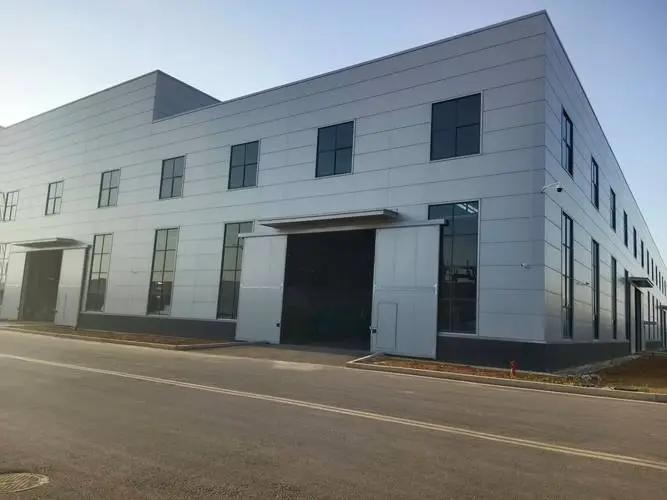
Steel Warehouse Cost: The Short Answer First
A prefabricated steel warehouse typically costs between $35 and $120 per square meter for the steel structure package alone, before foundation, shipping, and erection. A complete 1,000 sqm project — steel frame, cladding, foundation, delivery, and installation — usually lands in the $81,000 to $138,000 range as a planning benchmark.
That range is wide for a reason. Span, eave height, wind and snow loads, panel choice, destination port, and local labor rates each move the final number. This guide breaks the cost down layer by layer, shows you what changes the price the most, and gives you the information checklist suppliers need to quote accurately.
All figures below are planning estimates based on early-2026 market conditions. Steel prices and freight rates move; treat every number as a benchmark, not a quote.
What Actually Drives the Cost of a Steel Warehouse
Before looking at line items, it helps to understand the six variables that have the biggest effect on your total project cost. Change any one of these and the per-square-meter price shifts noticeably.
1. Span and Column Spacing
Span is the single biggest structural driver. A 20m clear span warehouse uses roughly 22-28 kg of steel per square meter of floor area. Push the span to 30m and consumption rises to 30-38 kg/sqm because the roof frame has to carry larger bending moments without interior columns. Beyond 36m, you move into truss or portal-frame territory with proportionally heavier members.
If your operation can tolerate interior columns, multi-bay designs (for example two 15m bays instead of one 30m span) cut steel tonnage noticeably. The trade-off is clear: open floors cost more per square meter.
2. Eave Height
Standard eave heights run 6-9m for most warehouses. Every extra meter of eave height adds surface area to walls and increases the wind moment on columns, which pushes up both steel weight and cladding area. A 12m eave height for racking or crane operation can add 10-15% to the steel package compared to an 8m building with the same footprint.
3. Design Loads: Wind, Snow, Seismic
Your local design code sets the wind speed, snow load, and seismic parameters the engineer must design to. A warehouse in a coastal wind zone or a heavy-snow region needs heavier frames, more bracing, and stronger connections than the same building in a mild inland climate. This is why identical-looking buildings from the same factory can carry different price tags — the engineering input is different.
Be wary of suppliers who quote from a generic drawing without asking about your site conditions. A price that ignores local loads will not survive detailed engineering.
4. Cladding and Insulation Requirements
Wall and roof panels span a wide price range depending on insulation needs. Single-skin corrugated steel sheets (0.5mm) run about $5-7/sqm. Sandwich panels with 50mm EPS core cost $12-16/sqm; 75mm rock wool panels for fire-rated buildings reach $22-30/sqm. Cold storage or temperature-controlled facilities need 100mm PU panels at roughly $35-45/sqm. Panel choice alone can move total project cost by 15-20%.
5. Destination and Delivery Terms
A 1,000 sqm warehouse generates about 25-35 tons of steel, fitting into 2-3 40ft HC containers. Freight varies heavily by route: budget $3,000-6,000 per container for most African and Southeast Asian routes, $4,000-7,000 for South American destinations. The delivery term you choose — FOB, CIF, or DDP — decides who carries the freight and customs risk.
6. Local Labor for Erection
Installation is almost always a local cost. Erection rates range from $8-20/sqm depending on your country’s labor market, and crane rental (25-50 ton mobile crane) runs $500-1,500 per day in most markets. Remote sites with poor access add mobilization fees on top.
Breaking Down the Steel Structure Package
When a manufacturer quotes the “steel structure package,” it usually includes four cost layers. Understanding the split helps you compare quotes on equal terms.
1. Steel Material: 40-50% of the Package
Hot-rolled structural steel (Q345B grade) has been trading around $580-650 per metric ton FOB China in early 2026. Because material is the largest line item, the steel consumption per square meter — driven by span, height, and loads — matters more than any other single factor.
2. Fabrication and Surface Treatment: 15-20%
Fabrication labor covers cutting, welding, drilling, and assembly of members. Chinese workshops typically charge $150-200 per ton for standard portal frames; complex connections, curved members, or tight tolerances push this higher.
Surface treatment matters too. Standard two-coat systems (primer + topcoat, around 150 microns total) cost less than heavy-duty three-coat systems (290 microns) specified for coastal or corrosive environments. Blast cleaning to SA 2.5 standard is the norm before painting.
3. Cladding and Roofing: 15-25%
As covered above, panel choice is where insulation requirements translate directly into budget. Do not compare quotes with different panel specifications side by side — adjust for the panel type first.
4. Accessories and Secondary Steel: 8-12%
Purlins, girts, bracing, eave struts, ridge caps, gutters, downpipes, doors, windows, and ventilators add roughly $8-15/sqm on top of the main frame. Common item prices: roller shutter doors (4m x 4m) about $800-1,200 each, personnel doors $150-250, turbine roof ventilators $40-80 per unit. Many first-time buyers focus on the frame quote and are surprised by this layer — it is almost never optional.
Beyond the Steel Package: Foundation, Shipping, Erection
The steel package is usually 60-70% of a complete project. Three cost blocks sit outside it.
Foundation Work
Budget 12-18% of total project cost for foundations. On good soil (bearing capacity above 150 kPa), isolated pad footings keep costs at $15-25/sqm of building area. Poor soil requiring piles or a raft can double that figure. Soil testing before quoting is not an extra — it is the cheapest insurance in the project.
Shipping and Logistics
Beyond ocean freight, inland transport from port to site adds another variable, especially in landlocked countries. Ask suppliers for CIF or DDP quotes to simplify budgeting, and confirm whether the price includes port handling and customs clearance.
Erection and Installation
If you are not using the supplier’s own installation crew, local erection at $8-20/sqm plus crane hire is a realistic planning range. Prefabricated buildings assemble quickly — a typical crew installs a 1,000 sqm portal frame building in 3-5 weeks — but site readiness (level ground, access, permits) determines whether that schedule holds.
Steel Warehouse Cost by Building Type
Different applications push costs in different directions. These are typical planning ranges for the steel package only, per square meter of floor area:
| Building Type | Typical Steel Package (per sqm) | Why It Varies |
|---|---|---|
| Simple storage warehouse (18-24m span) | $35-70 | Standard portal frame, low loads |
| Distribution center (24-30m span, 9-10m eave) | $50-85 | Wider spans, higher eave |
| Workshop with light crane | $70-110 | Crane beams and columns |
| Temperature-controlled / cold storage | $85-120+ | PU panels and heavier insulation |
Use these ranges to sanity-check quotes. If a supplier quotes well below the range for your building type, ask what specifications they assumed — the savings usually come out of steel weight, panel thickness, or load design.
Regional Differences and Delivery Terms
The same building costs different amounts delivered to different regions, and the difference is mostly freight and erection labor, not the steel itself.
FOB (Free On Board): you pay the factory price plus freight, insurance, and customs. This gives you full control but the most budgeting work.
CIF (Cost, Insurance, Freight): the supplier covers freight to your port. Most B2B buyers prefer this because it turns a variable cost into a fixed line item.
DDP (Delivered Duty Paid): the supplier handles everything to your site. The highest all-in price but the least risk and the least local logistics headache.
In practice, buyers in Southeast Asia and the Middle East typically see the lowest delivered costs thanks to shorter freight routes, while South America and Africa pay more per container. Local erection labor remains the most region-specific variable of all.
How to Reduce Steel Warehouse Costs Without Sacrificing Quality
A few strategies consistently reduce project cost without cutting into structural safety:
Standardize your design. Standard spans (18m, 21m, 24m) use optimized sections that manufacturers stock and fabricate efficiently. Non-standard spans require custom plate welding, typically adding 10-15% to frame cost.
Order multiple buildings together. Combining 2-3 buildings in one order reduces engineering cost per building and can qualify for volume steel pricing. Savings of 5-8% are typical on orders above 200 tons.
Right-size the specifications. A storage warehouse in a low-wind inland area does not need the same frame weight as a coastal workshop. Let the supplier’s engineer optimize for your actual site conditions instead of accepting worst-case assumptions from a template.
Decide on panel specs before comparing quotes. Comparing a single-skin quote against a sandwich-panel quote tells you nothing. Fix the specification, then compare price.
For a closer look at structural systems, see our guide on steel structure building types, or browse the FAQ page for common procurement questions.
Common Budget Mistakes to Avoid
Over the years we have watched buyers repeat the same five errors. Avoid these and your budget will hold:
Comparing quotes with different specifications. The single most common mistake. Always normalize for span, eave height, panel type, and steel grade before comparing suppliers.
Ignoring local loads. A quote based on generic wind loads can be 10-15% light. If your supplier does not ask about wind, snow, and seismic conditions, treat the number as a starting point, not a price.
Forgetting site access and soil. Remote sites with poor access add crane mobilization and trucking costs. Poor soil adds foundation cost. Check both before budgeting.
Underestimating the accessories line. Doors, gutters, ventilators, and secondary steel are 8-12% of the package. If a quote excludes them, the “savings” reappear as change orders later.
Choosing the cheapest fabrication option for corrosive environments. A three-coat heavy-duty paint system costs more upfront but protects coastal and industrial sites for decades. Cutting this line on a coastal warehouse is false economy.
Sample Budget for a 1,000 sqm Warehouse
Here is a planning budget for a standard 1,000 sqm building (25m span x 40m length x 9m eave height) in a moderate wind zone:
| Cost Block | Planning Range (USD) |
|---|---|
| Steel structure package | $38,000-52,000 |
| Cladding and accessories | $15,000-28,000 |
| Foundation (estimated) | $12,000-20,000 |
| Shipping (2-3 containers) | $8,000-18,000 |
| Erection | $8,000-20,000 |
| Total project range | $81,000-138,000 |
These figures are planning benchmarks. Your actual cost depends on specifications, destination, and current steel market conditions. According to the World Steel Association, construction-sector steel demand continues to grow, which is one more reason to lock in engineering and procurement early.
Getting Accurate Quotes: What Information to Provide
To receive a precise quotation from any steel structure manufacturer, prepare these details before you ask:
Building dimensions (length, width, eave height). Design loads (wind speed, snow load, seismic zone, live loads on mezzanine if applicable). Crane specifications if needed (capacity, span, lifting height). Cladding preferences (single skin, sandwich panel type and thickness). Door and window schedule. Surface treatment requirements. Delivery terms (FOB, CIF, or DDP). Site location and access conditions.
Suppliers who quote without asking for your site conditions are likely using generic pricing that will not hold during detailed engineering. Work with manufacturers who perform proper structural analysis before quoting — that discipline is what keeps the final number close to the estimate.
For related reading on system selection, see our article on choosing the right steel structure system for your application. When you are ready, request a detailed quotation with your specific requirements — the estimate is free and the numbers you get back will be grounded in your actual site conditions, not a template.
Frequently Asked Questions
How much does a steel warehouse cost per square meter?
For the steel structure package alone, expect $35-120 per square meter depending on span, height, and loads. A complete project including foundation, shipping, and erection typically runs $81-138 per square meter at 2026 planning rates.
What is the cheapest steel building type?
A simple single-span storage warehouse (18-24m span, 6-8m eave, single-skin cladding) is the most economical. Steel consumption drops to 22-28 kg/sqm, and the panel cost stays at the bottom of the range.
Why do quotes from different suppliers vary so much?
Usually because the specifications are different — span, eave height, steel grade, panel type, and load assumptions all move the number. Normalize these before comparing, or you are comparing apples to oranges.
Should I buy FOB, CIF, or DDP?
Most B2B buyers prefer CIF or DDP because the freight becomes a fixed cost and the supplier manages the logistics risk. FOB gives you control but shifts freight and customs work to your side.
How long does a prefabricated steel warehouse take to install?
A typical crew installs a 1,000 sqm portal frame building in 3-5 weeks, assuming the foundation is ready and site access is good. The steel package itself is manufactured in about 3-4 weeks before shipping.