
How a Steel Building Ships From a Chinese Factory: the Port-to-Port Journey

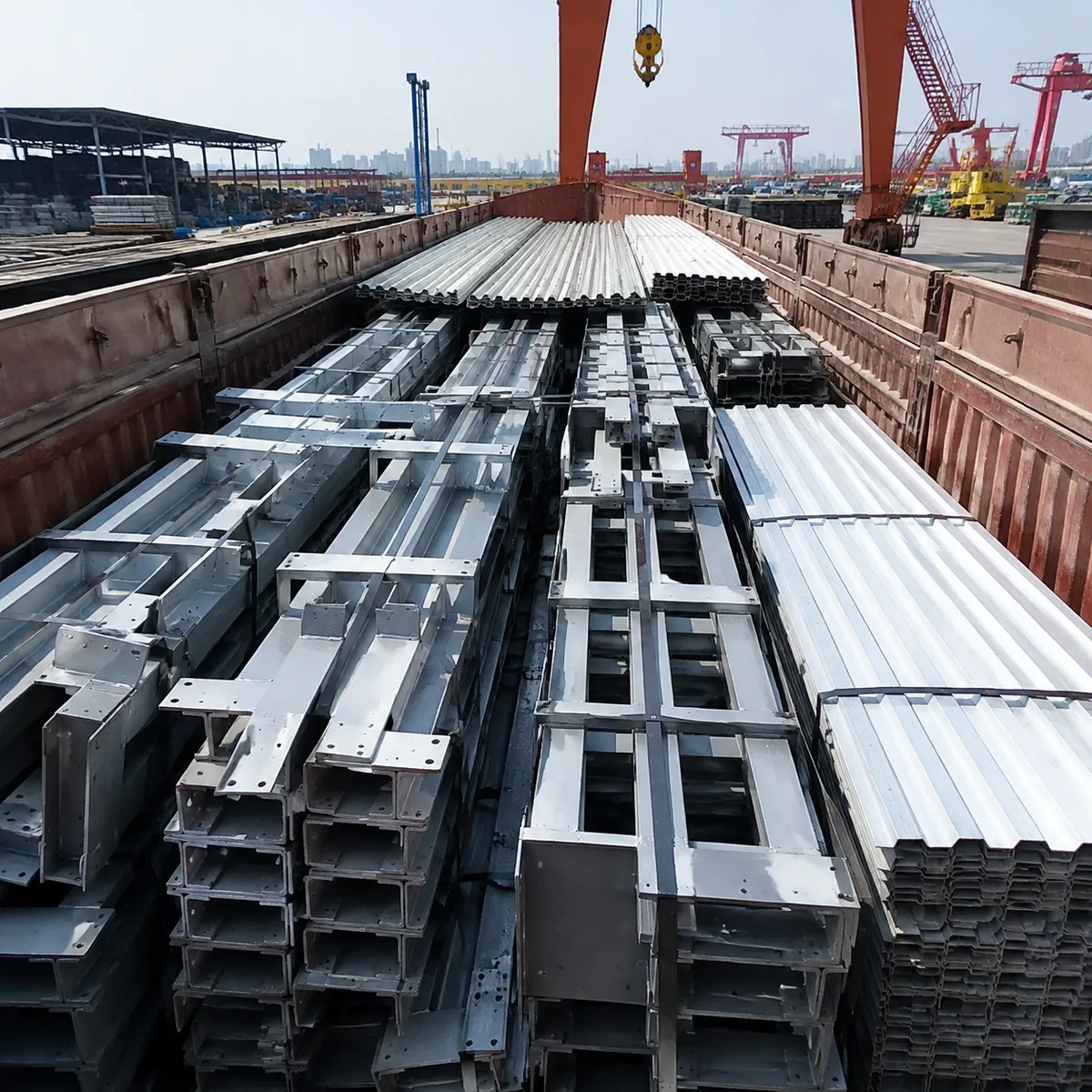
A steel building from a Chinese factory reaches your site through seven clear stages: production and QC, packaging, inland trucking to the port, export customs, ocean freight, destination port handling, and final delivery. The whole journey usually takes several weeks after production, and most of the timeline is set by the vessel schedule rather than the factory. Understanding each step tells you what to expect, who is responsible, and which documents you should hold.
Step 1: Production and quality control
Before anything moves, the factory fabricates your frame, purlins, cladding and fasteners, then checks them against the approved drawings. Most factories run a pre-shipment check on the completed components, because reworking steel after it leaves the plant is expensive. You can ask for photos or a video walk-around of the packed goods; many suppliers send these automatically.
Step 2: Packaging for ocean transport
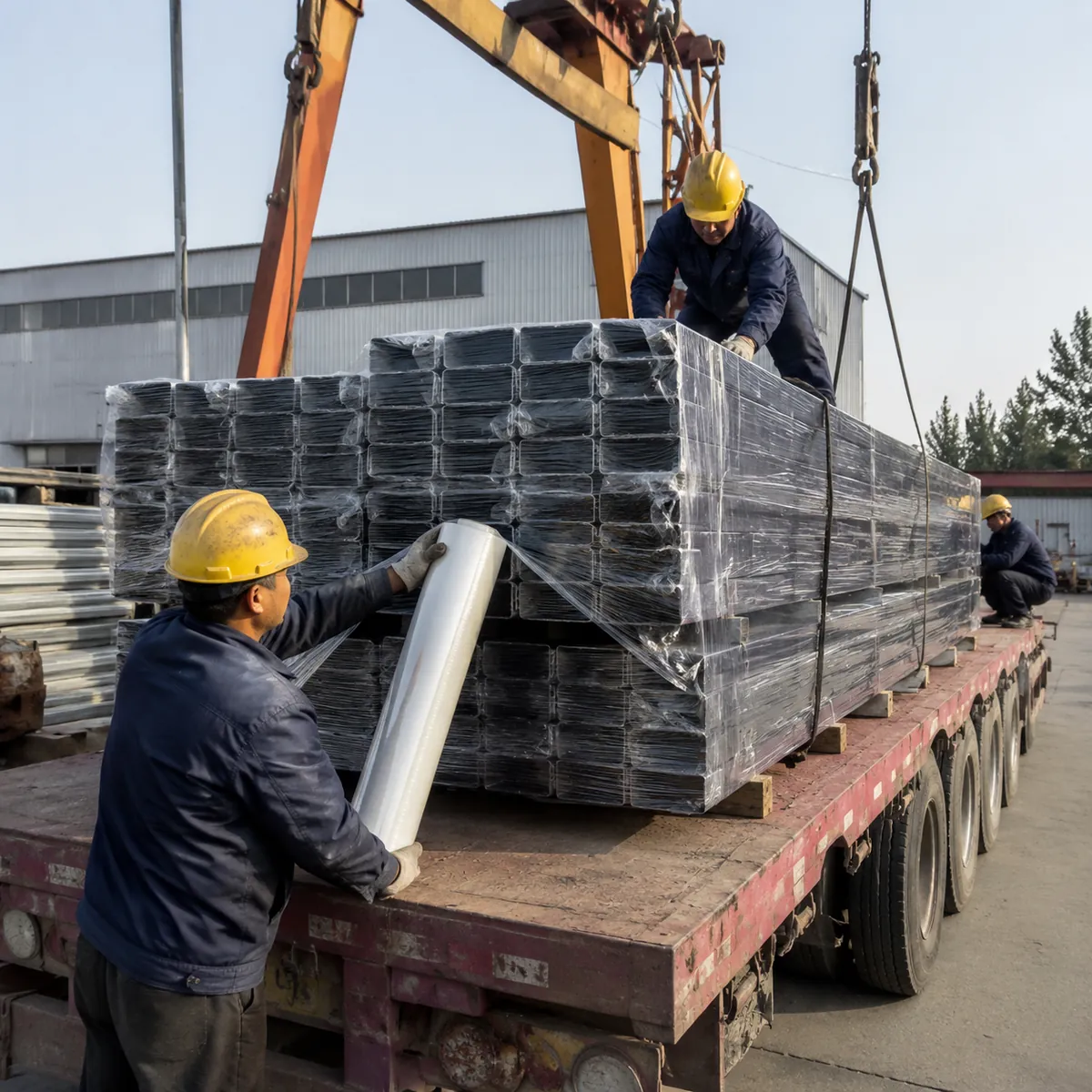
Steel components are wrapped, strapped and marked so they survive the voyage. Bolts and small parts go into boxes or bags, long members are bundled, and cladding is protected against scratching. The packing list — what is in each bundle and where it sits in the container — is the document you will check against at arrival. Packaging standards vary by supplier, so confirm what is included in the price before you order.
Step 3: Inland trucking to the export port
Packaged components move by truck from the factory to the departure port, usually Shanghai, Qingdao, Tianjin, Guangzhou or Ningbo. This leg takes one to three days depending on the factory’s location. If you have arranged your own freight, the factory coordinates the handover to your forwarder; if the factory handles freight, this is where their logistics team takes over.
Step 4: Export customs clearance
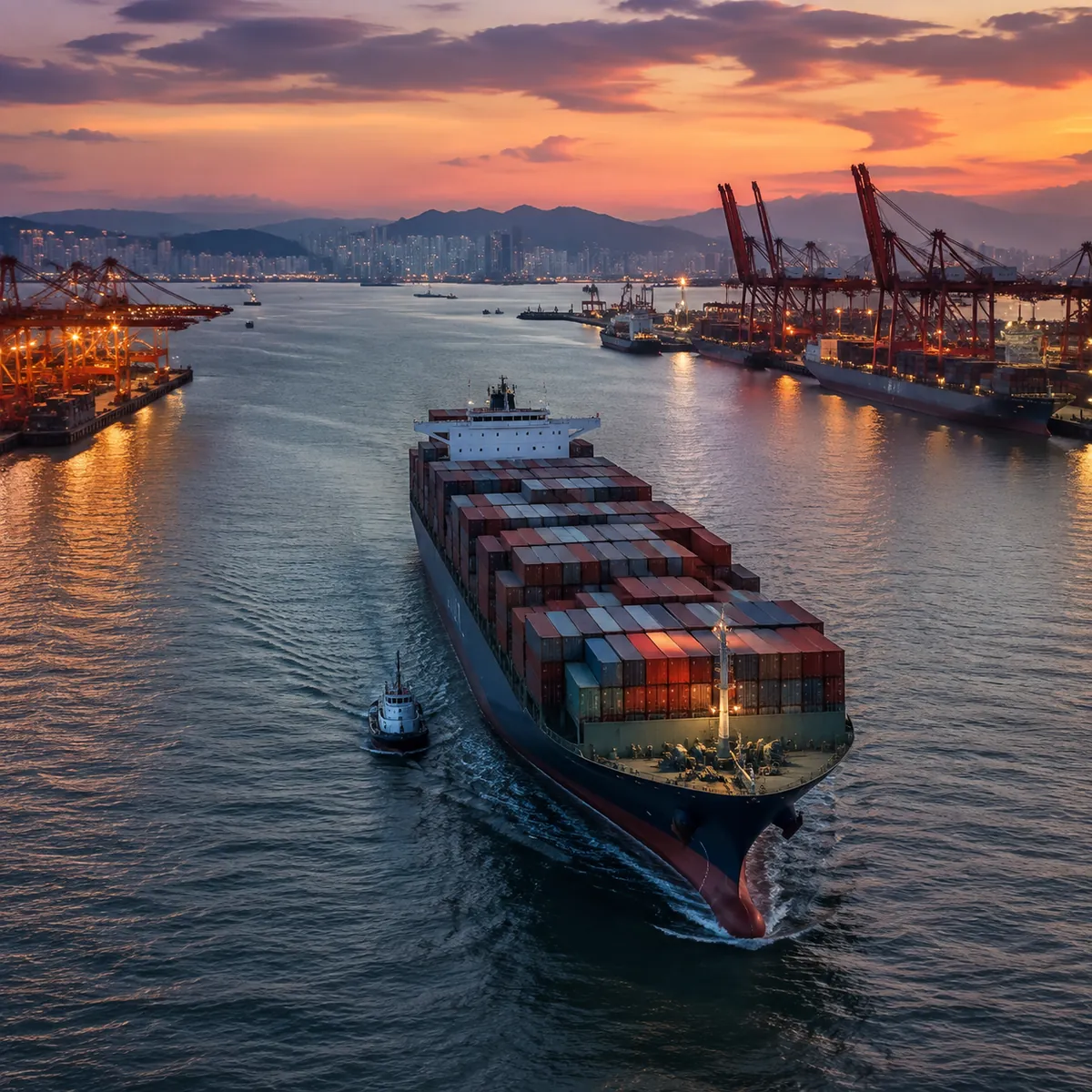
The exporter — your supplier or their freight agent — files the export declaration and books the vessel. Chinese steel exports have been subject to additional paperwork in some periods, so experienced suppliers build customs handling into their process. Your role here is usually to confirm the shipping terms (FOB, CIF, DDP and similar) and to make sure the documents match the cargo descriptions.
Step 5: Ocean freight and vessel schedule
This is the longest leg. A sailing from China to the US West Coast typically takes around two to three weeks; to Europe it can take four to six weeks depending on the route. The factory does not control vessel timing — port congestion and sailing frequency do. Ask for the estimated time of departure and arrival when your order is booked, and plan your site preparation around the arrival date, not the production date.
Step 6: Destination port and customs at arrival
At the receiving port, your freight forwarder or customs broker clears the goods. Duties, taxes and destination inspection requirements depend on your country and the product classification. Keep the supplier’s commercial invoice, packing list, bill of lading and any certificates in one folder — the broker will ask for them. For a detailed breakdown of the export paperwork side, see our guide to steel building export packaging and documentation.
Step 7: Final delivery to your site
After customs release, components move by truck to your site, where you or your contractor checks the bundles against the packing list before unloading. Damage claims are much easier to pursue while the driver is still there. This is also the moment to confirm you have all connection bolts and small parts — missing hardware is the most common site delay.
Shipping terms quick reference
| Term | Who arranges freight | What is included |
|---|---|---|
| FOB (port of loading) | Buyer | Factory delivers goods on board; buyer handles ocean freight and destination costs |
| CIF (destination port) | Seller | Factory arranges ocean freight and insurance to the destination port |
| DDP (delivered, duties paid) | Seller | Factory covers freight, duties and delivery to the address, within agreed limits |
Terms affect the price and who carries risk at each step, so get the chosen term in writing and confirm which documents the supplier will provide for each leg.
Related reading: FOB, CIF and DDP terms also apply to modular container house shipments — container shipping terms explained.
FAQ
How long does shipping take from China to the USA?
A steel building from a Chinese factory to the US West Coast typically takes two to three weeks at sea after the vessel departs, plus inland transport at each end. East Coast destinations add transit time. Ask the factory or forwarder for a route-specific estimate before you book.
Can a steel building be shipped in a standard container?
Small buildings and flat-pack components can fit standard containers. Large frames are usually shipped as breakbulk, in open-top containers, or with components designed to nest for compact loading. Confirm the loading method with the factory because it affects freight cost and packaging.
Who pays customs duties at the destination?
It depends on the shipping terms. Under FOB or CIF, the buyer pays import duties and taxes. Under DDP, the seller covers them within the agreed scope. Check the duty classification for steel buildings in your country before ordering so there are no surprises.
What documents should I receive with the shipment?
Normally the commercial invoice, packing list, bill of lading, and any certificates requested by your customs broker. Check each document against the others — mismatched descriptions are a common cause of customs delays.
Plan the journey before you book
The shipping route is decided early, not at the factory gate. Tell the supplier your destination port and preferred terms during the quotation stage, and confirm the delivery timeline in the contract. Ask about shipping your steel building and you will get the route, timing and document list before production starts.
