How to Plan a Steel Structure Warehouse Project Step by Step

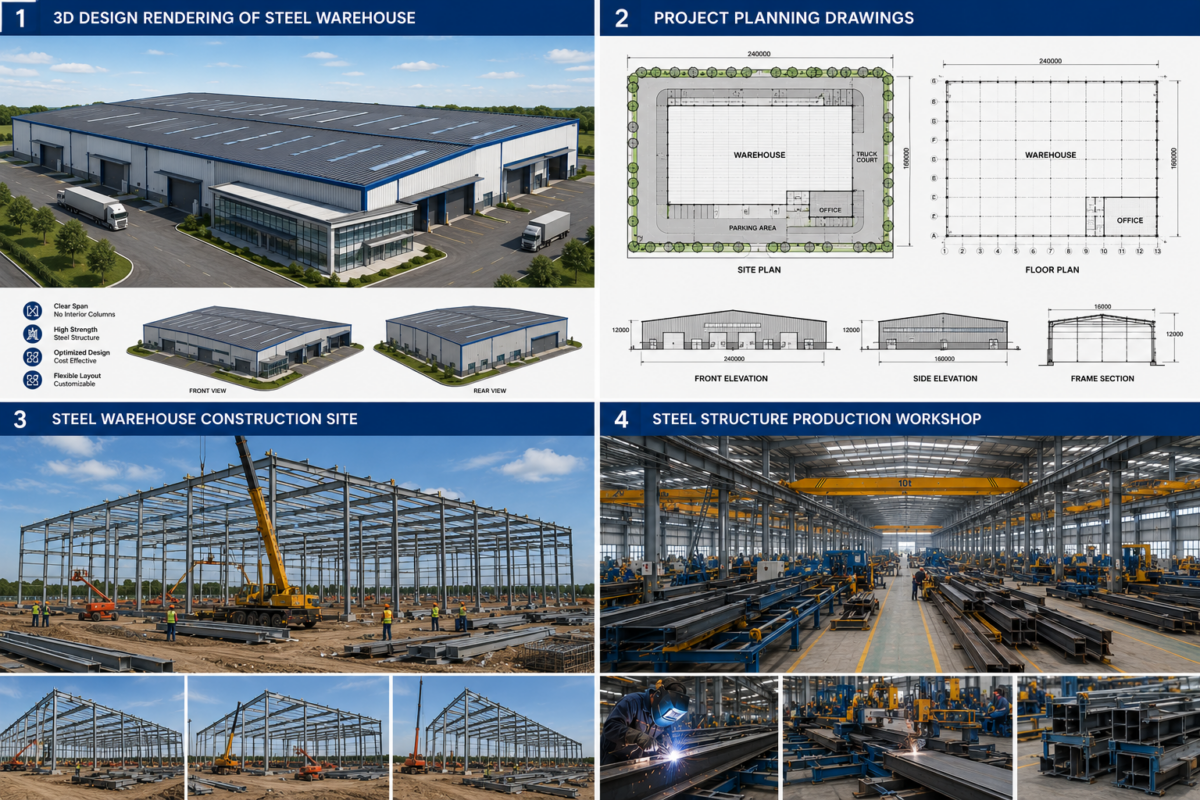
Planning a steel structure warehouse project requires careful preparation and coordination. A well-planned project can reduce construction costs, improve operational efficiency, and avoid costly delays during installation.
Whether you are building a logistics center, industrial warehouse, manufacturing facility, or agricultural storage building, understanding the project planning process is essential for success.
This guide outlines the key steps involved in planning a steel structure warehouse project.
Step 1: Define the Purpose of the Building
Before starting the design process, it is important to clearly define the building’s intended use.
Common applications include:
- Industrial warehousing
- Manufacturing workshops
- Logistics distribution centers
- Agricultural storage
- Equipment storage facilities
The intended use affects building dimensions, loading requirements, ventilation systems, and future expansion possibilities.
Step 2: Determine Building Dimensions
Warehouse dimensions directly influence project cost and structural design.
Key information includes:
- Building width
- Building length
- Eave height
- Roof slope
Proper dimension planning helps maximize storage capacity while optimizing material usage.
Step 3: Evaluate Site Conditions
Site conditions play an important role in structural design.
Factors to consider include:
- Ground conditions
- Wind load requirements
- Snow load requirements
- Seismic conditions
- Local building regulations
Professional engineering calculations ensure that the building complies with local standards and remains structurally safe.
Step 4: Select Structural Materials
Choosing suitable materials is critical for project performance.
Common options include:
- Q235 structural steel
- Q355 structural steel
- Galvanized steel components
- Painted steel systems
Material selection should balance durability, budget, and environmental conditions.
Step 5: Choose Wall and Roof Systems
Different wall and roof systems offer varying levels of insulation and protection.
Popular options include:
- Corrugated steel sheets
- EPS sandwich panels
- PU sandwich panels
- Rock wool insulated panels
The selection should depend on climate conditions and operational requirements.
Step 6: Plan Future Expansion
Many businesses experience growth after project completion.
Steel structure warehouses can be designed for future expansion by allowing:
- Additional building bays
- Extended storage areas
- Expanded production facilities
Planning ahead can reduce future construction costs.
Step 7: Work with an Experienced Supplier
An experienced steel structure supplier can provide:
- Engineering design
- Fabrication services
- Quality control
- Installation guidance
- Export support
Choosing the right supplier can significantly improve project efficiency and overall results.
For professional steel structure solutions, visit:
Conclusion
Successful warehouse construction begins with proper planning. By defining project requirements, selecting suitable materials, and working with experienced professionals, investors can maximize building performance and long-term value.
If you are planning a steel structure warehouse project, our team can provide customized design and engineering support.
Contact us today:
Get a quote